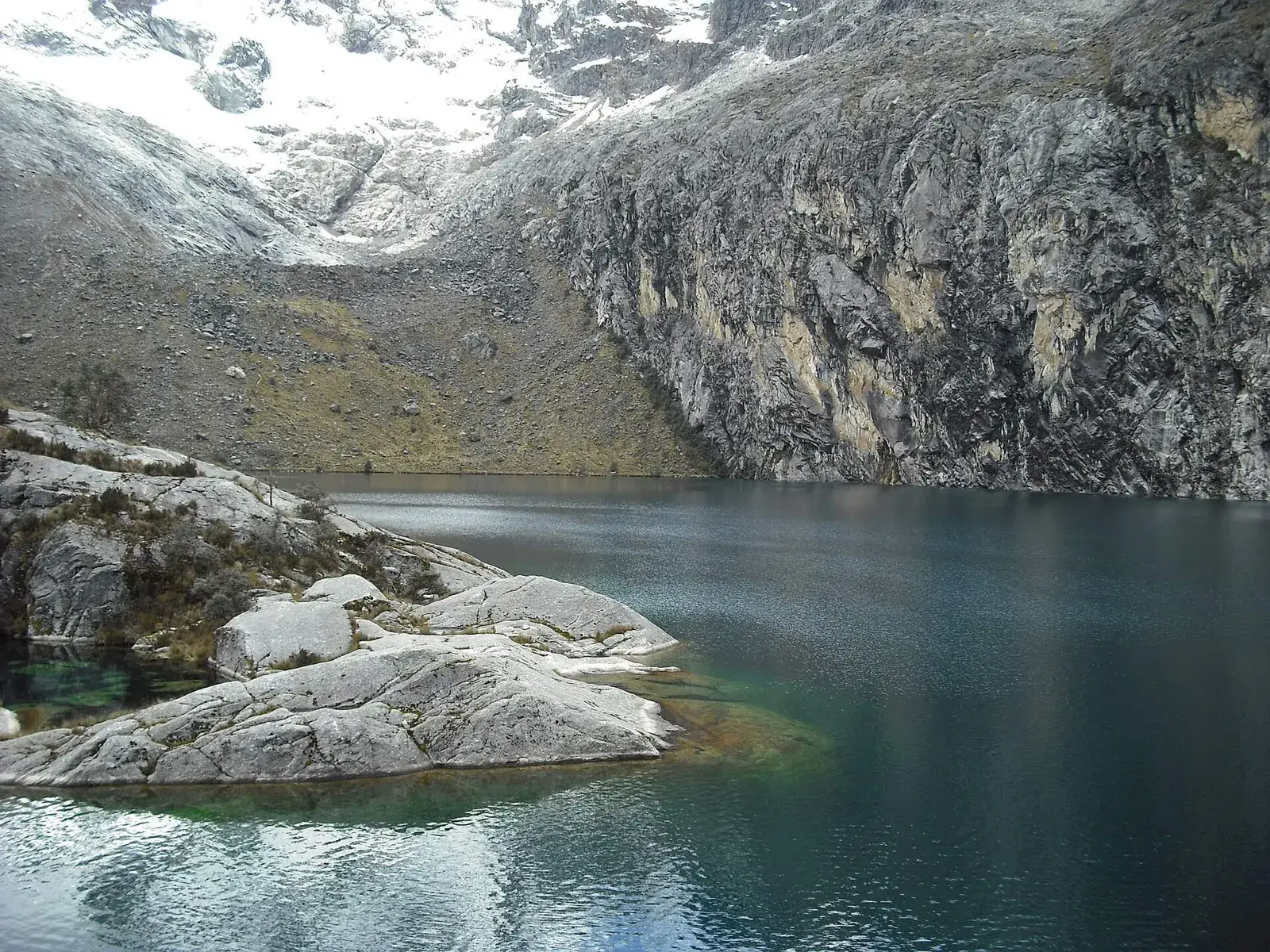
Around Huaraz the best day outings are the Llanganuco lakes, the Pastoruri glacier area, the archaeological site of Chavín de Huántar and a short hike to a lake such as Churup for acclimatisation. In town there is little to see beyond the market and a small regional museum. Allow at least three days, and take the first two gently.
All the highlights are at high altitude, and the weather can change quickly.
Lakes and road trips
The Llanganuco lakes, Chinancocha and Orconcocha, sit in a glacial valley beneath Huascarán, Peru's highest peak, and are reached by a winding road. They are accessible without a hike, which makes them a good first outing. Laguna 69, a famously turquoise lake, is a demanding full-day hike starting from the same area and should come only after you have acclimatised.
Roads are rough, and early starts are normal, so expect a long day in a vehicle. Mornings tend to be clearer, while cloud often builds in the afternoon.
Another popular lake, Laguna Parón, lies to the north and is reached by a long rough road. For an overview of the whole range and how the valleys fit together, read Cordillera Blanca.
Pastoruri and the glacier
The Pastoruri glacier tour goes to a high mountain area above 4,900 m, where a short walk leads to an ice front that has been shrinking for years. The trip is mostly about the scenery of the high plateau, the unusual Puya raimondii plants nearby and the experience of the altitude. Dress warmly and move slowly. The ice is much reduced from past photographs, so adjust your expectations.
Because the area is so high, this outing is not suitable for the first day in the region. Keep it for later in your stay, drink water, wear sun protection and be ready to stop if you feel unwell. Tell your guide at once if headache or nausea arrives, and see altitude sickness for what the symptoms mean.
Tours and activities
Bookable online, chosen for their traveller reviews.
-
Day trip From €29 per person
Chavín de Huántar
Chavín is an archaeological site in a valley east of the Cordillera Blanca, the centre of a culture that flourished long before the Incas. A visit includes stone galleries beneath the temple, carved heads and a museum. The trip is a full day and crosses a high pass, so it fits a day when the mountain weather is poor.
The underground galleries are narrow and dim, with air channels and carved stonework that rewards a slow look. A guide helps explain the layout and the ideas behind it, which are hard to read from the ruins alone. Bring a warm layer, since the galleries and the pass can be cold.
Walks and town time
Laguna Churup is a popular short hike used for acclimatisation, with a steep final section. In Huaraz itself, the market gives a view of local life and food, and the regional museum holds carved stone figures from the area. Evenings are for restaurants and bars that cater to trekkers. Local conditions affect road access, so ask your accommodation before long outings.
If you want a longer walk, the Santa Cruz trek is the best-known multi-day route in the area, and it needs proper acclimatisation. Talk to a reputable agency before committing, and read choosing a trekking agency.
Rest days, hot springs and food
Between big days, Huaraz offers gentle ways to recover. Hot springs in the nearby villages are popular after hikes, and the town has bakeries, juice stalls and restaurants that serve trekkers' appetites. Local dishes include trout, hearty soups and potatoes in many forms.
Avoid heavy meals and alcohol on the evening before a big hike, and drink plenty of water. Plan at least one easy day after a high outing, because the body needs time to recover at altitude. See where to stay in Huaraz for the districts where you can sleep, including quiet areas outside the centre.
Seasons and planning
The dry season, roughly from May to September, offers the clearest views and the most reliable access, and it is the busiest period. The wetter months bring cloud, rain and snow at altitude, and some roads and trails become difficult. Whatever the month, mornings are best for views, and afternoons often bring cloud.
Allow a spare day in your plan in case weather cancels an outing, and read about strikes and road blockades before booking a tight schedule. Most visitors arrive from Lima, and the journey is described in Lima to Huaraz.
Frequently asked questions
How many days do I need in Huaraz?
Three to five days allow acclimatisation and two or three outings. Add more for multi-day treks.
Is Laguna 69 suitable for beginners?
It is a long, high hike. Only attempt it after acclimatising and in reasonable fitness.
Can I visit without a guide?
Road trips need a vehicle, usually booked through an agency, and treks are best done with a guide.
What is the best first outing in Huaraz?
The Llanganuco lakes, because they need little walking and let you see the mountains at altitude. A short hike to Laguna Churup is another good early test.
Is the Pastoruri glacier worth visiting?
The scenery of the high plateau is striking, but the ice has retreated a long way. Go for the landscape and the plants, not for a large glacier.
Do I need a ticket for the national park?
Entry to the Huascarán National Park is usually charged, and some tours include it while others do not. Ask your operator and carry your passport.
Is Huaraz good for non-hikers?
Yes, if you enjoy mountain scenery from a vehicle. The lakes, Chavín and the glacier tour need little walking, but altitude still affects everyone.