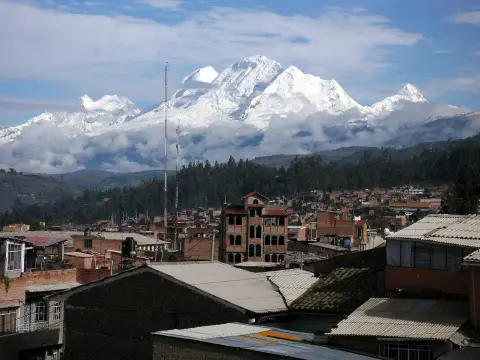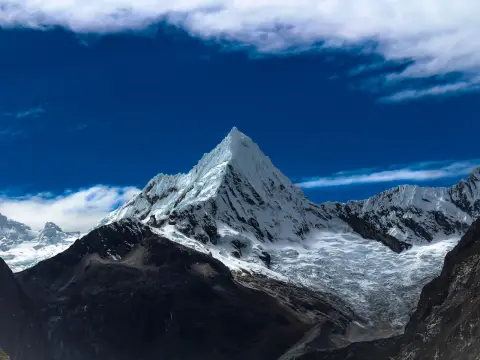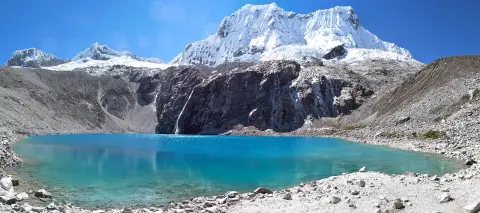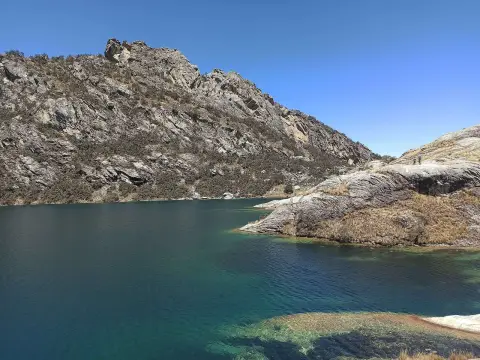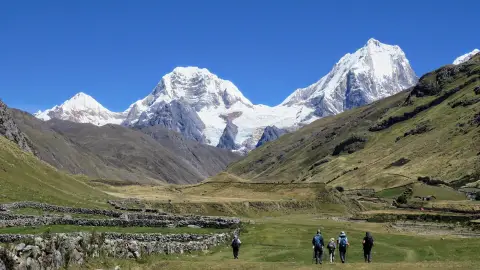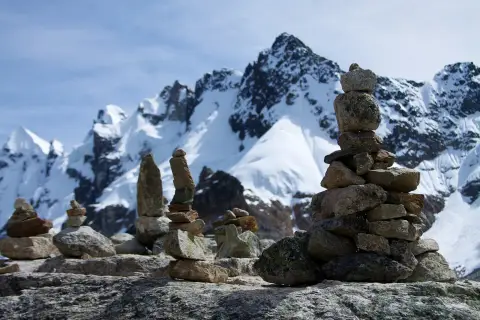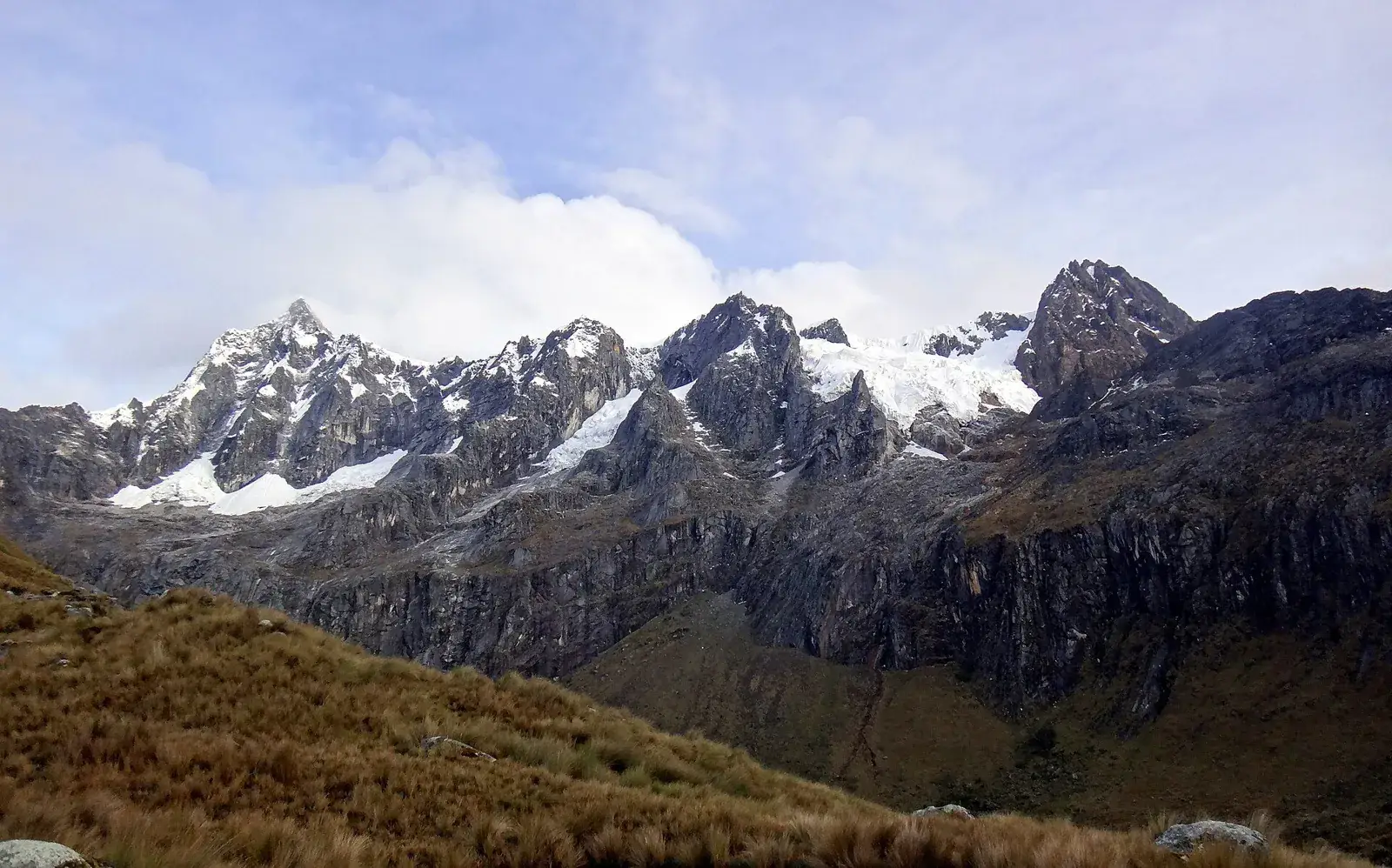
The Santa Cruz trek is a four-day, three-night walk of roughly 45 to 50 km through Huascarán National Park, usually from Vaquería to Cashapampa. It crosses the Punta Union pass at about 4,750 m, with views of Alpamayo, Taulliraju and other peaks above 6,000 m. It is a demanding but non-technical route, and the dry season, roughly May to September, is the right time to go.
Route map
Why it is popular
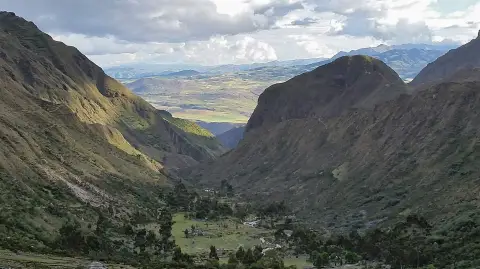
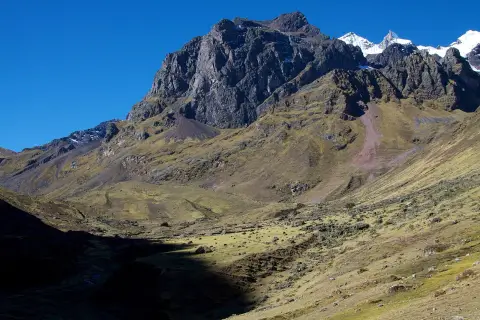
Santa Cruz is the trek that most people choose when they want a multi-day walk in the Cordillera Blanca without the commitment of Huayhuash. It combines a manageable length with glaciers, high lakes, meadows and one big pass, and the trails are well marked and have a long history of use. The scenery is varied, moving from a green valley floor to rocky terrain and back to cloud-forest slopes.
Part of its fame comes from the view of Alpamayo, often photographed as one of the most symmetrical peaks in the world. Whether you see it clearly depends on the weather, so allow for cloud and be flexible about expectations.
The stages
Most operators start from Huaraz with a long drive over a rough road through Yungay and the Llanganuco valley to Vaquería, then walk to a first camp at about 3,700 to 3,900 m on a short, easy day. Day two climbs gently up the Paria valley towards a camp near a glacial lake, with the afternoon open for walks at the camp itself.
Day three is the highlight and the hardest: a long climb to the Punta Union pass at about 4,750 m, with wide views, then a steep descent into the Huaripampa valley. Day four follows the valley down, past lakes and farmland, to Cashapampa, where transport returns you to Huaraz. The exact campsites vary between operators, and some itineraries add an extra day or side walks.
The walk can also be done in the opposite direction, but the standard direction usually gives easier acclimatisation and a more gradual climb to the pass.
Tours and activities
Bookable online, chosen for their traveller reviews.
-
Day trip From €29 per person
Fitness, season and rules
You need to be comfortable walking five to seven hours a day for several days, with some long climbs and a steep descent. Porters or muleteers carry the camping gear on organised treks, so you only carry a day pack. The dry season, roughly May to September, has the best views and the coldest nights; the wet season brings snow, rain and poor visibility, and is not recommended for most walkers.
Huascarán National Park charges an entry fee for the route, and rules can include camping regulations and requirements for guides and porters. Ask whether the fee is included in your price. Group sizes and campsite use may also be regulated.
Organised trek or independent
Most people book an organised trek in Huaraz, with a guide, a cook, muleteers, tents and food. Independent trekking is possible and is done by experienced walkers, but it requires you to arrange transport to the trailheads, carry camping equipment and food, and handle navigation in remote terrain. If you book through an agency, ask about group size, what happens if the weather closes the pass, how muleteers are treated and paid, and the guide's experience on this specific route.
Compared with Huayhuash and the day hikes
Santa Cruz sits in the middle of the Cordillera Blanca range of options. Laguna 69 and Churup are single-day outings, usually done as acclimatisation. Huayhuash is a longer and more remote circuit with repeated passes. Santa Cruz gives the multi-day experience, with camps, muleteers and a rhythm of walking, in a package short enough to fit into a normal holiday.
If you have done a lake walk and enjoyed it, this is the natural next step. If you are an experienced walker looking for a long, quiet challenge, Huayhuash will be more satisfying. Read about trekking to see these routes next to the Cusco options.
Getting there and getting back
Both ends of the walk need transport. The drive to the start is long and often rough, and the return from the end of the trail takes a couple of hours, so the first and last days include significant time in vehicles. Operators arrange this in their price, which is a strong argument for booking an organised trek unless you are confident handling local transport.
If you travel independently, ask in Huaraz about shared taxis and minibuses, and confirm the arrangements for the return before you set out. Some walkers choose the reverse direction to save a night, but the standard direction is better for gradual acclimatisation. Whatever you pick, add a buffer day at the end for a delay on the road, and do not book a flight home for the evening you finish.
What to pack and what is supplied
Organised treks normally supply tents tents, mats, cooking equipment, food and mule transport. Sleeping bags are often rented separately, and quality varies, so check the temperature rating. You carry a day pack with water, a rain layer, a warm layer, sun protection, snacks, a head torch and personal medicines.
Boots should be broken in, and a pair of walking poles helps with the long descents. Nights at the higher camps are very cold, so a hat, gloves and warm sleeping clothes make a difference. The full list is in gear, and the agency checklist covers what to ask about equipment before you pay. Pack your belongings in waterproof bags, because rain and snow can reach the duffel on the mules.
Where to sleep
-
Find hotels
Huaraz centre
Services, tour offices and restaurants for the Cordillera Blanca
-
Find hotels
Monterrey
Quieter spot north of town with thermal baths
-
Find hotels
Caraz
Small town closer to the northern lakes and trails
Frequently asked questions
How difficult is the Santa Cruz trek?
It is moderate to demanding. The route is not technical, but the pass is nearly 4,750 m, and several long days at altitude need good fitness and acclimatisation.
How many days does it take?
The standard version takes four days and three nights, though some itineraries are longer.
Can I do it without a guide?
Some walkers do, but it is a remote route, and park rules, navigation and emergency planning make a guide the safer choice for most people.
What is the best month?
The dry season, roughly May to September, is best. June to August have the clearest weather and the coldest nights.
Do I need a permit for the Santa Cruz trek?
No special trek permit is needed, but you must pay the Huascarán National Park entrance fee. Your agency usually handles this, so confirm that it is included.
What is the highest point of the Santa Cruz trek?
The Punta Union pass, at about 4,750 m, is the highest point. The first camp is around 3,700 to 3,900 m, so the days build up gradually.
Can I do Santa Cruz in the rainy season?
It is possible, but not recommended for most people. Snow, rain and cloud are likely and mud makes the path harder. Operators may also cancel departures in the worst months.