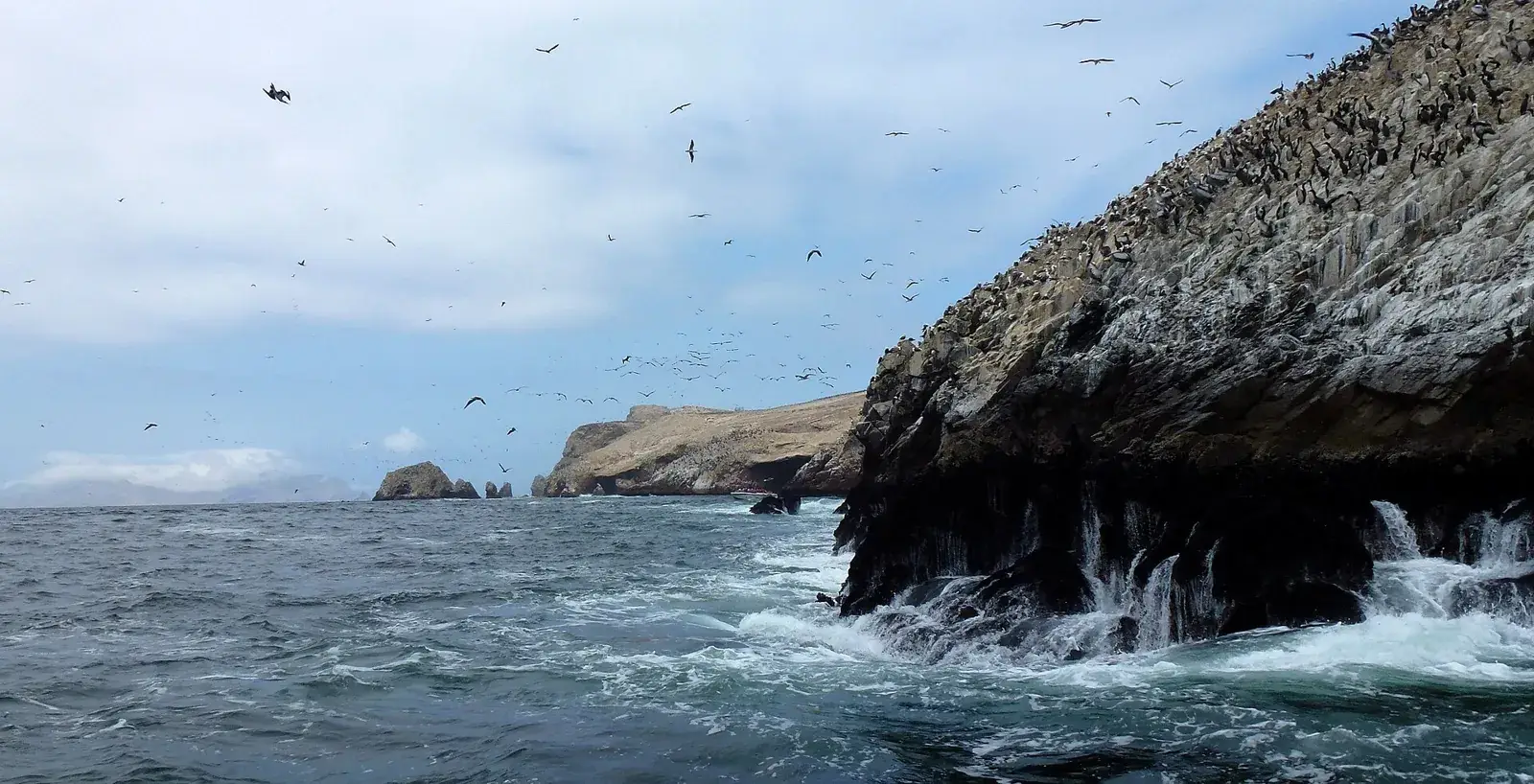
One night in Paracas is enough, two if you want to see both the Ballestas Islands and the national reserve at a relaxed pace. It is a flat, low-altitude coastal stop that pairs well with Huacachina and the Nazca Lines, and it is a rewarding break from the mountain parts of a trip.
In this section
-
 Destination guide
Paracas Tours
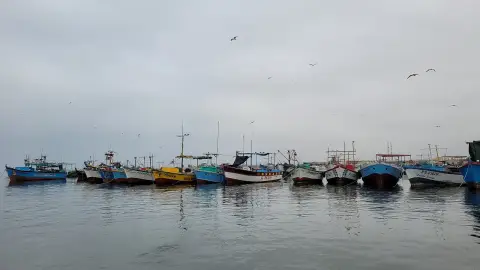
Paracas has two standard excursions, the islands by boat and the desert reserve by road, and both are short and easy to combine.
-
 Destination guide
Where to Stay in Paracas
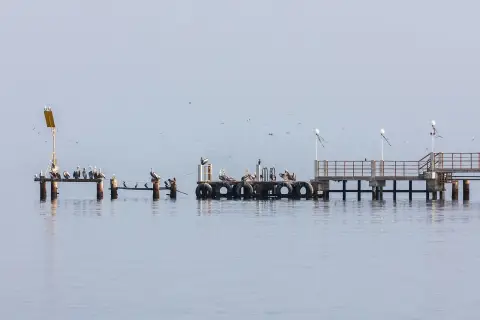
Paracas is a small bay settlement with a short main strip, and your choice is between the pier, the resort coast and the wider options inland.
-
 Attraction
Ballestas Islands
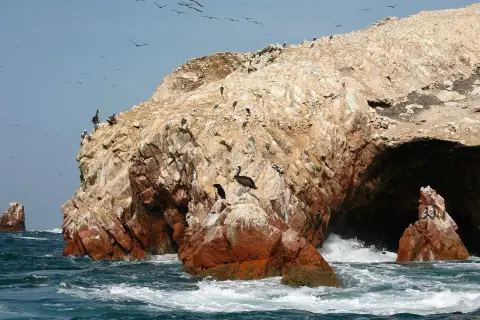
A short boat trip from Paracas to rocky islands crowded with sea lions, seabirds and, with luck, penguins.
-
 Attraction
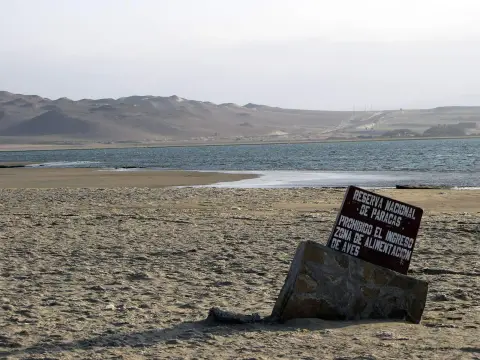
Paracas National Reserve
A protected stretch of desert coast with cliffs, bays and seabirds, reached by road from Paracas town.
-
 Attraction
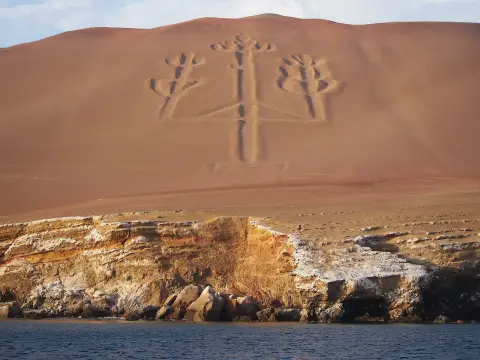
The Candelabra of Paracas
A giant figure cut into a sandy hillside on the Paracas peninsula, best seen from the water on the way to the Ballestas Islands.
-
 Attraction
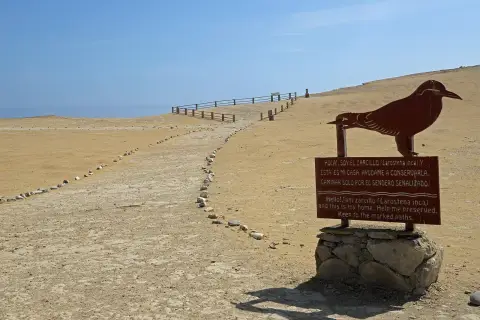
Julio C. Tello Site Museum
An archaeological site museum inside the Paracas National Reserve that tells the story of the people who lived on this desert coast long before the Incas.
What Paracas is
Paracas is a small, tourist-oriented town on a sheltered bay, with a seafront promenade, simple restaurants and a pier where boats depart. Its significance lies behind it: a national reserve where the desert meets the sea and the cold Humboldt Current feeds one of the richest marine habitats on the Pacific coast. The name is also linked to an ancient culture famous for its textiles, whose finds are displayed in a local museum.
The town is relaxed and mostly organised around the two excursions, so it is a good place for a quiet evening on the waterfront. It is also a welcome change of pace after Lima: the air is cleaner, the streets are flat and nothing is more than a short walk away. Seafood is the obvious thing to eat. See ceviche to understand what to expect from it.
The Ballestas boat trip
A short boat trip from the pier visits the Ballestas Islands, rock outcrops with sea lions, large colonies of seabirds and, with luck, Humboldt penguins. On the way out, boats pass a large figure scratched into a hillside, known as the Candelabra. Visitors do not step ashore on the islands, which are protected. Boats leave in the morning, when the sea is calmest, and it is usually a morning-only activity. Bring a windproof layer, since the wind and spray can be cold even when the town is warm.
Seabirds produce guano, which has been harvested from these islands for generations, and the smell reaches the boat before you arrive. Bring a hat and sunglasses and keep your mouth closed when birds are overhead. Cameras with a good zoom are more useful than a phone, because the boats keep a respectful distance from the rocks.
Tours and activities
Bookable online, chosen for their traveller reviews.
-
★ Top rated From €27 per person
-
★ Top rated From €27 per person
-
Day trip From €30 per person
The national reserve
The Paracas National Reserve is a coastal desert of red sand, cliffs and empty beaches. Typical stops include lookouts over the cliffs, a red-sand beach and a small visitor museum. Tours by minibus take a few hours, and some visitors hire a bicycle or a taxi instead. Go with the wind in mind: afternoons can be gusty, and sand blows into everything.
The light is best in the late afternoon, when the cliffs turn orange and the sea darkens. There is almost no shade and very little water inside the reserve, so carry your own and wear a hat. If you are on a tight schedule, the reserve is a good use of the afternoon after a morning on the boat, and it makes sense to book both through the same operator; see Paracas tours to understand how.
Paracas or Huacachina
Paracas is about wildlife, sea air and a calm bay. Huacachina is about dunes, buggies and a more backpacker atmosphere. They are about an hour apart and many travellers do both in two or three days, overnighting in one and visiting the other. If you only have time for one, choose Paracas for nature and Huacachina for adrenaline.
The comparison of Paracas and Huacachina sets out the trade-offs in detail. A third option is to skip both and use the time elsewhere; travellers heading straight for the mountains sometimes find that a day on the coast adds more to the trip than a night in either town. Decide based on your interests rather than on a checklist.
Where to stay
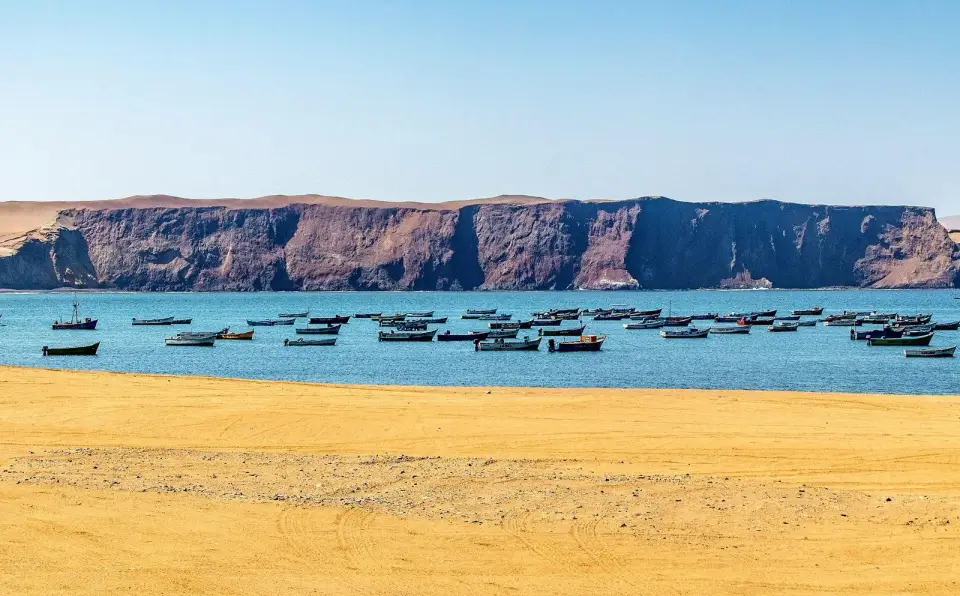
Most visitors sleep in the town itself, close to the pier, because the boat leaves early and a short walk is easier than a taxi at dawn. Options range from simple guesthouses to large resorts on the bay, and the resort-style hotels tend to sit further along the coast, with pools and quiet beaches. See where to stay in Paracas to understand how to choose between them.
If you arrive late from Lima, book the night before the boat trip, so that you are not racing to the pier after a long bus. Ask your hotel to help organise the reserve, as many offer their own half-day tours.
Getting there and when to go
Paracas is a few hours south of Lima by road, with direct buses from the capital and with onward services towards Ica and Nazca; see Lima to Paracas to compare the options. The climate is mild and dry all year, with the sunniest weather in the southern summer, roughly December to April. Winter, roughly May to November, is often overcast and cool, and the sea can be rougher. Boat trips can be cancelled in poor conditions, so keep some flexibility in your plan.
Because Paracas is low and flat, it is a useful stop for people who want a break from altitude. After a spell in the Andes, a night here is a gentle contrast. For a regional overview of seasons, see weather by region.
Continuing south
From Paracas the usual next stops are Huacachina, Nazca and then Arequipa or Cusco. Nazca is the base for the famous lines, which are best seen from the air. Buses link all of these, but the distances add up, so it is easier to plan two or three stops rather than all of them. See Lima to Nazca for a sense of how long the road takes.
Do not plan the coast as a rushed chain. A relaxed pace with a morning on the water, an afternoon in the desert and an evening on the waterfront is more memorable than a series of short stops spent mostly on buses. If time is tight, finish the coastal section at Paracas and fly onward from Lima.
Wildlife and responsible visiting
The islands and the reserve are protected because they are fragile. Keep to the paths and the marked routes inside the reserve, do not disturb nesting birds and do not feed or approach sea lions. Take any rubbish with you, and choose boat operators that observe the rules about distance from the wildlife.
Questions to ask before booking: how many people are on the boat, whether life jackets are provided, and whether the operator is registered. Boats vary in size, and a small group gives a calmer experience. Respect for the place also means accepting that some mornings are grey and cancellations happen; they protect both visitors and wildlife.
Map
Where to sleep
-
Find hotels
Paracas
Bay town with the boats to the Ballestas Islands
Weather in Paracas
Forecast: MET Norway
Frequently asked questions
Is it worth staying overnight in Paracas?
Yes, because the boat trip leaves in the morning. Arriving the evening before avoids a very early start from Lima.
Can I see penguins at Ballestas?
Sometimes. Humboldt penguins live there, but sightings are not guaranteed.
Is Paracas good for swimming?
The water is cold, because of the Humboldt Current, and the town is more for walks than for beach days.
How long is the Ballestas boat trip?
It is a short outing, normally a couple of hours including the ride out and back, but the exact length varies by operator and sea conditions. Allow time before and after for queues at the pier.
Do I need to book the Ballestas trip in advance?
In the busy months it helps to book a day ahead through your hotel or an agency, since morning departures fill up. Out of season you can often book on the evening before. Either way, check the weather in the morning.
What should I wear on the boat?
A windproof jacket, a hat, sunglasses and closed shoes. It is cooler on the water than in town, and the spray can soak a light shirt.
Can I visit Paracas as a day trip from Lima?
It is possible, but you would spend much of the day on the road. A night in Paracas allows the morning boat trip and the reserve without rushing. See Lima to Paracas for travel options.
Is Paracas suitable for children?
Yes. The terrain is flat and the boat trip is short, so it suits families. Make sure children wear life jackets and sun protection, and bring a layer for the wind.