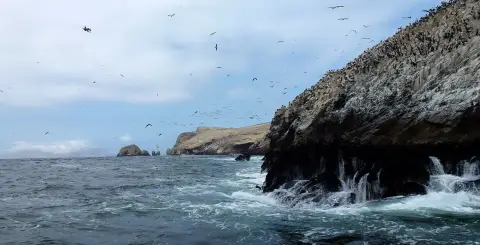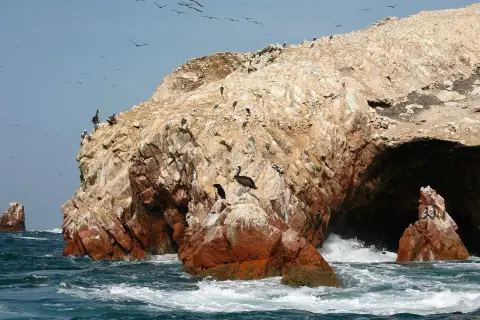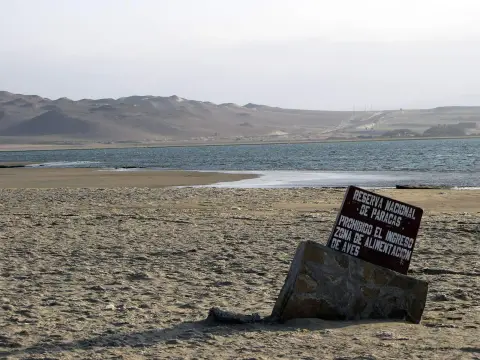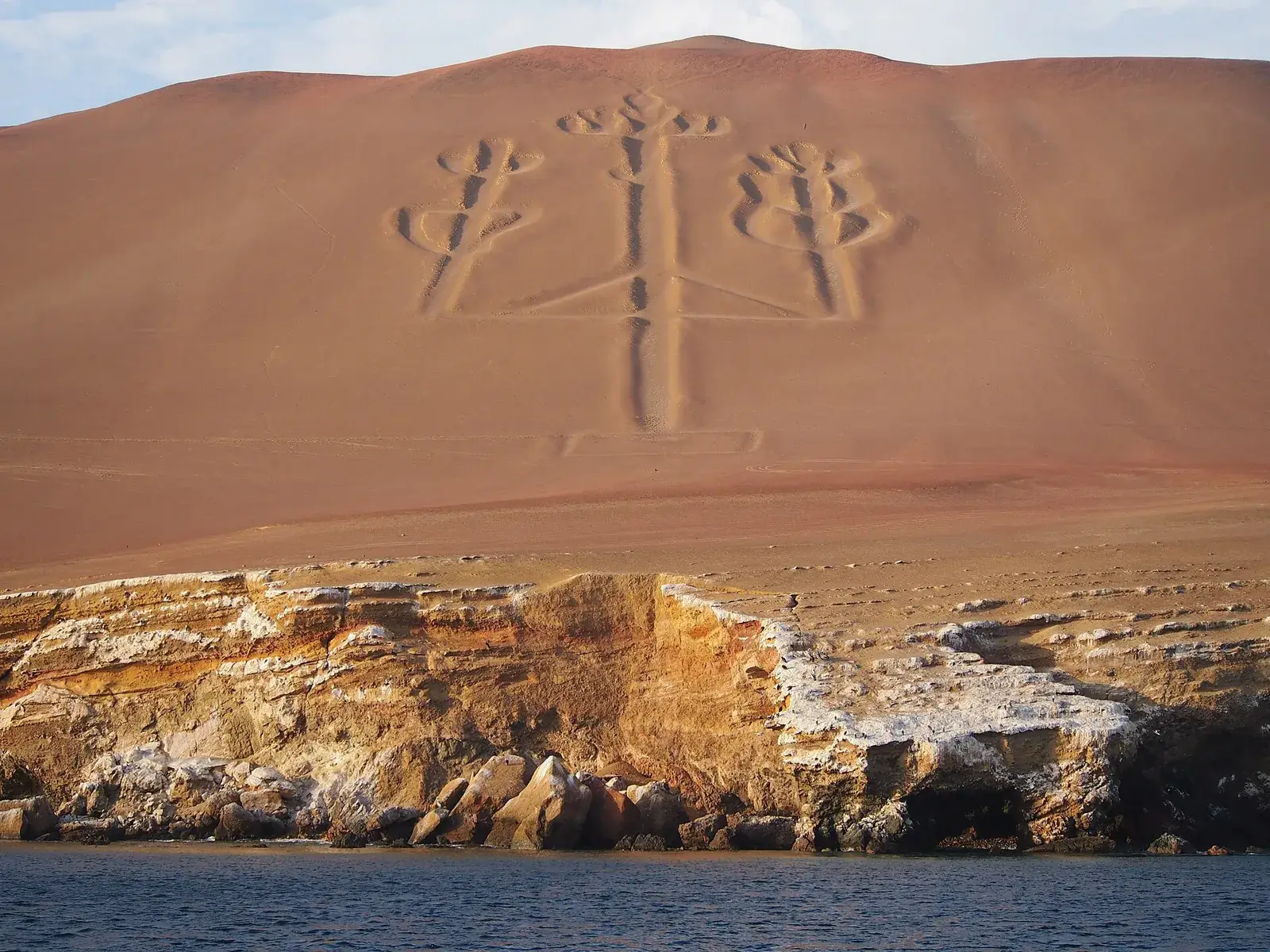
The Candelabra of Paracas is a geoglyph about 170 to 180 m tall, cut into a dune on the northern face of the Paracas peninsula. It is normally seen from a boat, in a short pause on the outward leg of the Ballestas Islands trip, so you do not need a separate visit. Pottery found nearby points to the Paracas culture, around 200 BCE, but its purpose is unknown. The hillside is protected, and walking on it is damaging and illegal.
Map
What the Candelabra is
The Candelabra of Paracas, known in Spanish as El Candelabro and sometimes called the Trident or the Candelabra of the Andes, is a geoglyph: a figure made on the ground by removing or rearranging the surface. This one is drawn on a steep slope of pale sand that faces the open water of Pisco Bay, on the northern side of the Paracas peninsula, inside the area covered by the Paracas National Reserve.
The design is a central shaft with a branching top and two smaller branched forms on either side, which is where the name comes from. The sources quote a height of about 170 m, with some guides rounding it up to around 180 m, and a width of roughly 60 to 70 m. Treat these as approximate, because published figures differ slightly.
The lines are not painted or built up. They are shallow trenches cut into the sandy surface, and the figure is large enough to be recognised from far out at sea. That is the point of its location: the slope is a natural screen that is visible from the water, not from the shore below.
How old it is and who made it
The usual date given is about 200 BCE, which would place the figure in the time of the Paracas culture, the society known for its elaborate textiles and burials on this peninsula. The basis is pottery fragments found at the site, in a style linked to that culture, and a radiocarbon date for pottery nearby. That is useful evidence but not a direct date for the cutting of the lines, so careful writers describe the age as probable.
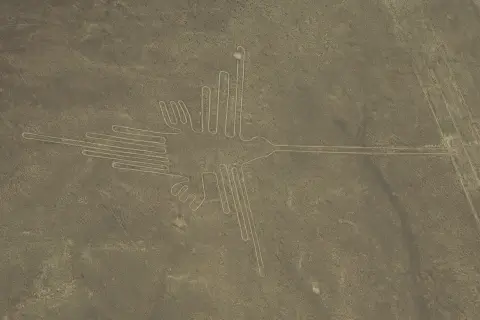
The figure is often compared with the lines of Nazca, a few hours south by road, and the two regions are indeed neighbours in time and place. The Candelabra is, however, cut into a slope rather than drawn on a flat plain, and it is much more compact, so it is better seen as a related tradition than as part of the same system. The wider story of the south coast cultures is in Pre-Inca civilisations.
Later legends exist, including stories that connect the figure with independence-era figures or with pirates, but there is no solid evidence for them.
Tours and activities
Bookable online, chosen for their traveller reviews.
-
★ Top rated From €27 per person
-
★ Top rated From €27 per person
-
Day trip From €30 per person
What it was for: theories, not answers
Nobody knows why it was made, and you should be wary of guides who speak with certainty. The explanations most often offered are that it served as a navigation marker for sailors approaching the bay, that it had a ritual or ceremonial meaning for the people of the coast, or that it relates to astronomical observation. Each of these is a reasonable hypothesis, and none has been demonstrated.
Some visitors link the shape with a cactus or a ritual plant, others with a trident. These readings are interpretations of a form that has no written explanation, and a figure cut around two thousand years ago does not come with a label.
The honest summary is the most useful one: a very large, deliberate and well-placed figure, made by people who lived on this coast, whose meaning has been lost. That uncertainty is part of why it holds attention, and a good guide will present the theories as theories.
Seeing it from the water
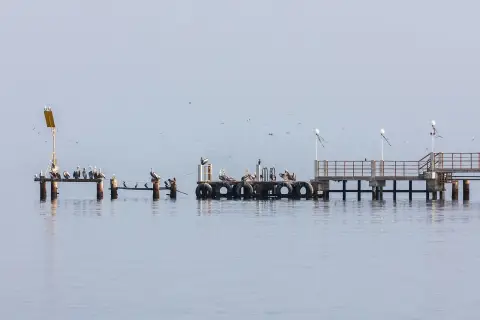
The standard way to see the Candelabra is from the boat that goes to the Ballestas Islands. Boats leave the Paracas pier, and on the outward leg most of them slow down or pause opposite the hillside so that passengers can look and take photographs, before carrying on to the islands. The sail from the pier is short, and the pause is a matter of minutes, not a visit in itself.
From the sea the whole figure fits in one frame, which is the view it was made for. Sit on the side facing the coast, and keep your camera ready before the boat slows, because the stop is brief and the boat may rock. A modest zoom lens or a phone with a good zoom is enough, and a polarising filter helps against glare off the water.
Because the pause is at the operator's discretion, the route, the time spent and even whether the boat passes close can vary with the sea, the day and the company. If it matters to you, ask when you book. Most travellers will find it already included in the Paracas tours that go to the islands.
Why not walk up to it
The figure sits on a slope that is protected archaeological heritage. Visiting on foot is not a practical or recommended option: the view from the seaward face is not better than the one from the boat, you cannot appreciate the shape from close up, and each footprint harms a monument that has survived around two thousand years of wind.
The risk is real. In 2022, tourists were reported to have walked over the hillside and left marks on the figure, and the Ministry of Culture filed a complaint. Damaging an archaeological monument is a criminal offence in Peru, with prison sentences of several years. There is signage, but access is not always physically prevented, so the responsibility rests with visitors.
Do not walk, drive or ride a bike on the slope, and do not pick up pottery or stones from the surface. If you want to understand the culture behind it, the site museum in the reserve is a better use of the time, and responsible travel in Peru explains the wider principle of leaving heritage as you found it.
Best time and what to expect
The Candelabra is visible all year, because it is cut into a dry slope that does not change with the seasons. The practical question is the light and the sea. Morning boats usually have calmer water and a sun that rakes across the hillside, which brings out the shadow in the trenches. In the afternoon the wind picks up, the sea is rougher, and the haze that sits on this coast can wash out detail.
Coastal fog is common on this part of the Peruvian coast, especially from roughly June to September, and on a grey morning the figure can look faint. It is still there, but the photograph will be flatter. The summer months, roughly December to March, are sunnier and warmer, with more people on the boats.
Trips can be cancelled when the port authority closes the sea, so a morning booking leaves a margin for rebooking the same day. The Paracas tours page covers how boats are arranged, and the Ballestas page covers the rest of the trip.
Combining it with other stops
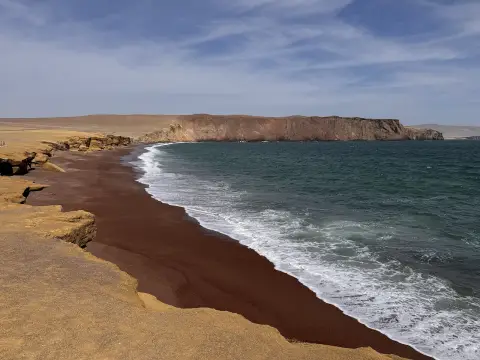
The Candelabra is part of the Ballestas morning, so the natural combination is the islands first and the Paracas National Reserve afterwards, with its cliffs, red sand beach and the fishing bay of Lagunillas. The reserve's site museum gives context to the Paracas culture, and the two together make a coherent half day. The general town page, Paracas, explains how the peninsula fits together.
For a fuller picture of the geoglyph tradition, the Nazca Lines are the obvious next stop, although they are a long way inland and require a flight or a long drive. If you are deciding whether that extra distance is worth it, the Nazca worth it comparison weighs the options.
Paracas is about three to four hours from Lima by road, as set out in Lima to Paracas, and many travellers do the boat trip the morning after arriving. If you need a bed near the pier, see where to stay in Paracas.
Where to sleep
-
Find hotels
Paracas
Bay town with the boats to the Ballestas Islands
Frequently asked questions
How big is the Candelabra of Paracas?
Sources give about 170 m in height, and some guides say around 180 m, with a width of roughly 60 to 70 m. The lines are shallow trenches cut into the sand, and the whole figure is large enough to be seen from far out at sea.
How old is the Candelabra?
It is usually dated to about 200 BCE, linked to the Paracas culture through pottery found nearby. That dates the activity around the site, not the lines themselves, so describe it as probably around two thousand years old.
Can I walk up to the Candelabra?
You should not. The slope is protected heritage, damage has been reported, and harming an archaeological monument is a crime in Peru. The view from the boat is the intended and the better one.
Is the Candelabra included in the Ballestas Islands tour?
Usually yes, as a pause on the outward leg, but the route and the time spent are up to the operator and the sea conditions. Ask when you book, and see the Ballestas Islands page for what else the trip includes.
Is the Candelabra connected to the Nazca Lines?
It is often compared with them and comes from a neighbouring region and a similar broad period, but it is cut into a slope and has a different form. Whether there was a direct link is not established. See Nazca Lines for the comparison.
What is the best time of day to see the Candelabra?
Morning, when the sea is calmer and the low sun shows the trenches in relief. Fog is common from roughly June to September and can make the figure faint, so it may look sharper on a clear day.
Do I need a separate ticket to see it?
Not if you see it from the boat on the Ballestas trip, which is how nearly everyone does. What the boat price and any park fees include changes, so confirm with the operator when booking, and check the tours page.