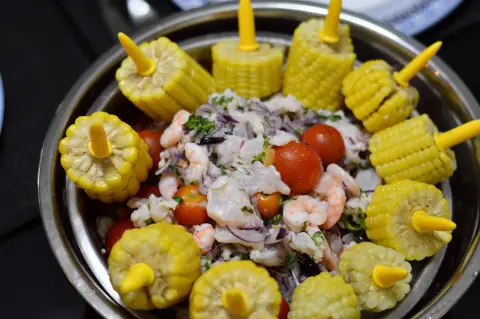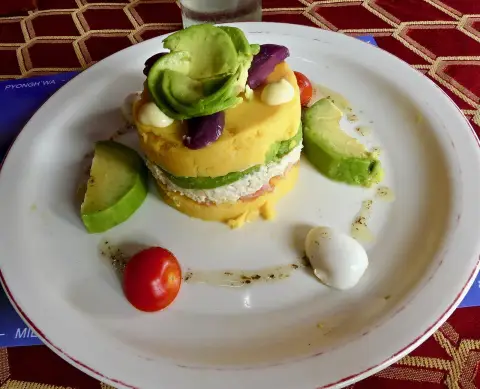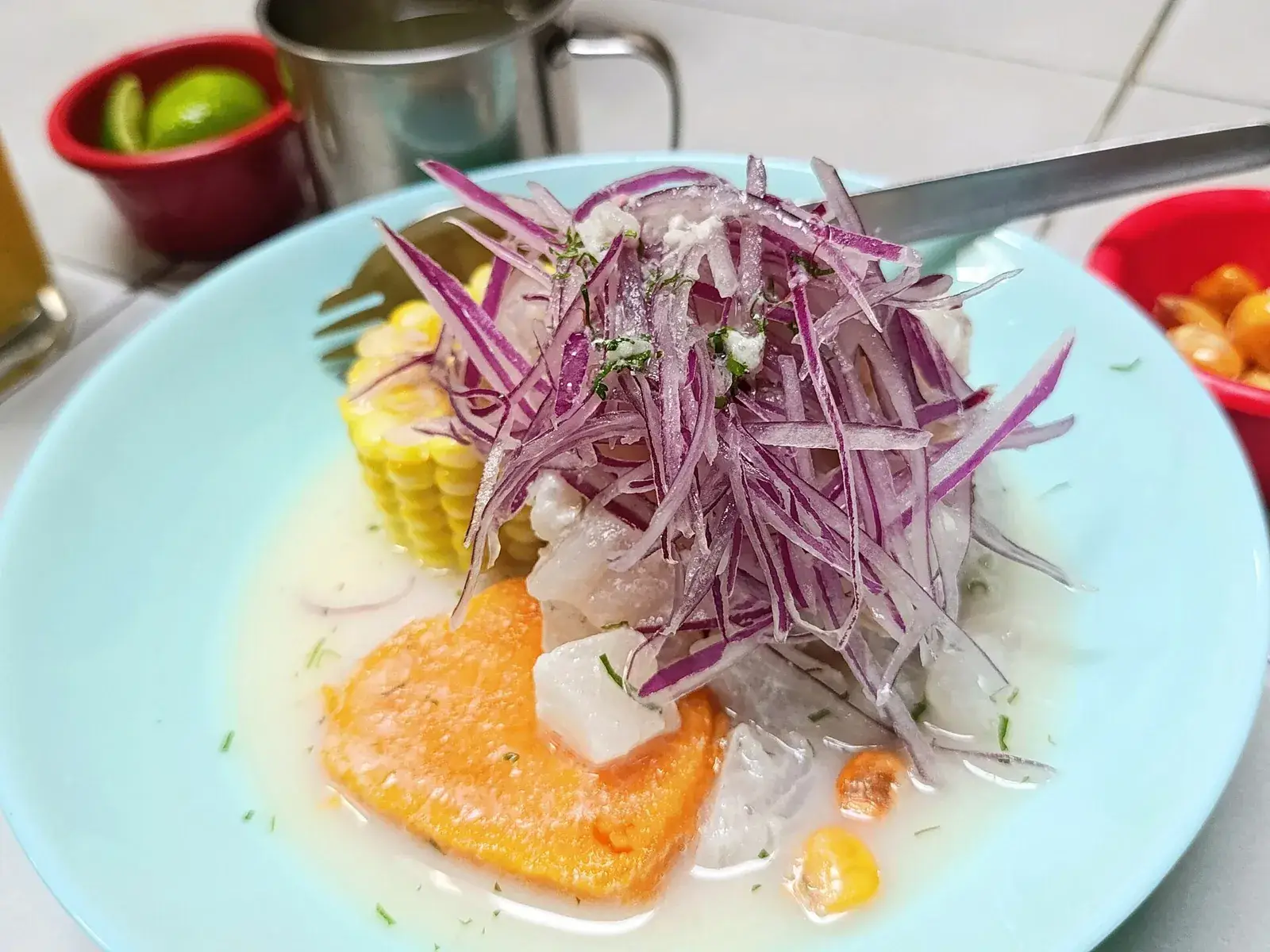
Peruvian ceviche is fresh raw fish cut into pieces and briefly mixed with lime juice, salt, chilli and red onion, then served at once with sweet potato and corn. The citrus firms the fish without fully cooking it, and the leftover juice, called leche de tigre, is drunk or served as a small glass. It is a lunchtime dish, and the fresher and simpler it is, the better.
What goes into a ceviche
A classic Peruvian ceviche has few ingredients: firm white fish such as sea bass or similar, lime juice, salt, red onion, and chilli, usually ají limo or similar, and coriander. The fish is cut into cubes, mixed with the others and served within minutes, rather than left to marinate for hours as in some other countries. The result is fish that is tender and still close to raw in the centre.
On the plate it comes with sweet potato, often boiled, large-kernelled boiled corn (choclo) and toasted corn kernels (cancha), which add sweetness and crunch against the acidity. Some versions include seaweed or a slice of lettuce. Mixed seafood ceviche adds shrimp, squid, octopus or shellfish, and ceviche de conchas negras, made with black clams, is a northern speciality.
Leche de tigre and the origin question
Leche de tigre, "tiger's milk", is the lime, fish and onion juice left in the bowl. It is served as a small glass of its own or as a starter, and has a reputation as a restorative, particularly after a night out. Treat that reputation as folklore rather than medicine.
Where ceviche comes from is disputed. Peruvians trace it to the pre-Hispanic coast, where people may have cured fish with fruit acids or fermented drinks, and to the arrival of limes with the Spanish. Other countries in Latin America claim their own versions. What is not disputed is that Peru has made it a national symbol, with official recognition as national cultural heritage and a UNESCO listing of the cooking know-how.
Tours and activities
Bookable online, chosen for their traveller reviews.
-
★ Top rated From €52 per person
-
★ Top rated From €23 per person
-
Day trip From €38 per person
-
★ Top rated From €85 per person
Eating it well
Ceviche is a lunch dish. The usual explanation is freshness: fish landed in the morning is at its best around midday, and many cevicherías close in the afternoon. A place that serves ceviche late at night deserves more caution.
Look for a busy, specialised restaurant, fish that is firm and translucent rather than grey or mushy, a clean smell of the sea and lime and no strong fishy odour, and a short menu. The dish should be served promptly, not left to sit.
Heat varies. Ask for it "sin ají" or "poco picante" if you are sensitive. In the north, ceviche tends to be served with fried cassava, while in Lima, sweet potato and corn are the standard sides.
Ceviche in Lima
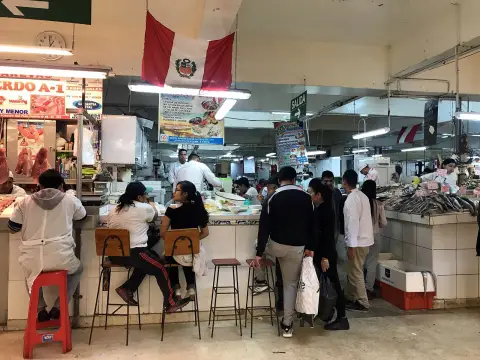
In Lima, ceviche is served in dedicated cevicherías that open for lunch and close in the afternoon, from simple family places to formal restaurants. The classic version is a clean, sharp plate with sweet potato, corn and a thin slice of red onion, and the lime juice is squeezed at the last minute so that the flavour is bright.
Variations in the city include ceviche with different sauces, such as ají amarillo or rocoto, ceviche made with shellfish, and a Nikkei style that borrows techniques from Japanese cooking. Tiradito, the sliced version, is a close relative, as explained in the Lima food.
If you want to learn how to prepare it, cooking classes teach the cutting, the timing and the balance of lime and chilli, and are among the most popular food activities in the city.
Ceviche on the north coast
On the northern coast, around Piura and Máncora, ceviche is part of everyday life, and many travellers feel that the best versions are found close to the fishing boats. The fish is often cut larger, the lime comes from small, very acidic fruit and the portions are generous. Cassava, fried or boiled, is the usual side, and black clams may appear as a regional alternative.
Cevicherías near the beach tend to open for lunch only and often sell out. If a restaurant has run out, that is a sign of fresh stock rather than poor management. Arriving around midday gives the widest choice.
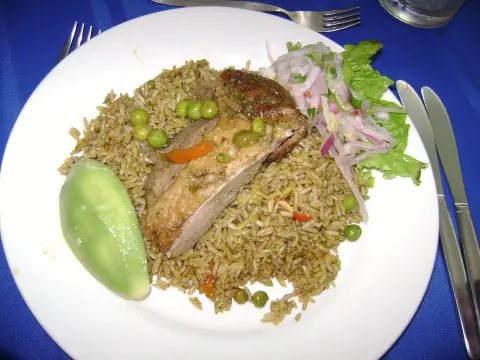
For more on the region's cooking, food in northern Peru places ceviche alongside arroz con pato, cabrito and other northern dishes.
Choosing, ordering and what to drink
A good ceviche is made to order. If it arrives within a minute or two of ordering, it may have been prepared in advance, which is a poor sign. Ask what fish is fresh that day, because many restaurants use whatever the market offers, and the best fish is the one that was landed recently.
Order portions that suit the table. A single serving is often enough for a light lunch, and a mixed seafood version can feed two. If you want to try several styles, share. Ask for the leche de tigre as a separate glass if you enjoy it.
Cold beer, chicha morada and white wine are common companions. A pisco sour is traditional but strong, particularly if you are heading to altitude. Keep alcohol light at lunch and save the cocktails for the evening.
Frequently asked questions
Is ceviche cooked by the lime?
Partly. The acid changes the surface of the fish and makes it look cooked, but this is not the same as heat cooking and does not reliably kill all bacteria or parasites.
What should I drink with ceviche?
Many people have a cold beer, chicha morada, or a pisco sour, though the latter is a lot with lunch if you are heading to altitude afterwards.
Can I eat ceviche in Cusco or the highlands?
You will see it on menus, but the fish has travelled far from the coast. Many travellers prefer to wait until they are on the coast.
What fish is used for ceviche?
Firm white fish, with the exact species depending on what is landed locally and on the restaurant. Sea bass is common, and many restaurants vary the choice daily.
Is ceviche spicy?
It can be, depending on the chilli and the cook. Ask for it mild if you are sensitive, and remember that the heat builds as you eat.
Is there a vegetarian ceviche?
Some modern restaurants make versions with mushrooms, hearts of palm or vegetables, but they are not traditional. See the vegetarian for other meat-free options.
What is the difference between ceviche and leche de tigre?
Ceviche is the dish of fish, onion and chilli, while leche de tigre is the juice left in the bowl. Many restaurants serve it in a small glass or as a separate dish with seafood in it.