Peru's weather depends on which of three zones you are in. The coast is dry and mild, grey from about May to November and sunny from about December to April. The Andes are dry from roughly May to September and wet from roughly November to March, with cold nights year-round. The Amazon is hot and humid all year, with rain at any time and wetter months from November to April.
Why one country has so many climates
Peru is a single country with the weather of several. Three things shape it: the cold Pacific current along the coast, the Andes running the full length of the country, and the Amazon basin on the eastern side. A traveller can leave a grey, damp capital in the morning and land in a sunny valley or a steaming rainforest town a short flight later, which is why a single "best month" for Peru does not exist.
The practical rule is to think in zones and then in altitude. The same month can be sunny on the Pacific coast, dry and freezing at night in the Andes, and humid in the Amazon. When to go puts these zones side by side; here each one is explained in more detail so you can match the weather to the places you actually plan to visit.
The Pacific coast: Lima, Paracas, Ica and Nazca
The central and southern coast is one of the driest inhabited places on earth, yet it is rarely hot and bright for long outside summer. The cold Humboldt Current produces a thick low cloud, locally called garúa, that sits over Lima for much of the year. From about December to April the cloud lifts, the sun is strong and the sea is as warm as it gets. From about May to November, expect grey skies, humidity and mild temperatures, with little real rain.
Further south, Paracas, Ica and Nazca are drier and sunnier, which helps for the Ballestas boats, sandboarding and Nazca flights. Wind can pick up in the afternoon, so boat trips and flights usually run in the morning. The desert also cools quickly after dark, so a light jacket is useful even in summer.
The north coast: Máncora and beyond
Northern Peru is warmer and more tropical, because the cold current swings away from the shore. The beach season around Máncora runs roughly from December to April, with hot sun and warm water. Between July and October the sea is cooler and humpback whales pass offshore, which is a reason in itself to visit.
Heavy rain is rare, but in strong El Niño years the north can see severe flooding and damaged roads, and that is worth keeping in mind when booking. Cities such as Trujillo and Chiclayo are hot and dry for most of the year, which suits the archaeological sites of the Moche and Chimú, though midday visits to open ruins with no shade are tiring. Go early, carry water and wear a hat.
The southern Andes: Cusco, the Sacred Valley and Machu Picchu
Cusco has two seasons, not four. In the dry season days are sunny and often warm in the sun, but nights are freezing or close to it. In the rainy season mornings are often clear and afternoons cloud over, with showers that can be heavy in January and February. The Sacred Valley sits lower and feels a little warmer, which is one reason many people sleep there first.
Machu Picchu sits lower than Cusco, so it is milder and wetter, and it can be misty at any time of year; see weather at the citadel for the details. Treks that cross high passes feel much colder than the towns suggest, and a clear morning in the valley can still mean snow or sleet above 4,000 m. Always pack for the pass, not for the town.
Arequipa, Colca and Lake Titicaca
Arequipa is sunny most days of the year and gets only a short rainy spell in summer, so it is one of the easiest cities to visit at any time. The Colca Canyon follows the high Andean pattern, with dry sunny mornings from May to September and a cold start at the viewpoints before the sun reaches the canyon floor.
Lake Titicaca is high and cold at night all year, and dry-season nights in Puno regularly go below freezing, so a warm layer matters more than the month. The lake itself moderates temperatures slightly, but the wind on the water can make boat trips feel much colder than the town. A windproof layer, hat and gloves are worth carrying on any island excursion.
The Cordillera Blanca and the central Andes
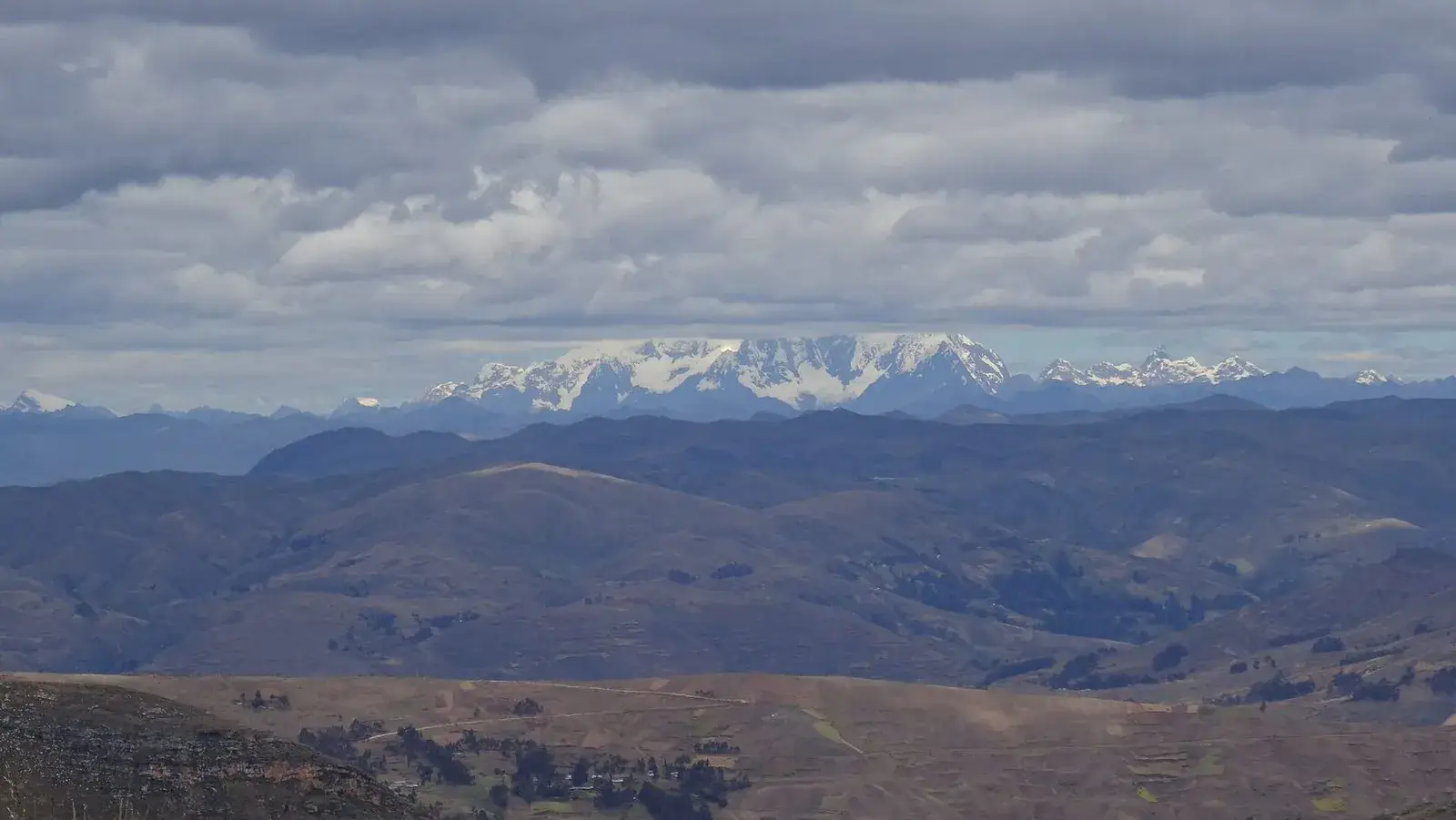
Huaraz and the Cordillera Blanca have a sharp dry season, roughly May to September, which is the main trekking window. The rest of the year clouds hide the peaks and trails turn muddy. Snow and ice conditions on the high passes are unpredictable, so check with local guides before setting out.
Huaraz itself is high, at about 3,050 m, and nights are cold even when days are bright. Because the range holds some of the highest peaks in the country, afternoon cloud can build quickly over the glaciers; most guides start walks early to enjoy the clear morning light and to be off the exposed sections before the weather turns.
The Amazon: Tambopata, Manu and Iquitos
The rainforest is warm and humid all year, with showers possible in any month. The wetter months run roughly from November to April, when rivers are high and some trails flood. The drier months, roughly May to October, are better for walking and for seeing river-bank wildlife, as animals gather on exposed banks. Occasional cold snaps, called friajes, can bring noticeably cooler air to the southern jungle between roughly May and August.
The northern jungle around Iquitos follows its own river calendar, with water levels that change the look of the landscape and the way lodges are reached. Lodges in Tambopata and Manu usually organise boat and walking schedules around the weather, so ask what the conditions mean for the programme in your travel month.
Altitude changes everything
Temperature falls with height, so the same valley can have three different climates between its floor and its upper pass. Cusco at about 3,400 m has cold nights year-round, the Sacred Valley floor at about 2,800 to 2,900 m is gentler, and Machu Picchu at about 2,430 m is warmer still. Aguas Calientes, at about 2,040 m, is humid and green.
This matters for packing and for health. A day that starts in warm sunshine at 2,800 m can end in a cold wind at 4,000 m, and the sun is harsh at every altitude because there is less air to filter it. If you are new to height, see altitude sickness to understand how to spend your first days; general questions about symptoms belong with a doctor or travel clinic.
Turning the weather into a plan
Start from the places you must see and read their season, not the country's. If Machu Picchu and a trek are the priority, work around the dry months and book early. If the coast and food matter most, the southern summer is the natural fit. If you want the Amazon, the drier months make walking easier, while the wetter months suit boat-based exploration.
Mixed trips need a compromise. A June visit gives Andean sunshine but grey Lima skies; a February visit gives beach sun but wet mountains. The dry season and rainy season show what each trade-off costs, and the packing list covers the layers that work in all of them.
Frequently asked questions
Does it rain all day in the rainy season?
Rarely. In the Andes mornings are often bright and the rain comes in the afternoon or at night, though some days are wet from morning to evening. Plan outdoor sights early and keep the afternoon for museums, food or rest.
Is Lima hot?
Lima is warm and sunny in summer, but it is mild and cloudy for much of the year, so do not assume beach weather outside the summer months. Humidity can make the grey season feel cooler than the thermometer suggests.
Which region has the most stable weather?
Arequipa and the southern coast are the most predictable, with dry and sunny conditions most of the year. The high Andes and the Amazon are the least predictable, especially in the wetter months.
Is Cusco cold at night in every month?
Yes, nights are cold throughout the year at about 3,400 m, and in the dry season they can fall to freezing or close to it. Daytime in the sun can feel warm, so layers are the answer, not a single heavy coat.
Can I see the Amazon in the rainy season?
Yes. Lodges operate all year, and high water opens boat routes into flooded forest. Expect more humidity, more mosquitoes and some trails under water, so ask your lodge what to expect in your month.
What is garúa?
Garúa is the low grey cloud and fine drizzle-like mist that the cold Humboldt Current produces along the central and southern coast. It is common over Lima from about May to November and rarely turns into real rain.
Is El Niño a risk for my trip?
Strong El Niño years can bring heavy rain and flooding to the north coast and disrupt roads. They are not annual, and national forecasts and local news give warning.
Which month is best for the whole country?
No month suits every region. May, June and September are often chosen for the Andes, with dry conditions and fewer people than July and August, but the coast will be grey in all three. Compare the months in when to go.