The Julio C. Tello Site Museum is the archaeological museum of the Paracas National Reserve, run by Peru's Ministry of Culture and named after the archaeologist who first studied the Paracas culture. Its permanent rooms follow human life on the peninsula from the first fishers and gatherers to the Paracas culture, in a striking modern building. Allow about an hour, visit on the way into or out of the reserve, and check opening days and the ticket rules before you go.
Map
What the museum is
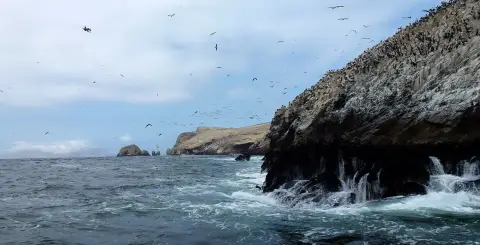
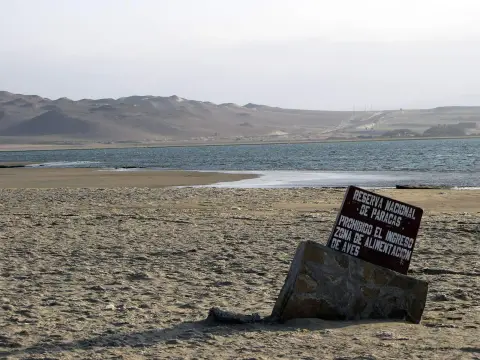
The Julio C. Tello Site Museum stands inside the Paracas National Reserve, on the road that links Pisco with Puerto San Martín, and it belongs to Peru's Ministry of Culture. It is a site museum in the strict sense: it sits in the landscape where the archaeology was found, rather than in a city centre, and its subject is the long human story of this dry coast. Most visitors who see the reserve on a half-day tour from Paracas town pass it without realising how much it explains.
The museum is named after Julio C. Tello, the Peruvian archaeologist often called the father of Peruvian archaeology, who identified the Paracas culture in the 1920s. Its permanent exhibition is organised in nine rooms, with a tenth space for temporary shows. It is a compact museum rather than a day out of its own, and it works best as the thing that turns the empty cliffs and sand outside into a place where people lived.
Why Paracas matters
The Paracas culture developed on this stretch of the south coast roughly between 800 and 100 BCE, before the better-known Nazca culture that followed it. It left no stone cities. What it left instead were cemeteries, and the dry desert preserved what was buried in them: bodies wrapped in many layers of cloth, with some of the finest embroidered textiles made in the pre-Columbian Andes. The dyes alone, including reds from cochineal insects, show trade links across a wide area.
Tello's work on the peninsula in the late 1920s brought these burials to the attention of the world, and the cemetery sites that bear the names Cerro Colorado and Wari Kayan are still the reference points for the culture. The wider setting is covered on the pre-Inca cultures page, and the weaving tradition on textiles in Peru. This museum is the place to meet the people behind those names, on the ground where they lived.
Tours and activities
Bookable online, chosen for their traveller reviews.
-
★ Top rated From €27 per person
-
★ Top rated From €27 per person
-
Day trip From €30 per person
The building
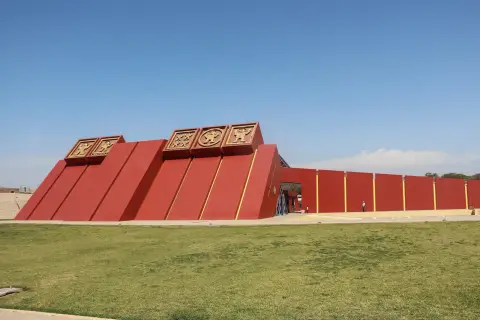
The present building opened in 2016, after the earlier museum was damaged by the August 2007 earthquake in the Ica region and then replaced. It was designed by the Lima architects Sandra Barclay and Jean Pierre Crousse, and it has won architecture awards in Peru and abroad. The museum itself also received a Latin American prize for best new museum in 2018.
You can see why from the car park. Two low volumes of reddish exposed concrete, joined by an open corridor, sit against the desert and almost match its colour. Inside, daylight and natural ventilation do much of the work, which suits a collection of fragile organic material. Even if archaeology is not your main interest, the building rewards a slow walk, and it is one of the better-looking museums in the country. It makes a good pair with the Larco Museum in Lima, which covers the same pre-Inca world from the capital.
What you see inside
The exhibition begins with the earliest people on the Paracas peninsula, small groups of fishers and gatherers who lived off the rich sea and the shore. Displays show their tools, shell and bone objects and human remains, and reconstructions of daily life make the scale of their world easy to grasp. A recreated cave-shaped tomb shows how the dead were buried, and a rebuilt house of cane on huarango wood posts shows what shelter looked like in a place with almost no rain.
Later rooms move on to the Paracas culture itself, with ceramics, textiles, tools and burial goods found in the peninsula's excavations. Labels are mainly in Spanish, with English support in places, so a short read beforehand helps. The piece to keep in mind is that the best-known mantles and mummy bundles from the Paracas cemeteries are not mainly kept here; large parts of that material are held in Lima. The museum is about context and daily life, so go for that rather than for a treasure room.
How long to allow
About one hour is a comfortable visit for most people, a little more if you read every label or have a particular interest in archaeology, and half an hour if you only want the highlights and the building. It is a small museum and is not tiring, which makes it a welcome break from the sun and wind of the reserve.
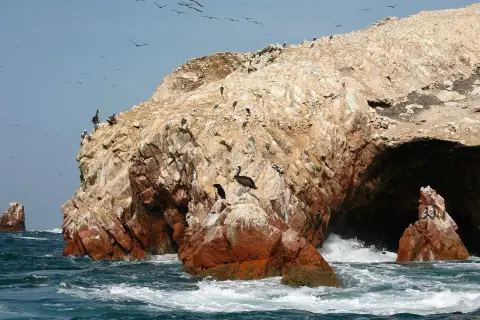
Plan it as one stop in a longer loop. A typical morning is the boat trip to the Ballestas Islands at first light, then the reserve in the late morning, with the museum as the indoor stop when the heat and wind rise. That order, described on Paracas tours, keeps the museum for the moment you most want shade. A visit on its own, without the rest of the reserve, is rarely worth a special trip.
Getting there from Paracas
The museum is inside the reserve, a short drive from Paracas town, so you need transport. Most visitors reach it on a guided reserve tour, where it is often one of the planned stops, but on some tours it is skipped or left optional, so ask when you book. A taxi or private driver can take you directly and wait, which is useful if the museum is your priority. Agree the waiting time and the total price beforehand.
Cycling to the reserve is possible, although the exposed road and the wind make it hard work for the whole loop. Bear in mind that the museum lies within the protected area, so the reserve entrance ticket applies in addition to any museum ticket. Whether the museum is covered by the tour price differs between operators, so confirm what is included. To reach Paracas in the first place, see Lima to Paracas.
Best time, tickets and planning
The museum is indoors, so it works in any weather, which is part of its value. The south coast is dry all year, and the main variables are the strong afternoon wind outside and, in winter, grey cool mornings, since low cloud is common along the coast. Mornings are generally quieter, before tour groups arrive from the town.
Opening days and hours are set by the Ministry of Culture. The museum has been reported to close on one weekday, so check the day before you plan around it, and note that public holidays can change the schedule. Admission is modest and is sold at a separate museum ticket window, with reduced rates for students and some other groups. Bring some cash in soles in case card payment is unavailable. Do not rely on a figure printed in an old guidebook.
Who it suits and what to combine it with
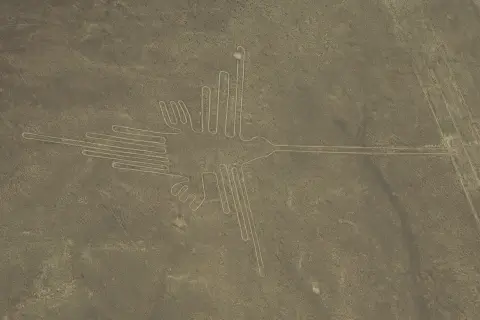
The museum suits curious travellers, families with older children, and anyone who wants to understand the south coast before moving on to the Nazca Lines. The Nazca culture followed Paracas in the same region, and the Nazca Lines page shows how the two connect. It is less suited to visitors who want spectacle, as the real drama of Paracas is outside, in the cliffs and the sea.
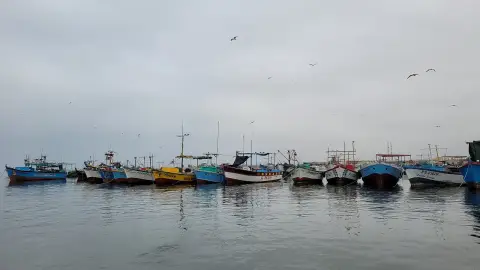
Combine it with the reserve loop, the Ballestas boat trip and a seafood lunch at the harbour, then continue to the dunes of Huacachina or onward to Nazca. If you are staying overnight, where to stay in Paracas helps with choosing a base. For museums elsewhere in the country, museums in Peru shows where this one fits.
Where to sleep
-
Find hotels
Paracas
Bay town with the boats to the Ballestas Islands
Frequently asked questions
How long does a visit to the Julio C. Tello Museum take?
About an hour is comfortable for most visitors. Allow a little more if you read the labels closely, or about half an hour if you only want the main rooms and the building.
Can I see the Paracas mummies and famous textiles here?
Not mainly. The best-known mantles and mummy bundles from the Paracas cemeteries are largely held in Lima. This museum shows the context: daily life, burial customs, tools and ceramics. For the wider picture, read about textiles in Peru.
Do I need to pay the reserve entrance fee as well?
The museum is inside the Paracas National Reserve, so the reserve ticket is normally needed to reach it, and the museum charges its own admission. Ask your tour operator which of them is included.
Is the museum included in Paracas tours?
It is a common stop on reserve tours, but not on every one, and some tours treat it as optional. Ask when you book, and see Paracas tours for how tours are usually arranged.
Is the museum open every day?
Opening days and hours can change, and the museum has been reported to close one day a week. Check the Ministry of Culture's information or ask locally the day before.
Is the museum good for children?
It suits older children, who will enjoy the recreated tomb and the cane house. Younger ones may tire of the Spanish labels, but it is indoors, cool and not long, so it is an easy stop.
Who was Julio C. Tello?
Julio C. Tello was a Peruvian archaeologist, often called the father of Peruvian archaeology. He studied the Paracas culture in the 1920s and the museum carries his name. Early cultures like his subject are explained on the pre-Inca cultures page.