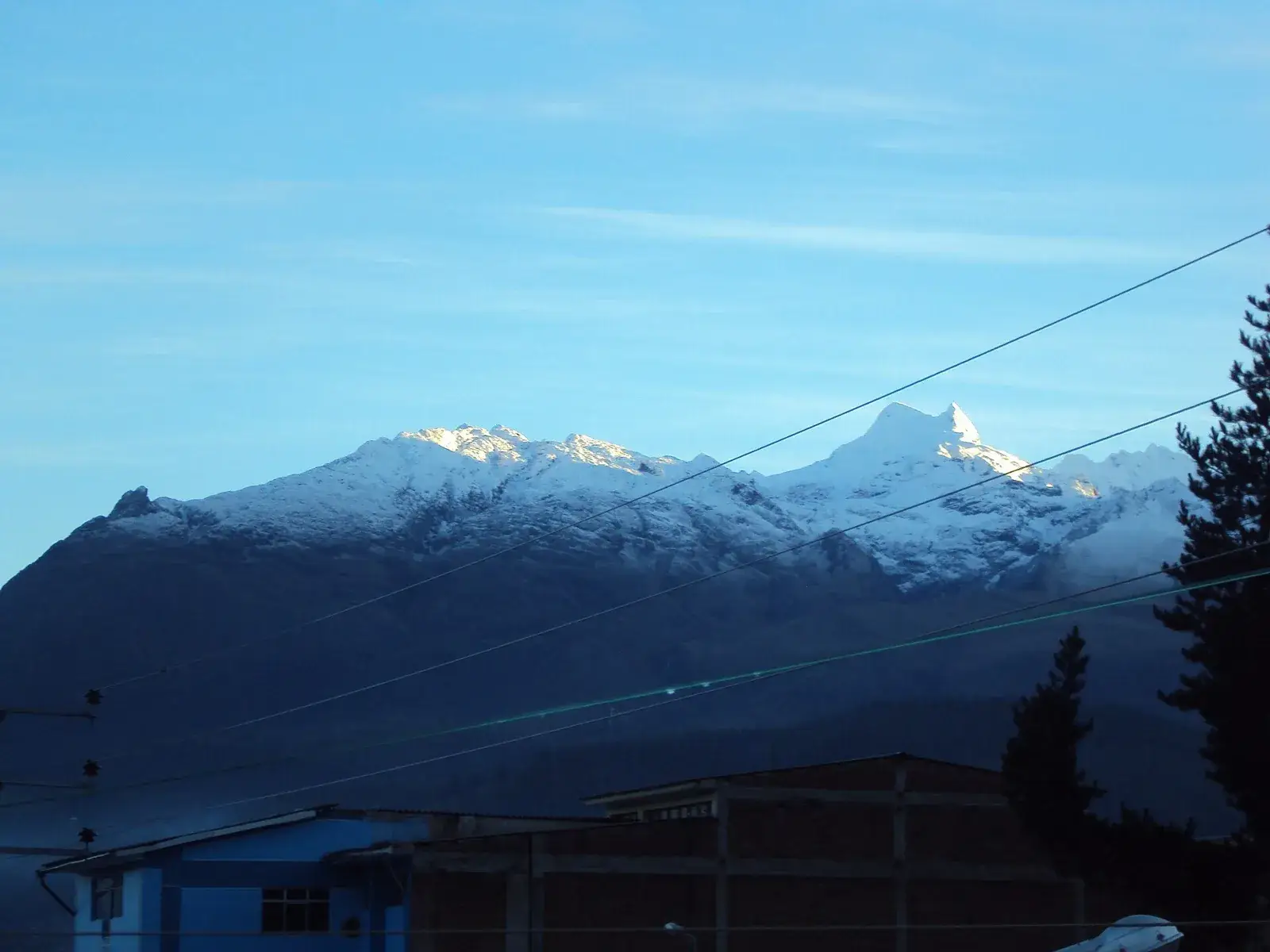
Huaraz is reached from Lima by a road of roughly 400 km that takes about 7 to 9 hours by bus. It climbs from sea level to a pass of around 4,100 m, then drops to Huaraz at about 3,000 m. There is usually no practical flight, so the bus is the normal way, and the night services are popular. Arrive with a day or two to spare before any trek.
The road
The journey leaves Lima on the Pan-American Highway north, then turns inland at Pativilca and climbs the valley towards the Andes. It rises steadily past dry hills, then crosses a high plateau near Conococha at more than 4,000 m before descending to the Callejón de Huaylas, the long valley that holds Huaraz. The total is about 400 km. Views of the snowy Cordillera Blanca appear near the end in good weather, which is why a daytime journey is more rewarding, though more buses leave at night.
For the town, see Huaraz, and for what lies beyond it, the Cordillera Blanca.
Buses
Several companies run direct buses to Huaraz, at different comfort levels, from basic seats to reclining cama services. The journey typically takes 7 to 9 hours but can be longer with traffic leaving Lima or after landslides. Most departures are at night, which saves a day but means you arrive in the early hours, when hostels may not be ready. Book accommodation for the night before if you want to sleep on arrival, or ask if you can check in early. Day buses exist and give you the scenery.
For how to pick a company, see long-distance buses. On this route, choose a service with a good record, since the road climbs through a number of bends.
Flights and alternatives
Huaraz has had little or no regular commercial air service in recent years, so do not count on flying. Some travellers instead fly Lima to Trujillo and head inland, but that is a long detour. If you are short of time, a private transfer is quicker and more comfortable than the bus but costs a lot more. Check the weather and news, because rain and landslides on the climb, or protests, can close the road.
See strikes and road blockades to understand how disruptions happen and how to keep your trip flexible, which matters most in the wet season from roughly November to March.
Your first two days
Treat the arrival as the start of an acclimatisation plan rather than a day to trek. After the bus, rest, eat lightly and drink water, then spend the first days on low-key excursions. Walks around Huaraz and day trips at moderate heights prepare the body for the high passes of the longer routes.
For a sensible build-up, see acclimatisation for treks, and the Santa Cruz trek and other routes show what you are preparing for. If you feel unwell at any stage, descend, rest and consult a doctor.
Where to stay and when to arrive
Huaraz is the base for the Cordillera Blanca, with hostels and hotels for trekkers and day visitors. A night bus that arrives at dawn is a common cause of a rough first day, so if you can, book the night before as well, or arrange an early check-in. See where to stay in Huaraz to compare the options.
If you are arriving at the start of a booked trek, build a spare day into the schedule, because the bus can run late. A trek operator will often collect you from the terminal, and it is worth confirming this ahead of time. Keep your valuables with you and avoid leaving bags in the hold unattended at stops.
Coming from the north coast
If you are travelling up the coast, the northern city of Trujillo is a long way from Huaraz, and onward links between the two are less frequent and less well known than the direct services from Lima. Ask at a bus terminal or a travel agency about current options rather than counting on a particular timetable. See Lima to Trujillo for the coastal route.
For most visitors, the simplest plan is to go from Lima to Huaraz and return the same way. A look at your wider plan helps: a trekking circuit takes days, and a departure from Huaraz late in the day often means an overnight bus again.
Frequently asked questions
How long is the bus from Lima to Huaraz?
Usually 7 to 9 hours, sometimes more, with night services the most common.
Is there a flight to Huaraz?
Regular flights have been scarce or absent. Do not assume one exists.
How high is Huaraz?
About 3,000 m, so give yourself a couple of days before trekking.
Is the night bus to Huaraz safe?
Most journeys pass without incident, but the road is winding and accidents occur. A daytime bus is preferable if you can manage it, and a reputable company is important either way.
Should I take a day or a night bus?
A day bus gives you views of the mountains and arrives at a normal hour. A night bus saves a day but leaves you tired and arriving before hostels are ready.
When is the best time to travel to Huaraz?
The dry season, roughly May to September, has clearer skies and a lower risk of landslides. The wet season brings rain and sometimes road closures.
Can I leave luggage in Huaraz while trekking?
Most hostels and hotels will store bags for guests who go on multi-day treks. Ask when you book and carry valuables with you.