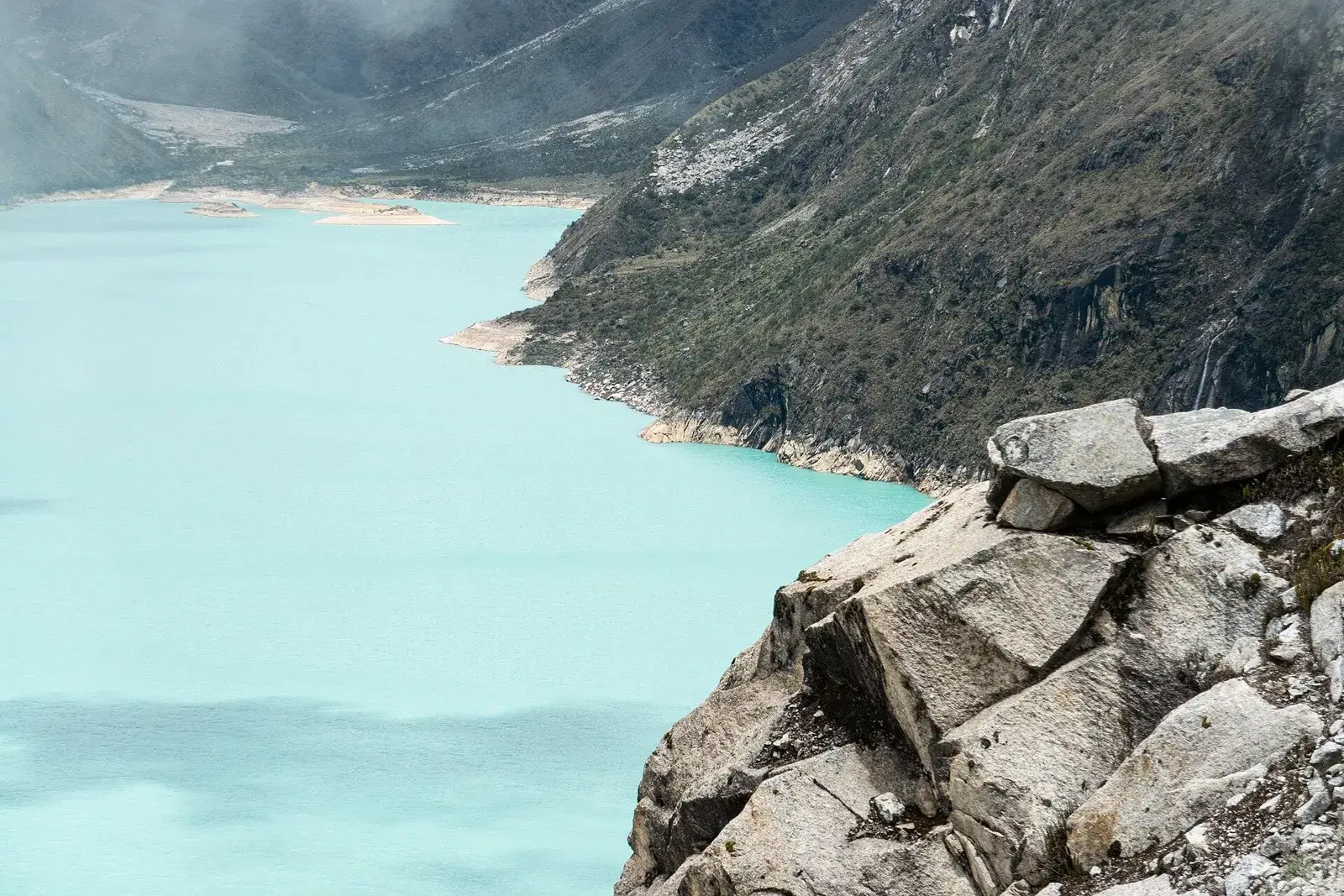
Laguna Parón is a large glacial lake at about 4,150 m in the Cordillera Blanca, reached by a long drive from Caraz or Huaraz on a rough road. The lake is close to the end of the road, so the walking is gentle, with optional longer walks around the shore. It is one of the easier ways to see big mountain scenery, but altitude still affects people, and the road journey is long.
What you see
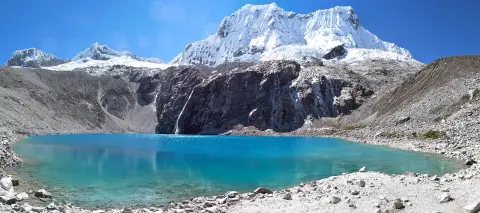
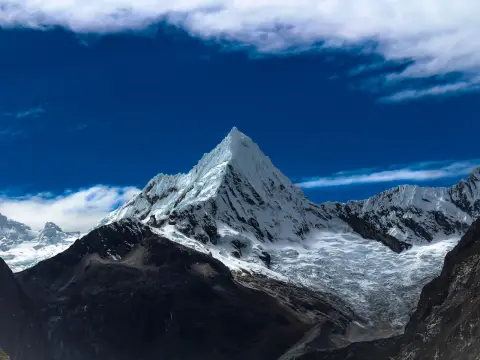
Parón is a deep turquoise lake enclosed by high peaks. At the head stands Artesonraju, a pyramid of rock and ice more than 6,000 m high. Other summits rise around the lake, and on clear mornings the reflections are impressive.
Unlike Laguna 69, the lake is reached with little walking from the road, which makes it suited to visitors who want a big view without a steep climb. It is also a working water source: the lake supplies the town below and its level is managed, so you may see signs of the infrastructure beside the shore.
Getting there and what to do
The lake lies above the town of Caraz, roughly 65 km north of Huaraz. From Caraz, the road climbs through the Parón valley for about 30 km on a narrow, unpaved surface, with the final part taking an hour or more. Tours from Huaraz usually take around two and a half hours each way, and from Caraz a bit less. You can also go by taxi or private car.
At the lake, a flat path leads along the shore and viewpoints. For a longer walk, you can follow the water towards the head of the valley or climb to a higher viewpoint, which adds a few hours and some altitude. Many visitors spend one or two hours at the lake, with a picnic. A visit combined with a stop in Caraz makes a relaxed day.
Tours and activities
Bookable online, chosen for their traveller reviews.
-
Day trip From €29 per person
Season and entry
The dry season, roughly May to September, is the best time. Mornings are usually clear and the views of the peaks are best before cloud builds. In the wet season, from roughly November to March, the road can be muddy or blocked and the views are often poor. The area is inside Huascarán National Park and an entry fee is normally charged, so check whether it is included in your transport or tour, and carry cash for it in case.
There are few services at the lake, so bring food, water and warm clothing. Toilets and shops are limited, and weather can change quickly.
Where it fits
Parón works well as a gentler day among harder ones, or as a good outing for travellers who are not up to a long climb. It also suits photographers, who often prefer early light. In a Huaraz itinerary, it sits well after Laguna Churup and before Laguna 69, or as a rest-day alternative before a multi-day trek such as Santa Cruz. If you are staying in Caraz, you can go with a local driver and set your own timing.
The Parón valley and its lakes
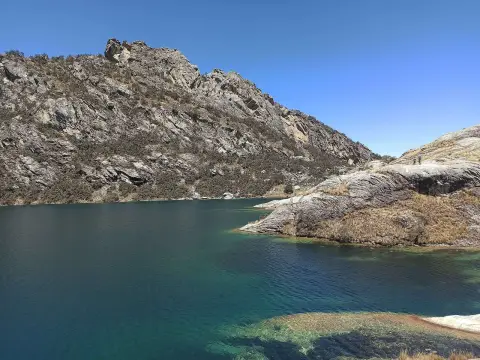
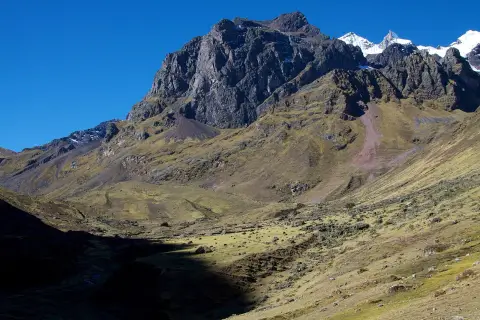
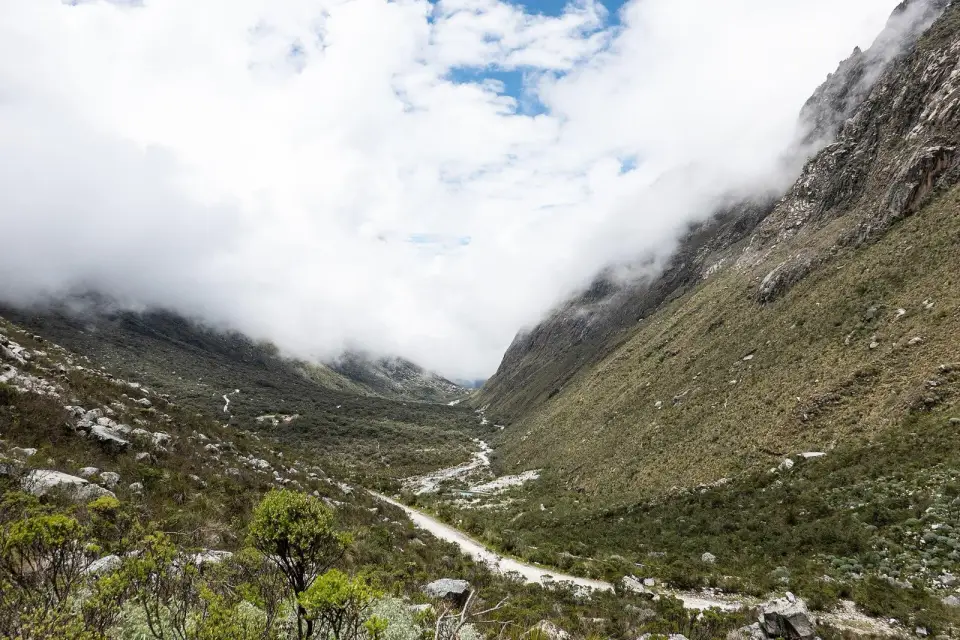
The road to Parón follows a glacial valley with small farms, eucalyptus and, higher up, open grassland and rock. There are several smaller lakes on the way, and the colour of the water changes with the light. At the main lake, a path runs along the shore and onto the moraines at the far end, where views of the glacier-hung peaks are widest.
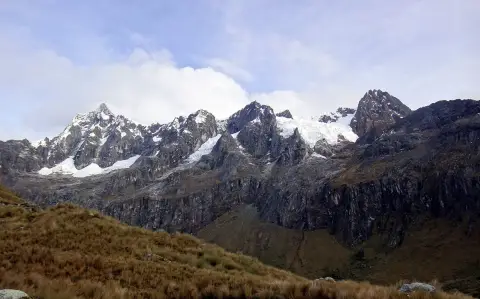
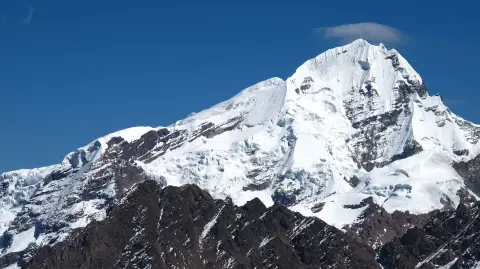
The area forms part of the Cordillera Blanca, and other peaks including Pirámide and Chacraraju are visible from the shore on clear days. The experience is quiet compared with the busier lakes, but it can fill up on weekends and holidays when families and groups arrive by minibus. A weekday morning gives the best chance of calm water and good reflections.
What to carry and how to dress
The walk is easy, but the lake is cold, windy and open. Carry layers, a waterproof jacket, a warm hat and gloves, sunscreen and sunglasses. Boots or shoes with grip help on the shore paths, which can be muddy. Bring water and a picnic, as there is little to buy, and a small amount of cash for the park ticket and for the driver if you hire a taxi.
Because the journey is long, a few extras make a difference: a car-sick remedy if you are prone to it, a sweater for the early start and a charged phone or camera. See gear for the standard kit for high-altitude days, and most of it works here.
Parón compared with other lakes
Parón is the largest and the easiest to reach, with the least effort on foot. Laguna Churup is closer to Huaraz but steeper and includes a scramble; Laguna 69 is the full-day climb with the most varied scenery. If you want long, flat walking beside a big lake, Parón is the best of the three, and it is also the most accessible for older travellers or children.
Its weakness is the drive. Two and a half hours each way is a long time, and the rough road can make people uncomfortable. A shorter alternative is to stay in Caraz the night before and set off early, which cuts the journey and puts you at the lake for the best light. See Huaraz for more on bases and day trips in the region.
Where to sleep
-
Find hotels
Huaraz centre
Services, tour offices and restaurants for the Cordillera Blanca
-
Find hotels
Monterrey
Quieter spot north of town with thermal baths
-
Find hotels
Caraz
Small town closer to the northern lakes and trails
Frequently asked questions
How high is Laguna Parón?
The lake is at about 4,150 m.
Is Parón a hike?
Not really. The road reaches the shore, and the walking is gentle. Longer walks are optional.
How far is it from Huaraz?
It is a long drive of roughly two and a half hours each way, because of the distance to Caraz and the rough road up the valley.
Can I swim in the lake?
No. The water is very cold and the lake is a protected water source.
Is Laguna Parón better than Laguna 69?
They are different. Parón is easier, with a big view and little walking, while Laguna 69 is a demanding climb with a stronger sense of achievement. Choose by fitness and acclimatisation.
Can children or older people visit Laguna Parón?
Often yes, because the walking is gentle. The altitude is about 4,150 m, so check with a doctor first, go slowly and be ready to descend if anyone feels unwell.
How long should I spend at Laguna Parón?
Most people spend one to two hours at the lake. A longer walk along the shore or to a viewpoint adds a few hours, but the total day is dominated by the drive.