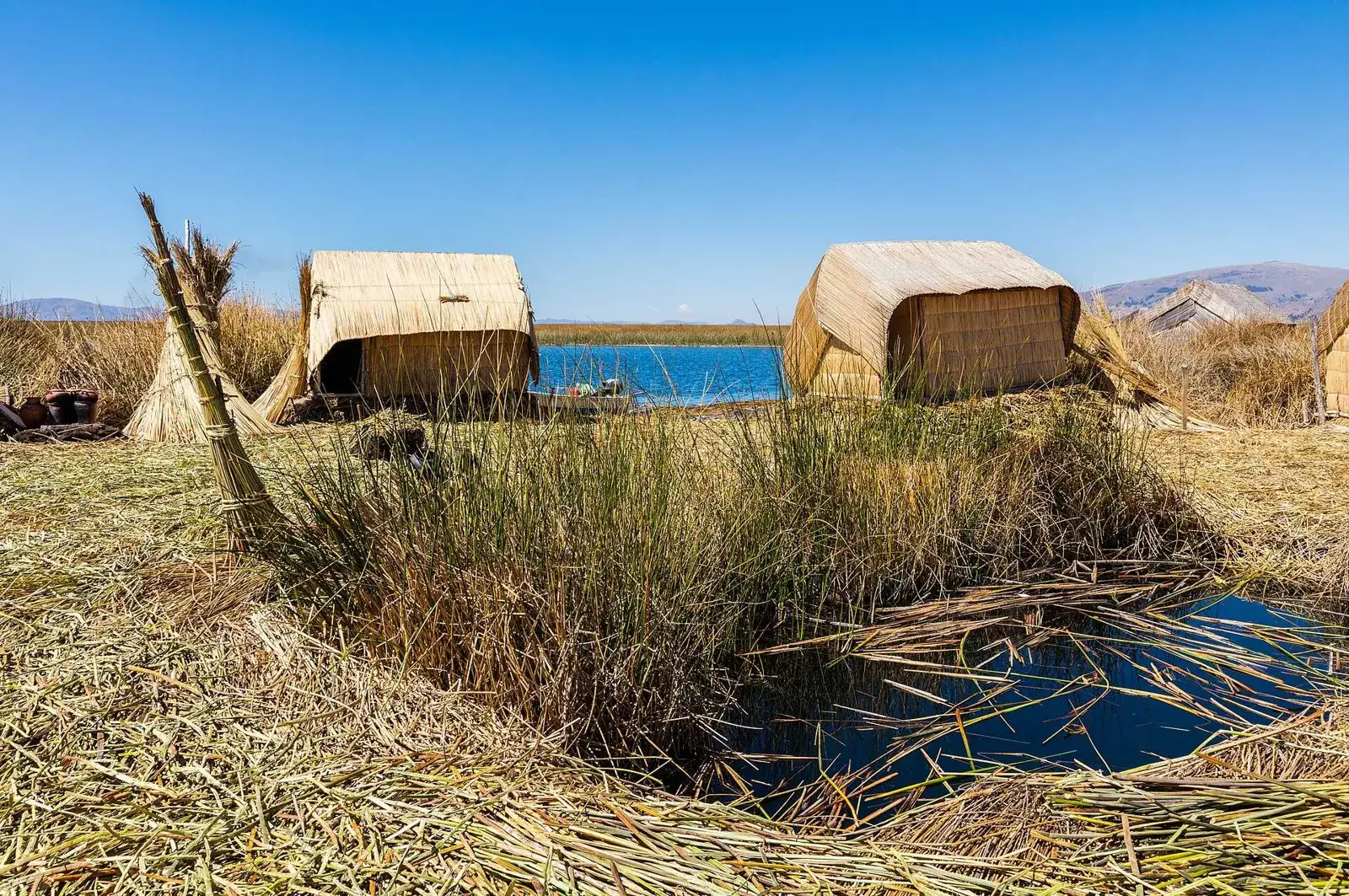
The Uros islands are man-made islands of layered totora reeds in the Peruvian part of Lake Titicaca, close to Puno. A boat trip takes about two to three hours including the visit. Expect a well-practised tourist experience rather than a quiet village visit: still interesting, but best approached with realistic expectations and respect for the families who live there.
Map
What the islands are
The Uros people live on islands made from totora, a reed that grows in shallow parts of the lake. The reeds are cut, bundled and layered, and fresh layers are added on top as the lower ones rot. Houses, boats and many everyday items are also made from the reed. The islands are anchored in place, but they float, and they do feel springy underfoot.
The Uros are generally described as having moved onto the water in earlier centuries, with defence and independence often given as reasons. Be careful with simple stories of origin, since accounts differ, and the community today is a mixed one, with many families who also have ties to the mainland.
What a visit involves
Tours leave from the harbour at Puno and cross the lake to a group of islands close to the shore. On arrival, a community member usually explains how the islands are built, using a model, then shows the houses and craftwork. You may be offered a short ride on a reed boat for an additional payment, and there are stalls selling textiles and souvenirs.
This is a commercial arrangement, and it is fair to say so. Tourism is now a main source of income for many families, and the islands near Puno are visited every day by many groups. The experience can feel staged, and some visitors find it uncomfortable. Others enjoy seeing the building technique and the lake itself.
If you want a more meaningful visit, ask whether your operator works directly with island families, whether visitors are rotated among islands, and consider buying handicrafts directly. You can also stay overnight on some islands through community-run arrangements, which gives more time to talk with the hosts, though conditions are simple and cold at night.
Planning the trip
Most travellers visit as a half-day excursion from Puno, often joined to Taquile Island on a longer day. Because both are on the lake, the boat time is considerable; ask how long the crossing is and how much time you will spend on each stop.
Puno stands at around 3,800 m, and the lake is higher than most travellers have been before, so the sun is strong and the wind can be cold. Wear a hat, sun protection and layers, and bring cash in small notes for crafts and boat rides.
Ask before taking photographs of people, and do not hand out sweets or money to children. If you are short of time, the visit to the islands is optional rather than essential, and some travellers prefer to spend that time on Sillustani or Taquile.
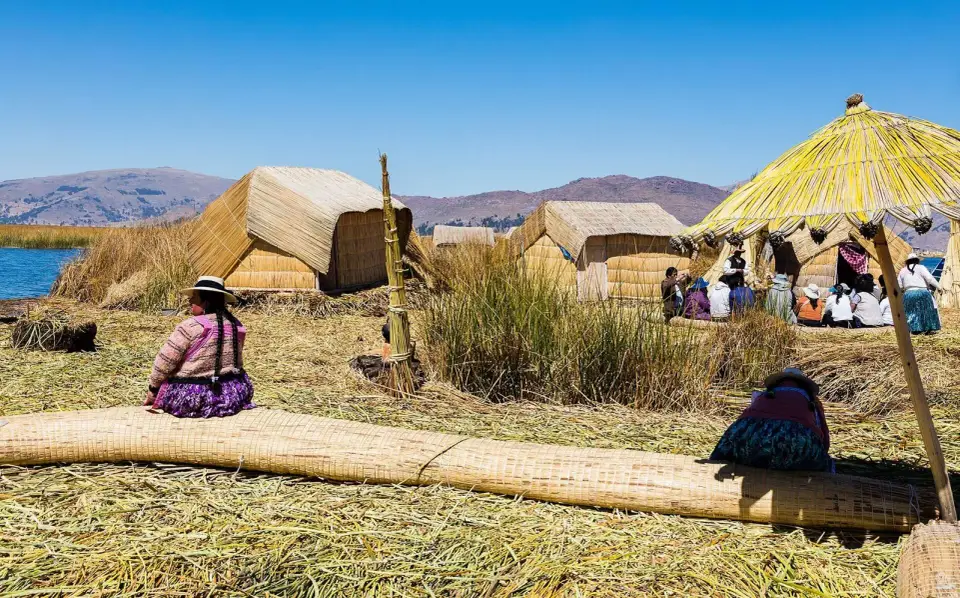
Life on the water
Daily life on the islands depends on the reed. Totora is used for building houses and boats, and its soft white base can be eaten. Visitors are sometimes offered a taste and shown how the plant is peeled. The reed also plays a role in how the lake and its birds and fish are used, though the details of day-to-day fishing and farming on the islands are more modest than the tourist presentation suggests.
The islands need constant maintenance. New reed is laid on top at regular intervals, and the anchoring ropes and poles are checked, since the platforms slowly sink and decay. The cold, windy climate at this altitude makes the work hard, and many families keep connections with the mainland for schooling, health care and supplies.
Many of those on the islands today also work in tourism, running boat trips, selling crafts or hosting visitors. That is a natural change, and understanding it makes the visit more honest. For how to spend money in ways that reach local families, see responsible travel.
Visiting respectfully
A good visit starts with the right attitude. The islands are homes, and hosts are managing a daily routine of groups. Listen to the explanation, ask questions, and give people space. Wait to be invited before entering a house, and ask before photographing individuals or their children.
Buying a handicraft is a direct way to support families, and there is no need to buy at every stall. Look at the quality and ask who made the piece. Be wary of items that look mass-produced, and avoid haggling hard over small amounts, since the price of a textile reflects hours of work.
The reed boat ride costs extra. If you want to take it, agree the price before you board. If you would rather not, a polite refusal is accepted. Pay in small notes and carry change, as hosts may not be able to break large bills.
Do not leave waste behind. Take your rubbish with you, avoid single-use plastics and follow the guide's instructions about where you may walk.
Choosing between the Uros and other lake trips
The Uros trip is short and easy, which makes it a convenient first outing from Puno. If you only have a day, the usual choices are the reed islands alone, the reed islands plus Taquile, or the burial towers at Sillustani on a separate half-day trip. Each gives a different picture of the region.
Taquile is a natural island with terraced slopes, a different weaving tradition and a longer stay, as described on the Taquile. Sillustani is an archaeological site above a lake; for what you see there, see Sillustani.
If you are deciding how to spend your time on the lake, see Lake Titicaca for the options. Where you sleep matters too, and where to stay in Puno covers the main areas. For other things to do in town, see Puno things to do.
Frequently asked questions
Are the Uros islands touristy?
Yes, particularly the islands closest to Puno. The experience is organised for visitors. It can still be interesting if you go knowing that.
How long does the trip take?
A half-day excursion from Puno, about two to three hours including the boat crossing and the visit.
Can I stay overnight on an island?
Some families offer overnight stays through community arrangements. Conditions are basic, so ask what is provided and what to bring.
Do the islands really float?
Yes. They are built from layers of totora reed on a base of root blocks, and they move slightly underfoot. They are anchored so they do not drift away, and new reed is added regularly as the lower layers rot.
Is it worth visiting the Uros islands?
It depends on your expectations. If you want to see an unusual building technique and the lake, it is worth a short trip. If you expect an untouched community, you may be disappointed. Consider Taquile or Sillustani as alternatives.
Should I give money or sweets to children?
No. Handing out sweets or money encourages begging and can cause problems for families. If you want to help, buy crafts from adults or ask your operator about community projects. See our responsible travel.
Can I combine the Uros islands and Taquile in a day?
Yes, many operators offer a full-day trip that covers both. It is a long day on the water, so bring warm clothing and snacks. Check how much time you get at each stop.
What should I bring on the boat?
Sun protection, a hat, warm layers, water and cash in small notes. A windproof jacket helps because the lake can be cold even when the sun is out.