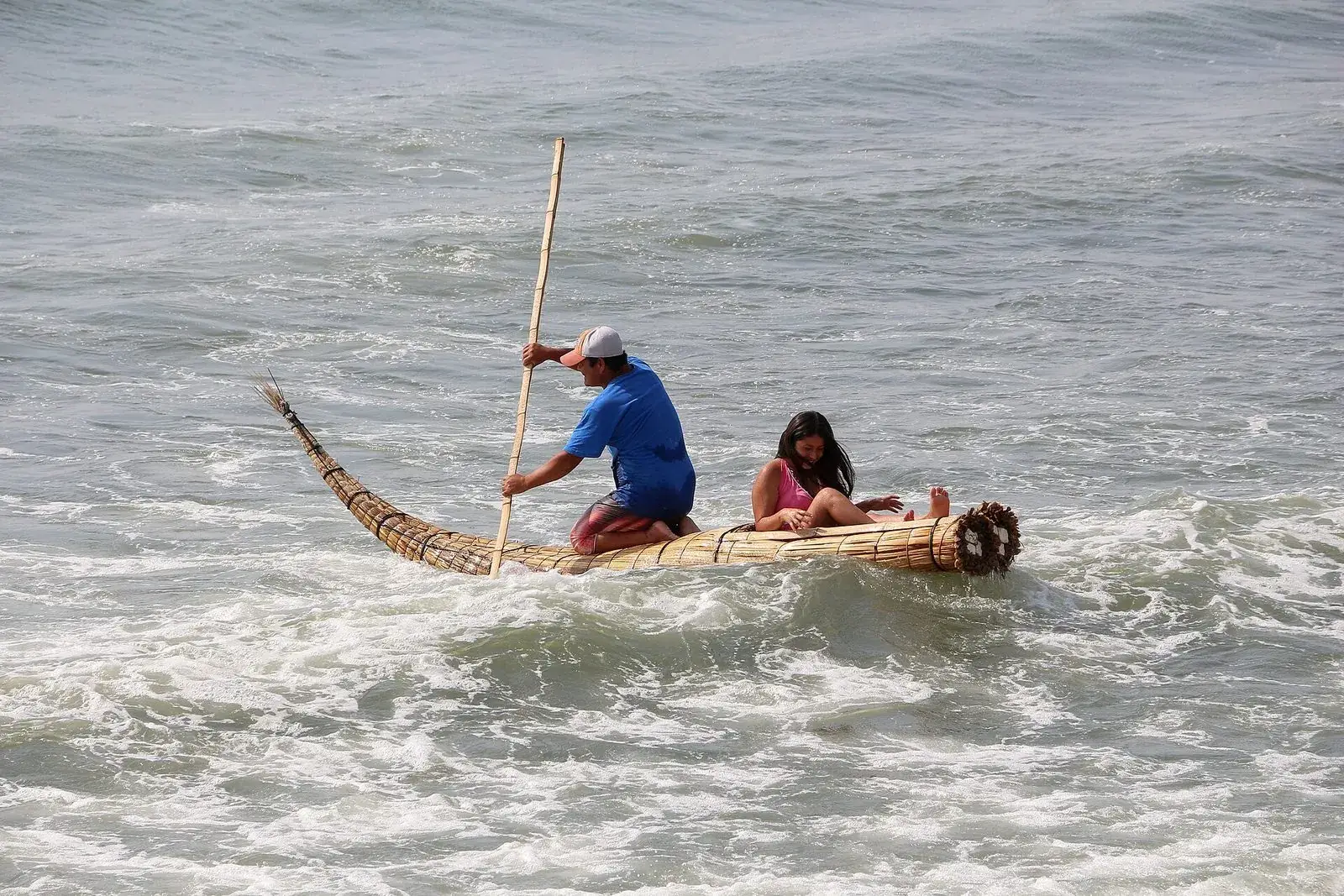
Northern Peru is best done as a one-way line in about eleven days: Lima, Trujillo, Chiclayo, Cajamarca and Chachapoyas with Kuélap, then a flight back to Lima. The reward is a series of cultures older than the Incas and mountain landscapes with few visitors.
Roads are long and winding, so allow buffers.
Why go north
The north is where Peru's earlier civilisations built their capitals: the Moche, the Chimú and the Sicán, among others. The sites are adobe cities, painted temples and royal tombs, and the museums that hold the finds are some of the best in the country. Inland, the cloud forests around Chachapoyas have a fortress and waterfalls few foreign visitors see.
It is a route for travellers who are comfortable with long road days, simple hotels in smaller towns and a loose schedule. It also suits people who have already seen the south and want something new. A month-long trip can add it to the Inca heartland, as the 30-day route does.
How to get there and how to order the stops
Fly from Lima to Trujillo or Chiclayo, or take a long coastal bus. The coast road runs north from Lima through desert, and the main bus companies cover it overnight; see Lima to Trujillo for the options. Flights save a long day and are the sensible choice if you have only ten days.
The order in this route follows the roads: coast first, then inland to Cajamarca, then east to Chachapoyas, and home from there by flight or through Chiclayo. Doing it the other way round is possible, but the high mountain road is better taken when you are rested and have a spare day. Do not try to turn this into a loop in a week; the roads between towns are slower than they look, and the distances are long.
Days 1 to 4: Trujillo and the coast
Fly from Lima to Trujillo and spend three nights. The first day is for the colonial centre. The second covers Chan Chan, the vast Chimú adobe city, and the nearby coast, and the third the Moche temples of the Sun and Moon. Mornings are best, since the coast is hot and sunny later.
Sites are exposed, with little shade, so take a hat, sun protection and water. Trujillo has the sights, and Chan Chan and the Huacas de Moche show what each one offers and how long to allow.
Days 5 to 6: Chiclayo
Travel by bus or short flight to Chiclayo, a few hours up the coast. Visit the museum of the Lord of Sipán, the royal tombs and the nearby pyramid complexes. Chiclayo also has a notable market and a strong food tradition, which suits an unhurried day.
For the tombs and the museum, see Sipán, and for the town, Chiclayo. If you like cooking, the northern coast has its own dishes, set out in what to eat in the north, and Chiclayo is a good place to try them in a market or a plain restaurant rather than a tourist one.
Days 7 to 8: Cajamarca
Climb inland by road to Cajamarca, a colonial town in the Andes. The road gains altitude, and the town lies above 2,500 m, so the air is cooler and thinner than on the coast. This is the site where the Spanish captured the last Inca ruler. There are thermal baths and countryside outings, and the town is a pleasant place to slow down.
See Cajamarca for the town and its outings. If the road is long, give the first evening to the square and a simple dinner, and use the second day for a relaxed circuit of the countryside and the baths. It is the highest stop on the route so far, so keep the pace gentle, and let your body notice the change before you move on to the next stage.
Days 9 to 11: Chachapoyas and Kuélap
The final leg goes east to Chachapoyas, a long journey that is best taken in daylight. Use the first day to rest. The second is for the Kuélap fortress, a walled hilltop city of the Chachapoya people, reached by a cable car or a road, depending on current arrangements. The third day can be the Gocta waterfall, one of the tallest in the world by some measurements, reached by a walk through the forest.
Return to Lima by flight from Chachapoyas or via Chiclayo. Flights from the small airports change often. For the practical details, see Kuélap and Gocta, and for the town and the base options, Chachapoyas.
Optional extension: Máncora
If you want sea and sun at the end, add Máncora, a surf and beach town in the far north, which is reached from Chiclayo or by a flight to a nearby airport. Three nights suffice. It is a holiday stop rather than a sightseeing one, and fits the end of a long route.
See Máncora for the beaches and the season. The sea is warmest at the start of the year, and the weather is clearer in the southern summer, so match the extension to the time you travel. Do not plan anything demanding here; the point is to stop moving after ten days of roads and ruins.
Frequently asked questions
Is northern Peru safe for tourists?
Most visitors travel without trouble, but conditions vary by town and season. Use licensed transport.
Can I combine the north with Machu Picchu?
Yes, but through Lima and with at least three weeks in total. See the 30-day route.
When is the best time to go?
The dry months are easier for the mountain sections. The coast is warm throughout the year.
How many days does the north need?
About ten days gives the coast, Cajamarca and Chachapoyas without rushing. With less, drop Cajamarca or Chachapoyas and keep the coast.
Do I need Spanish in the north?
More than in the Cusco region. English is less common outside the main hotels, so a few phrases and a translation app help a good deal.
Is it worth seeing Chan Chan and the Sipán museum in the same trip?
Yes, they show different cultures, the Chimú and the Moche-related Sipán. Chan Chan is about the city, the museum about royal tombs and gold.
Should I fly or take the bus on the coast?
Fly if you have limited time, since the coast legs are long. The bus is comfortable and cheaper, and a good choice if you want to see the desert.