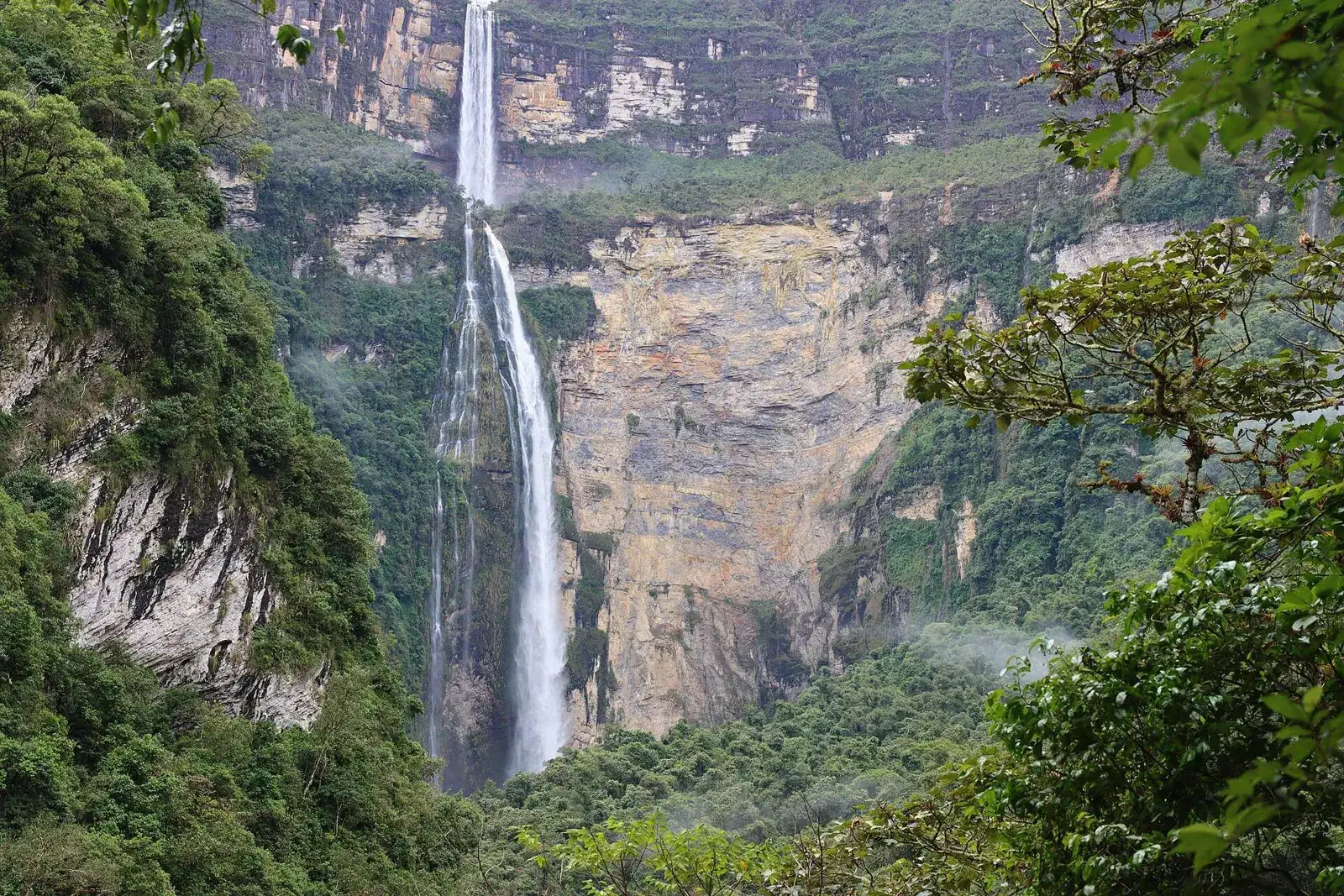
Gocta is a very tall waterfall in the cloud forest of Amazonas, reached on foot from one of two villages: San Pablo or Cocachimba. The hike takes most of a day with return, through forest and farmland. It is well suited to a day away from ruins, with birds, orchids and mist. Wear boots, bring rain protection and arrange a local guide, which is generally required.
Map
A waterfall that came to wider notice recently
Local communities have long known the falls, but Gocta became famous internationally in the mid-2000s, when it was announced as one of the tallest waterfalls in the world. The height has been quoted at over 700 m, in two main tiers, but measurement methods and rankings are debated, so avoid treating "third tallest" or similar claims as settled facts.
What is not in doubt is the setting: a long ribbon of water drops from a limestone cliff into a green gorge, and the spray and mist create a cool microclimate. The surroundings are rich in wildlife, and visitors may see birds, butterflies and orchids along the trail, and the rare cock-of-the-rock is sometimes mentioned by guides, though sightings are not guaranteed.
Which village to start from
There are two main trailheads. Cocachimba lies on the side of the lower route, which is the more common option for a day hike. San Pablo is on the other side and offers a longer, more demanding approach. The choice depends on how much time and energy you have, and where you stay. Both villages have simple accommodation, and community-based tourism projects operate there.
A local guide is normally required and is a good idea in any case, since trails can be muddy and unclear, and guides know the places where you can safely get close to the water. Fees are set by the community and paid on site or through the guide association. Confirm the arrangements when you arrive.
The hike goes up and down through forest, crossing streams. It is not technically hard, but it can be slippery after rain, and the humidity makes it tiring. You get views of the falls from several points, with the lower viewpoint giving the most impressive angle from the base.
Planning
Gocta is a day trip from Chachapoyas, with transfers by road to the trailhead villages, and a road section that may be rough. Tours handle transport and guides, and are often combined with other places in the area. Staying a night in a village makes for an earlier start and a less hurried visit.
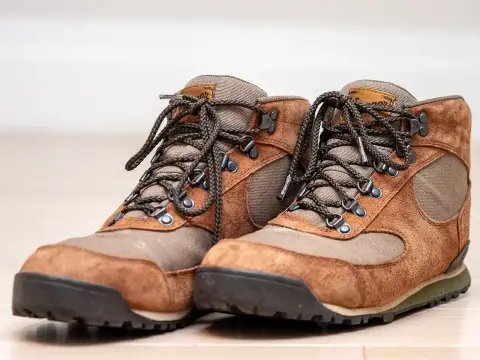
The drier months, roughly May to September, are generally more comfortable for walking, but the falls carry more water in the wetter season, and rain can occur at any time. Bring a waterproof jacket, quick-drying clothing, boots with good grip, insect repellent and a change of socks. A plastic bag for your camera is useful near the spray.
Carry enough water and snacks, and take your rubbish with you. Routes can close because of landslides or maintenance, and the rules on swimming at the base can change.
On the trail
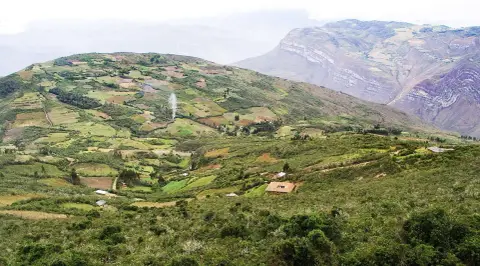
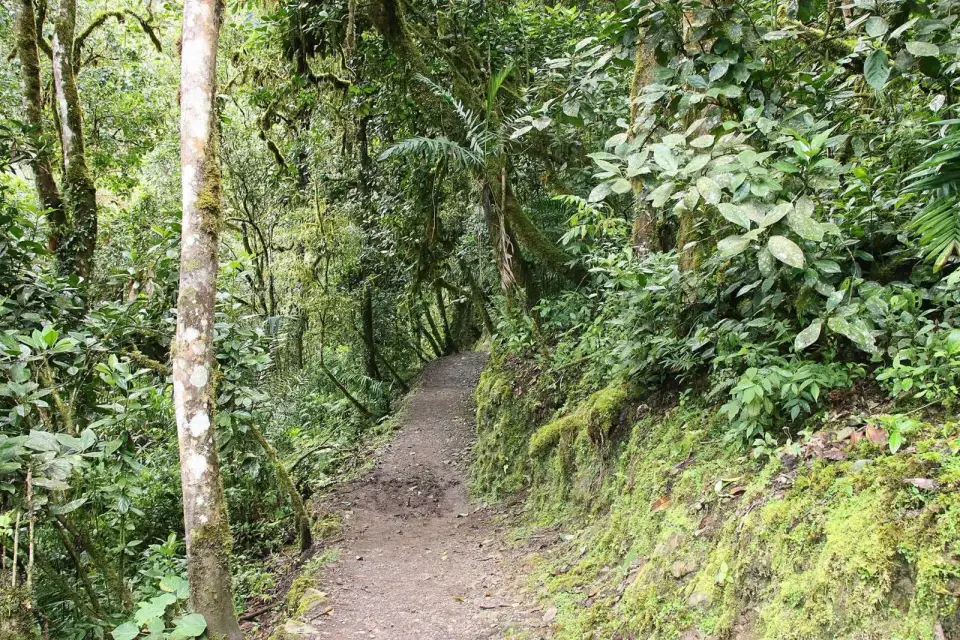
The walk begins through farmland and pasture, where the first views of the cliff and the falls appear across the valley. The path then enters cloud forest, with moss, ferns, bromeliads and orchids on the trees. Streams cross the path in places, and some sections are steep, with steps or rough stone to help.
Pace yourself. The humidity and the repeated ups and downs tire many walkers more than the distance suggests, and the trail can be crowded at peak times with groups. Starting early gives cooler air and quieter paths, and leaves time for a slow return in the afternoon.
Listen as well as look. The forest is full of birds and insects, and a guide can help to identify calls and plants. Keep to the trail to protect the vegetation, and do not pick flowers or handle wildlife. Photography is easiest in soft light and with a dry cloth to wipe the lens. If you want gear advice for wet-forest hiking, see hiking gear for the essentials.
Is the hike for you?
Gocta is a good choice for walkers of moderate fitness who enjoy forest and water. It is less suited to travellers who have mobility problems or who dislike mud and humidity, and the trail is not appropriate for very small children. If you are unsure, ask your guide or accommodation about the current state of the route and the time required.
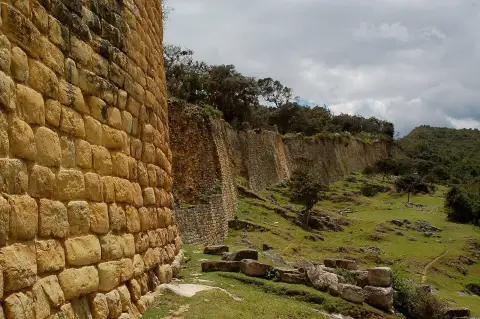
It is also a good alternative day for those who have had enough of ruins. After seeing the walls of Kuélap, the waterfall gives a very different kind of day, based on landscape rather than archaeology. For hikers, other walking options in Peru range from short forest trails to high-altitude treks.
If your time in the north is limited, think about priorities. Kuélap is the major archaeological site, and Gocta is the main natural attraction. In two full days you can see both without rushing, and an extra day lets you explore the town and the villages.
Staying in the villages
Overnighting in Cocachimba or San Pablo is a pleasant option. It puts you at the trailhead for an early walk, allows you to see the falls in morning light and gives you an evening in a small mountain village. Facilities are simpler than in Chachapoyas, so expect basic rooms, home-cooked meals and limited choice. Ask in advance about hot water, heating and electricity.
Staying locally also spreads tourism income to the communities that manage the trail. Buy meals and snacks from village shops, and hire local guides rather than arranging everything from a larger town. These choices help families directly and are easy to make.
For travellers who prefer more comfort or want to combine several outings, Chachapoyas has a wider choice of lodgings and restaurants, and the villages can be visited by day. The long journey from the coast is explained in reaching Chachapoyas from Lima, and the north itinerary suggests how to build a wider trip.
Where to sleep
-
Find hotels
Chachapoyas
Base for Kuélap and Gocta
Frequently asked questions
How long does the Gocta hike take?
Most visitors allow a full day, including the transfer, with several hours of walking on the trail. Ask your guide for the time on the day's route.
Is a guide required?
Local guides are normally required and arranged at the villages. They also help with the muddy and sometimes unclear trails.
Is Gocta the tallest waterfall in the world?
No. It is among the tallest, and rankings depend on how waterfalls are measured. Avoid exact claims.
Can I swim at the base of Gocta?
Rules vary and can change, and the water is cold and the area near the base can be hazardous. Ask your guide whether swimming is allowed and safe on the day. Never swim without the guide's approval.
Which is better, Cocachimba or San Pablo?
Cocachimba is the more common starting point and suits a day hike, while San Pablo gives a longer approach. Ask at your accommodation which suits your fitness and schedule.
Can I visit Gocta and Kuélap in the same trip?
Yes, and most visitors do, using separate days. Both are reached from Chachapoyas. See our Kuélap for how that day works.
What should I wear and bring for Gocta?
Boots with grip, quick-drying clothes, a waterproof jacket, insect repellent, water and snacks. A spare pair of socks and a bag for your camera help. See the gear for more.
Is Gocta open all year?
Generally yes, but heavy rain can close or damage routes. The drier months are more reliable. Ask your guide or accommodation about conditions before you set out.