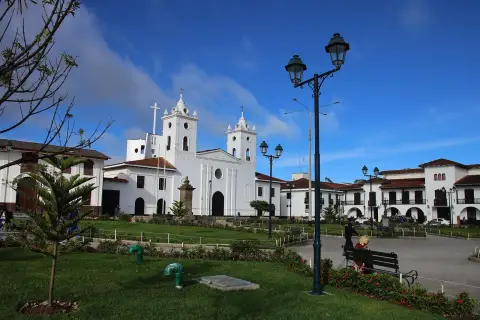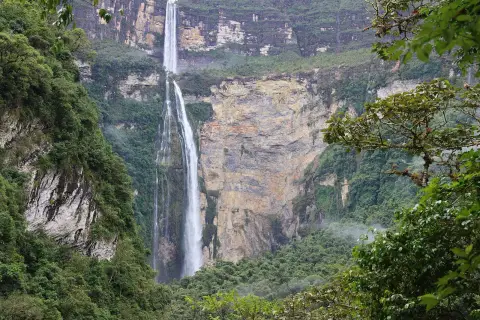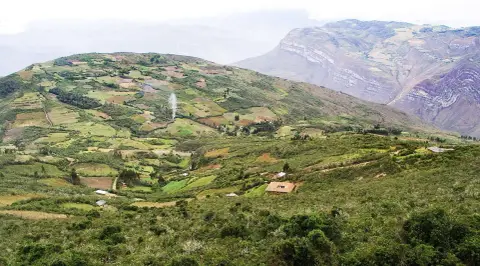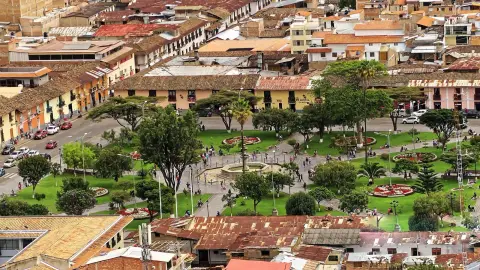
Kuélap is a large walled settlement built by the Chachapoya culture on a ridge high above the Utcubamba valley. Its stone walls and the foundations of hundreds of roundhouses are the main sights. Most visitors reach it from Chachapoyas by road to the cable car station, then by cable car, and the trip takes the better part of a day. Access arrangements have changed in recent years.
Map
The fortress and its builders
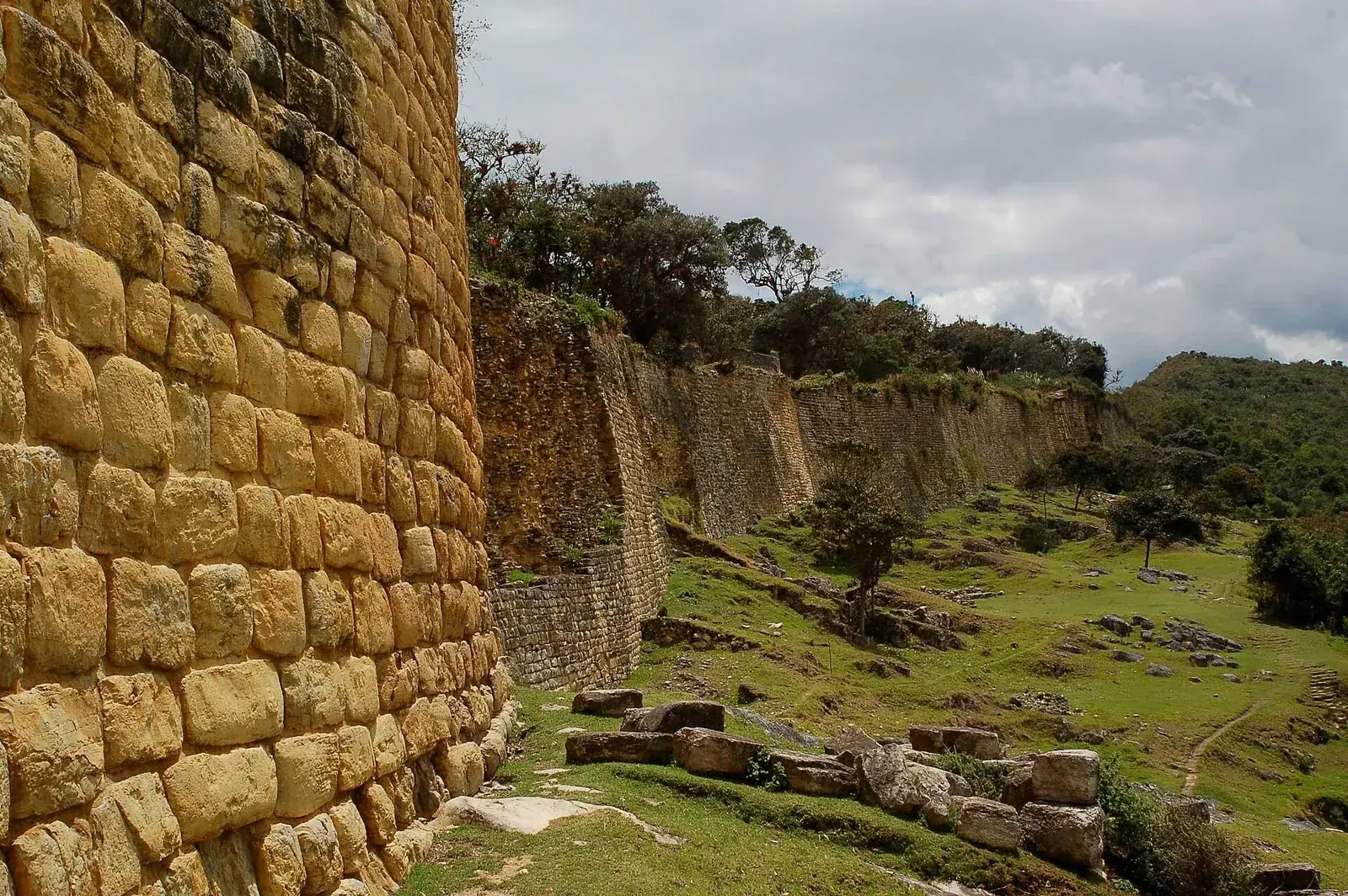
The Chachapoya, sometimes called the "cloud warriors", lived in the cloud-forest highlands of north-eastern Peru and were later absorbed into the Inca empire. Kuélap is their best-known site. Its main feature is a long outer wall, built in tight-fitting stone, enclosing a settlement of circular house foundations. Researchers disagree about how much of the complex was defensive, how much residential and how much ceremonial, and these are open questions.
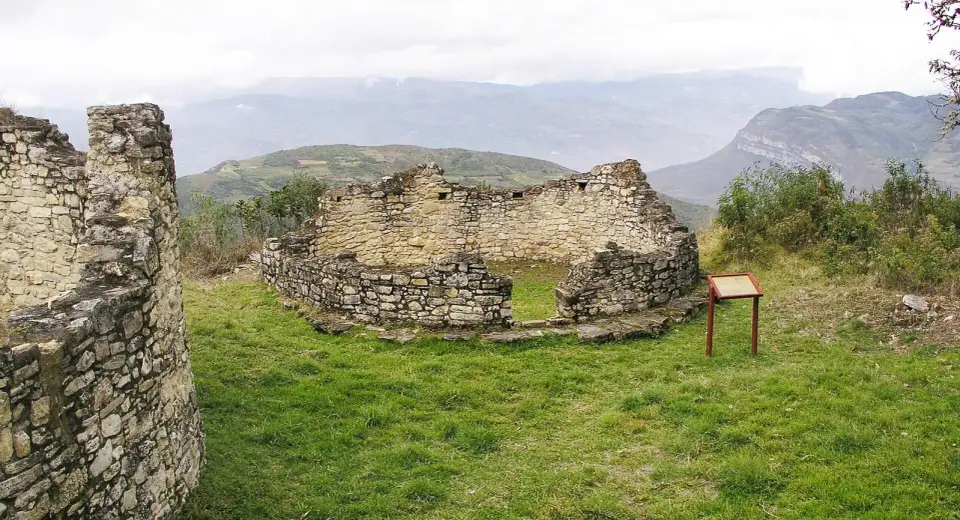
Chachapoya buildings are round, in contrast to the rectangular plans used by the Incas, and the ruins show decorative patterns in the stonework. Trees, ferns and orchids grow around and between the structures, which gives the site a different feel from the dry sites on the coast.
Walking through Kuélap
You enter through a narrow, tapering passage in the outer wall, and walk uphill into the enclosure. Inside, the foundations of roundhouses stand in rows across terraces, and some have been partially reconstructed with thatched roofs to show how they might have looked. A guide helps with understanding the layout, which is hard to read alone.
Look for the large circular structure near the highest part, sometimes called the Tintero or inkwell because of its shape, which has been much discussed by researchers. Treat any confident statement about its use with caution. The setting is the second attraction: from the walls the views extend along the valley, and mist often rolls through.
The ground is uneven and can be slippery in wet weather, so wear shoes with grip. The site is at roughly 3,000 m, so the air is cool, and you may feel the altitude if you arrive from the coast.
Getting there
Kuélap is reached from Chachapoyas by road towards the village of Nuevo Tingo, where a cable car carries visitors up the mountain. The cable car shortened a trip that used to require a long drive on a rough road, but operations can be affected by maintenance, weather or administrative issues. The cable car and the roads have been closed at times, so ask your accommodation or a local tour operator about the status before committing a day to the trip.
Plan for a full day, with early starts typical because of travel time and weather. The rainy season brings fog, mud and the risk of landslides on the roads, and the drier months from roughly May to September are more reliable. Pack a rain jacket in any season, since weather in the cloud forest can change quickly.
Tours from Chachapoyas are common and take care of transport and entrance. Independent travellers can arrange transfers or use public transport to the cable car, but should ask locally about schedules.
Who the Chachapoya were
The Chachapoya were not a single unified state in the way the Incas were, but a collection of related communities that shared a region, building traditions and burial customs. They are known for sites perched on cliffs and ridges, for round stone houses and for funerary structures built into cliff faces. The Incas conquered the area in the 15th century and moved some people elsewhere.
What archaeologists know comes largely from excavation, as the Chachapoya left no written record, and the Spanish accounts that mention them are brief. Kuélap is the largest and best-studied site, but the region has many others, and new discoveries are still reported from time to time. That is one reason to treat precise statements about population or function with care.
The north of Peru offers a useful comparison. The coastal cultures of the Moche and Chimú built in adobe in the desert, as at the Lord of Sipán Museum and the sites near Trujillo, while the Chachapoya built in stone in a wet mountain forest. Seeing both gives a fuller picture of northern Peru.
Weather, altitude and what to pack
The cloud forest is wet and changeable. Even in the dry months, mist and showers can arrive within an hour, and the stone paths become slippery. Waterproofs, a warm layer and shoes with real grip are more valuable here than at a coastal site. A hat and sunscreen are also useful, as the sun can be strong when the clouds clear.
At roughly 3,000 m, Kuélap is not extremely high, but travellers arriving by road from the coast may notice breathlessness on the uphill walk to the entrance. Take it slowly and drink water. See altitude sickness for the basics.
Bring cash for small purchases, a bag for your rubbish and a camera that you can protect from moisture. If you plan to continue to the waterfall at Gocta the next day, keep some dry clothes in reserve. Local stores in Chachapoyas can supply basic items if you forget anything.
Planning a Chachapoya stay
Kuélap rarely stands alone in a trip, and most visitors give the area two or three nights. A typical plan is one day for the fortress, one day for the Gocta Waterfall and a third day for the town and the surrounding villages or other sites. You will find more on these options in Chachapoyas.
Reaching the region takes time. The journey from the capital is long. See getting from Lima to Chachapoyas for the usual routes. Many travellers combine it with Cajamarca and the coast in a northern loop, described in the north itinerary. See Cajamarca for the highland context.
Because roads and the cable car can close, keep a spare day in your schedule if you have a fixed departure. A flexible plan makes weather and access problems far easier to deal with.
Where to sleep
-
Find hotels
Chachapoyas
Base for Kuélap and Gocta
Frequently asked questions
How long does the trip to Kuélap take?
Plan for a full day from Chachapoyas, including the road, the cable car and a couple of hours at the site.
Is the cable car always running?
No. Closures have happened because of maintenance, weather and other issues. Ask your accommodation or a local operator before travelling.
Is Kuélap suitable in the rainy season?
It can be visited, but fog, mud and road problems are more likely. The drier months are generally more reliable.
Do I need a guide at Kuélap?
It is not essential, but a guide helps greatly because the layout is hard to read and the interpretations are debated. Guides can usually be found on site or booked through a tour from Chachapoyas.
Can I visit Kuélap and Gocta on the same day?
That would be a very long day, because the sites are in different directions and the roads are slow. Most visitors give each its own day. See Gocta for what that trip involves.
Who built Kuélap?
The Chachapoya culture, a group of related communities in the cloud-forest highlands. They were absorbed into the Inca empire later. Many details of life at the site are still debated.
How high is Kuélap?
Roughly 3,000 m above sea level. It is cooler than the coast, and travellers arriving from sea level may feel the altitude on the climb. Go slowly and drink water.
How do I get from Lima to Chachapoyas?
The journey is long, by a combination of flight and road or by a long overland route. See travel from Lima to Chachapoyas for the options and how much time to allow.