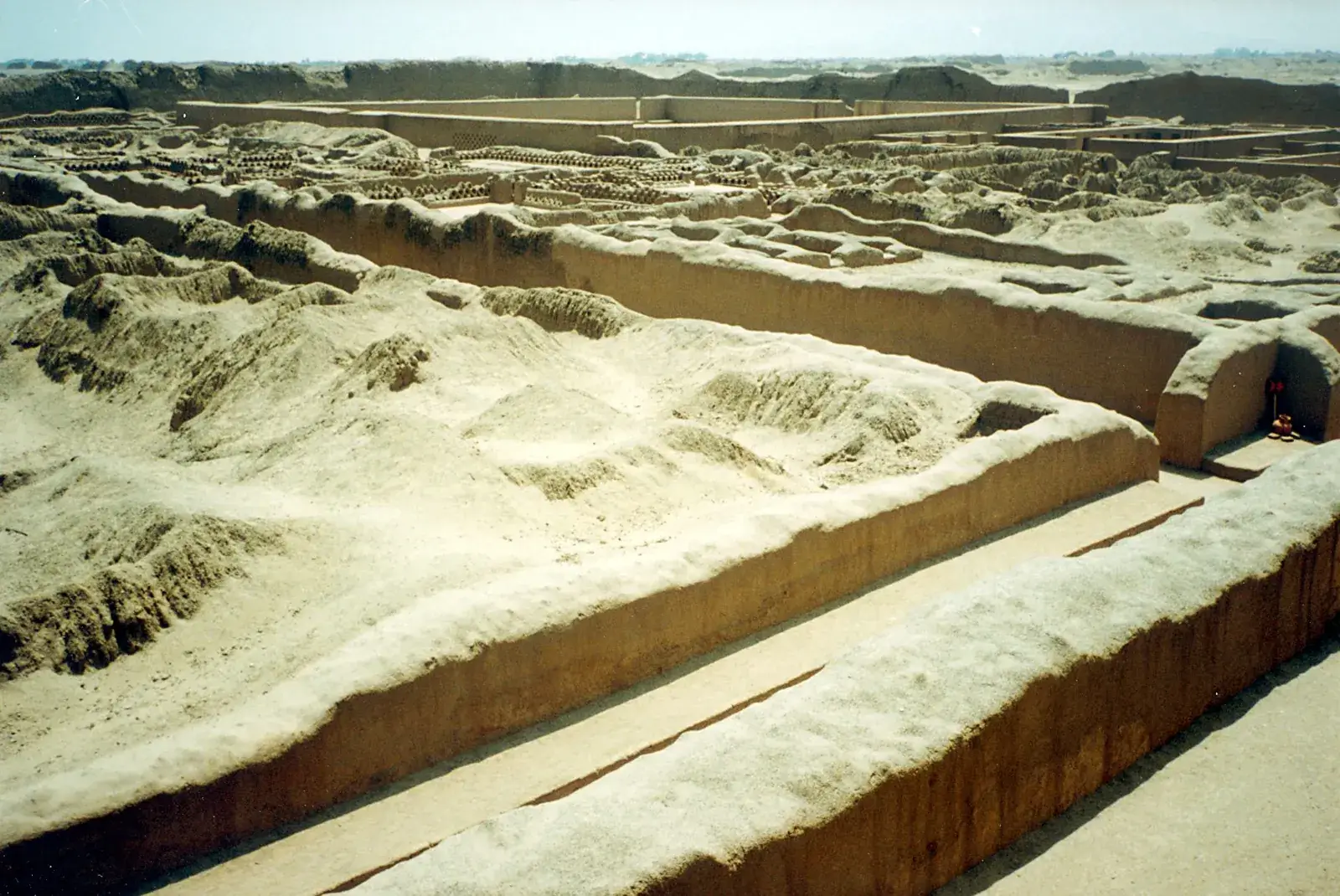
Chan Chan was the capital of the Chimú kingdom on the north coast, and is commonly described as the largest adobe city in the Americas. It lies a short distance from Trujillo, and a visit takes around two hours. Only part of the site is open, usually the Tschudi complex, with decorated walls of fish, birds and waves. Expect sun, dust and exposure, and a fragile site under constant conservation.
Map
The Chimú and their capital
The Chimú kingdom ruled much of the north coast in the centuries before the Incas, and Chan Chan was its capital. It was later conquered by the Incas in the 15th century. The city is made up of several large walled compounds, often called ciudadelas, thought to have served as palaces, administrative centres and burial places for successive rulers. Interpretations are based on archaeological work, and some are still debated.
The scale is difficult to grasp at ground level. The site covers many square kilometres, and what you walk through is only a small part. It is a UNESCO World Heritage site, and it is also listed as in danger because of the threats it faces.
What you will see
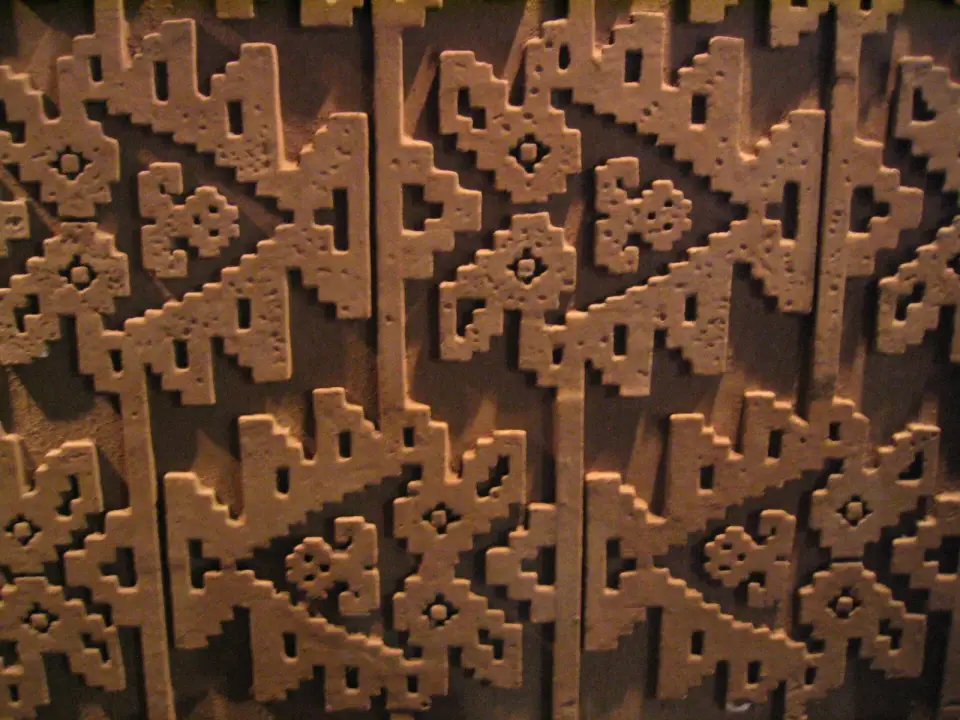
The visit usually takes in one compound, normally the Tschudi complex, restored and prepared for visitors. Walk through narrow entrances into large plazas, ceremonial spaces and corridors whose walls are covered with relief patterns. The friezes show fish, waves, pelicans and geometric designs, reflecting the importance of the sea to the Chimú. Some are original, and some are restorations, which good guides will point out.
A small site museum has objects and models that help in understanding the layout of the city, which is hard to read from the ground. Spend a little time there before walking the ruins.
The adobe is highly vulnerable. Heavy rain and flooding, particularly during El Niño years, can cause serious damage, and the site is protected with roofs and ongoing work. In the main, you will be asked to stay on paths and not touch the walls.
Reading an adobe city
Chan Chan is easier to enjoy if you know what to look for. The compounds are enclosed by high walls with a single, narrow entrance, a design that controls movement and creates a sense of privacy and hierarchy. Inside, the plan repeats: courtyards, storerooms, audience halls and, in the larger compounds, platforms thought to hold burials.
The wall decoration is the highlight. Repeated patterns, such as rows of fish or lines of waves, were moulded or carved in the mud plaster and then smoothed, and they show how much the Chimú cared about the sea. Unlike stone, the material is soft, which explains both its beauty and its fragility.
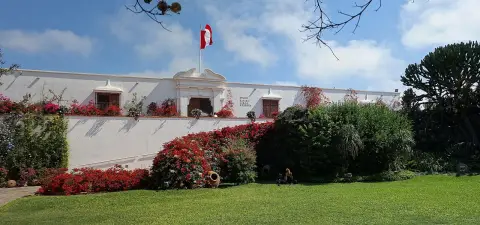
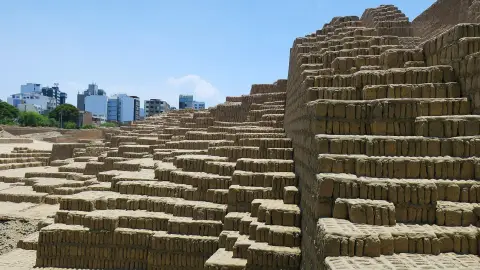
If you have seen Huaca Pucllana in Lima, the contrast in scale is clear: that site is a single mound, while this is a whole urban landscape. The objects the Chimú left behind, such as fine metalwork and textiles, are on display in museums rather than at the site, including the Larco Museum in Lima.
Guides often mention the layout of water systems and the way the city was supplied, but details are partly reconstructed, so treat precise numbers cautiously.
Practical tips
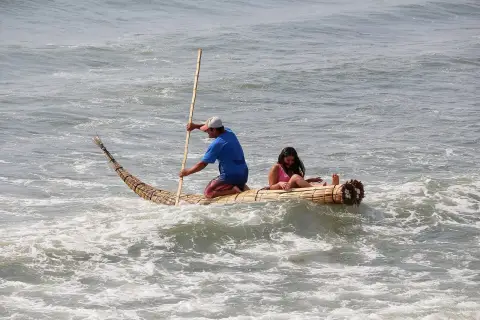
Chan Chan is close to Trujillo, and a taxi or tour is the usual way to reach it. Many visitors combine it with the Huacas de Moche and the beach town of Huanchaco in a single day, which gives a broad picture of north-coast cultures from different periods. Tours are convenient, but a taxi driver can also manage the route if you agree the plan and price in advance.
There is little shade, and the coastal sun can be strong even when it feels cool. Bring water, a hat and sun protection, and wear comfortable shoes. The best light is in the morning or late afternoon, and groups arrive in the middle of the day.
A guide adds a lot, since the site is difficult to interpret on your own. The site closes on certain days. Find out whether the museum and other sites are included in the ticket.
Conservation and your part in it
Because adobe dissolves in water, Chan Chan is vulnerable to the very rare but severe rains of El Niño years, and to wind, salt and the pressure of nearby settlement. Conservation work is continuous, and you will see covered walls, scaffolding and areas fenced off. This is normal and a sign that the site is cared for.
As a visitor, the most useful things you can do are simple. Stay on the marked paths, never touch or lean on the walls, and do not climb on structures. Leave no rubbish, and keep dogs and children under control. The decorations you see now are the result of decades of work by people trying to keep the mud from returning to the earth.
Guides are a useful source of information on what is original and what has been rebuilt. If a frieze looks too sharp, it may be a restoration. That is not a flaw, but it is worth knowing, and a good guide will tell you.
Chan Chan in a north-coast trip
Chan Chan makes most sense as part of a wider look at the north coast. Visitors usually see the Moche temples near Trujillo first, then the Chimú capital, and, if time allows, travel on to the royal tombs of Sipán near Chiclayo. The north itinerary shows how these stops can be sequenced across several days.
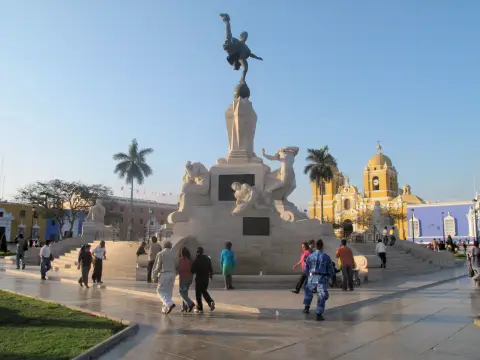
Trujillo things to do lists other options in the area, including the colonial centre and the beach. Travellers arriving from the capital can find the journey in Lima to Trujillo.
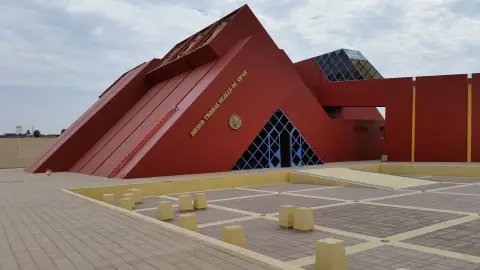
If you only have time for one adobe site on this coast, the choice comes down to preference. Chan Chan is the larger and more urban, while the Moche temples are more colourful. The Lord of Sipán Museum offers the finest metalwork and the richest tomb finds, and is best seen in addition rather than instead.
Where to sleep
-
Find hotels
Trujillo centre
Colonial centre, base for Chan Chan and the Moche temples
-
Find hotels
Huanchaco
Surf village by the sea, a short ride from the city
Frequently asked questions
How long does a visit to Chan Chan take?
About two hours for the restored compound and the museum. Allow longer if you combine it with other sites.
Is Chan Chan worth the trip?
Yes, if you are interested in pre-Inca cultures or the north coast. It looks different from highland Inca sites, built of adobe rather than stone.
Can I walk through the whole city?
No. Only part of the site is open to visitors, and the rest is protected.
How far is Chan Chan from Trujillo?
It is a short drive from the centre, so a taxi, a local minibus or a tour all work. Agree the price and waiting time if you use a taxi. See Trujillo for more on getting around.
Do I need a guide at Chan Chan?
It is strongly advisable. The site is hard to read without explanation, and a guide can show what is original and what has been restored. Guides are usually available at the entrance.
Why is Chan Chan listed as in danger?
Because adobe is vulnerable to rain, flooding, erosion and development. Conservation projects continue, and the listing draws attention to the need for funding and protection.
Can I visit Chan Chan and the Huacas de Moche on the same day?
Yes, and many tours do. Allow a full day if you also add the beach at Huanchaco. See the Huacas de Moche for what that visit involves.
What should I wear and bring?
A hat, sunscreen, sunglasses, water and comfortable shoes. There is little shade, and the wind can raise dust. A light layer helps in the morning and evening.