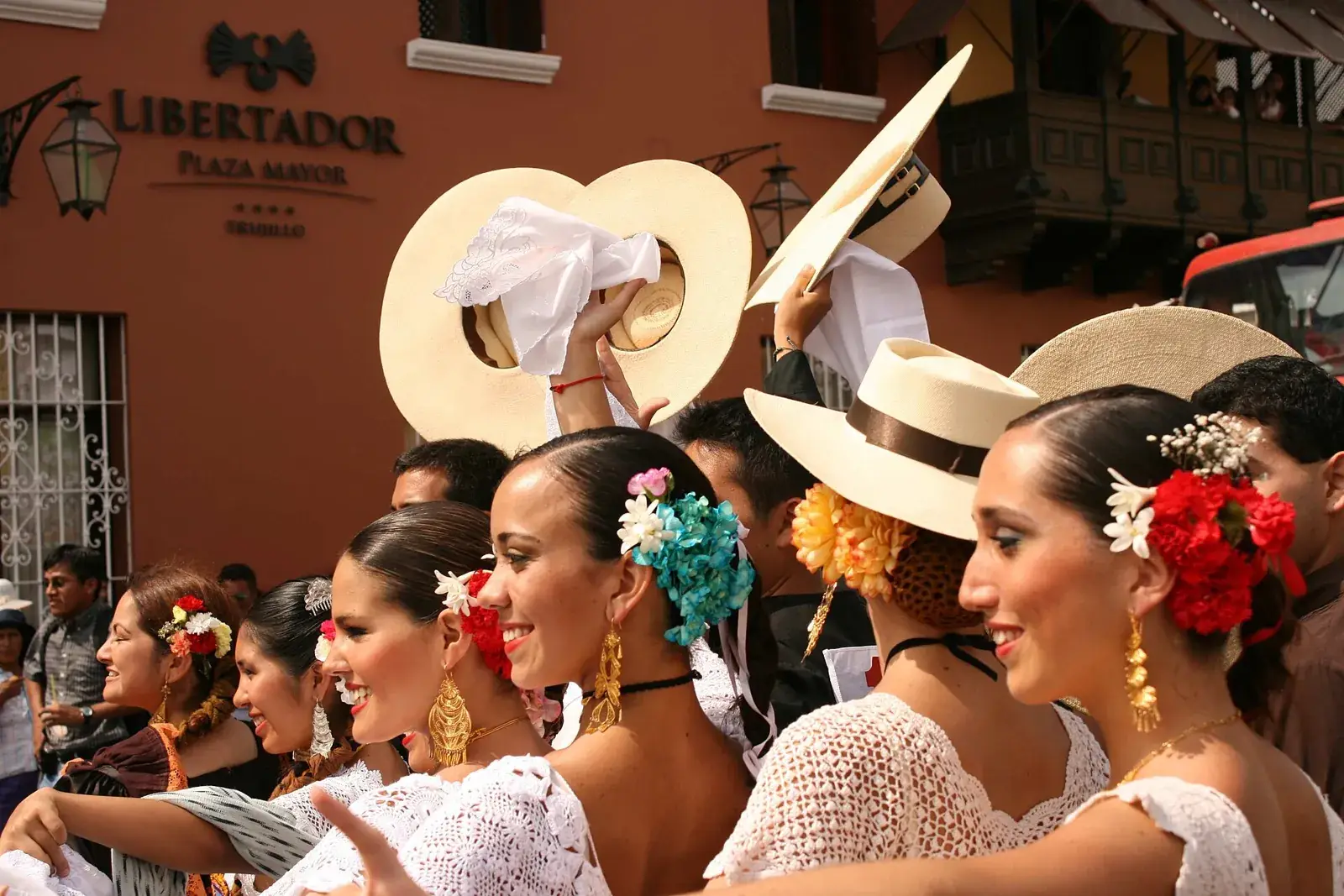
In Trujillo, visit Chan Chan, the vast adobe capital of the Chimú, the Huacas de Moche with their painted temples, the colonial centre and the surf town of Huanchaco. Allow two days. Most sites are a short taxi or tour ride from town, and mornings are better for the sun and the crowds.
The north coast has a dry desert climate, but the sun is strong and the sites have little shade.
Chan Chan
Chan Chan was the capital of the Chimú kingdom and one of the largest adobe cities in the world. Visitors usually see one restored compound, with walls decorated with relief carvings of fish, birds and waves, courtyards and storerooms. The scale and the ornament are striking, and the site is exposed to sun and sea wind, so bring a hat, sun cream and water.
A guide helps to explain the layout and the meaning of the patterns. Arrangements for visiting, including tickets and the museum, can change.
The adobe is fragile, and the site has been shaped by erosion, so stay on the marked paths and do not touch the reliefs. Early morning is the most comfortable time to visit, before the heat builds, and it leaves the afternoon free for the coast or the Moche temples.
The Moche temples
Just south of town, the Huacas del Sol y de la Luna belong to the earlier Moche culture. The Huaca de la Luna has been excavated to reveal layers of painted adobe reliefs, with vivid colours still visible. A museum nearby displays ceramics and metalwork. Plan a half day for the temples and the museum, and combine them with Chan Chan for a full day of archaeology if you have a driver.
Visits to the temple are generally guided, and the guide leads you through the layers where earlier structures were built over, and then over again. It is a good place to see how a culture reused and renewed its sacred spaces, and the colours of the reliefs add a dimension that bare adobe sites lack.
Wear sun protection and sturdy shoes, since the site is dusty and the walkways are exposed.
The historic centre
Trujillo's colonial centre is arranged around a large Plaza de Armas ringed by pastel-coloured mansions with wrought-iron balconies and a cathedral. Several of the mansions can be visited, and some house banks or cultural centres. A walk takes an hour or two. The centre is pleasant by day and quiet at night, so take a taxi after dark.
Morning light brings out the colours of the facades, and the plaza is a lively place in the early evening, when families gather. For how to order a safe ride, see taxis and ride-hailing; for how the centre fits with the archaeological sites in a day plan, see Trujillo.
Huanchaco and the coast
Huanchaco, a short ride from Trujillo, is a seaside village known for surf and for the traditional reed boats, caballitos de totora, which local fishermen still use. It has seafood restaurants, a pier and a laid-back feel, and is a good place for a late lunch and sunset. Swimming conditions vary, and the water is cool.
The village makes a relaxed end to a day of archaeology. Watch the fishermen bring in their boats in the late morning if you can, and sit with a drink as the sun drops over the Pacific. Surf lessons are available for beginners, but check currents and conditions with locals before entering the water.
Food and practical tips
The north coast is known for its ceviche, usually made with fish, lime and chilli and served with sweet potato and corn, and for dishes such as seco de cabrito, a kid stew. Eat the ceviche at lunch. Trujillo is flat and warm, and taxis are cheap, but use registered cabs after dark. Some areas around archaeological sites are not suitable for walking alone, so go with a guide or driver.
Northern Peruvian food explains more of the regional specialities and how to order them. Ceviche covers the dish in detail.
Planning two days
A simple plan puts Chan Chan and Huanchaco on one day: the ruins in the morning, lunch by the sea and a sunset on the pier. The second day pairs the Moche temples with the colonial centre, with the temples in the morning and the plaza and mansions in the afternoon. If you only have one day, choose either Chan Chan or the temples, and see the centre in the evening.
Most visitors use taxis or a guided tour to link the sites. Arrange a driver for several hours rather than individual rides, since the sites are some distance apart. Keep water with you and plan rest breaks in the shade.
Beyond Trujillo: the north coast
Trujillo is one stop on a wider northern route that includes Chiclayo, with its royal tombs and the Lord of Sipán museum, and the beaches further north. The northern Peru itinerary places Trujillo within a longer circuit with inland stops. Many visitors arrive by bus or air from the capital, and Lima to Trujillo compares the options.
The coast is dry, with mild temperatures and long sunny spells. Cloud and mist can cover the sky in the cooler months, so a light jacket is useful in the evening. The sun is strong, so wear a hat even on grey days.
Frequently asked questions
How many days do I need in Trujillo?
Two days cover Chan Chan, the Moche temples, the centre and Huanchaco.
Is Chan Chan worth visiting?
Yes, it is one of the largest adobe cities in the world, with remarkable carved reliefs.
Is Huanchaco good for swimming?
The water is cool and currents can be strong. Check conditions with locals before swimming.
Should I take a guide at the archaeological sites?
A guide is valuable at Chan Chan and the Moche temples, because the adobe walls and reliefs are hard to interpret alone. Agree the language and the price before you start.
Can I visit Trujillo and Chiclayo on the same trip?
Yes, by bus or taxi along the coast, usually with a night in each. Chiclayo is known for royal tombs and a museum, and the two cities are often linked on a northern route.
Is Trujillo safe for tourists?
The centre is generally comfortable by day, but petty crime exists. Use registered taxis, keep valuables out of sight and follow local advice about areas around the ruins.
What is the best time of year for Trujillo?
The coast is dry and mild year round, with the warmest and sunniest months generally in the southern summer. Cloud is more common in the cooler months.