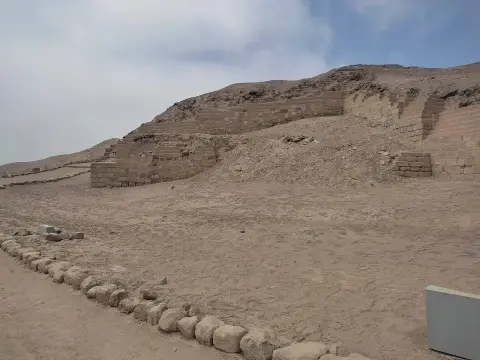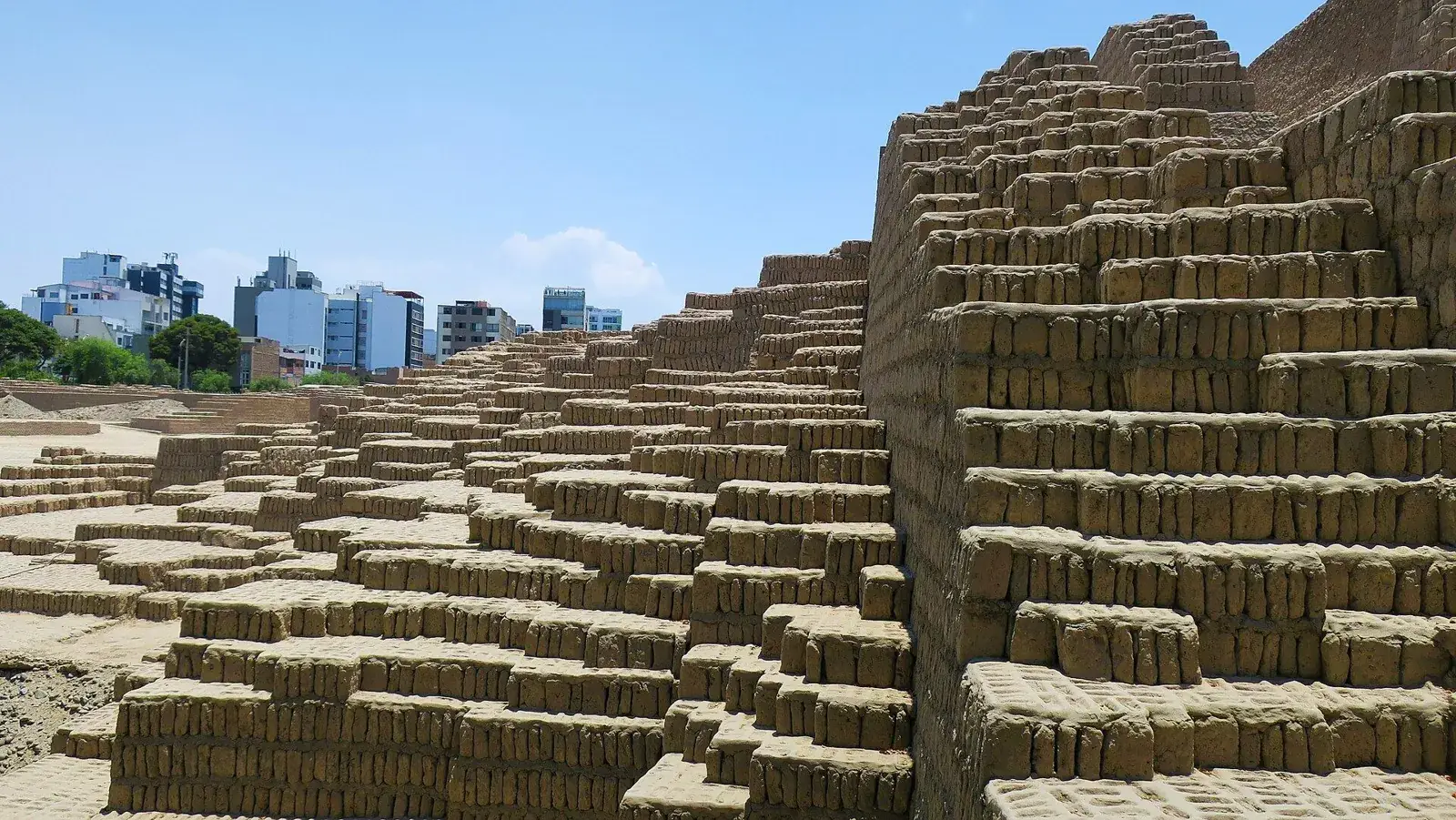
Huaca Pucllana is a large pre-Inca ceremonial and administrative mound in the middle of Miraflores, built mainly of small adobe bricks set on edge. It is visited with a guide and takes about an hour. It is an easy first archaeological stop in Lima, and a good way to see that the city's history goes far beyond its colonial centre.
Map
What Huaca Pucllana is
"Huaca" is a Quechua word for a sacred place, and on the Peruvian coast it is also used for the many adobe pyramids and mounds left by pre-Inca societies. Huaca Pucllana is generally attributed to the Lima culture, which flourished on this stretch of coast in the centuries before the Inca empire, and it was later reused by another culture, the Wari. Dates and details are refined by ongoing research, so treat the exact periods on offer as a guide rather than settled facts.
The structure is a stepped pyramid with plazas and platforms, and archaeological work has found burials and offerings here. Its position is striking: modern apartment blocks and streets surround an ancient monument, so the mound seems to rise out of the neighbourhood of Miraflores.
The brickwork and the visit
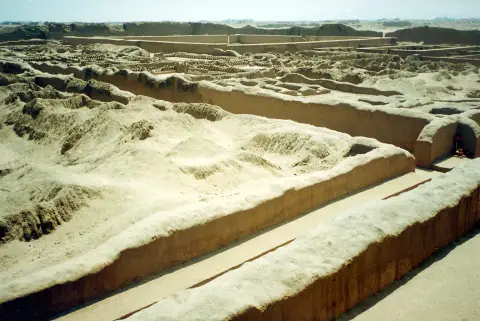
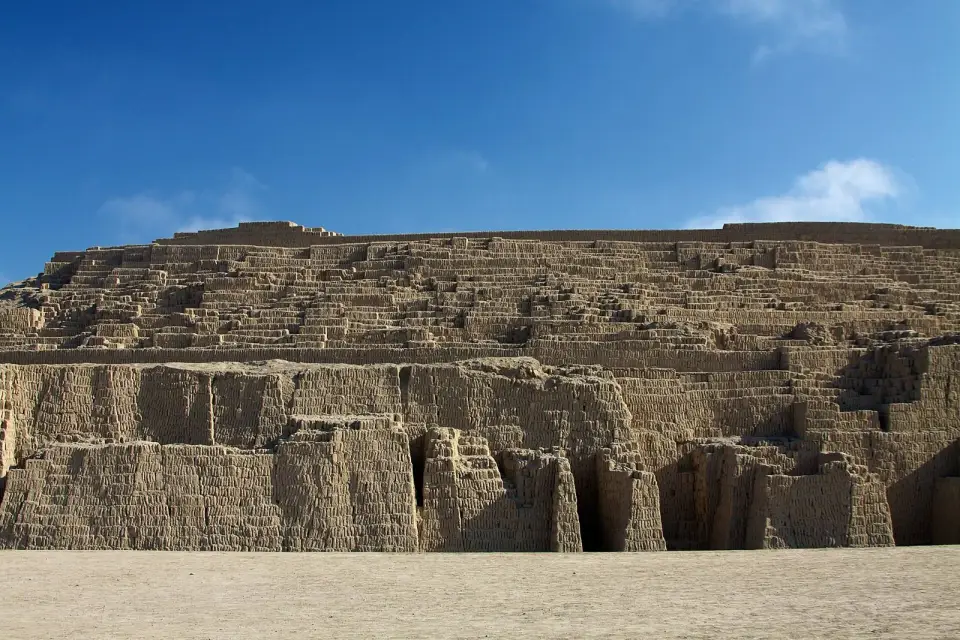
The distinctive feature is the way the walls were built. Instead of large blocks, the builders used many narrow adobe bricks stacked on their sides with gaps between them, in a pattern often compared to books standing on a shelf. Guides explain that this method may have helped the structure absorb tremors, in a region where earthquakes are common. This is a widely repeated interpretation, and it is reasonable to present it as such.
Visits are normally on a guided walk around the site, which allows you to see the platforms, the passageways and the excavation areas. Tours are offered in several languages, and the guides explain the structure and the finds. You walk on paths, not into the structure, and the route is not demanding, but wear sun protection and a hat, as there is little shade.
On site there is also a small museum and a garden with animals typical of the region, which usually appear in guided tours or can be seen on a short walk.
Tours and activities
Bookable online, chosen for their traveller reviews.
-
★ Top rated From €52 per person
-
★ Top rated From €85 per person
-
★ Top rated From €94 per person
-
★ Top rated From €55 per person
Coastal pyramids and why they look like this
Visitors used to stone temples are sometimes surprised by a pyramid made of mud. On Lima's desert coast, where it almost never rains, adobe was an excellent and cheap building material, and the climate has preserved the walls for well over a thousand years. The same logic explains the great earthen cities and temple mounds farther north, such as Chan Chan, which are built on a much larger scale.
Lima once held many of these huacas across what is now a modern city. Many were lost to building and farming, and a few survive as protected islands among the streets. Huaca Pucllana is one of the best preserved and best presented, which is why it is so widely recommended as a first stop.
The surviving mound gives an idea of how the Lima culture organised its ritual and administrative life: platforms for ceremonies, spaces for storing goods and areas for offerings. As with all interpretations of these societies, remember that written records are absent and that many details come from archaeology alone.
Fitting it into your day
About an hour is enough, and the site's position in Miraflores means you can combine it with a walk to the clifftop parks or a meal. A well-known restaurant overlooks the huaca, and many visitors choose it for lunch or dinner to see the illuminated pyramid. If you plan to eat there, book ahead, since it is popular.
The site often opens in the evening as well as the day, and evening visits show the structure lit up, but schedules change by season and by day. Entrance is usually by ticket, and tours are often part of the price. Arrive at the entrance rather than relying on a taxi driver to explain the arrangements.
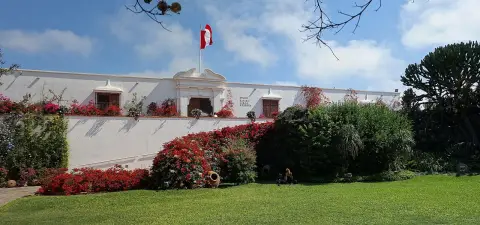
For a larger site outside the city, see Pachacámac. For a broader look at the objects made by these coastal cultures, the Larco Museum is the best match.
Who the site suits
Huaca Pucllana is ideal for visitors with limited time who want a taste of ancient Peru without leaving the hotel district. It also suits people who have just arrived and want a gentle first outing, since the walking is easy and the sea-level air is comfortable compared with the Andes.
Travellers who are heading to the north coast may want to treat it as a rehearsal. Walking the platforms and seeing the brickwork prepares you for the larger complexes at Chan Chan and for the museum cases at the Larco Museum. Travellers who will not go beyond Lima will find it a fair representation of the pre-Inca coast in a compact form.
People with limited mobility should ask about the route before booking, since the tour involves paths, some slopes and steps. Children are usually welcome, but a hat, water and sunscreen matter as much for them as for adults.
Hours, tours and tickets
Opening days and hours change, and an evening opening can be offered on some days and not others. The tour format, languages offered and group size also vary. Ask whether the ticket includes the guide and the small museum.
Photography is normally allowed in the open parts of the site, but rules on drones and tripods are usually restrictive. If you carry a large camera or a bag, ask at the entrance whether you need to leave it.
If you are staying nearby, ask your hotel's reception, since they will often know whether a tour is running that day. For a wider list of possible outings, see things to do in Lima and the Lima accommodation, which explains why Miraflores makes a good base for sites like this.
Where to sleep
-
Find hotels
Miraflores
Easy first base: restaurants, parks and the cliff-top walk
-
Find hotels
Barranco
Art, nightlife and a seaside feel, quieter by day
-
Find hotels
San Isidro
Calm business district with parks, close to Miraflores
-
Find hotels
Historic Centre
Colonial sights on the doorstep, busy by day and quiet at night
Frequently asked questions
How long does a visit to Huaca Pucllana take?
About an hour with a guide. The site is compact, and the tour covers the main platforms and the museum area.
Is it worth visiting if I am going to Pachacamac?
They are different. Huaca Pucllana is small, close to the hotels in Miraflores and quick to see, while Pachacamac is much larger and needs a half day outside the city.
Can I visit without a guide?
The normal format is a guided visit.
Who built Huaca Pucllana?
It is generally attributed to the Lima culture, with later use by the Wari. Researchers continue to refine the dates, so guides may give slightly different periods. Treat dates as approximate.
Can I visit Huaca Pucllana at night?
The site is often illuminated in the evening and may open for visits then, but schedules change. Book if you want to dine at the restaurant that overlooks it.
Is Huaca Pucllana suitable for children?
Yes, in most cases. The tour is not long and the animals in the garden appeal to younger visitors. Bring sun protection, because shade is limited.
How far is Huaca Pucllana from the Miraflores clifftop?
It is inland within Miraflores, so a short taxi ride or a longer walk gets you from the clifftop parks. See Miraflores to understand how to combine the two.
Is Huaca Pucllana the same as the pyramids at Pachacamac?
No. They are separate sites of different sizes and periods. Pachacamac was a large religious and pilgrimage centre south of Lima, and Huaca Pucllana is a smaller mound inside the city.