Lima's historic centre is the old colonial core around the Plaza Mayor, and it is inscribed as a UNESCO World Heritage site. Give it a half day. The main sights are the cathedral, the Government Palace area, the San Francisco convent and the wooden balconies on the nearby streets. Go in daylight, take a taxi to and from it and keep belongings close.
Map
What this district is
Lima was founded by the Spanish in 1535 and became the capital of the viceroyalty of Peru, which governed a vast part of South America. The historic centre is what remains of that period: a grid of streets around a main square, with churches, convents, mansions and public buildings. UNESCO inscribed the historic centre of Lima as a World Heritage site.
Not everything is old. Earthquakes have damaged and destroyed buildings over the centuries, and much of what stands has been rebuilt or restored. The mix of colonial, republican and modern buildings gives the centre a busy, working feel rather than the look of a preserved museum town.
The main stops
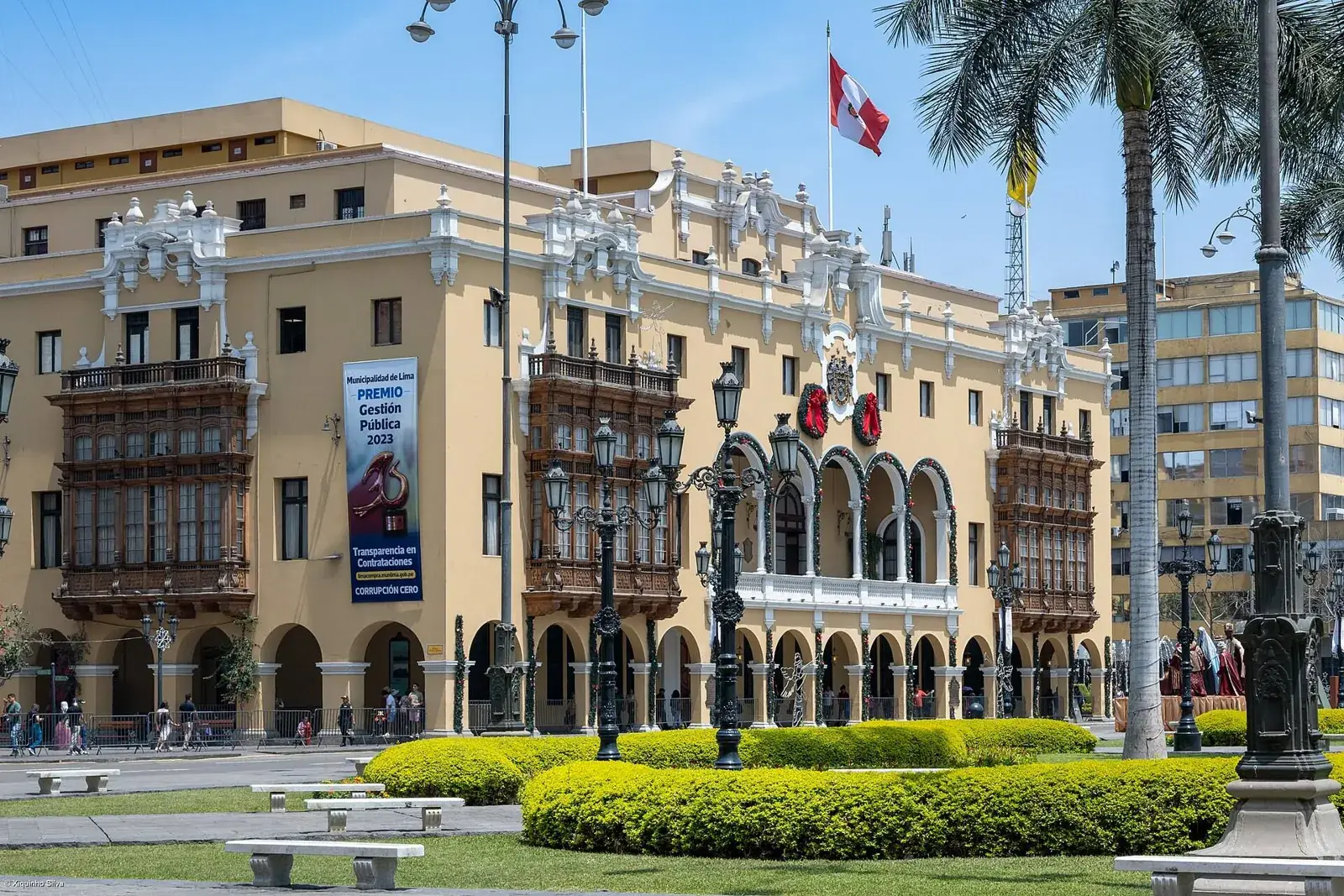
Start at the Plaza Mayor, also called Plaza de Armas, and look at the cathedral, the archbishop's palace with its carved balconies and the Government Palace. The changing of the guard at the Government Palace is a popular spectacle, but schedules can vary.
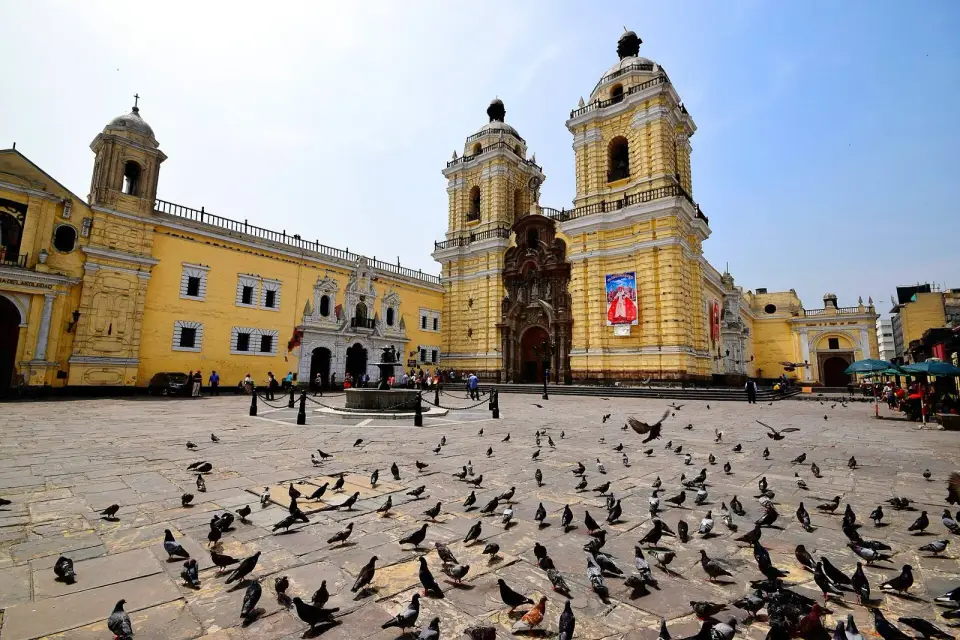
The convent of San Francisco is known for its library and its catacombs, which are visited on guided tours. The church of Santo Domingo and the Casa de la Literatura are other options. Many visitors also walk along Jirón de la Unión, a busy pedestrian street, and take a look at the Chinatown streets (Barrio Chino) a short walk away, where you can find Chinese-Peruvian food known as chifa.
Choose two or three places rather than trying to see everything. A guided walking tour is a good way to get context and to move around with more confidence, especially on a first visit.
Tours and activities
Bookable online, chosen for their traveller reviews.
-
★ Top rated From €52 per person
-
★ Top rated From €85 per person
-
★ Top rated From €94 per person
-
★ Top rated From €55 per person
Balconies and architecture
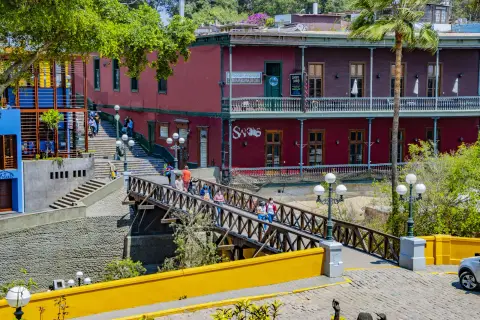
Look up as you walk. One of the centre's best-known features is the wooden balconies, enclosed and carved, projecting from colonial and later mansions. They are a local variation on a style found in other Spanish-colonial cities, and their lattice screens allowed residents to look onto the street while staying out of view.
Beyond the balconies, notice the contrast in building styles from block to block: baroque church façades, republican public buildings with classical details and a number of simple modern structures. Earthquake damage and rebuilding explain why few buildings are in their original state.
Interiors are often as interesting as exteriors, with courtyards, staircases and tiled details. Some historic houses can be visited, but access varies, so ask locally which are open. A guided tour is the simplest way to see inside those that are open to the public, and Lima tours describes what such tours typically cover and how to choose one.
Practical advice
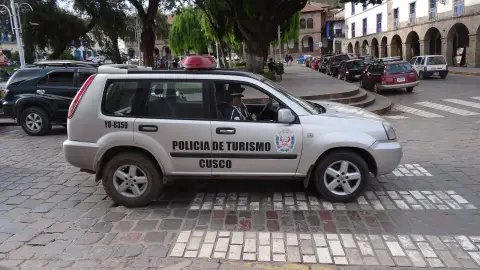
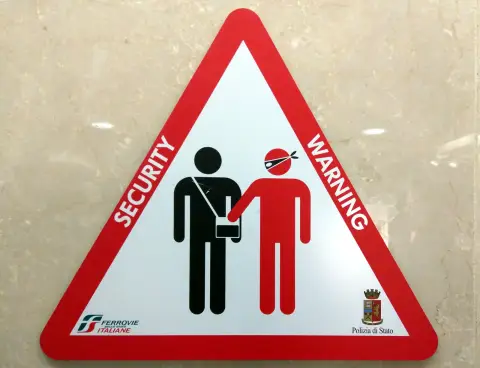
The historic centre is crowded and busy during the day, and pickpocketing is a recognised problem. Carry only what you need, use a front bag, and keep phones out of sight. Daytime is the right time to visit. Many streets empty after the offices close, so avoid walking around in the evening unless you are with a group or tour.
Taxis and ride-hailing are the usual way to arrive and leave. Walking between the centre and tourist districts such as Miraflores is not recommended, and the Metropolitano bus service along a dedicated lane is another option you can ask about locally.
Opening hours and entrance charges for churches and museums differ, and some places close at lunchtime or on certain days. Bring modest clothing for churches. If your time in Lima is short, you can combine this with a visit to a museum in another district.
Scams and how to avoid them
Busy squares attract opportunists. Common tricks include a stranger who offers help and then distracts you while a partner takes your bag, people who claim something has been spilled on your clothes, and unlicensed guides who start walking beside you and then ask for payment. A firm "no, gracias" and continuing to walk is usually enough.
Be wary of anyone who offers to change money on the street, and avoid showing a lot of cash. Use cash machines inside banks or shopping centres rather than isolated machines. Common scams lists the patterns in more detail, and the general safety advice puts the risks in proportion.
Most visitors who go by day, keep belongings close and use official taxis have an uneventful visit. Treat precautions as habits rather than reasons to avoid the centre, because it is the best place in Lima to understand the colonial period.
Planning your half day
A practical order is to arrive in the morning, begin at the Plaza Mayor, walk to San Francisco and have lunch in the centre or in the nearby Chinatown. In the afternoon you can visit one more church or museum before heading back by taxi. Starting early avoids the heaviest crowds and the midday heat.
If you have limited energy or time, pick the cathedral and the San Francisco convent and skip the rest. If you have more, a pre-booked walking tour with a licensed guide gives context that is hard to get from signs.
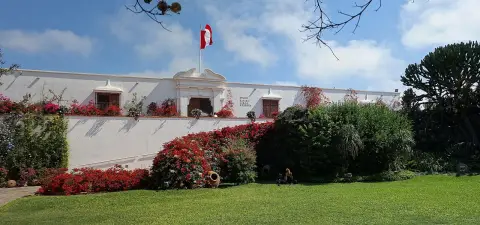
Pair the historic centre with a museum elsewhere on another day, such as the Larco Museum, so that you do not try to do everything in one outing. For wider planning, things to do in Lima gives other ideas, and Lima sets the centre alongside the coastal districts.
Where to sleep
-
Find hotels
Miraflores
Easy first base: restaurants, parks and the cliff-top walk
-
Find hotels
Barranco
Art, nightlife and a seaside feel, quieter by day
-
Find hotels
San Isidro
Calm business district with parks, close to Miraflores
-
Find hotels
Historic Centre
Colonial sights on the doorstep, busy by day and quiet at night
Frequently asked questions
How long do I need in Lima's historic centre?
A half day is enough for the main square, the cathedral and one or two other sights. Add time for a convent tour and lunch.
Is it safe to walk around the historic centre?
In daylight and with normal precautions, many visitors do. Pickpocketing is common, and the area is best avoided late in the evening. A guided walk gives extra comfort.
Is the historic centre a World Heritage site?
Yes. UNESCO inscribed the historic centre of Lima as a World Heritage site.
Is a guided tour worth it in the historic centre?
For a first visit, yes. A guide can get you into the right places, explain the layers of history and keep you away from awkward streets. Compare the options for Lima tours and check what the entrance fees cover.
What is the best day to visit the historic centre?
Weekdays and mornings are busiest with locals but feel safest, while Sundays can be quiet and some places close.
Can I see the catacombs of San Francisco?
Yes, they are visited on guided tours of the convent, usually in groups. Hours and tour languages vary.
Is the historic centre good for food?
Yes, particularly for simple lunches and for Chinese-Peruvian food in the Chinatown streets. See the chifa for what to order. Choose busy places and read the water and food advice.
How do I get from Miraflores to the historic centre?
A taxi or ride-hailing car is the simplest way, and the journey time depends on traffic. Some visitors use the Metropolitano bus, but it is crowded. See Miraflores for a base in the coastal districts.