Pachacamac is one of the largest archaeological sites near Lima, a pre-Hispanic religious centre on the desert coast south of the city. It was an important pilgrimage place before and during the Inca period. Plan a half day including the trip, wear sun protection, and expect to walk or ride between the temples across an open, dusty landscape.
Map
A sacred place on the coast
Pachacamac takes its name from a coastal deity, and the site was known as an oracle that drew pilgrims from across the region. It was in use for many centuries, long before the Incas, and was later incorporated into the Inca empire, which added its own buildings. The Spanish arrived here early in the conquest, a fact often mentioned on site.
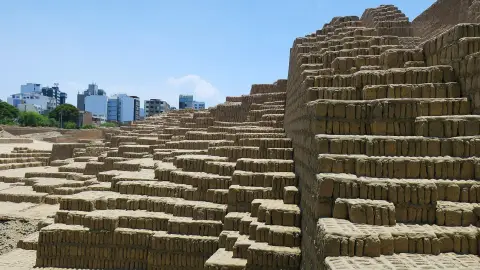
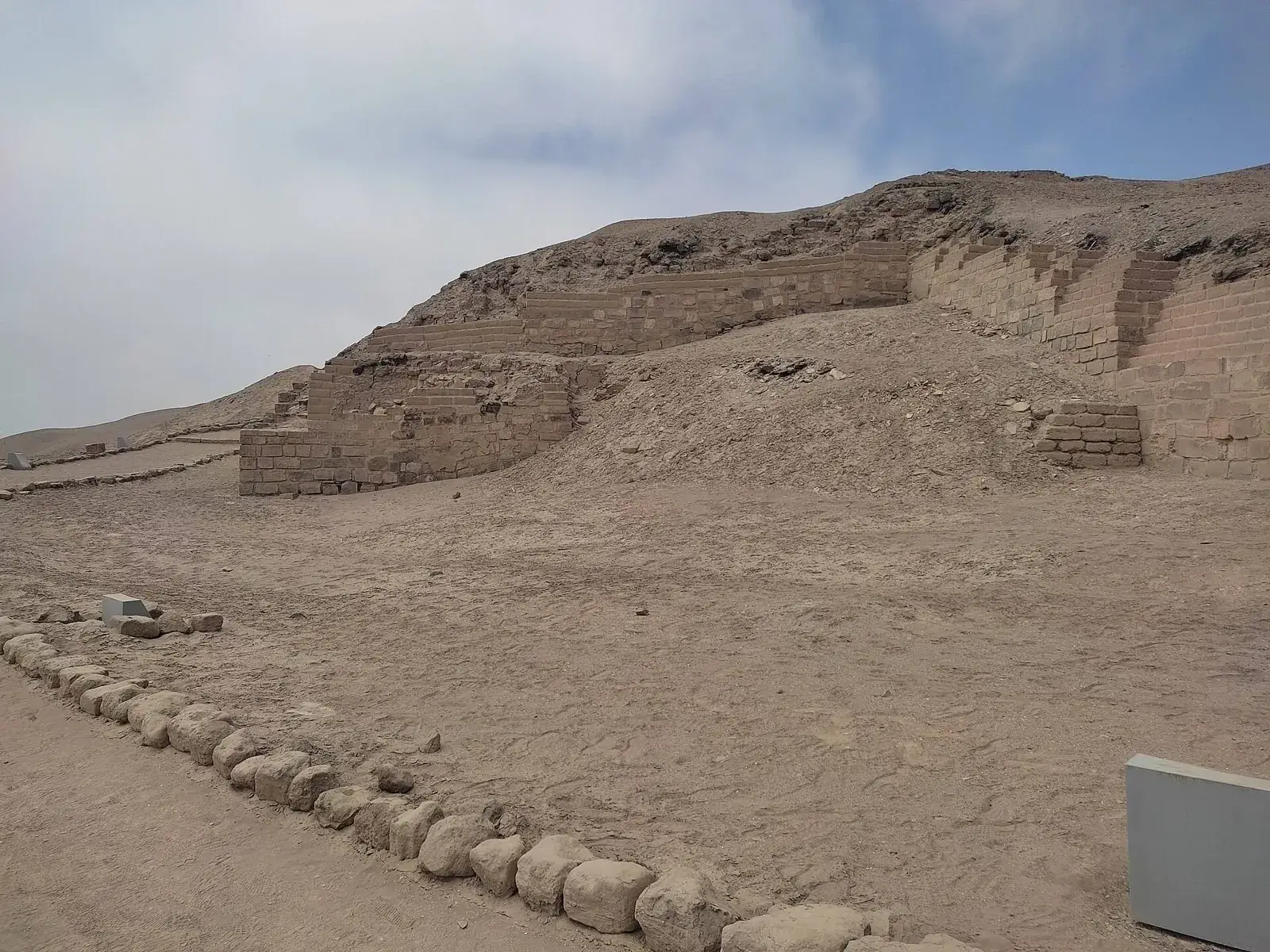
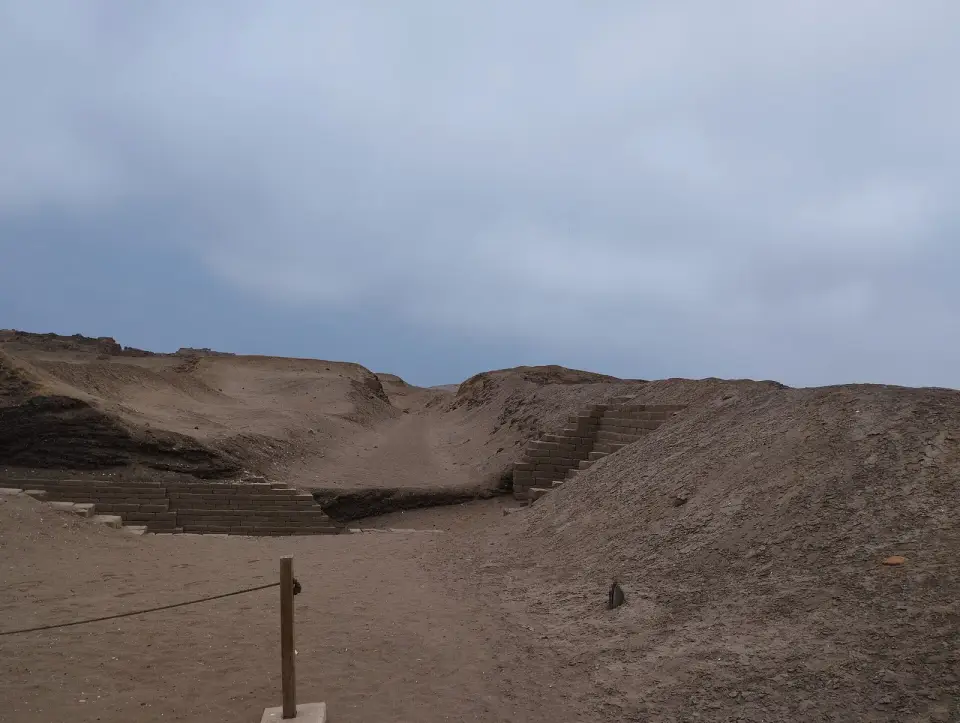
The site is large, with a mix of pyramids, plazas, temples and cemetery areas spread over a wide area between the desert and the sea. Layers from different periods overlap, so some structures are easier to read than others. Much is built from adobe and has eroded, and parts have been restored.
What to see
Key structures include the Temple of the Sun, a large stepped platform with views across the site towards the ocean, and the Painted Temple, which is a smaller building associated with the oracle. The Inca-period Acllahuasi, usually described as the "house of the chosen women", is a restored complex with trapezoidal doorways. The older pyramids with ramps show how the sacred centre was arranged before the Incas.
The views are as much part of the visit as the structures. Climbing the main platform lets you see the layout, the line of the sea and the contrast between the green valley and the desert.
A small site museum holds objects found in excavations, and it helps to understand the scale of the pilgrimage. If you have visited the Larco Museum, you will recognise the wider cultural context. Distances between structures are considerable, and a route by vehicle around the site is usually available, so ask on arrival.
Tours and activities
Bookable online, chosen for their traveller reviews.
-
★ Top rated From €52 per person
-
★ Top rated From €85 per person
-
★ Top rated From €94 per person
-
★ Top rated From €55 per person
Reading the layers of the site
Pachacamac is easiest to understand if you remember that it was not built at one time. Early structures belong to coastal societies that predate the Inca empire, and later phases reflect the Wari influence and finally the Incas, who treated the existing shrine with respect and added buildings rather than removing it. This pattern, absorbing a famous local religious centre instead of replacing it, is a standard feature of how the empire expanded.
Look for differences in construction. The older pyramids tend to be stepped mounds of adobe, often with ramps, while the Inca additions are marked by trapezoidal doorways and more regular masonry. The result is a patchwork, and a guide helps to separate the periods.
The site was excavated and studied over many decades, and interpretations are still revised. When a guide gives a precise date or a precise function for a building, it is fair to treat the statement as the current best reading rather than as the final word.
Getting there and planning
The site lies roughly an hour from central Lima by road, depending on traffic, which can be heavy on the way out of the city. Many people go on a half-day tour from Lima, which handles transport and a guide. Going independently by taxi or public transport is possible, but you should plan the return before you go, since transport at the site can be limited. For how to arrange a safe round trip, see taxis and apps.
There is little shade, and the coastal sun and wind are strong. Bring water, a hat and sunscreen, and wear closed shoes for the dusty paths. The fog that covers the coast in winter can make the site look very different, and cooler, so a light jacket is useful in those months.
Many archaeological sites close on certain days. If you plan to go with a tour, ask whether the entrance fee and the museum are included.
Tour or independent visit
A tour is the straightforward choice. The operator handles the road, the timing and the explanation, and you do not need to worry about finding the way back. Lima tours describes the common formats and what to ask before booking.
An independent visit suits people who want to spend longer on site or who dislike groups. Hire a taxi with an agreed waiting time, or use ride-hailing for the outward journey and make a plan for the return, since it can be difficult to find a car in a remote spot. Carry water and food, as the amenities at the site are limited.
Whichever you choose, start in the morning. Light is better, the heat is lower and the haze that often covers the coast tends to burn off by midday. If you are staying in Miraflores, ask your accommodation about drivers who do this run regularly.
Pachacamac in a wider Lima plan
Pachacamac works best as a half-day excursion in the middle of a Lima stay, once you have seen the more compact sights. The Huaca Pucllana mound and the Larco Museum provide a good grounding, and Pachacamac then shows the same cultures on a grand scale.
If you have a long layover or are heading south to Paracas, consider whether the extra time is better spent here or on the road. The two are in the same general direction, but they require separate half-days and different transport.
For ideas on what else to do in the city, see things to do in Lima. For those with limited time, Pachacamac is the first thing to drop, but it is also the one that gives the best sense of how big and sacred the coast was before the colonial period.
Where to sleep
-
Find hotels
Miraflores
Easy first base: restaurants, parks and the cliff-top walk
-
Find hotels
Barranco
Art, nightlife and a seaside feel, quieter by day
-
Find hotels
San Isidro
Calm business district with parks, close to Miraflores
-
Find hotels
Historic Centre
Colonial sights on the doorstep, busy by day and quiet at night
Frequently asked questions
How long does a visit to Pachacamac take?
Allow a half day including the journey from Lima. The visit on site is usually about two hours.
Can I get there without a tour?
Yes, by taxi or public transport, but a tour handles the transport and explains the site. If you go alone, arrange the return in advance.
Is it better to see Huaca Pucllana or Pachacamac?
If time allows, both. Huaca Pucllana is a quick stop in Miraflores, and Pachacamac is a much larger site that needs a half day.
Who built Pachacamac?
It was built and added to over many centuries by different societies on the central coast, and later by the Incas. The site's long history is part of its interest. Guides may give slightly different dates, so treat them as approximate.
What was the oracle at Pachacamac?
The site was known for an oracle linked with a coastal deity, and pilgrims travelled to consult it. Details of the rituals are uncertain. The idea is well documented in accounts written after the conquest, which should be read with care.
What should I bring to Pachacamac?
Water, a hat, sun protection and closed shoes. In winter, add a light jacket because fog and wind make the coast cooler. Food is limited, so carry a snack.
Is Pachacamac worth it if I am short of time?
It is worth it if you want to see a large ancient religious centre, but it is the first thing to drop if you only have one or two days. In that case, choose Huaca Pucllana or the Larco Museum.
Is there a museum at Pachacamac?
Yes, a small site museum holds objects from excavations. It helps to put the structures in context.