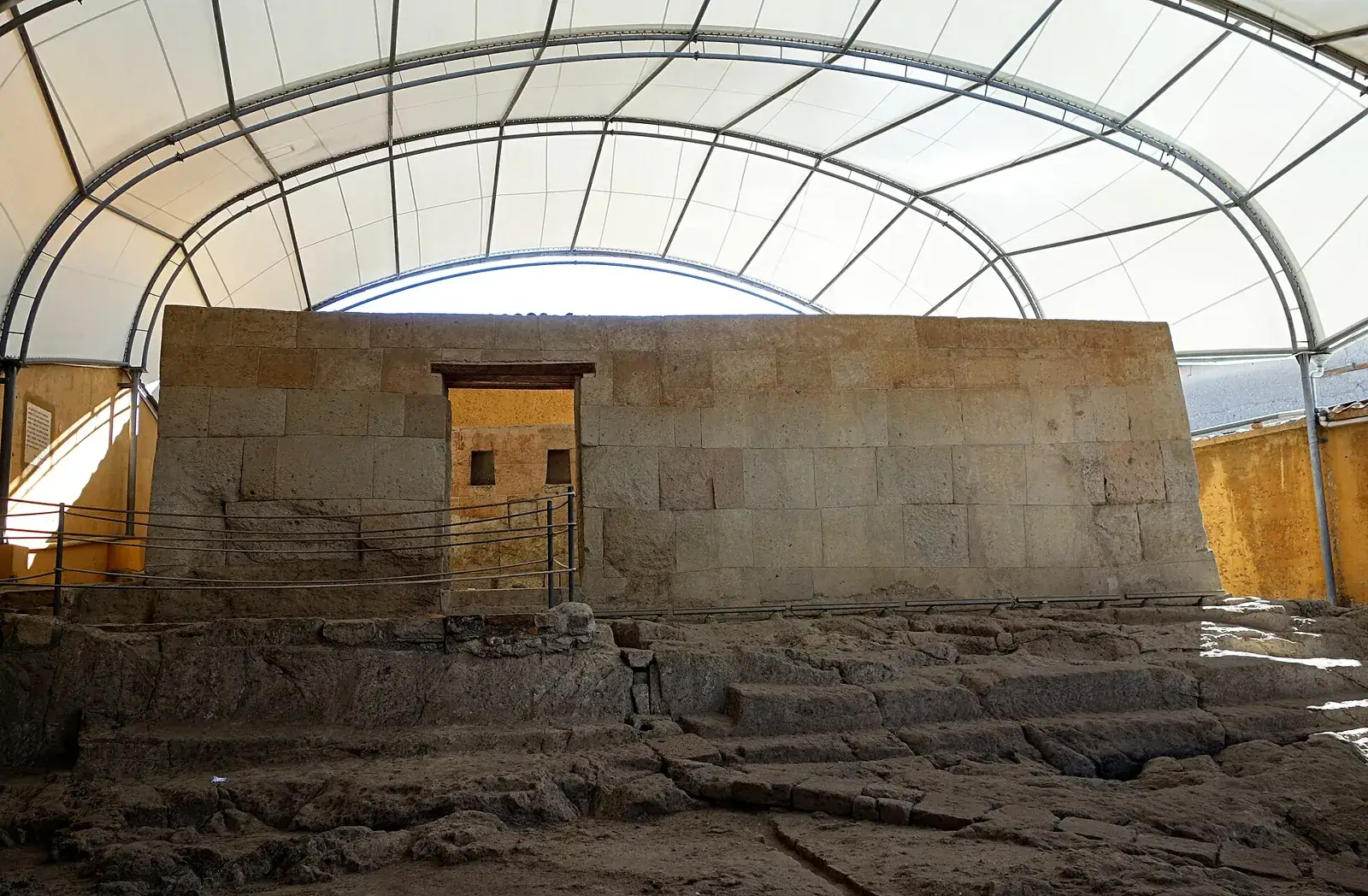
The Ransom Room (Cuarto del Rescate) is a small Inca stone chamber a short walk from Cajamarca's main square, and the only Inca building still standing in the city. Tradition says Atahualpa was held here after his capture in 1532 and offered to fill it with gold and silver. A visit takes 20 to 30 minutes; it is worth more if you know the story first. Check access and hours locally before you go.
Map
What the Ransom Room is
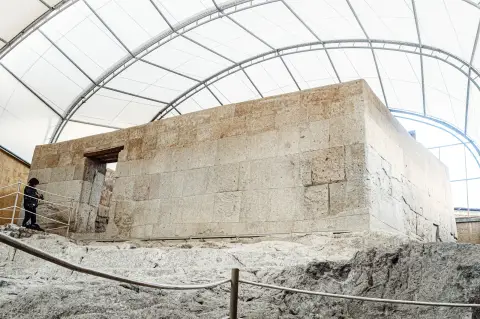
The Cuarto del Rescate is a rectangular room of fitted volcanic stone, a few steps from the Plaza de Armas of Cajamarca. By the usual measurements it is about 11.8 m long, 7.3 m wide and 3.1 m high. Only the four walls are original; the roof is modern, and today a tensioned canopy covers the whole structure to protect the stone.
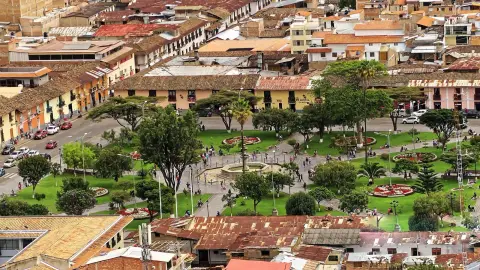
It is the only surviving Inca construction in the city, which is why it carries so much weight. Cajamarca was an Inca provincial centre when the Spanish arrived, but the plaza, palaces and temples were overbuilt or dismantled in the colonial period. This room, preserved inside later buildings, is what is left.
Expect a small, quiet site rather than a monument. The interest lies in the stonework, the doorway and the history, which means that a short visit with some background reading is more rewarding than a long one without.
Atahualpa and the ransom
In November 1532 the Inca ruler Atahualpa came to Cajamarca with a large following and met Francisco Pizarro and a small Spanish force. The Spanish seized him in an ambush on the plaza. Peruvian historians date his captivity from 16 November 1532 to 26 July 1533, the day he was executed.
During those months Atahualpa is said to have offered to fill the room with silver twice and with gold once, as high as he could reach. Accounts agree on the offer but differ on the details and on what he meant by it; some historians argue the Spanish read as a ransom what he intended as a gesture to win his captors' goodwill. Gold and silver were gathered from across the empire and melted down, and he was executed anyway.
The episode is told in more depth in the Spanish conquest, and the empire he ruled is covered in the Inca empire. Read those first if you want the room to mean more than a wall of stone.
Is it really the room?
This is the question a thoughtful visitor should ask, and the answer is cautious. The building is Inca, and local tradition and Peruvian sources identify it as the place where Atahualpa was held. Some historians are less certain that this exact room was the one that held the gold, and records of the period do not settle it.
What is not in doubt is the age and origin of the walls. The masonry is Inca work, and it stands in the place where the events are known to have unfolded. Treat the label on the door as tradition rather than proof, as a good local guide will.
Archaeological work has continued: excavation reported in 2023 turned up pottery from Inca, Cajamarca, colonial and republican periods, together with remains of other stone walls. That is a reminder that the room was part of a larger complex, and that more may still be learned about the plaza of 1532.
What you see inside
The walls show typical Inca stonework: regular blocks of volcanic stone, tightly fitted, leaning slightly inward as they rise. The doorway is trapezoidal, wider at the base than at the top, and in the inner walls you can see small trapezoidal niches, the same form seen in Inca buildings across the Andes. For more on why these shapes appear everywhere, see Inca engineering.
The best-known detail is the red line, a horizontal mark on one wall. Tradition says it shows the height to which Atahualpa raised his hand when he promised to fill the room. Look at it as part of the tradition, not as a measured archaeological feature.
Around the room, the rock floor and stepped foundations are visible, and the canopy gives even light for photographs. The stone is delicate, and a 2008 study warned of serious deterioration in it, so do not touch the walls.
Getting there and what to expect
The room is about 50 m from the Plaza de Armas, in the historic centre, so no transport is needed from anywhere in the historic centre. It is a simple walk from any hotel around the plaza, and the whole town centre is compact enough to see on foot in a day.
Access and ticketing have changed over the years. Some visitors have reported that the interior was closed, while other sources describe it as open; the sensible approach is to ask at your hotel or the local tourist office on the day. The entrance arrangement, whether a combined ticket with nearby sites is sold, and the hours are all things that can change, so none is given here.
Local guides wait near the entrance and around the Belén complex and will take small groups. Guides add the most value here, because the room is small and the story is the point. Agree the price before you start.
How long, and when to go
Allow 20 to 30 minutes for the room itself, or up to an hour if you take a guide and walk through the neighbouring colonial buildings. It is a good first stop on a morning walk, followed by a coffee on the plaza.
Cajamarca sits at about 2,700 m, so the altitude is mild and the walk is flat. There is no effort involved. See altitude sickness if you arrive from the coast, since a headache on the first afternoon is possible.
Timing matters mostly for crowds. Tour groups tend to come in the morning, and some visitors find the lunch hour the quietest. The structure is covered, so rain does not stop a visit, and the dry season, roughly May to September, makes the walk between sights more pleasant. Outside that period, bring a light waterproof layer.
Who it suits and what to combine
The Ransom Room suits anyone interested in the end of the Inca empire, and travellers who like to stand where history turned. It will disappoint someone expecting a large site like Machu Picchu: it is one room, and the value is in the story and the stonework. Families with older children usually do well if the story is told simply.
Combine it with the rest of the town centre: the plaza where the ambush took place, the cathedral and the colonial churches, and the Santa Apolonia viewpoint above the centre. Outside town, the water channels at Cumbemayo and the burial niches at Ventanillas de Otuzco fit into the same two days; the Cajamarca guide sets out the full list.
If you are building a northern route, Cajamarca links naturally with Trujillo on the coast and Chachapoyas in the cloud forest; the northern itinerary shows how to fit the stops together.
Where to sleep
-
Find hotels
Cajamarca
Colonial highland town with thermal baths nearby
Frequently asked questions
What is the Ransom Room?
It is an Inca stone room in Cajamarca where, by Peruvian tradition, Atahualpa was held after his capture in 1532. It is the only Inca building still standing in the city. See also the Spanish conquest.
Was it really filled with gold?
Atahualpa is said to have offered to fill the room with silver twice and gold once. Large quantities of gold and silver were collected and melted down by the Spanish, but exact amounts differ between sources. Historians also disagree on how the offer was understood.
How long does a visit take?
About 20 to 30 minutes for the room alone. With a guide and the nearby colonial buildings, plan on up to an hour.
Where exactly is the Ransom Room?
It is about 50 m from the Plaza de Armas in the historic centre, so it can be reached on foot from any central hotel. The Cajamarca guide gives the wider layout of the town.
Is the red line on the wall original?
It is part of the tradition rather than a measured feature. It is said to mark the height of Atahualpa's raised hand when he made his offer, and it should be seen as local tradition, not as archaeological evidence.
Can I visit independently, or do I need a guide?
You can go alone, since the site is small and central. A guide adds the story and the context, which is most of the value, and guides usually wait near the entrance; agree the price first.
Is the Ransom Room worth it if I only have a day in Cajamarca?
Yes, because it is close to the plaza and takes little time. It sets the context for the rest of the town. For a fuller visit, see how the northern itinerary allocates time.