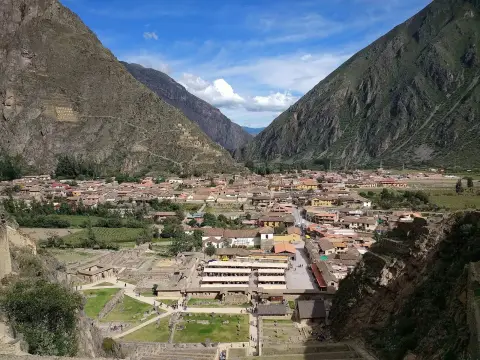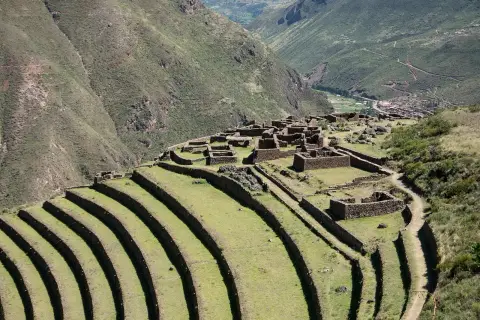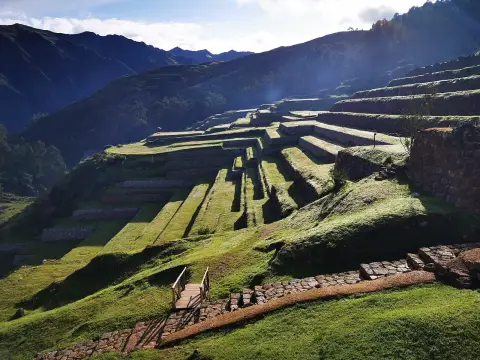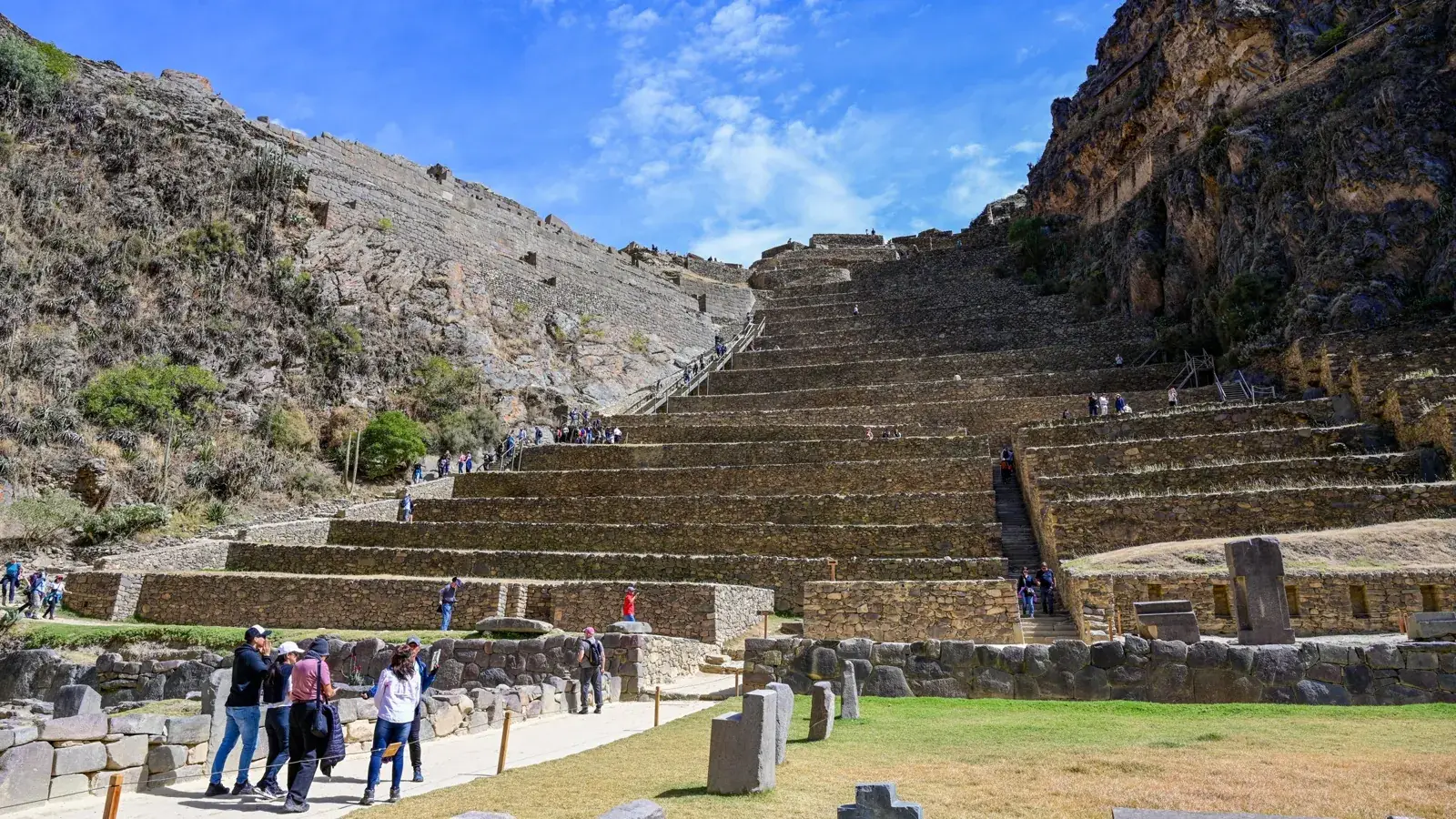
The Ollantaytambo site is a steep hill of agricultural terraces topped by an unfinished temple with giant, tightly fitted stones, rising directly above the town. Allow about two hours, longer if you climb to the storehouses opposite. It is the best-preserved Inca stonework in the Sacred Valley that you can reach on foot from your hotel. Go early: the climb is short but steep, and the site fills up once the tour groups arrive.
Map
What the site is
The Ollantaytambo archaeological site is usually called a fortress, and the name stuck because of what happened here in the Spanish conquest. Archaeologists point out that most of what survives is ceremonial and agricultural, so it is better understood as a royal estate and temple complex with a defensive position. It climbs the northern slope of the valley directly above the town of Ollantaytambo, at about 2,790 m.
The Inca emperor Pachacuti is credited with rebuilding the place in the fifteenth century after conquering the settlement already here. Much of the work was left unfinished when the Inca state fell into civil war and then conquest. That unfinished quality is part of the interest: you can see blocks that were dragged into position but never trimmed, and walls that stop abruptly.
A short history: the battle that the Incas won
When the Spanish took Cusco, the Inca ruler Manco Inca withdrew to Ollantaytambo and made it a stronghold. A Spanish force led by Hernando Pizarro came up the valley and attacked the terraces, and the defenders rained stones and arrows on the horsemen and flooded the plain below. The Spanish retreated. It was one of the few clear Inca victories of the conquest.
The success was short-lived. The Spanish returned in greater numbers, and Manco withdrew deeper into the mountains, towards Vilcabamba. Ollantaytambo was then handed to a Spanish colonist, and the town continued to be lived in, which is the reason its Inca street plan survives today.
The terraces you climb were therefore both a farm and a battlefield, and guides often tell the story at the foot of the stairway. Dates differ slightly between sources, so treat the exact year as something to confirm.
Tours and activities
Bookable online, chosen for their traveller reviews.
-
From €107 per person
Ollantaytambo
Private Sacred Valley Day Trip with Local Guide
-
From €107 per person
Ollantaytambo
Moray and Maras Day Tour from Ollantaytambo to Cusco
-
Day trip From €54 per person
Ollantaytambo
Moray ATV Tour from Cusco with Salt Mines and Tasting
-
From €65 per person
Ollantaytambo
Private Half-Day Maras and Moray Tour from Ollantaytambo
The terraces and the climb
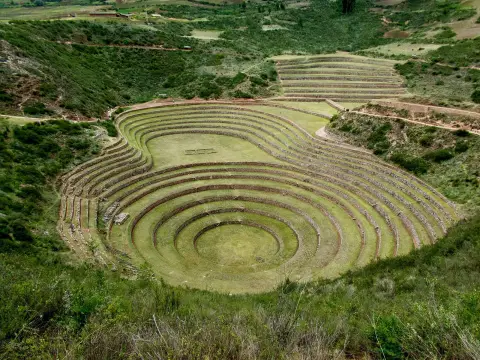
The entrance leads you up a long flight of agricultural terraces, built of cut stone and tall enough that each step takes real effort. The terraces were not only for growing crops: they stabilise the hillside, and their curved layout is intended to match the slope. At the sides, a few stairways run between levels.
The climb itself is only a few minutes, but the steps are high and the air is thin. Most people stop to breathe halfway, which is normal even for fit visitors in their first days at altitude. If you have only just arrived from Lima or Cusco, go slowly and read altitude sickness first.
Near the base, look for the Princess's Bath, a small carved fountain with a water channel, and the sunken lower terraces used for planting. Water was carried across the site by stone channels, and some still run today.
Temple of the Sun and the Wall of the Six Monoliths
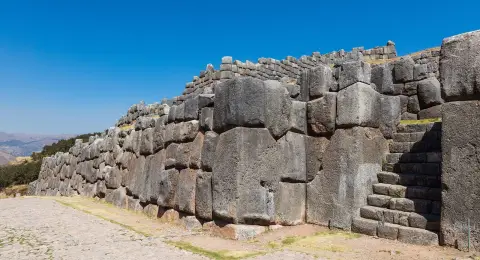
At the top of the terraces stands the unfinished Temple of the Sun, the reason most people climb. Its centrepiece is the Wall of the Six Monoliths, six huge slabs of pinkish rhyolite set side by side and joined by narrow stone strips. The blocks are enormous, and the fit between them is tight enough that you can see the care that went into the work.
The stone did not come from the hill. It was quarried at Kachiqhata, on the opposite side of the valley, several kilometres away, and brought here using ramps, rollers and large teams of workers. Some blocks were left on the route and are known as the tired stones.
Take time to look at the details: the T-shaped notches, the carved surfaces, and the way the wall was set up before it was dressed. Compare the stonework with Sacsayhuamán above Cusco if you are visiting both.
The storehouses and the other side of the valley
From the temple, look across the Patacancha valley to the hillside called Pinkuylluna, where small stone buildings sit high above the town. These are Inca storehouses (*qollqas*), placed on a cold, windy ridge on purpose: the draughts and low temperature helped preserve grain and other food.
You can walk up to them on a separate path from the town, with no need to pass through the main site entrance, though you should check the current ticket rules before you go. The path is steeper and less maintained than the main stairway, but the reward is a close view of the ruins and the town from above, usually with fewer people.
From the upper terraces you can also pick out the quarry slope across the valley and the line that the stones followed. The view helps to understand why the Incas chose this narrowing of the valley: whoever held it controlled the route towards Machu Picchu and the lower jungle.
Tickets, timing and crowds
Entry to the site is usually covered by the Boleto Turístico del Cusco, the multi-site ticket sold in Cusco, which includes several Sacred Valley monuments. Whether you can buy a separate ticket for this site alone, which options exist and how long each is valid has changed over the years, so check at the entrance or with the Cusco tourism office.
Opening hours also change with the season and with public holidays. The site is open daily, but confirm the times locally.
The crowds follow the trains. Tour buses arrive from late morning, and the lower terraces and temple area become busy. Arriving at opening time gives you the stairway to yourself and softer light on the stonework. Late afternoon is also quieter, though shade falls early on the hillside.
Combining it with trains and other stops
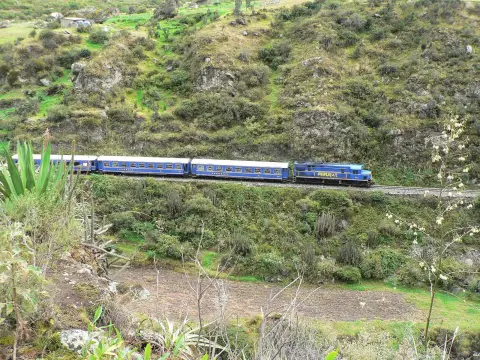
Because the Machu Picchu trains leave from Ollantaytambo, many visitors fit the site in around their departure. The practical pattern is to climb in the morning if your train is in the afternoon, or on the day you return. If you board an early train, do not plan on seeing the ruins first; leave it for the other end of the trip. See trains to Machu Picchu for how departures work.
Two hours on site is a realistic minimum, and it is easy to spend longer with the history and views. Add the Pinkuylluna storehouses if you want a bigger half day.
The site combines well with Moray and the salt pans in a full Sacred Valley tour, or it can be done independently on foot. For where it sits in the wider region, see the Sacred Valley overview.
Practical advice
Wear shoes with good grip, as the stone steps are worn and slippery after rain, and bring water, sun protection and a layer. There is little shade, and the sun is fierce at midday in the dry season. The rainy months, roughly November to March, bring afternoon showers and a greener hillside.
A guide is worth considering at this site, because much of the interest lies in the stories behind the stones rather than in signs. Agree the price and duration before you start, and check any guide's licence at the entrance.
Trekkers arriving from the Inca Trail or heading out to it will see porters and groups passing through the town. Keep to the marked paths, do not climb on the walls, and do not take stones or pieces of the ruins.
Where to sleep
-
Find hotels
Ollantaytambo
Early trains to Machu Picchu and a walkable old town
Frequently asked questions
How long does the Ollantaytambo site take to visit?
Plan about two hours for the main terraces and temple area. Add roughly another hour if you walk up to the storehouses on the opposite hill.
Is the climb hard?
It is short but steep, with high steps, and the site is at about 2,790 m. Most people manage it at a slow pace. If you are still adjusting, see altitude sickness.
Do I need the Cusco tourist ticket?
Entry has generally been through the Boleto Turístico del Cusco, though the options change. Ask at the entrance or with the tourism office before you travel.
Can I visit before an early Machu Picchu train?
Not realistically. The site opens in the morning and early trains leave before that. Plan the visit for the afternoon before or the day you return.
What is the best time of day?
Opening time, when the lower terraces are quiet and the light on the stone is soft. Late afternoon is the second choice. Midday brings the tour groups and the strongest sun.
Is a guide necessary?
No, but it helps. Much of the story, including the battle and the quarry, is not explained at the stones themselves. Agree price and length first.
Is it worth visiting if I am short of time?
Yes, if you are already in town for the train. It is one of the most impressive Inca sites in the valley, and you can see the main part in about two hours. Read about the town in the Ollantaytambo guide.