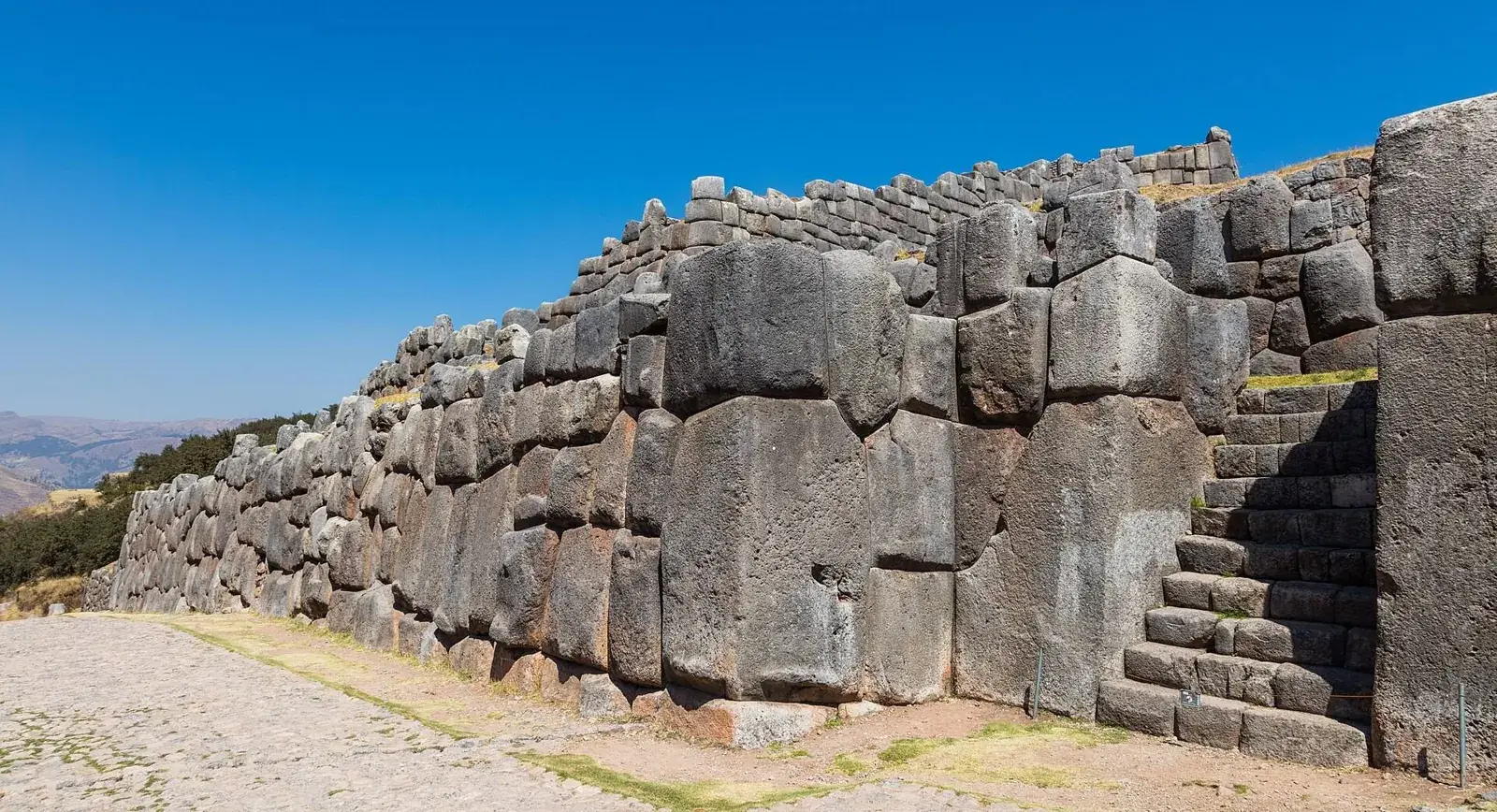
Sacsayhuamán is a hilltop Inca complex on the northern edge of Cusco, known for three tiers of huge zigzag stone walls. It takes one to two hours to see, can be reached by taxi or a steep walk from the Plaza de Armas, and is covered by the Cusco tourist ticket. Go in the morning, with water and a warm layer, and visit after a day or two at altitude.
The site stands at roughly 3,700 m, higher than the city itself.
Map
What you are looking at
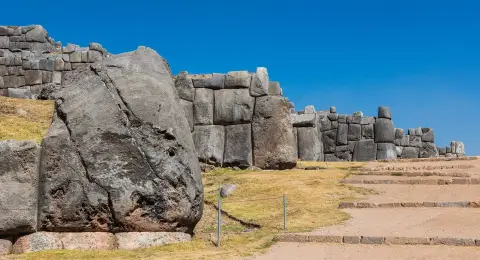
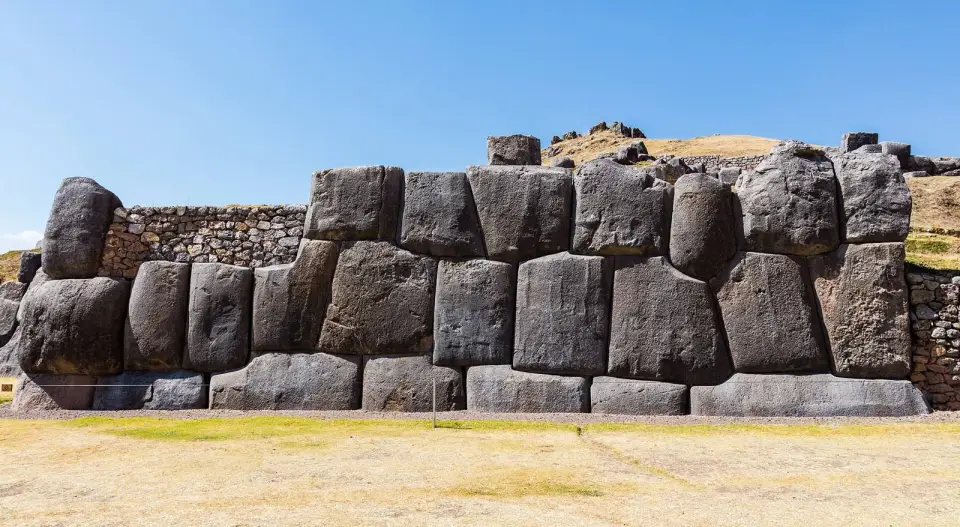
The most famous feature is the wall of three massive terraces, laid out in a zigzag, built from enormous limestone blocks fitted together without mortar. Some stones are far heavier than anything moved by hand today seems plausible, and the joints are so tight that a blade will not slide between them. The zigzag shape is often explained as a defensive design, though other interpretations exist.
Above the walls are open grassy terraces and a rocky outcrop with carved surfaces, and a rounded platform where Inca ceremonies may have taken place. The view over Cusco's red roofs is worth the climb on its own.
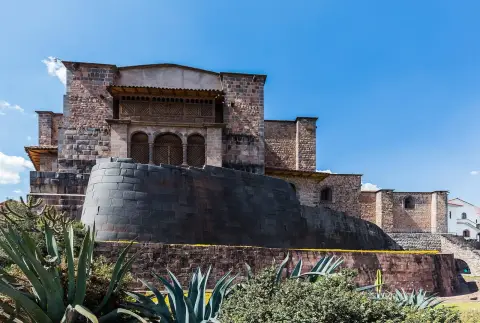
Stand at the foot of the walls and look along them, and the scale becomes clear: the largest blocks are far taller than a person. Walk the length slowly, notice how each stone has been shaped to fit its neighbours, and compare the finish with the walls of the Qorikancha in town, where the stonework is finer but the blocks smaller.
History in brief
Sacsayhuamán was built in the fifteenth century under the Inca ruler Pachacuti and his successors, and it served both as a ceremonial site and a military one. It was the scene of a major battle during the 1536 Inca uprising against the Spanish, and the Spanish later stripped many of the smaller stones to build colonial Cusco, which is why the largest ones remain. Local lore says the shape of Cusco was meant to resemble a puma, with the fortress as its head.
What remains is only a fraction of the original complex. Early chroniclers described towers and buildings on the terraces, but these were dismantled for building material over the years. That helps to explain why the site feels like a vast open platform rather than a fortress with rooms, and why the walls are so dominant.
Tours and activities
Bookable online, chosen for their traveller reviews.
-
★ Top rated From €23 per person
-
★ Top rated From €22 per person
-
★ Top rated From €23 per person
-
★ Top rated From €17 per person
Getting there and tickets
From the Plaza de Armas, the walk takes roughly half an hour or more uphill via the San Cristóbal district; many visitors take a taxi up and walk down. Tour minibuses also stop here as part of a half-day circuit with Q'enqo, Puka Pukara and Tambomachay. The site is covered by the Cusco tourist ticket, with full and shorter versions, and checks are made at the entrance. Opening hours and ticket rules can change.
Guides wait at the gate. Agree the price and language before starting, and make sure they are officially registered. Tours from Cusco explains how to judge a guide or an operator, and things to do in Cusco shows how to fit the visit into a two-day plan.
When to go and what else to do
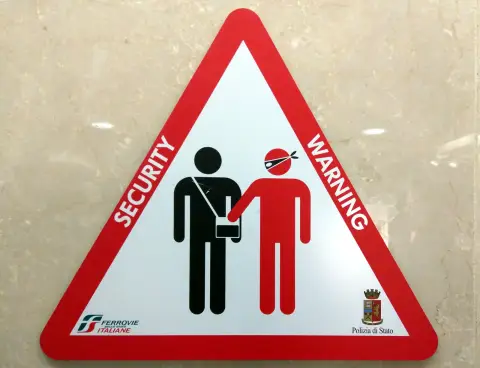
Mornings are best for clear skies and fewer groups. In June, the open ground below the walls hosts the Inti Raymi ceremony, which draws large crowds. Combine the visit with the nearby ruins, or walk down through the neighbourhoods toward the centre. Be careful with your belongings on quiet paths, and avoid walking alone at dusk.
Light changes the walls through the day. Early light is flat and cool, midday is bright and harsh, and late afternoon is warm and gold, though the site may close before the best light. If you are photographing the stonework, shoot from low angles along the wall rather than head-on, and include a person for scale.
Pacing, children and accessibility
The ground is uneven, with grass, steps and loose stones, and there is little shade. Allow time for breaks, drink water often and watch for early signs of altitude trouble: headache, dizziness or breathlessness. For the symptoms worth taking seriously, see altitude sickness.
Children enjoy the open space, but keep them away from edges and steep drops. Wheelchair users and people with limited mobility will find the site hard, though a taxi can drop you near the main viewpoints. For advice on getting around the region with mobility needs, see accessible travel.
Comparing Sacsayhuamán with other Inca sites
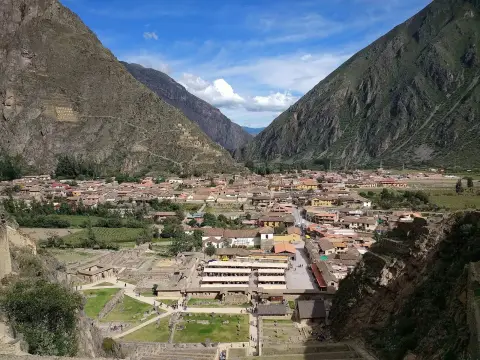
Sacsayhuamán is the best place in the city to feel the scale of Inca stonework, but other sites show different sides of the empire. Ollantaytambo combines terraces and temple walls on a hillside, while the Qorikancha shows the refined masonry of a major temple. Machu Picchu, covered in the Machu Picchu, is a royal estate with a very different setting and purpose.
Because the sites differ, you do not need to see all of them in depth. If you only have time for one in the Cusco area, Sacsayhuamán is an easy choice for a morning, and a good way to prepare for the larger sites in the valley. Spend a day or two in town to adjust to the height before you head to the high trails.
Where to sleep
-
Find hotels
Plaza de Armas and historic centre
Everything on foot, at the price of noise and crowds
-
Find hotels
San Blas
Artisans' quarter with steep lanes and views, a short walk uphill
-
Find hotels
All of Cusco
Compare every area and price level in one search
Frequently asked questions
How long does a visit take?
One to two hours is enough for the walls and the viewpoint. Allow longer if you add nearby sites.
How do I pronounce Sacsayhuamán?
Visitors often say it as 'sack-say-wah-MAN'. The name comes from Quechua and its exact meaning is debated.
Can I visit it at night?
Normally the site closes in the late afternoon. Avoid walking the hill after dark.
Do I need a guide at Sacsayhuamán?
It is not required, but a guide adds a lot of context, since the site has few signs. If you take one, agree the price and language first and check that they are registered.
Is it free to visit Sacsayhuamán?
Entry is usually covered by the Cusco tourist ticket, so you need that ticket or a valid alternative. Arrangements can change.
Can I walk there from the centre?
Yes, but it is steep, especially on your first day at altitude. Many visitors take a taxi up and walk back down through San Cristóbal.
Is Sacsayhuamán the same as the Inti Raymi site?
The Inti Raymi ceremony takes place in June on the large open area below the walls, so the site is crowded and some access may be restricted that day.