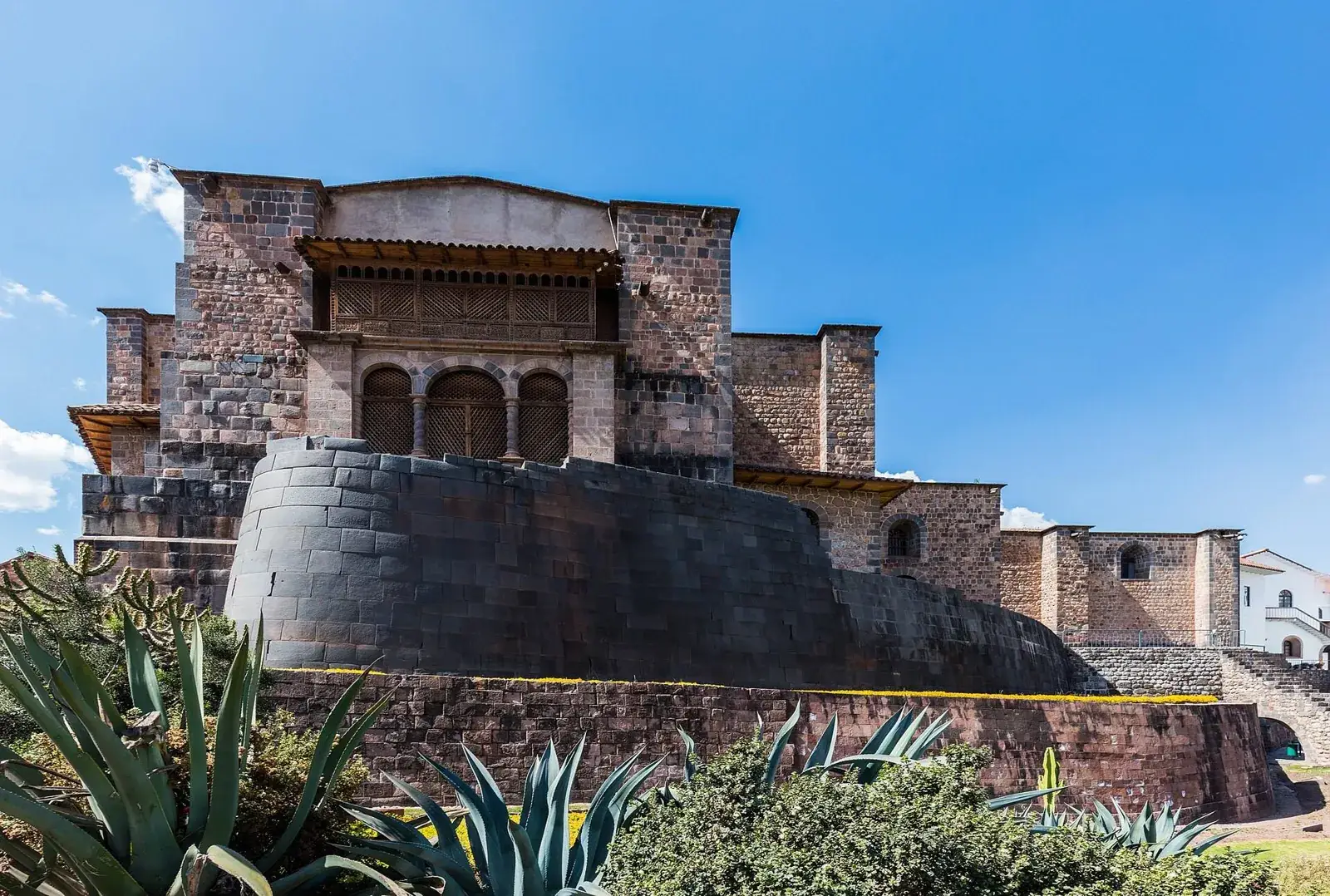
The Qorikancha is the Inca temple in Cusco on which the Spanish built the church and convent of Santo Domingo. Allow about an hour. What you see is a rare, direct contrast: precisely fitted Inca walls at the base, colonial arches and cloisters above. Little of the Inca interior survives, so a guide or a good audio explanation makes the visit far more rewarding.
Map
What the Qorikancha was
The name is usually translated from Quechua as "golden enclosure" or "golden courtyard". It was among the most important religious sites of Inca Cusco and is generally linked with the worship of the sun, along with other deities and astronomical observation. Chroniclers writing after the conquest describe rooms richly decorated with gold and silver, but those accounts were set down by Spanish authors, and their details cannot all be checked today.
What is certain is what happened next. After the Spanish took Cusco in the 1530s, the site was given to the Dominican order, who built their church and convent directly on the Inca foundations. The temple's treasures did not survive that period. For a first orientation to the wider city that surrounds the site, start with Cusco.
Stone below, convent above
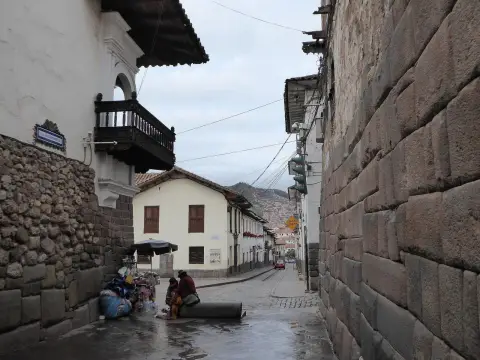
The reason to come is the masonry. The curved outer wall beneath the church apse is one of the best-known examples of Inca stonework in the city: large stones cut and fitted so closely that the joints are hard to see, without mortar. Inside, a number of rooms around the cloister keep trapezoidal doorways and niches, features that are typical of Inca architecture.
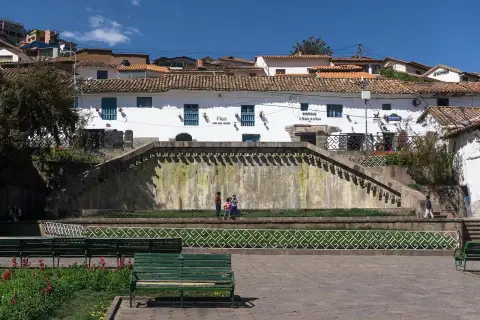
The Spanish additions are worth looking at too. The cloister has colonial arcades, and the church above has been restored more than once after earthquakes. Cusco has been shaken by major quakes, and the repeated pattern is the same: the Inca walls tend to stay standing while the later construction on top is damaged. Guides often point this out, and it is a good way to read the whole site.
Do not expect a room full of objects. The visit is mostly about walls, proportions and what the site tells you about two successive empires.
Tours and activities
Bookable online, chosen for their traveller reviews.
-
★ Top rated From €23 per person
-
★ Top rated From €22 per person
-
★ Top rated From €23 per person
-
★ Top rated From €17 per person
How to read the walls
A few simple clues turn a blank-looking wall into something legible. Look first at the trapezoidal doorways and niches: they are wider at the base than at the top, a shape the Incas used consistently and one that tends to resist earthquakes. Then look at how the stones sit against each other. Inca masons fitted irregular, many-sided blocks tightly, whereas later colonial masonry is usually laid in regular courses of squared blocks with visible mortar.
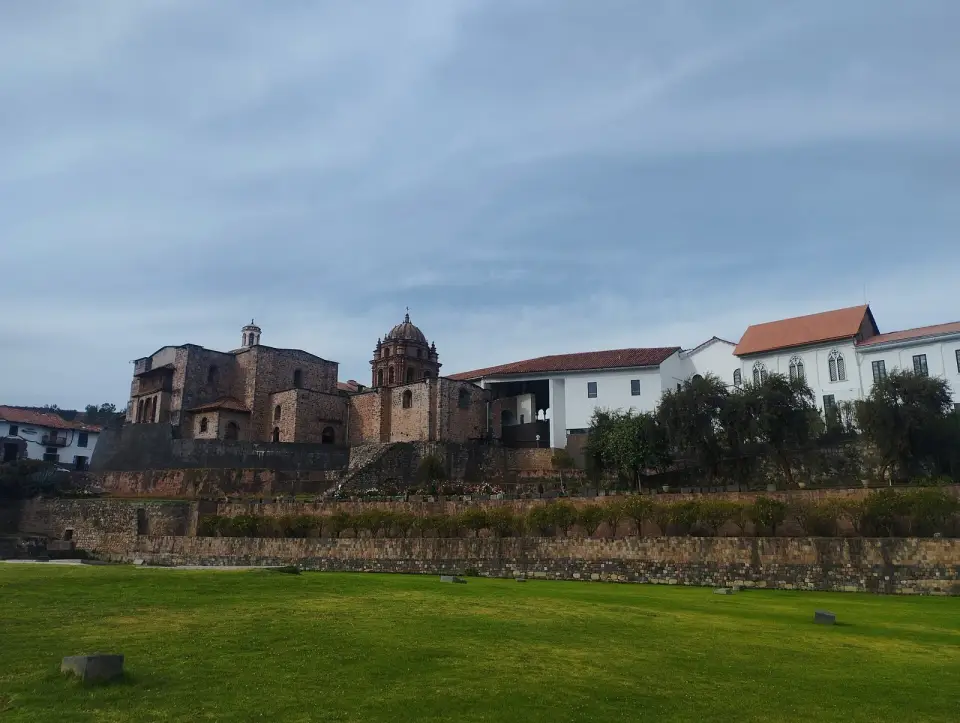
Once you can tell the two apart, the cloister becomes a kind of layered diagram. Lower walls of dark, fitted stone carry lighter, flatter colonial work. Where the two meet, you can see how the Spanish used the older structure as a ready-made foundation, both for practical reasons and as a statement about who now held power.
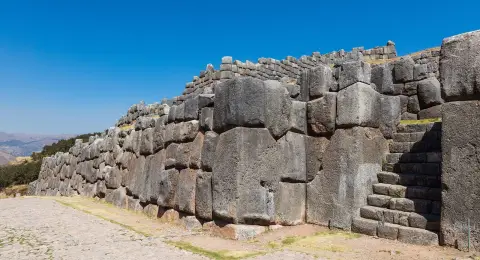
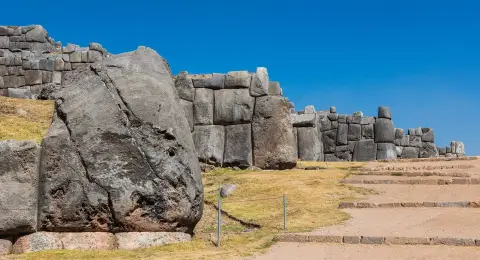
A short comparison with the large fortress walls at Sacsayhuamán helps: there the stones are enormous and rough-faced, here they are smaller and finished with great refinement.
Making the visit worthwhile
Because the site is mostly architecture, explanation matters. A licensed guide can show which walls are Inca, which are colonial rebuilds and how the rooms were probably used. If you prefer to go alone, read a short account first and walk the cloister slowly, looking for the trapezoid shapes.
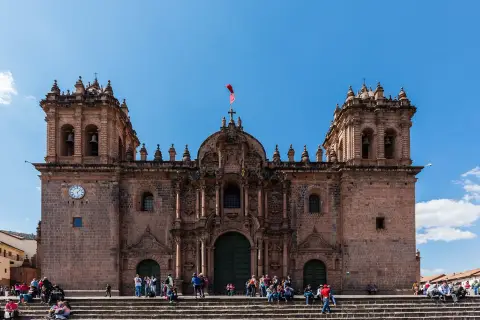
Go early or late in the day if you can, as tour groups tend to pass through in the middle of the day. The site is a short walk from the Plaza de Armas, so it fits naturally into a morning in the historic centre alongside the cathedral. It is a good first-day activity if you are still adjusting to Cusco's altitude, because it involves little climbing; see sleeping at 3,400 m to understand why a gentle first day is wise.
Many visitors book a city tour that includes the Qorikancha. See Cusco tours to understand what such tours usually cover and what to ask before you pay.
Respecting a working religious building
The convent still functions as a place of worship, and that shapes how you should behave. Dress in a way that suits a church: covered shoulders and no beachwear are sensible. Keep your voice low in the cloister and the church, and follow any instructions about photography, since rules on flash or filming can differ between areas and change over time.
Some areas may be closed at certain times for services or restoration work, so do not assume every room on a photograph you have seen is open. If a section is closed, the curved outer wall can be admired from the street side as well, which is a useful fallback.
General good manners, including how to ask before photographing people and how to behave in religious places, are covered on etiquette. Treat the site as you would a cathedral in Europe, because for many Cusqueños it is still a living part of their religious calendar.
Fitting it into a day in the centre
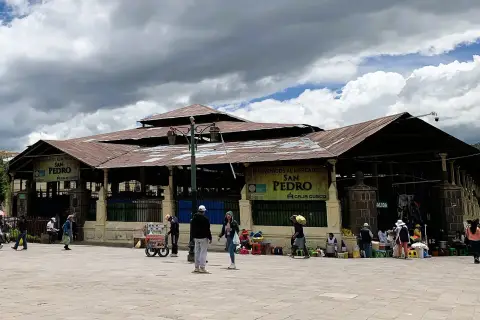
The Qorikancha is close enough to the main square that it works as one stop in a walking morning. A sensible order is to begin at the cathedral on the Plaza de Armas, walk to the Qorikancha, and then continue to the food stalls of San Pedro Market for a juice or a simple lunch. The whole loop is gentle on the legs, which matters at 3,400 m.
For the afternoon, the larger archaeological sites above the city are better visited after you have rested. See Sacsayhuamán to understand how to approach that hillside complex. See things to do in Cusco for other options in the centre if you have more time.
If you are choosing where to sleep with sightseeing in mind, see Cusco stay to understand which areas keep the historic sites within walking distance.
Common mistakes to avoid
The most frequent mistake is arriving with the wrong expectations. Visitors who expect a golden temple are disappointed, because the gold is gone. Come for the stonework and the story of what replaced the temple, and the visit will feel substantial.
A second mistake is rushing. A quick walk through in fifteen minutes leaves you with a few photographs and no understanding of what you saw. Slow down at the curved wall and in the cloister, and give yourself time to compare Inca and colonial work.
A third is assuming that ticketing is simple. Cusco's arrangements for monuments are changed from time to time, and the Qorikancha has not always been covered by the same ticket as other central sites. Do not rely on an old forum post.
Finally, do not combine the visit with a heavy first day at altitude. If you have just arrived, read the advice on altitude sickness first and keep your plans light.
Where to sleep
-
Find hotels
Plaza de Armas and historic centre
Everything on foot, at the price of noise and crowds
-
Find hotels
San Blas
Artisans' quarter with steep lanes and views, a short walk uphill
-
Find hotels
All of Cusco
Compare every area and price level in one search
Frequently asked questions
How long do I need at the Qorikancha?
About an hour is enough for most visitors. Allow longer if you take a guided tour or want to photograph the curved Inca wall and cloister at leisure.
Is the Qorikancha worth visiting if I am also going to Sacsayhuamán?
Yes. They show different things. Sacsayhuamán is a vast hillside complex of enormous stones, while the Qorikancha is a close-up view of refined Inca masonry combined with a colonial convent in the city centre.
Is the Qorikancha covered by the Cusco tourist ticket?
Arrangements for Cusco's ticketing change. Do not assume that every central monument is included in the combined ticket.
Do I need a guide at the Qorikancha?
It is not required, but it adds a great deal because the interior is mostly empty rooms and walls. A guide can explain which parts are Inca and which are colonial. If you go alone, read a short account beforehand.
Is there any gold left in the Qorikancha?
No original gold decoration survives for visitors to see. Descriptions of golden walls come from chroniclers written after the conquest, and the treasures were lost in the colonial period. The value of the visit is in the stonework.
Is the Qorikancha suitable for a first day at altitude?
Yes, it is one of the easier activities in the centre, with little climbing and plenty of places to sit. Pair it with a slow walk and plenty of water, and read our altitude advice first.
Is the Qorikancha the same as Santo Domingo?
They are the same place. Santo Domingo is the name of the colonial church and convent built on top of the Inca temple, so the site is known by both names.
Can I take photographs inside?
Rules differ between areas and can change, particularly inside the church. Look for signs and ask staff before using a flash or a tripod.