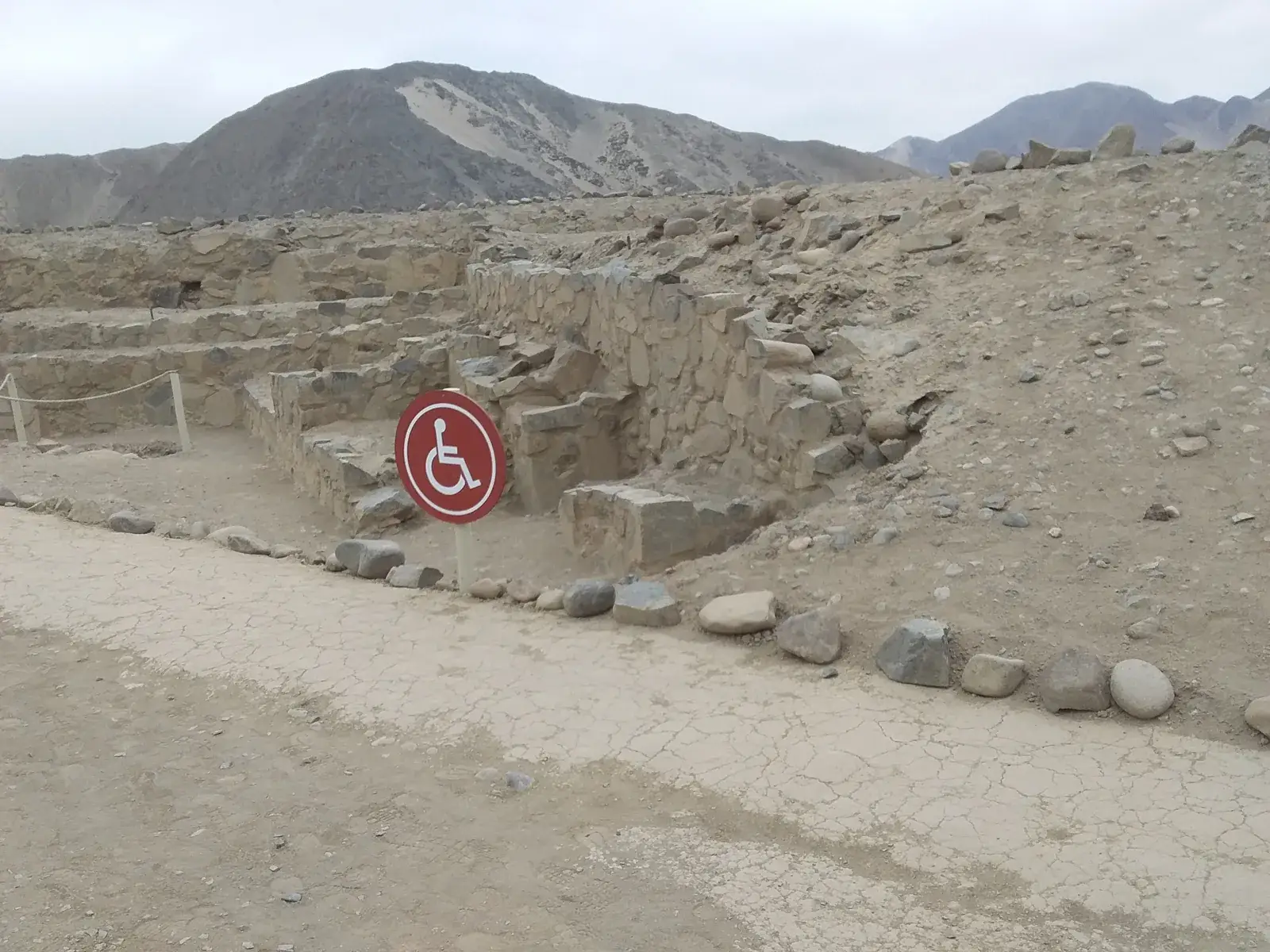
Peru is not easy for wheelchair users and travellers with reduced mobility. Pavements are uneven, historic centres are cobbled and steep, many sites have steps, and altitude adds strain. It can still be done with careful planning, accessible-aware operators and realistic expectations. Always confirm access details directly with each hotel, operator and site.
The honest picture
Accessibility standards in Peru are improving in some places but are uneven and rarely consistent. Pavements may be narrow, broken or blocked, kerbs can be high, and many streets in Cusco and other historic towns are steep and cobbled. Lifts and ramps exist in modern hotels and shopping centres, but older buildings often have stairs only.
Information is also limited. A facility described as accessible may mean different things, so ask specific questions: width of doors, number of steps, bathroom layout and the distance from the vehicle. Photos and recent traveller reports help.
Sites, tours and transport
Archaeological sites are mostly uneven terrain with steps and slopes. Machu Picchu involves stairs and steep paths. See accessibility at Machu Picchu for the options in detail. Some operators offer adapted tours, private vehicles and shorter routes, but availability changes, so contact them well ahead.
For transport, private cars and vans with a driver are far easier than public buses and collectivos. Airports in the main cities have assistance services, which you should request when booking. Trains on tourist routes vary in step height and carriage design, so check with the company. In Lima, Miraflores and Barranco have better pavements and more accessible restaurants than many other areas.
Planning tips
Choose a smaller number of bases and fewer transfers, and give each stop more time. Book hotels with ground-floor rooms or lifts, and confirm in writing. Carry spare parts and repair items for equipment, and check that your travel insurance covers medical equipment, mobility aids and evacuation. Travel companions, local guides and specialist agencies with experience in accessible travel can make a real difference.
Bring any needed medication and documentation for equipment with you, and have a plan for dealing with a repair or breakdown.
Choosing a base and an itinerary
Some destinations are far easier than others. Lima's modern districts, with wide pavements, shopping centres and restaurants close together, are the most manageable. Coastal places such as Paracas are flat and at sea level, which removes the altitude question, and boat trips and reserve visits can sometimes be done by vehicle. Arequipa's centre is relatively flat, though its sights include stairs and cobbles.
Cusco and the Andes are the hardest combination, because of steep streets and altitude together. The Sacred Valley is lower than Cusco and has some level sites and wide paths, so it can be a more comfortable base, as explained in altitude. Consider fewer, longer stays rather than a fast circuit, and use private transfers between bases.
Hotels, bathrooms and getting around town
When you ask a hotel about access, be precise: Is there a step-free entrance? How wide are the door and the bathroom door? Is there a roll-in shower, grab rails and a raised toilet seat? How far is the car from the door? A "ground-floor room" may still be reached by steps. Ask for photographs and measurements, and confirm everything in writing.
Within towns, taxis are the most practical way to move around, but ask whether a driver can take a folding wheelchair or mobility scooter, and check boot space. Ride-hailing apps do not always offer accessible vehicles, so arrange transport in advance for airport transfers, as outlined in taxis and apps. Plan breaks and avoid cobbled streets in rain, which are slippery.
Flying, airports and domestic transport
Request assistance with your airline at booking and again before departure, specifying your needs and the equipment you will carry. Powered wheelchairs and batteries have airline rules, so confirm them early. Domestic flights, often on smaller aircraft, may have stricter limits. See flights for the main airlines and routes.
Long-distance buses vary in comfort, but few are adapted. Tourist trains tend to have the better facilities, but platforms and steps differ. Consider private transfers with a vehicle that suits your needs, and allow extra time at every stage. Keep medication and essential equipment in hand luggage.
Who can help and what to ask
Specialist travel agencies and local operators with experience of reduced mobility, sensory impairment or chronic health conditions can adapt itineraries and check access in advance. Ask for references from previous clients, and a detailed written plan covering transport, hotels, meals and emergency arrangements.
For travellers with other needs, such as hearing or vision impairment, neurodivergence or dietary requirements, communicate early so that guides can adjust the pace and the information they give. See seniors for more on pacing, and your insurer should understand your condition and equipment before you go.
Frequently asked questions
Is Machu Picchu wheelchair accessible?
The site has stairs and steep paths, so access is limited. See Machu Picchu accessibility and ask operators about adapted options.
Are hotels in Peru accessible?
Some modern hotels are, but many are not. Always confirm specifics in writing.
Is there help at airports?
Main airports offer assistance if you request it in advance through the airline.
Which Peruvian city is easiest for a wheelchair user?
Lima's modern districts are generally the most manageable, with better pavements, lifts and restaurants. Cusco is hard because of steep, cobbled streets and altitude.
Can I hire a mobility scooter or wheelchair in Peru?
Rental options are limited and not always reliable. If you need equipment, bring your own and check airline rules, or ask a specialist agency about local hire well before you travel.
Are taxis able to carry a folding wheelchair?
Often yes in ordinary cars with a boot, but drivers vary. Arrange the transfer in advance, state the size of the chair and ask for a vehicle with space.
Should I worry about altitude if I have a mobility condition?
Altitude can add strain, particularly with heart, lung or circulation conditions. Speak to a doctor or travel clinic, and build in rest days at a lower base such as the Sacred Valley.