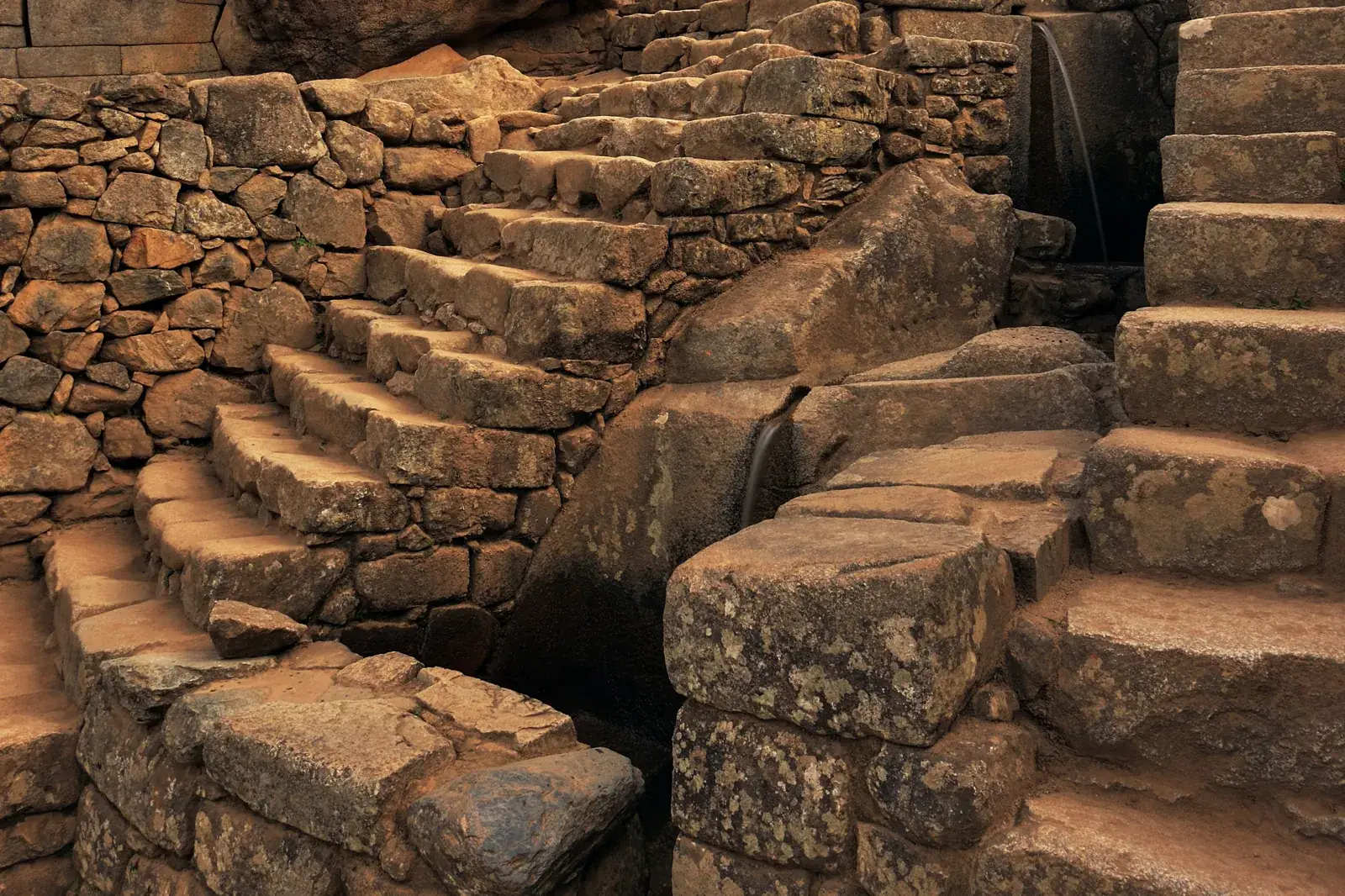
Machu Picchu was not built for wheelchairs: it is a steep stone site with many steps, uneven paths and few ramps. Some visitors with reduced mobility do manage it with planning and assistance, but conditions and facilities change. Arrange the visit with a specialist operator well before you book anything else.
Take this as an outline of the issues, not as confirmation that any access is available.
The terrain
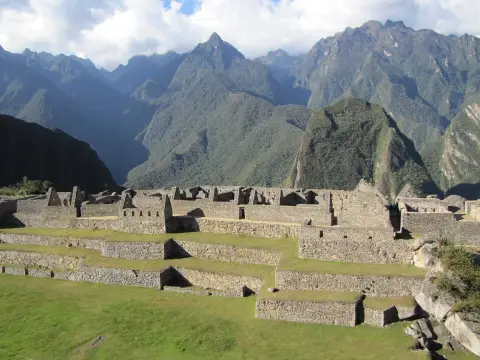
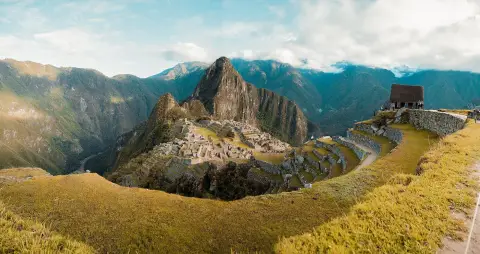
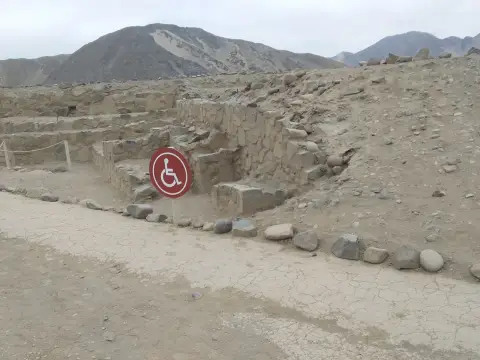
The citadel is built on a mountain ridge, using stone terraces and staircases, and most paths are uneven, with steps of varying height. Surfaces become slippery in rain, and there are sections without rails and with drops to the side. Distances are not long, but the combination of steps, slopes and queues is demanding for anyone with limited balance or endurance. The ground is the original or restored stone, so smooth surfaces are rare.
The site also has long stretches of stairs between sectors, and some of the best viewpoints sit at the top of a climb. A person who can walk on level ground for a long time may still find the steps tiring, and a person who uses a stick may find the narrow, uneven stones difficult. Handrails are few, and in some places the path narrows to a single line. These are facts of the terrain, not a failing of the staff, and they shape what is realistic.
Getting to the site
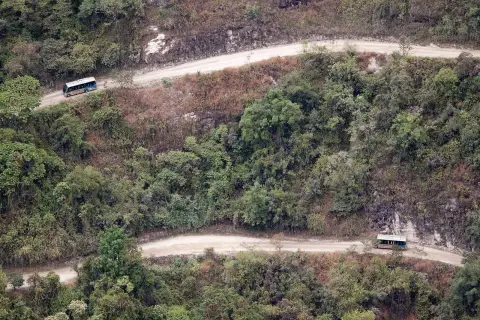
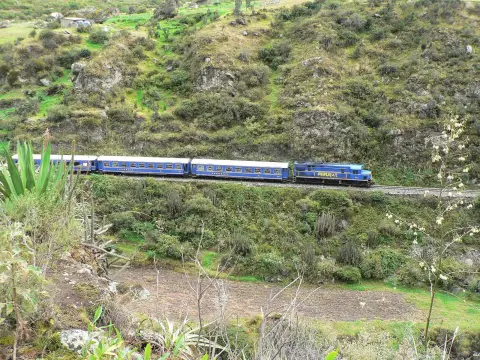
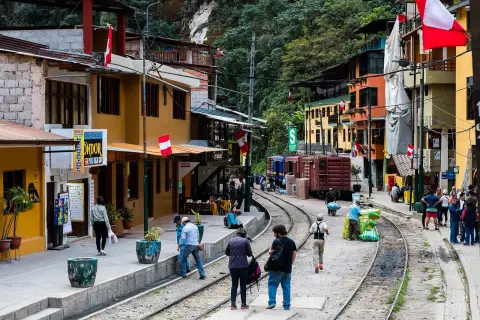
The journey has several stages, each with its own challenges. Trains have steps at the doors and narrow aisles, with assistance varying by operator and station. Aguas Calientes is built on a slope with steps and steep streets. The bus up to the gate is the usual choice for anyone who cannot walk the footpath. At the entrance there are queues and turnstiles. Ask each operator what help they offer.
For the stations and the luggage limits, see trains, and for how the road and the queue work, buses. Ollantaytambo's station is a short walk from the town, but the platforms and the approach can be uneven. Contact the railway company in advance, in writing, and ask exactly what assistance is available at boarding and arrival, since the answer determines which departure and station to choose.
Tours and activities
Bookable online, chosen for their traveller reviews.
-
★ Top rated From €49 per person
Machu Picchu
Machu Picchu Entry Ticket for Circuit 1, 2 or 3
-
★ Top rated From €23 per person
-
From €178 per person
Machu Picchu
Private Machu Picchu Tour with Guide, Entry and Bus
-
★ Top rated From €22 per person
Practical ideas
Choose the shortest or the gentlest circuit that includes the viewpoint you want, and enter early when it is quieter and cooler. Travel with a companion or a guide who can help on steps. Consider a private guide who can adapt the pace and use rest points. Stay in Aguas Calientes the night before, so that the first leg of the day is short. Carry any medication and mobility aids you need, and ask whether walking sticks with rubber tips are accepted.
If the site is not feasible for you, the Sacred Valley has places that are easier to reach, such as the terraces at Pisac and the lower areas of Ollantaytambo, although these also have steps. A specialist operator can build a plan that includes the views you can reach comfortably. To choose an operator, see Machu Picchu tours, and for how the routes differ, circuits.
Pace, rest and timing
Allow far more time than the standard visit. Plan frequent rests, since the time limit inside the site still applies, and tell your guide at the start that you will move slowly. Avoid the middle of the day, when the heat and the crowds make the narrow stairs harder, and choose an early or late window. A quiet window also reduces the pressure to keep up with the flow.
Prepare for a long day in other ways: bring water, a hat, a light layer and any medication, and eat before you enter, because food is restricted inside. Because the visit is time-limited, ask the guide to prioritise the sections that matter most to you. For how entry windows and time limits work, see opening hours, and for the essentials, what to bring.
Wider access in Peru
Accessibility across the country is uneven. Cities such as Lima have some modern facilities, but pavements, buses and many historic buildings in Cusco and the valley are not adapted. Taxis and private transfers are often the most practical way to move around, and a hotel that has been checked in advance is worth the extra effort.
For airports, hotels, transport and tips for planning a whole trip, see accessible travel in Peru. If you travel with a wheelchair, a walker or a medical device, ask each provider about the exact dimensions and the arrangements, because standard answers are not always reliable. Local specialists can often arrange equipment, drivers and helpers, which makes a large difference on a trip with so many steps.
Health and fitness
Travelling in the Andes also involves altitude, warm humid weather and long days, which affect people with heart, lung or mobility conditions differently. A doctor who knows your history is the right person to advise on whether to go and what to prepare. Travel insurance that covers pre-existing conditions and medical evacuation is advisable.
The ruins are lower than Cusco, which can help some travellers, but the transfer days and the effort of the stairs still count. See altitude at Machu Picchu for the heights in general terms. See where to stay to compare bases that allow a gentler start. Build in rest days, avoid rushed connections, and keep emergency contacts and your medical information with you on the day.
Questions to ask before you book
Prepare a short list and send it in writing. Ask your operator whether any adapted route exists and what documents are needed. Ask the railway whether staff can help you board, and whether there is a ramp or a platform at your station. Ask your hotel in Aguas Calientes about steps, lifts and the distance to the bus stop. Ask the guide or operator how many people will accompany you and what experience they have.
Keep the answers, because staff on the day may not know the arrangement. If a promise is vague, assume the service will not be available, and plan a fallback. For wider advice, see accessible travel in Peru, and mistakes shows how a missing detail can affect any visit.
Where to sleep
-
Find hotels
Aguas Calientes
Sleep at the foot of Machu Picchu for an early entry
-
Find hotels
Ollantaytambo
Early trains to Machu Picchu and a walkable old town
-
Find hotels
Plaza de Armas and historic centre
Everything on foot, at the price of noise and crowds
-
Find hotels
San Blas
Artisans' quarter with steep lanes and views, a short walk uphill
-
Find hotels
All of Cusco
Compare every area and price level in one search
Frequently asked questions
Can I visit Machu Picchu in a wheelchair?
Facilities are very limited and decisions rest with the authorities. Contact them and a specialist operator well ahead.
Are there ramps or lifts?
Few, if any, in the historic areas.
Is the bus accessible?
Buses have steps and are crowded. Ask the operator about assistance.
Can I bring a walking stick?
Sticks with rubber tips are generally accepted, while metal tips are not. Mention any medical need in advance.
Is there a quiet time that is easier for slower walkers?
An early or late entry window is usually calmer, with fewer people on the stairs. Avoid the middle of the morning in the dry season.
Can someone help me on the site?
A private guide or companion can give practical help on the steps, and staff and guards can direct you to the nearest exit or the first-aid post. Do not expect a formal assistance service unless it has been confirmed in writing.
Are there alternatives if the visit is not possible?
Yes. Some valley sites, such as Pisac and the lower parts of Ollantaytambo, are easier to reach, though they also have steps. A specialist operator can suggest options.