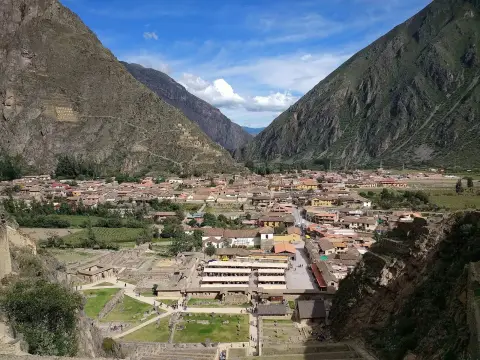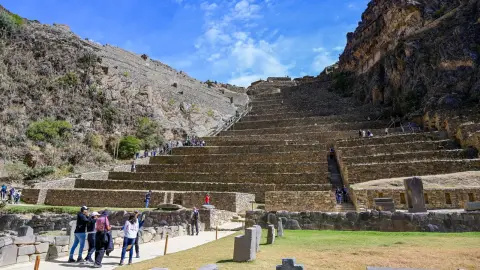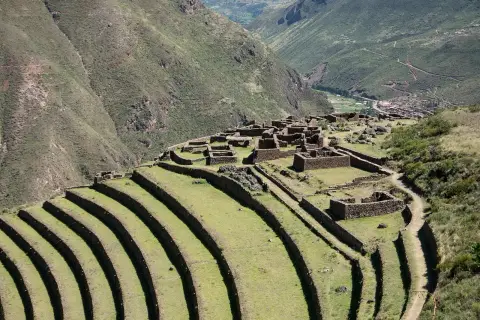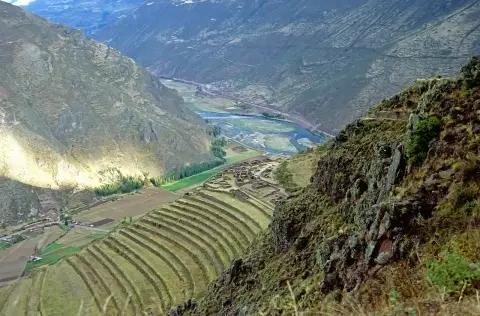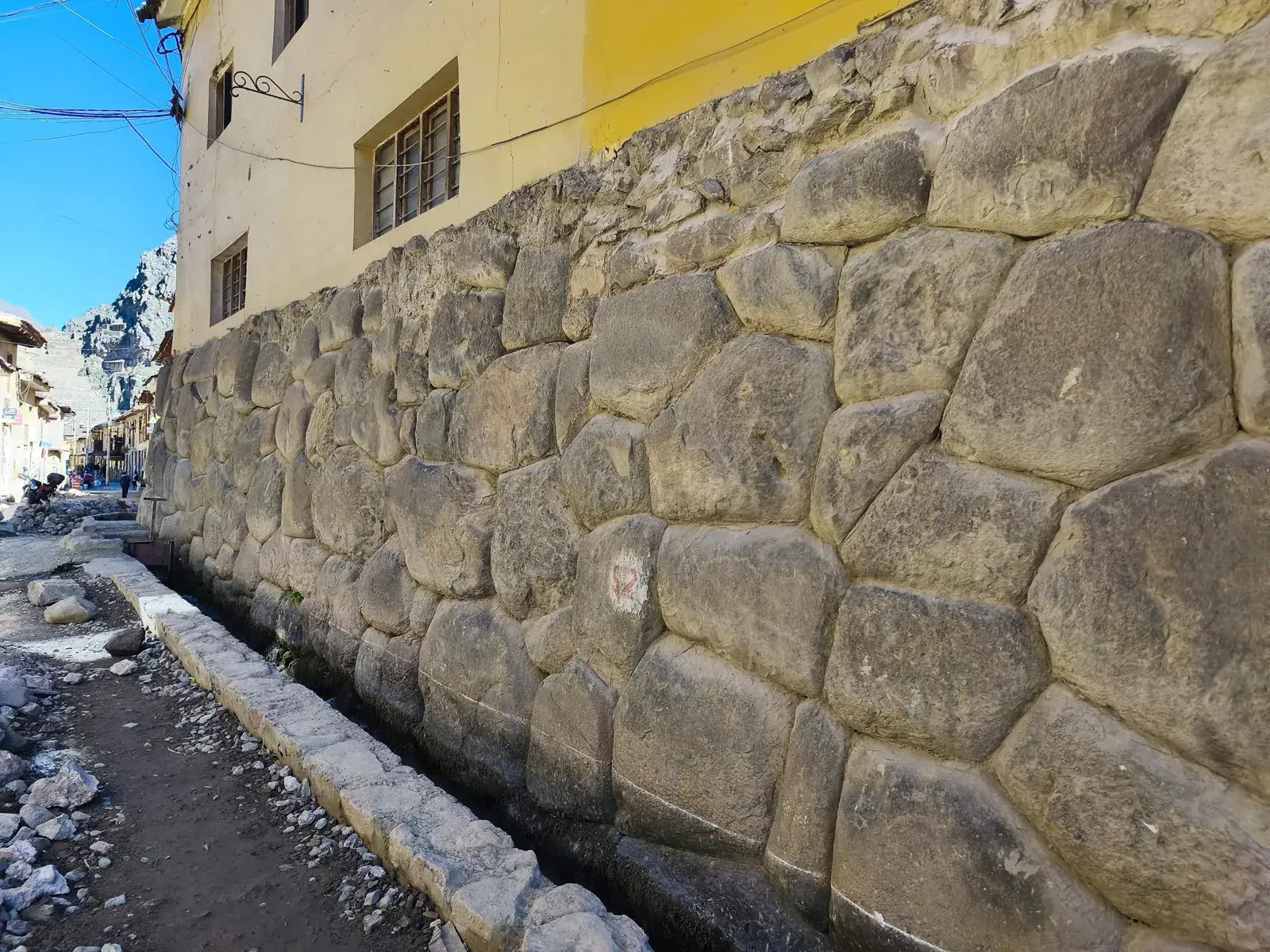
The old town of Ollantaytambo is the street grid that sits below the fortress: a few blocks of narrow cobbled lanes, Inca-built walls that still hold up houses and a water channel running beside some streets. It is free to walk, needs about one to two hours, and is best early in the morning or after the day-trip groups leave. It is a living neighbourhood, so treat it as someone's home rather than a monument.
Map
What the old town is
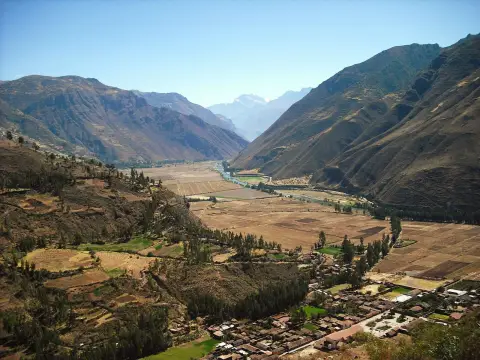
The old town is the part of Ollantaytambo that follows the layout laid down in Inca times, in the angle between the Patacancha river and the foot of the hillside. Unlike a ruin, it has never been emptied: families live in the houses, shops open onto the lanes and children walk to school along the same stone-edged streets. That continuity is its main attraction, and it is why this page is separate from the fortress above the town, which is a ticketed archaeological site.
The grid is small enough to cover on foot in a morning. Most visitors pass through it on the way from the train station or a hotel to the fortress steps and never stop, so a deliberate walk with no destination in mind adds a lot. You need no ticket, no guide and no special gear, only comfortable shoes for uneven cobbles and a layer for the shade.
A short history of the street plan
Ollantaytambo is described in the Spanish chronicles and by modern historians as an estate associated with the Inca ruler Pachacuti, built as a town and ceremonial centre at a strategic narrowing of the valley. The settlement was laid out on an orthogonal grid, and archaeologists describe it as a set of long streets crossed by shorter ones, with the blocks divided into walled compounds known as kanchas, each with a courtyard and several one-room buildings around it.
Later history added a second layer. Manco Inca, who rose against the Spanish, used Ollantaytambo as a base in the 1530s, and the plain below the town was the setting of a battle in which his forces defeated a Spanish expedition before he withdrew to the forest. Colonial builders then put adobe upper floors, tiled roofs and a church on top of Inca foundations. The old town you see is that mixture, and reading the difference between the two is the pleasure of the walk.
Tours and activities
Bookable online, chosen for their traveller reviews.
-
From €107 per person
Ollantaytambo
Private Sacred Valley Day Trip with Local Guide
-
From €107 per person
Ollantaytambo
Moray and Maras Day Tour from Ollantaytambo to Cusco
-
Day trip From €54 per person
Ollantaytambo
Moray ATV Tour from Cusco with Salt Mines and Tasting
-
From €65 per person
Ollantaytambo
Private Half-Day Maras and Moray Tour from Ollantaytambo
Walls, doorways and water channels
The Inca work is easiest to spot at street level. Look for walls of tightly fitted stone, with large blocks cut to meet at close joints, and for narrow trapezoidal doorways, wider at the base than at the lintel. Many of these walls form the lower part of a house, with a plain plastered or adobe storey above, so the Inca stone is often only the first two metres.
Beside several lanes a stone-lined water channel carries a thin stream down the street, fed from the Patacancha and the springs of the hillside. Residents still use water from this system, which is one reason the town feels different from a museum. Keep to the side of the lane, do not block the channel and do not throw litter into it. The channels are narrow and a camera pointed straight down is a good way to step off the cobbles into them.
The plaza and the lanes around it
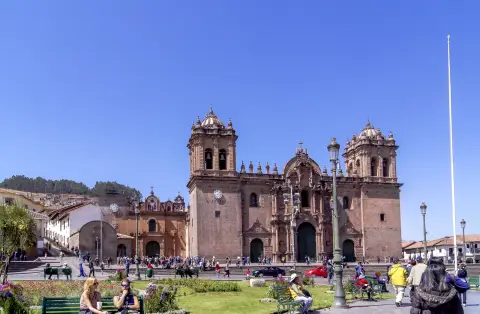
The main square is the practical centre of the town: taxis and minibuses gather here, restaurants and cafés open onto it, and the paths to the fortress start a short walk away. It is livelier than the lanes and usually busy around mid-morning and late afternoon, when the groups come and go. The statue and the trees make it a comfortable place to sit with a drink, but it is not the best of the old town.
For that, leave the plaza by the side streets. The quieter lanes a block or two away have the stone walls, the channels and the stepped alleys that climb toward the terraces, and there are small courtyards where bars and guesthouses occupy former kanchas. The view up the slope shows the fortress terraces above the roofs and, across the ravine, the Inca storehouses on the opposite hillside, which make good orientation points if you lose your bearings.
The best hours to walk
Ollantaytambo has two clear rhythms. From mid-morning to early afternoon the lanes fill with tour groups and the station crowds, and the narrowest streets become slow. Before about eight in the morning and after about five in the evening the town reverts to its residents, light comes in low along the stone walls and the walk is more pleasant and better for photographs.
If you sleep here, the evening walk is a good use of an hour after dinner, but carry a small torch, as lighting is uneven and the cobbles are uneven too. In the dry season, roughly May to September, mornings are cold and clear and the shade is chilly, while the rainy season, roughly November to March, makes the stones slippery and brings afternoon showers, so shoes with grip matter more than a camera.
How long and how to combine it
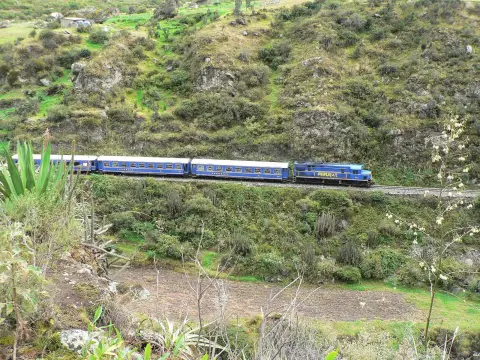
Allow one to two hours for the old town on its own, including a stop for coffee. It pairs naturally with the fortress, which is a longer and steeper visit: many people do the fortress first in the cool early hours and then wander the streets over breakfast, or the reverse in the afternoon when the climb is less crowded. If you are catching a train, leave the old town for the evening before or the morning when you have a buffer, as the lanes tempt you into losing track of time. The services are covered in trains to Machu Picchu.
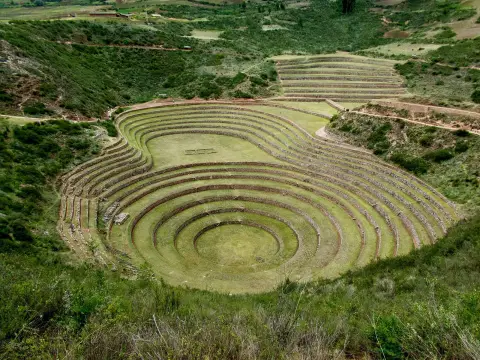
A wider day can add the terraces of Moray by road, and a longer stay is covered in where to stay in the Sacred Valley. The town sits at about 2,790 m, lower than Cusco but high enough to make stairs tiring on the first day; altitude sickness explains how to pace the first 24 hours.
Getting there and respectful behaviour
The old town is on foot from anywhere in Ollantaytambo, and the route to the valley is described in Cusco to the Sacred Valley; shared vans, buses and taxis arrive at or near the plaza, and the station is a short walk from the centre. Cars are slow and the lanes are narrow, so step aside for vehicles and carts.
Because people live here, a few habits matter. Ask before photographing residents, especially children and people in traditional dress; do not walk into courtyards or doors that are open to a private home; and do not touch or climb on the walls, which are old and, in places, lived-in structures. A greeting in Spanish or Quechua costs nothing, and etiquette in Peru has short guidance. As in any place that tour groups pass through, keep an eye on your bag in the plaza, as explained in common scams.
Where to sleep
-
Find hotels
Ollantaytambo
Early trains to Machu Picchu and a walkable old town
Frequently asked questions
Do I need a ticket to walk the old town of Ollantaytambo?
No. The streets are public and free to walk. The ticket applies to the fortress terraces and temple area above the town, covered on the fortress page.
How long does the old town take?
One to two hours is enough for the lanes, the plaza and a coffee. Add more time if you stay for a meal, or if you want a second, slower walk in the evening light.
Are the walls really Inca?
Many of the lower courses of walls in the old town are Inca work, with later adobe and tile added above in the colonial period. The grid itself also dates from the Inca town plan.
Does the water in the channels come from Inca times?
The channels follow an Inca system that has been kept in use, and some still carry water beside the streets today. Treat them as working infrastructure and do not drink from them.
When is the old town least crowded?
Early morning, before the groups arrive, and after about five in the evening are the quietest times. Mid-morning to early afternoon is the busiest, especially near the plaza and the station.
Is the old town suitable for children and older visitors?
The lanes are short and mostly flat compared with the fortress, but cobbles are uneven and the altitude is noticeable. Go slowly, and see the town guide for the wider picture.
Is it safe to walk the lanes in the evening?
The town is generally quiet and calm at night, but lighting is uneven and the cobbles are tricky, so carry a small torch and stay on the main lanes. See common scams for sensible precautions.