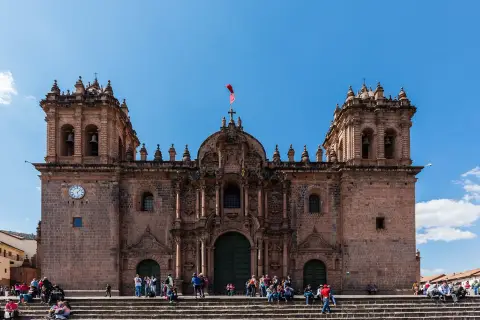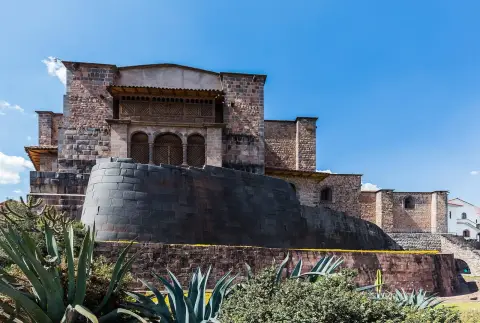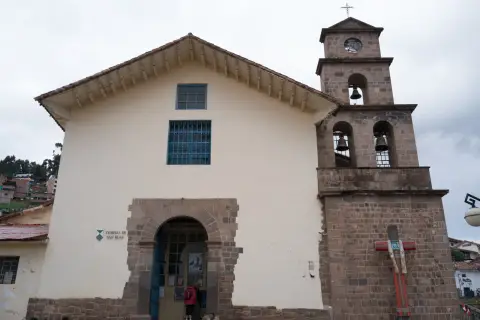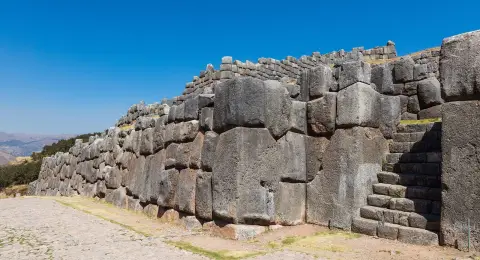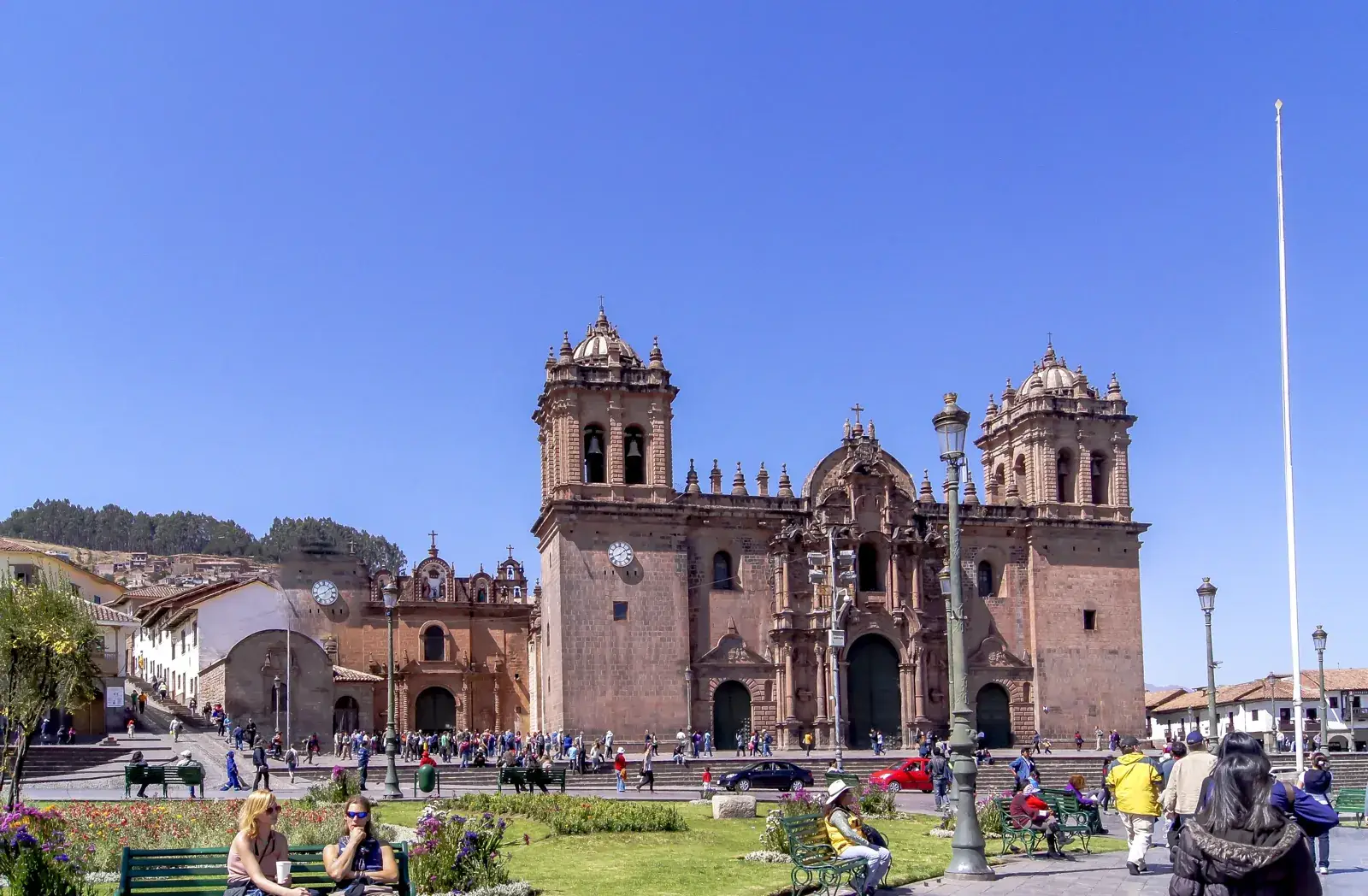
The Plaza de Armas is the main square of Cusco and the natural starting point for any visit to the city. It stands on the site of the Inca ceremonial square and is framed by the Cathedral, the Jesuit church of La Compañía and arcaded colonial buildings. Allow an hour for the square and the two churches, and come back after dark, when the facades are lit.
Entry to the square is free, while the churches have their own rules, so check ticket arrangements on the day.
Map
Why the square matters
The Plaza de Armas is the orientation point of historic Cusco. Streets run off its corners towards the main sights, taxis and tour operators gather around it, and most visitors cross it several times a day without planning to. It is a good place to sit on a bench, watch the city and adjust to the altitude of roughly 3,400 m before taking on anything steeper.
The square is a mix of three layers of history. The open space itself is Inca in origin, the churches and arcades are colonial, and the people using it, from schoolchildren to marching bands, are very much present-day Cusco. That combination is what makes it more than a photo stop. For the wider city and how its districts fit together, see Cusco.
Two small gardens and a central fountain give some shade and a place to rest. Most of the ground floor around the square is given over to cafes, restaurants, agencies and shops, so expect to be approached by sellers and by people handing out menus.
Inca origins: Huacaypata
Before the Spanish arrived, the central space of Cusco was a larger open area usually known as Huacaypata, with a neighbouring square often called Cusipata. Chroniclers describe it as a place for gatherings, ceremonies and processions, and it is generally linked with the great festivals of the Inca calendar. Their accounts were written by Spanish authors after the conquest, so the details, including the exact size of the original space, are not all certain.
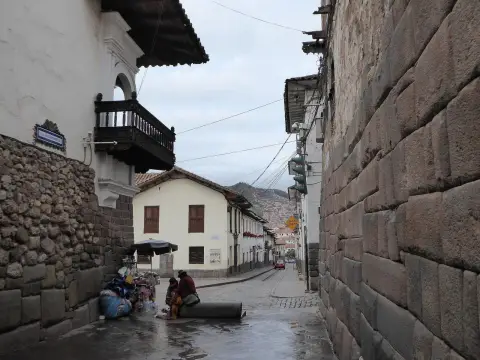
After the Spanish took the city in the 1530s, the open ground was reduced, the Inca buildings around it were taken over or demolished, and the colonial square was laid out. Many of the colonial walls around the plaza stand on Inca foundations, a pattern that also appears at the Qorikancha, a short walk away.
Visitors will not find Inca ruins in the square itself. What survives is the idea of the place, a central space where the city meets, which has continued for centuries.
Tours and activities
Bookable online, chosen for their traveller reviews.
-
★ Top rated From €23 per person
-
★ Top rated From €22 per person
-
★ Top rated From €23 per person
-
★ Top rated From €17 per person
The Cathedral and its paintings
The Cathedral takes up one side of the square and is among the most important colonial buildings in Peru. Construction is usually dated to the sixteenth and seventeenth centuries and took a long time, partly because of the scale and partly because of earthquakes. It is generally described as standing on the site of an Inca building, though the details are debated.
Inside, the main attractions are the heavy carved wooden choir stalls, the silver-decorated altars and a very large collection of paintings of the Cusco School, a colonial tradition that blended European religious painting with Andean details. The best-known canvas is a Last Supper in which the dish on the table is often described as cuy, the guinea pig that remains a festive food in the Andes. Guides point it out on almost every visit, so it is worth asking staff where to find it. Read about the dish itself at cuy.
Dress modestly, expect a quieter atmosphere than on the square, and check current rules on photography, which differ between churches and change over time.
La Compañía de Jesús
On a corner of the square stands the Church of the Society of Jesus, known as La Compañía. It was built by the Jesuits in the seventeenth century on the site associated with an Inca palace, and its baroque facade and twin towers are often photographed against the late afternoon light. The church and the nearby cathedral are sometimes mentioned in the same breath because they are said to have competed in height and decoration, a story told by guides that should be taken as local tradition.
Inside, the gilded altarpiece and the carved details are the main points of interest. The church is usually quieter than the cathedral, so it can be a pleasant place to pause. Some parts of the building have in recent years been used for exhibitions or cultural events, which can change what is open.
Because visiting arrangements for churches in Cusco vary, check the posted hours at the door and ask at your accommodation about whether a combined or separate ticket applies on the day you go.
Arcades, balconies and evening
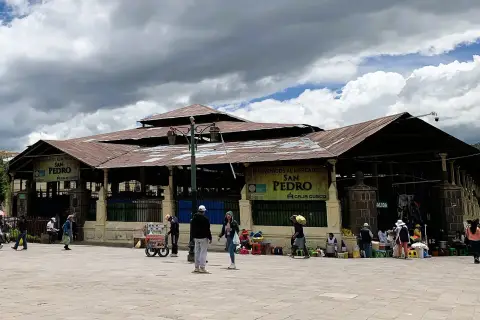
The square is lined on its sides by arcades with wooden balconies above, many of them now housing restaurants and bars. The balconies are a good vantage point for watching festivals or the evening crowd, but expect to buy a drink or meal to sit there, and prices tend to be higher than a few streets away. For simpler meals, San Pedro Market is a short walk.
The square is at its most attractive in the evening, when the cathedral and La Compañía are lit and the mountains around the city darken. Visiting twice, once by day for the interiors and once after dark for the atmosphere, works well. It is cold once the sun goes down, so bring a warm layer even in the dry season.
Be aware that the area stays busy late and that some bars nearby can be noisy. If you are choosing a base, see where to stay in Cusco to weigh the convenience of being close to the plaza against the night noise.
Festivals and gatherings
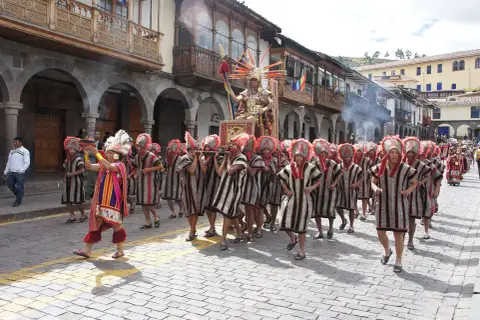
The Plaza de Armas is the stage for many of the city's public events. In late December, a Christmas craft fair known as Santuranticuy is usually held in the area, and religious processions leave the Cathedral on important dates such as Corpus Christi, when statues of saints are carried to the square. Holy Week is also marked by processions through the centre.
The ceremony of Inti Raymi, held around the June solstice, begins at the Qorikancha, passes through the plaza and ends at the site beside Sacsayhuamán. The square is crowded on those days, and hotels book up well in advance.
Dates, routes and the exact format of these events change from year to year, so check the official calendar before planning a trip around one. For a wider view, see festivals and holidays. Outside event days the square is calmer, but there is almost always something happening, from a school parade to a protest or a concert.
Safety, scams and common mistakes
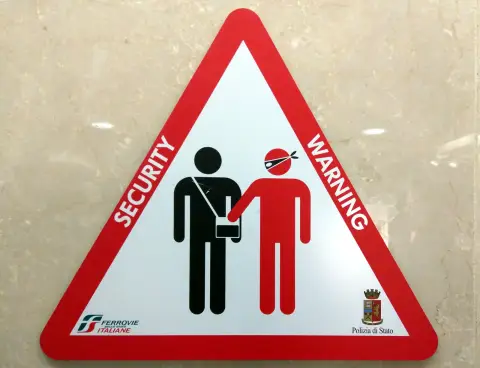
The plaza is generally busy and well patrolled, but like any tourist centre it attracts opportunists. Typical problems are pickpocketing in crowds, offers from unlicensed sellers of tours or souvenirs, and people who approach with friendly conversation before asking for money. Keep your phone and wallet in front pockets and be cautious with bags left on cafe chairs. A more detailed list is on common scams in Peru.
A few mistakes are easy to avoid. Do not book a tour from the first person who stops you on the square, because comparing a few offers is easy, and see Cusco tours for what to ask. Do not walk quickly uphill on your first day at altitude, and read the advice on altitude sickness if you have just arrived. Finally, use licensed taxis or ride apps at night rather than unmarked cars, particularly on the quieter streets away from the plaza.
What is nearby and how long to allow
Allow roughly an hour for the square, the Cathedral and La Compañía, or longer if you stop for a coffee. It is a good first stop on a walking circuit. From the plaza, a short walk leads to the Qorikancha, and a steep climb up stepped streets leads to the artisan quarter of San Blas, which is best saved for a time when you have adjusted to the altitude.
For a longer day, a taxi or walk to the hillside ruins above the city is a natural next step, and things to do in Cusco lists other options. The square also works as a meeting point: it is easy to find, central and well known to every driver.
Shops around the plaza sell textiles, silver and souvenirs, but quality and prices vary a lot, so compare a few before buying and see souvenirs for guidance on what is worth buying.
Where to sleep
-
Find hotels
Plaza de Armas and historic centre
Everything on foot, at the price of noise and crowds
-
Find hotels
San Blas
Artisans' quarter with steep lanes and views, a short walk uphill
-
Find hotels
All of Cusco
Compare every area and price level in one search
Frequently asked questions
How long should I spend at the Plaza de Armas in Cusco?
Allow about an hour for the square, the Cathedral and La Compañía, and add time for a drink on a balcony. A second short visit after dark is worthwhile because the buildings are lit and the square feels different.
Is the Cusco Cathedral free to enter?
Entry rules for the Cathedral have changed over the years and it has usually been ticketed for visitors, with its own arrangement separate from other sites. Check the current rules at the entrance or with your accommodation, and note that services may restrict access.
What is the famous painting in the Cusco Cathedral?
The best-known work is a Last Supper from the Cusco School in which the main dish is often described as cuy, the guinea pig. Guides usually point it out, and staff can show you where it hangs. Its attribution and exact date are matters for the guides and the cathedral's own information.
Is the Plaza de Armas safe at night?
It is busy and generally patrolled in the evening, but petty theft and approaches from sellers do occur. Stay in lit areas, keep valuables out of sight and use a licensed taxi or app for the ride back, especially if you have been drinking.
When are the main festivals on the Plaza de Armas?
Typical dates are Holy Week, Corpus Christi, the June Inti Raymi ceremony and the Christmas craft fair in December. Exact dates move from year to year, so check an official calendar. See festivals and holidays for general planning.
Is the Plaza de Armas the same as Huacaypata?
The Inca square called Huacaypata occupied a larger area, and the present plaza is generally considered to be a reduced colonial successor of it. The connection is well accepted, but the exact boundaries of the original are uncertain.
Can I walk from the Plaza de Armas to San Blas and the Qorikancha?
Yes. The Qorikancha is a short, gentle walk, while San Blas involves a steep climb up narrow stepped streets. Do the climb slowly, and consider visiting San Blas on your second or third day at altitude.