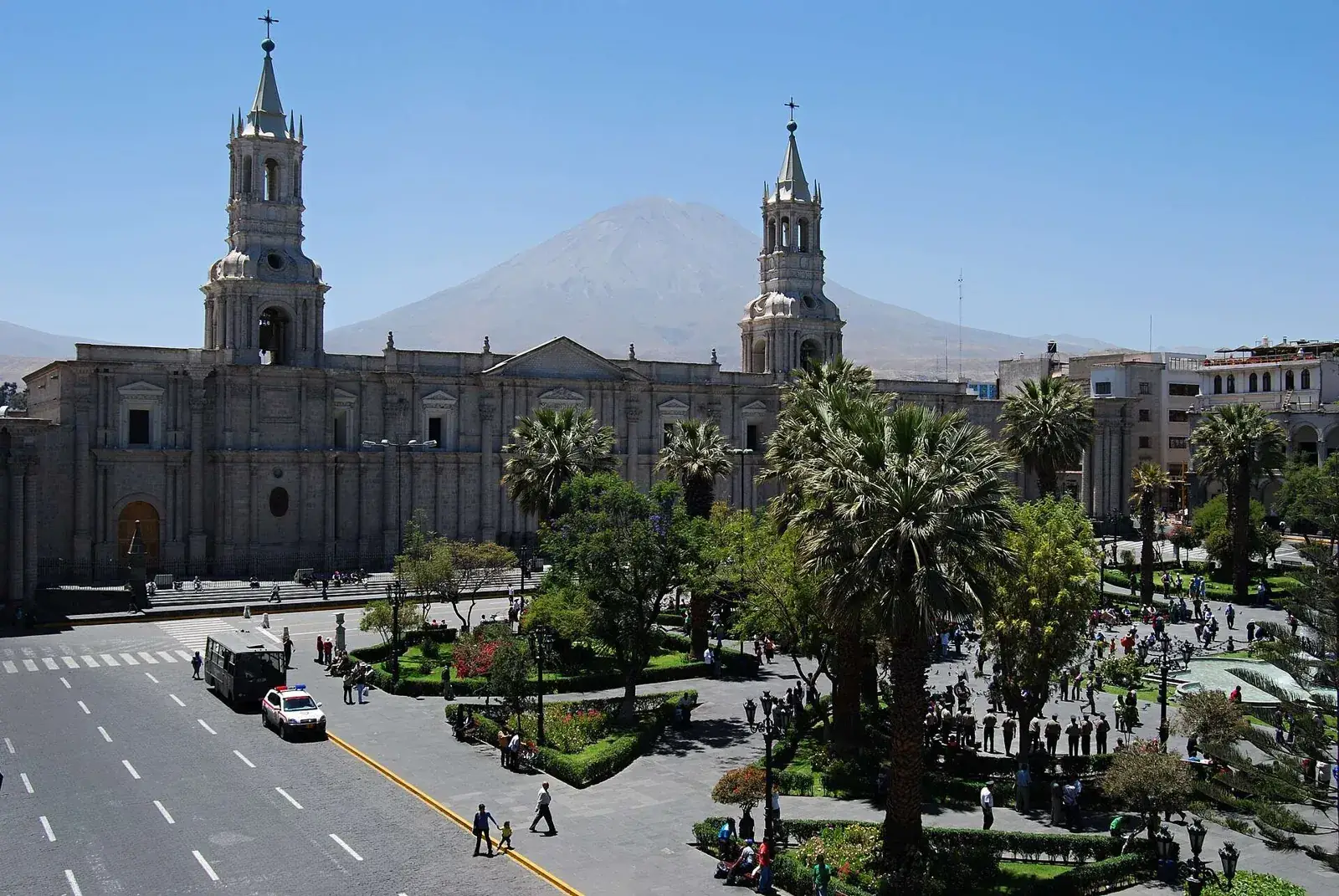
Fly if you can. The flight to Arequipa takes about an hour and a half, while the bus covers roughly 1,000 km of coastal desert in 15 to 17 hours or more. The bus is a real option for budget travellers who like night journeys, but it eats a day, and the road has its own hazards. Arequipa itself is at about 2,300 m, a gentle altitude.
By air
Flights run several times a day from Lima to Arequipa and take about an hour and a half. The airport is close to the city centre, and the ride into town is short. Fares vary widely by season and how early you book. For most travellers who have a week or two, this is the sensible choice, because it hands you back most of a day. Arequipa is also a gentle first stop at altitude, at about 2,300 m, much lower than Cusco or Puno, so flying in here works well as a first step in the Andes.
For luggage rules and what to do about delays, see domestic flights. See Arequipa to understand what to see on arrival.
By bus
The bus follows the Pan-American Highway along the coast, through Ica and Nazca, and then climbs inland to Arequipa. The distance is roughly 1,000 km and the journey takes 15 to 17 hours or more, almost always including a night. Higher-class services have reclining seats and meals. The scenery is mostly dry desert with a few green valleys and some views of the ocean, and the road crosses a number of bends and long straight desert stretches where drivers can fall asleep.
You can break the journey at Ica, Paracas or Nazca, which turns the bus ride into part of the trip. That is the best argument for going by road: you see the south coast and arrive at Arequipa in stages. See long-distance buses to understand how to choose a company and seat class.
Which to choose
If your time is limited, the flight wins by a wide margin. If you are travelling slowly and want to see Paracas, Huacachina and Nazca, use the bus in stages and fly the last leg only if you are tired. Leaving Arequipa, the options are the Colca Canyon, Puno or Cusco, each a separate mountain journey with its own details.
The question is really one of days. A 16-hour bus plus the hours around it consumes most of one day and leaves you tired on arrival, which matters if your trip is short. See how much time you really lose travelling to understand how such hours accumulate.
Stages down the coast
For the bus traveller, a staged journey is the most appealing way to do it. A first stop at Paracas takes about four hours from Lima, then Huacachina adds a night in the dunes, and Nazca gives the chance to see the lines from the air. From there, the road climbs into the desert highlands towards Arequipa.
Each leg is manageable by daytime bus, and the trip becomes a mini-circuit rather than a single endurance test. It costs more days, but those days are filled with sights, so the question to ask is whether you want to spend time on the coast or save it for the mountains.
Arriving in Arequipa
Overnight buses arrive early in the morning, which can leave you with hours to wait for a hotel room. Ask your accommodation about early check-in, or arrange to leave your bag and have breakfast nearby. Taxis at the terminal are plentiful, but agree the fare before you get in, and prefer an app or a taxi sent by your hotel after a long night. See taxis and ride-hailing for the basics.
Arequipa's 2,300 m is a gentle height, but it is still higher than most coastal cities, so some people notice a slight breathlessness on the first day. Take it easy until you have settled in.
Onward from Arequipa
Arequipa is a hub for the southern highlands. From here, the Colca Canyon is a trip of about half a day by road, and Puno and Lake Titicaca lie across the high plateau to the east. See southern Peru loop to understand how Arequipa, Colca, Puno and Cusco fit together.
If you are choosing between Arequipa and Cusco as a base, see Cusco or Arequipa for the differences. For a first visit, Arequipa suits those who want a colonial city, good food and a slower pace at moderate altitude.
Frequently asked questions
How long is the bus from Lima to Arequipa?
Expect 15 to 17 hours or more, usually overnight.
Is Arequipa a good first stop at altitude?
Yes. At about 2,300 m it is much lower than Cusco, and many people find it a gentler start.
Can I stop on the way?
Yes. Ica, Paracas and Nazca are common breaks, and bus services run between them.
Is the flight to Arequipa cheaper than the bus?
Usually not, but fares can be competitive if you book early or travel off-peak. Count the extra day and the cost of an overnight bus before deciding on price alone.
What is the best time of day to fly?
Flights run through the day. Morning departures leave the afternoon free in Arequipa, which is useful for a first walk through the historic centre.
Are night buses to Arequipa safe?
Most arrive without incident, but accidents on the highway have happened. Choose a reputable company, avoid the cheapest service and keep your valuables on you. See safety.
Can I go from Lima to Arequipa and then on to Cusco?
Yes, and it is a common loop. From Arequipa to Cusco you can take the bus, or fly through Lima; see Cusco to Arequipa.