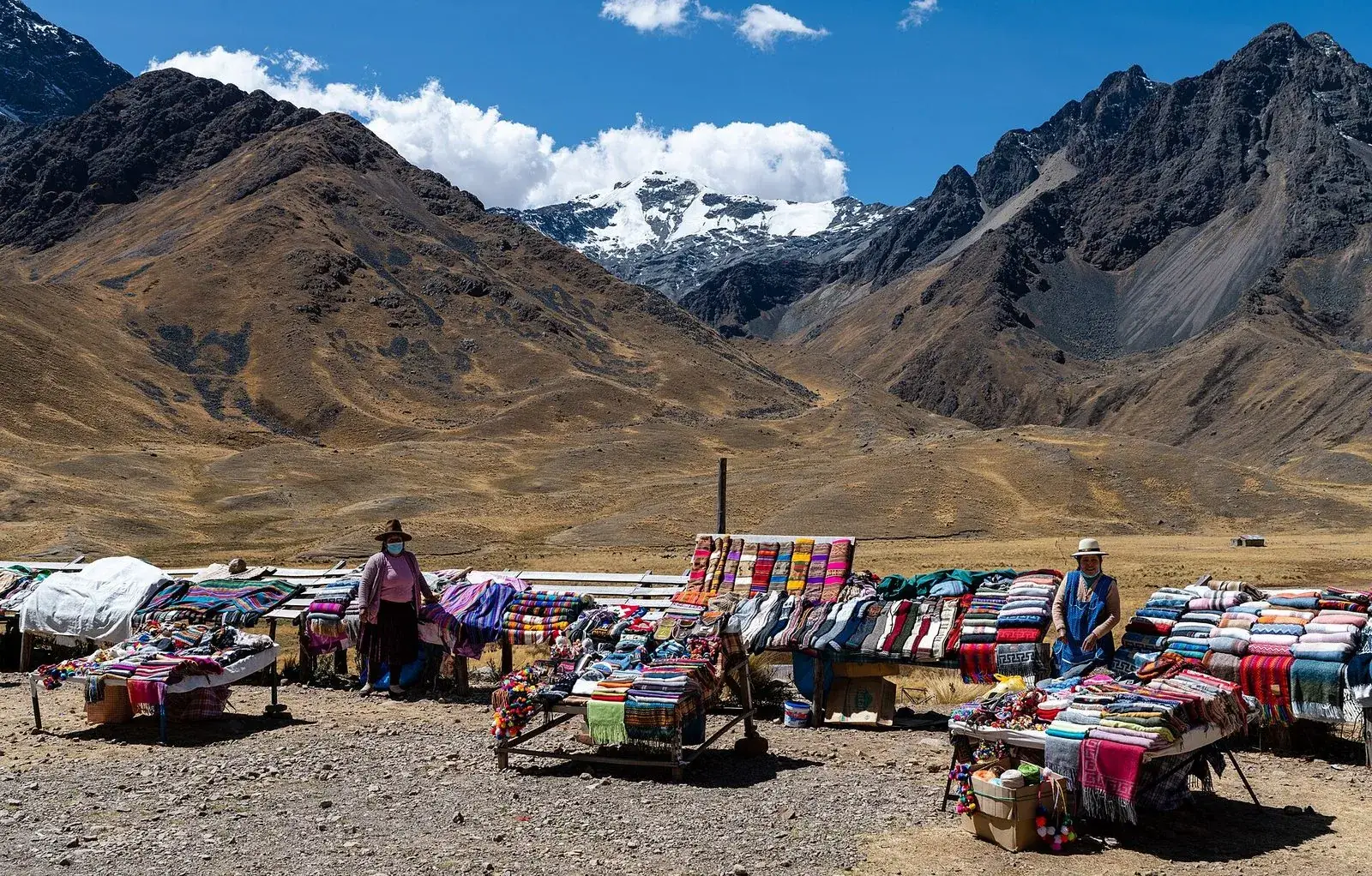
The southern loop links Arequipa, the Colca Canyon, Lake Titicaca and Cusco in about twelve days, mainly by land, with the high-altitude stretch in the middle. It begins with a flight to Arequipa from Lima and ends with Cusco and Machu Picchu, or in reverse.
Its strength is the scenery between the cities, which flights hide. Its cost is long travel days, so it is for travellers who enjoy the journey.
What makes it different
Most Peru itineraries fly between the highlights. This one stays on the ground in the south, where the roads and the railway cross high plateaus, volcanoes and open grassland. It leaves out Lima and the coast and focuses on a single arc, which means more time in each place and fewer airports.
The route is not faster than flying, and it asks more of you. Bus journeys are long, the roads are high and the weather can change. In exchange you see how the landscape changes between the Arequipa desert, the volcanic highlands and the Titicaca plateau. It is the natural counterpart to the 14-day route, which flies between its stages.
Who the loop is for
The loop suits travellers who enjoy long daytime journeys and watching the land change from the window. It suits those who would rather have six bases of two or three nights each than a tight schedule of airports. It does not suit anyone who is easily car-sick on winding roads, anyone with a tight international connection, or anyone who cannot afford to lose a day if a road is closed.
Before committing, read time lost in transit: it explains why a route with long overland legs needs a spare day, and where that day should sit. The loop below places it at the end, beside the Machu Picchu visit, where it does the most good.
Days 1 to 3: Arequipa
Fly to Arequipa from Lima and spend the first full day on the historic centre, the monastery and the food. The city is lower than the places that follow, so it is the right start. Use day two for a short outing and keep the third day as a buffer, or leave early for the canyon.
For the sights and the best order for a three-night stay, see Arequipa. A good evening plan is to eat early and sleep early, since the next days are physically harder. If you have an extra half day, the volcano views from the nearby countryside are a calmer way to use it than another museum.
Days 4 to 5: Colca Canyon
Travel by tour bus or private car into the Colca Canyon, crossing a high pass on the way and stopping at viewpoints. Sleep in a canyon village. Rise early for the condors at the Cruz del Cóndor viewpoint, then continue by road. Many tours return to Arequipa, but you can ask for the drop to be made at the departure point for onward buses to Puno, where the schedule allows.
For the formats and the village options, see Colca Canyon, and for how the tourist bus compares with a private car, see Arequipa to Colca journey. Whichever you choose, carry a warm layer, since the canyon mornings are cold.
Days 6 to 8: Puno and the lake
The bus from Arequipa to Puno takes much of a day, with a long drive over high plateaus. Sleep in Puno. The next day is for the lake: the Uros reed islands and Taquile, or Sillustani and its stone burial towers. Keep the afternoon free. The sun is strong, the nights are cold and many people feel tired at this altitude.
For the options and what to watch for with luggage, see bus from Arequipa to Puno, and for choosing a hotel in the centre rather than at the edge, see Puno. Put the lake boat trip on the first full morning, when you are fresher, and leave the second day for Sillustani or a rest.
Days 9 to 12: to Cusco and Machu Picchu
Travel from Puno to Cusco by the tourist day bus, which stops at several sites on the way, or by train where it runs. The day is long, but it ends in Cusco at a lower altitude than Puno, which most travellers find a relief. Spend a day in Cusco, two in the Sacred Valley and one at Machu Picchu. This is the logical end of the loop, because after the lake you are already adapted.
If you want a gentler finale, fly from Cusco to Lima on the last morning and give the international connection a long margin. Cusco to Puno compares the bus, the train and the flight, and the notes on Machu Picchu timing help you decide whether to sleep in Aguas Calientes.
Weather, buffers and when to avoid the loop
The loop depends on mountain roads, and mountain roads are the first thing to suffer in the rainy season. Landslides, floods and protests can block them for hours or days. For that reason it is best done in the dry months, roughly May to September, when the roads are more reliable, though the nights are colder.
Keep one spare day after the Titicaca section and one before the international flight. If you must choose between them, keep the one beside the flight. What to do when weather blocks a route explains how closures work and how to find reliable information, and the notes on long-distance buses describe the main companies and what to check before buying a ticket.
Frequently asked questions
Can I do this loop in reverse?
Yes. Start in Cusco and finish in Arequipa. The altitude profile is less friendly, though, because the highest nights come early.
Is the loop safe in the rainy season?
It is possible, but road delays and landslides are more likely. Add a spare day.
Can I shorten it?
Drop the canyon first. Arequipa to Puno directly saves about two days.
How long are the bus journeys?
The Arequipa to Puno stretch and the Puno to Cusco stretch each take much of a day, and the canyon road adds more. Ask the company for the real time at the time of booking, since it changes with weather and roadworks.
Is there a way to avoid the overnight bus?
Yes. All the legs here are daytime journeys, and you can replace the longest one with a flight if you want to save time or are unwell. Daytime travel also lets you see the scenery.
Can I add the Amazon at the end?
Yes, from Cusco, with a short flight to Puerto Maldonado. That turns the loop into the 21-day route, and the lodge options are covered in the Amazon route.
Do I need to book the buses in advance?
In the dry season it is wise to book the day buses a few days ahead. In low season you can usually buy at the terminal, but check seats on the Puno to Cusco tourist bus.