Two weeks allow a full first-time Peru: two nights in Lima, a night or two on the coast at Paracas, three nights in Arequipa, and about six nights in the Cusco region with Machu Picchu. Fly between the stages and keep the highest part for the second half.
It deliberately leaves out Lake Titicaca and the Amazon, which the 21-day route adds.
The design: altitude climbs as the trip goes on
This route starts at sea level and rises in steps. Lima and Paracas are on the coast. Arequipa is at moderate altitude, which gives the body a chance to adapt before the highest part. Cusco and the Sacred Valley come last, so Machu Picchu is visited when you are well adjusted and the legs are warmed up.
Unlike the 10-day route, which squeezes Arequipa in after Cusco, this one gives each stage room. It also spends a week in the Cusco region, which is enough for the valley, Machu Picchu and one extra trip, such as Rainbow Mountain or the Humantay lake, if you feel well.
Why the order is the opposite of the short routes
Shorter itineraries put Machu Picchu first because there is no time to waste. With two weeks you can afford to hold it back, and that has three benefits. The body gets four or five days of progressively higher sleeping altitude before you reach the Andes proper. The spare days sit at the end, next to the flight home, where they protect the connection. And the most expensive and capacity-limited booking, the Machu Picchu ticket, falls in the second week, which gives you more time to secure it.
The cost is that you must fly twice before reaching Cusco, and that the Arequipa leg is only useful if you actually take the rest. If you do not like internal flights, the south loop shows an overland alternative. For the scheduling logic behind both, see time lost in transit.
Days 1 to 2: Lima
Use the first day to arrive and rest, and the second to see the city properly: the historic centre in the morning, the clifftop districts and a good dinner in the evening. Lima has more to offer than a stopover, and the food alone justifies the second night.
See Lima for the districts and suggests a sensible order. If you like museums, pick one rather than three; if you like food, book a table for the second evening before you arrive, since the best places fill several days ahead. Keep the second afternoon short, because the next day starts with the road south.
Days 3 to 4: Paracas and the coast
Travel south by road, typically about three to four hours by bus or private transfer, and sleep in Paracas. The main outing is the boat trip to the Ballestas Islands for sea lions and seabirds, usually offered in the morning, followed by the Paracas National Reserve with its desert cliffs. Huacachina, with its dunes, can be added as an extra night, but it also pushes the schedule.
If you prefer to save time, drop this stage and spend the days in Lima and Arequipa. The coast is the easiest part of the route to remove. For the boat tours and the reserve, see Paracas, and if you have time for only one of them, Paracas and Huacachina helps you choose.
Days 5 to 7: Arequipa
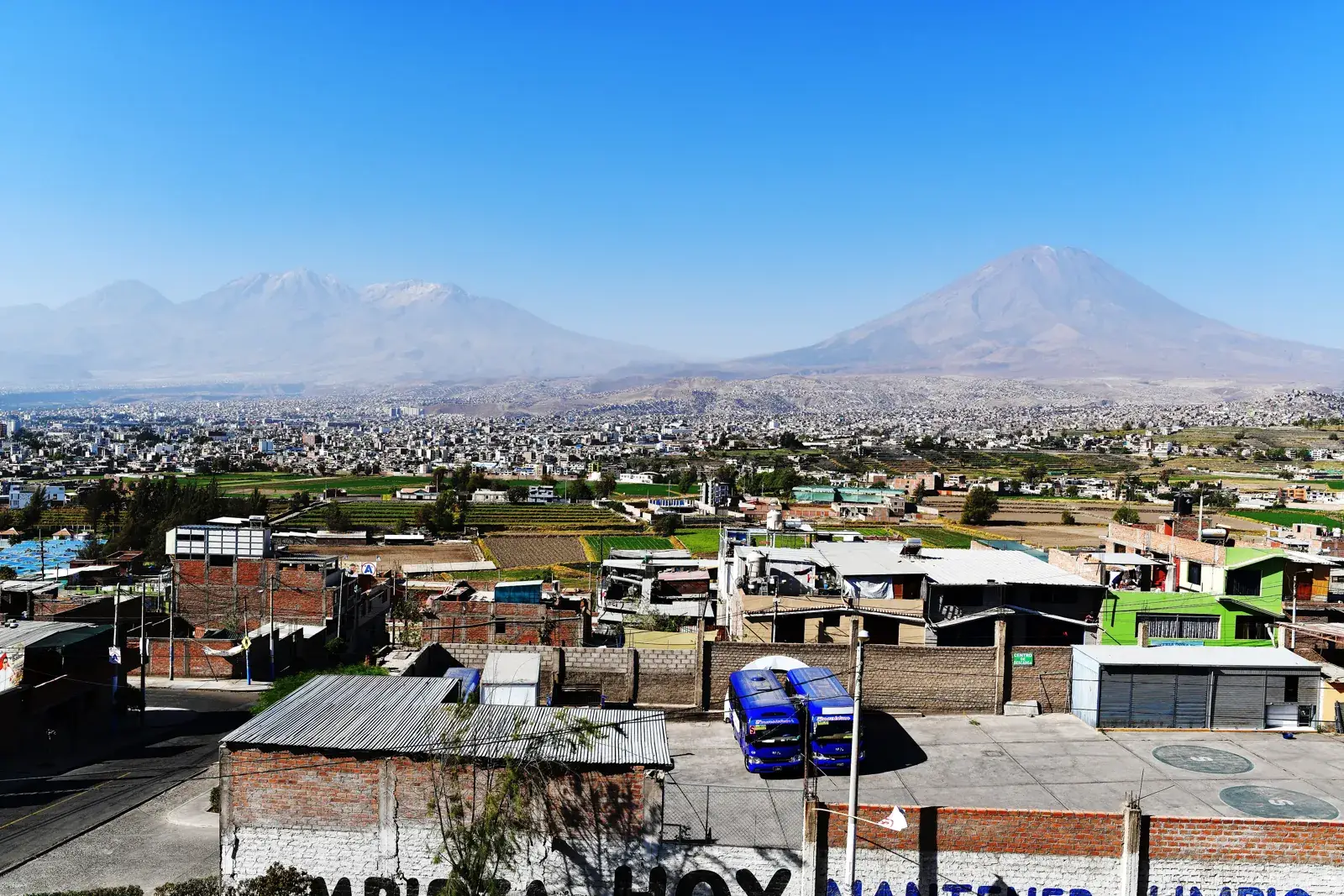
Return to Lima for a flight to Arequipa, or take the longer overland route if you enjoy long bus days. Arequipa has a mild dry climate, a historic centre in pale volcanic stone and good food. Spend the first day on the centre and the Santa Catalina monastery, the second on a market, a viewpoint and a slow lunch. The third day can be a short excursion to the countryside around the city, or, with an extra night, a visit to the Colca Canyon.
This is the right moment to rest. The next stage is the long mountain part of the trip. See Arequipa for the main sights. See Colca Canyon to understand what an extra night there would add.
Days 8 to 13: Sacred Valley, Machu Picchu and Cusco
Fly to Cusco on day eight and go straight to the Sacred Valley for two nights. Day nine is a slow valley day. On day ten take the train to Aguas Calientes, visit Machu Picchu on day eleven morning after a night there, and return towards Cusco in the afternoon. Day twelve is for Cusco: the Plaza de Armas, the Qorikancha, San Blas and the hill ruins. Day thirteen is spare: a market, a cooking class, or an excursion to Rainbow Mountain or the Humantay lake, which are early starts at high altitude and are best left until you feel well.
Keep this spare day as a buffer if you can. It protects the Machu Picchu timing and the flights home. See how many days Machu Picchu needs to understand why a night in Aguas Calientes pays off.
Day 14: fly home
Fly from Cusco to Lima and on. Choose a morning flight and give the international connection a long margin, and ideally a night in Lima before departure if your long-haul flight leaves early. A single booking for both flights gives some protection if the first one is delayed.
If you must cut a day anywhere, remove the spare day in Cusco only as a last resort; it is the one that protects the flight. The overview of flights in Peru explains how rebooking works when a mountain flight is cancelled.
Who this route suits, and what to adapt
Two weeks in four stages suits people who want variety without a trek: a first visit, a honeymoon, a trip with parents. It works well for travellers who enjoy food and city walks, because Lima and Arequipa balance the archaeological days.
If you have only twelve days, drop Paracas first. If you want to trek, replace the spare Cusco day and the Paracas stage with a four-day walk, and read acclimatisation before you do. See too many cities to understand why four bases in fourteen nights is about the limit.
Frequently asked questions
Why not include Lake Titicaca on this route?
It would add at least two more nights and a long transfer. The 21-day route and the southern loop include it.
Which part can I drop if I have 12 days?
Drop Paracas first, then shorten Arequipa to two nights.
Is the coastal section worth it?
It is worth it if you like wildlife and desert landscapes. If you would rather spend time in the mountains, replace it with a longer Cusco stay.
Is two weeks enough to include a trek?
Only a short one, and only if you replace Paracas or the spare day. The Inca Trail needs a permit booked far ahead, so decide on the trek before you book anything else.
Should I fly or take the bus from Lima to Arequipa?
Fly if you have two weeks. The bus is a long overnight journey, and it removes most of a day from a route that has little spare time.
Can I do Huacachina instead of Paracas?
Yes, but both are on the same road south. If you have only one night, Paracas has the wildlife and Huacachina the dunes, and the comparison of the two helps you choose.
Where should I put a rest day?
In Arequipa, before the Cusco stage. It is lower than Cusco and mild, and it gives your body a pause before the highest part of the trip.
What is the best season for this route?
The dry season, roughly May to September, is the most comfortable for the mountain part. The coast is cloudier then, so choose the shoulder months if you can.