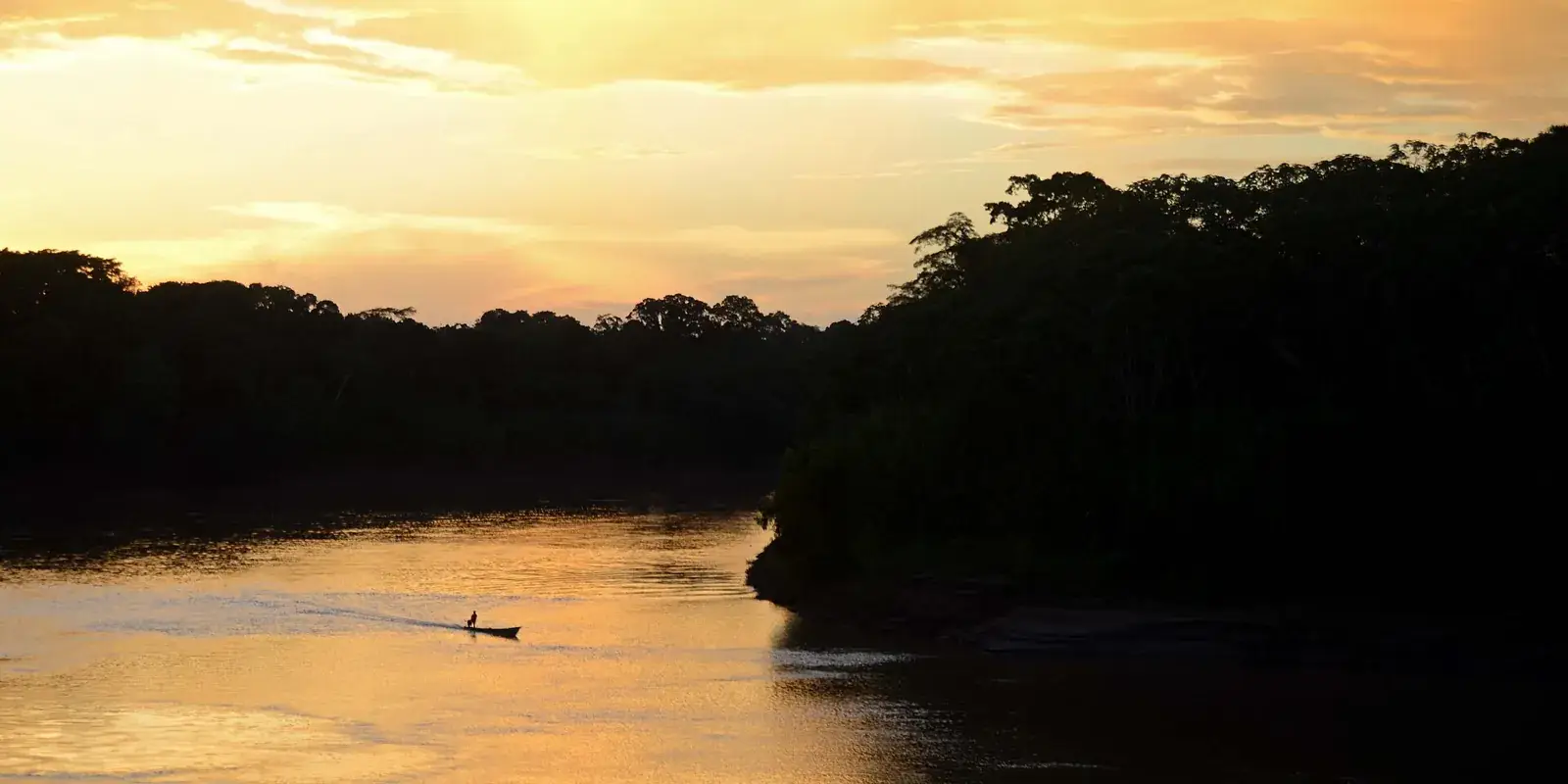
The Tambopata National Reserve is the legally protected core of the forest that most visitors mean when they say "Tambopata". It covers about 275,000 hectares of lowland rainforest south of Puerto Maldonado, on the border with Bolivia, and you enter it by boat with a lodge or a licensed operator. Plan at least three nights in the area, go with a guide, and expect patient wildlife watching rather than constant sightings.
Map
What the reserve is
The Tambopata National Reserve was created in September 2000 and covers roughly 275,000 hectares in the south-east of the Madre de Dios region, in Tambopata province. It lies south of the Madre de Dios river, with Bolivia to the east and the Bahuaja-Sonene National Park to the south, and it is managed by SERNANP, the national protected areas service.
The terrain is flat to gently rolling forest at roughly 200 to 400 m above sea level, cut by rivers, streams and oxbow lakes. That is a very different Peru from Cusco, and the altitude rules of the Andes do not apply here. The reserve is part of a wider conservation corridor that runs from the Vilcabamba mountains towards the Amboro area of Bolivia, which matters for animals that need large ranges.
The wider Tambopata destination covers lodges, health and trip planning. This page is about the protected area itself: what it is, what the rules mean and what you are actually entering.
Why it is protected
Tambopata sits where the Andean foothills meet the Amazon plain, and that meeting produces unusual variety. Botanists have recorded more than 1,700 species of vascular plants here, and the animal list includes jaguar, puma, tapir, giant otter, harpy eagle and several kinds of macaw. Most of these animals are secretive, so the list is a measure of the forest's richness rather than a promise of what you will see in a few days.
The reserve belongs to the IUCN category that allows sustainable use of natural resources, so it is not a strict no-entry zone. Certain activities such as tourism and the harvesting of some forest products are regulated rather than banned, and the buffer zone around the reserve is home to Indigenous communities, including the Ese Ejja people. Much of the visitor economy around Puerto Maldonado depends on the forest staying standing, which is one reason lodges and local communities have a stake in its protection.
What you can expect to see
The standard experience is a guided walk on forest trails, boat trips on rivers and oxbow lakes, and early-morning visits to a clay lick where macaws and parrots gather. Beyond the headline birds, the forest rewards slow attention: troops of monkeys, colourful frogs, leaf-cutter ant columns, huge buttress-rooted trees and, at night, caimans caught in a torch beam on the river.
Do not plan around one animal. Jaguars are present but very rarely seen, and a guide who promises one is overselling. The more reliable pleasures are birds, primates, reptiles and insects, plus the sense of scale when you stand under a tall canopy.
The most visited spot in the reserve is Sandoval Lake, a short boat and walk from Puerto Maldonado, which makes it practical for a one-night stay or a day trip. Going deeper, towards the clay licks and research stations on the upper river, takes more time and is where longer lodge stays earn their cost.
Getting in from Puerto Maldonado
There is no road into the heart of the reserve. Visitors start in Puerto Maldonado, usually after a short flight from Lima or Cusco (see Cusco to Puerto Maldonado), and continue by motorised canoe along the Tambopata or a neighbouring river, sometimes after a drive to a river port. Transfer times vary a great deal: the nearest lodges are within a short journey, while the deepest need most of a day on the river.
Most people enter through a lodge package, which includes the boat, the guide and the arrangements for entering protected land. Independent entry is harder because you need a boat, a guide and the right permissions, and the reserve is not an area to wander into alone. If you are weighing options, Puerto Maldonado lodges explains what to compare before booking, such as the boat time, guide quality and what the price includes.
Best time to visit
The climate is warm and humid all year, with a mean temperature of about 26 °C and a wide range between cool and very hot days. The rainy season runs roughly from December to March, when downpours are frequent, trails are muddy and some river trips change. The drier months, roughly May to October, make walking easier and travel more predictable.
In June and July, cold winds from the south can bring a short cool spell, sometimes called a friaje, so pack a warm layer even though you are in the lowlands. These cold snaps can last a few days and are not harmful, but they surprise visitors who expect only heat.
Time of day matters more than month. Birds and mammals are most active at dawn and in the last hour of light, and midday is quiet. Ask your lodge how it schedules the clay lick and the night outing in your month, because both depend on weather. Flights in and out of Puerto Maldonado can be delayed by rain, so avoid tight connections on the day you leave.
Threats: gold mining and deforestation
Tambopata is not a pristine museum. Illegal gold mining in the Madre de Dios region has destroyed forest, polluted rivers with mercury and caused social conflict, and it has reached the edges of the reserve and the buffer zone. Mining damage is concentrated along some rivers and in specific zones, and visitors on a standard lodge programme rarely see it, but it is a real pressure on the area.
Informal logging, roads and settlement also push at the boundaries. The reserve's protection depends on patrols, community agreements and the income that tourism brings to local people, so how you travel matters. Choose a lodge that employs local guides, follows the park rules and is open about where it operates, and read responsible travel for general principles. If a lodge offers to take you somewhere that feels like a mining zone or a restricted area, say no.
The existence of these threats is also a reason to go with accurate expectations: you are visiting a working conservation area, not a theme park.
Reserve, lodge or other Amazon options
The words "Tambopata" and "reserve" are used loosely, and some lodges sit on community or private land in the buffer zone rather than inside the reserve itself. That is not necessarily a problem, because the forest there can be excellent, but ask where the lodge is and which areas you will visit if protected status matters to you.
If you are choosing between regions, Manu is wilder and more remote, while Tambopata is easier to reach and fits a short extension from Cusco. The comparison of where to go in the Amazon sets out the differences, and is the Amazon worth it is blunt about what a short visit can and cannot deliver.
Pack for the forest with light long clothes, rubber boots (often lent), insect repellent as advised by your doctor and binoculars, and carry insurance that covers medical evacuation.
Frequently asked questions
Is the Tambopata National Reserve the same as Tambopata?
Not exactly. Tambopata is also the name of a river, a province and a district, and the visitor area around Puerto Maldonado is often called Tambopata. The National Reserve is the protected area with legal boundaries, and some lodges are in its buffer zone rather than inside it.
How big is the reserve?
About 275,000 hectares, which is roughly 2,750 square kilometres. It adjoins the Bahuaja-Sonene National Park, so the combined protected forest is much larger.
Can I visit the reserve in one day from Puerto Maldonado?
A short visit to Sandoval Lake is possible as a day trip, but it only scratches the surface. To reach the deeper forest and the clay licks you need at least a couple of nights. See Tambopata Reserve for how long to stay.
Do I need a guide?
Yes, for practical and safety reasons. Trails are not always marked, the forest is disorienting and the rules for entering protected land are easier to follow with a licensed operator or lodge. A good guide also finds animals you would walk past.
Is the reserve safe?
Within a normal lodge programme it is generally considered safe, with the main risks being insects, heat and slips on wet trails. Avoid areas near illegal mining, and follow the lodge's advice on river conditions and swimming. Read health and vaccines before you go.
Will I see a jaguar?
It is very unlikely. Jaguars live in the reserve, but they are shy and cover large areas. Plan for birds, monkeys, caimans and other wildlife, and treat any larger sighting as a bonus.
Is there an entrance fee?
Protected areas in Peru normally charge an entrance fee, and lodges usually include it in the package price or add it separately. Check the amount and what it covers with your operator before booking, because rules and prices change.