Huaca Arco Iris, also called Huaca del Dragón, is a Chimú adobe temple in the La Esperanza district, a short taxi ride from the centre of Trujillo and close to Chan Chan. Its walls carry relief friezes of rainbows and two-headed serpents, which is why it is worth a stop. A visit takes roughly 30 to 45 minutes, and it is usually seen together with Chan Chan, since the ticket is normally a combined one. Check days, hours and prices locally before you go.
Map
A temple the city grew around
Huaca Arco Iris is a Chimú religious and ceremonial monument built of adobe, in the La Esperanza district on the north side of Trujillo. It is also known as Huaca del Dragón, after the dragon-like figures carved on its walls, and in Spanish as Huaca del Arco Iris. The Chimú built it in the centuries before the Inca conquest, and it is generally dated to the Late Intermediate Period, with abandonment around 1450, although sources disagree on the exact dates and some place its origins earlier.
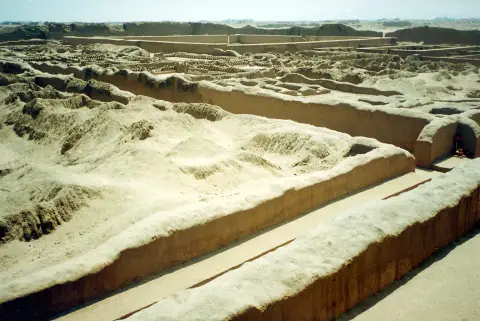
The word huaca is used across the Andes for a sacred place, and on the north coast it usually means a platform mound of mud brick. Unlike the vast walled compounds of Chan Chan, the capital that lies a few kilometres away, this is a single, compact monument. It was probably a place of ritual and administration, not a palace or a burial compound, and its size is modest, around 3,000 square metres by one published figure.
What makes the site unusual is that it now sits among houses and streets, a reminder of how closely the ancient Moche Valley and the modern city overlap.
The rainbow and the serpents
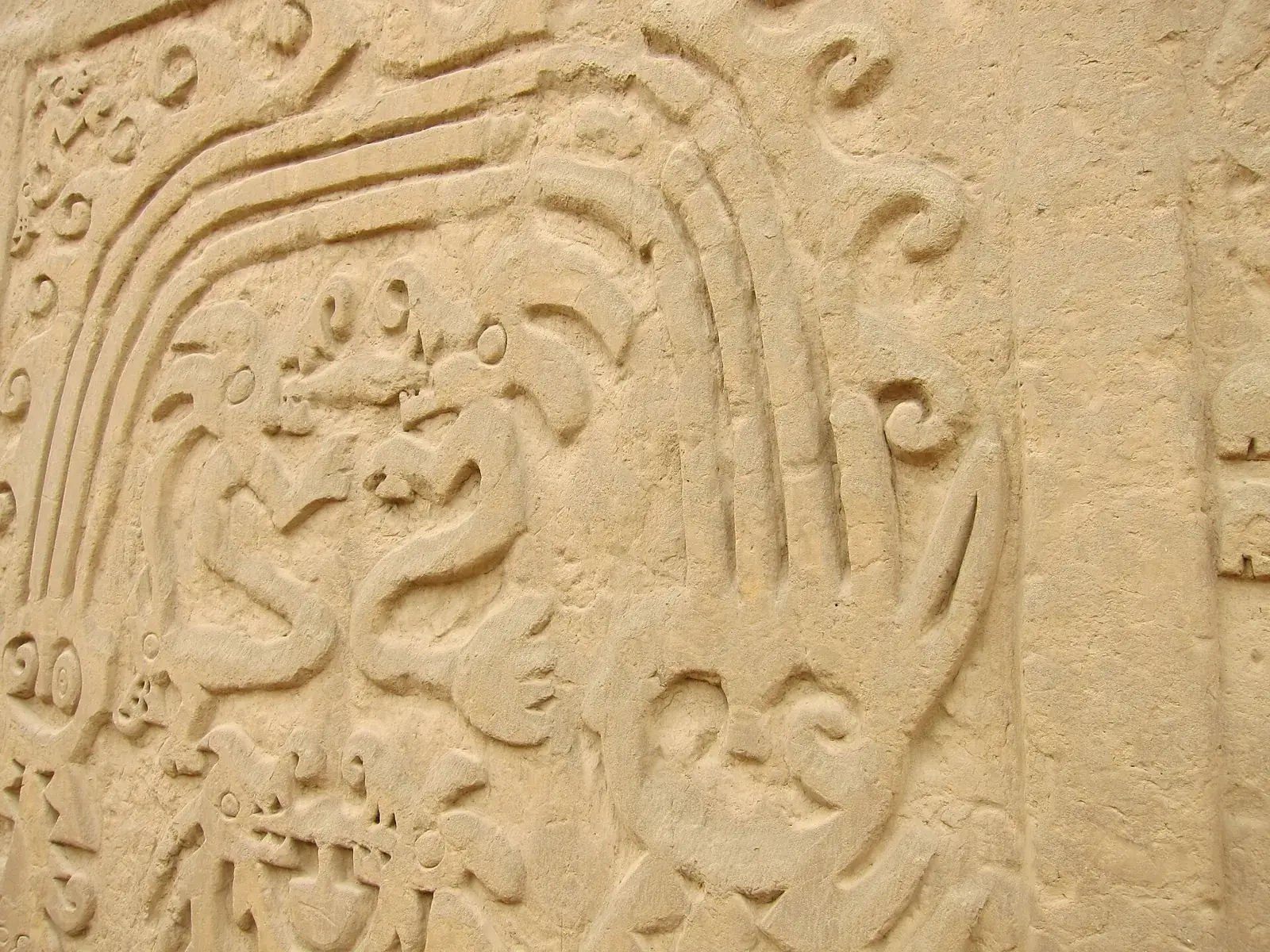
The reason to come is the decoration. The walls carry relief friezes modelled in the mud plaster: bands of arched lines, read as rainbows, and below them two-headed serpents and other stylised figures. Some descriptions add human figures and a ceremonial knife, the tumi, among the motifs.
The usual reading links the rainbow to rain, water and fertility. On a coast where the rivers come down from the Andes and every field depends on irrigation, a symbol of water renewing dry land makes sense. The two-headed serpent appears in other Andean art as a creature linked to water and the sky. These are interpretations by archaeologists and guides, not texts left by the Chimú, so treat any single explanation as one possible reading.
Rainbow-shaped arches are described as rare in Chimú art, which is why the temple carries its popular name. The friezes you see are a mix of original surface and conservation work, and a good guide will point out which is which. If you have seen the fish and wave patterns at Chan Chan, the images here feel different: more mythical and less tied to the sea.
What you walk through
The monument is a large stepped platform enclosed by perimeter walls, which some sources describe as up to about six metres high. On entering, a ramp leads up to the first level, and a smaller ramp leads on to the second. These ramps, rather than stairs, are typical of north-coast temples and are thought to have been used for processions.
On the upper level there are rows of small storage rooms or pits, which archaeologists suggest held offerings, food or ritual goods. One source counts fourteen of them. Many visitors walk around the base first, reading the friezes on the outer walls, and then climb the ramp for a view over the compound and the surrounding neighbourhood.
The site is open-air and usually has little shade, with limited signs, so a short guided explanation or a printed guide helps. Keep to the marked paths and do not touch the walls: adobe wears away under hands, and the friezes are the reason the place has been protected. Because the temple is small, it does not tire you the way a long day at a big ruin can.
Why it is a short stop and not a full day
It helps to set expectations. Huaca Arco Iris is not a large site, and visitors who arrive expecting the scale of the Huacas de Moche or the reach of Chan Chan sometimes find it modest. Its strength is the quality of the carved wall surface and the ease of the visit.
Plan around 30 to 45 minutes on site, which is a figure given by local sources and depends on how long you spend with a guide. That makes it a good second or third stop in a day that begins at Chan Chan. The Moche temples, built earlier by a different culture, show the older tradition on this coast, while Huaca Arco Iris belongs to the later Chimú world. Seeing both gives a sense of how the same valley was shaped by successive peoples.
For the objects that these builders made, such as metalwork and ceramics, the Larco Museum in Lima is the best-known collection, and the Lord of Sipán finds in the north are covered on the Sipán page.
Getting there from Trujillo
The temple lies about five kilometres from the centre of Trujillo, in La Esperanza, reached from the main avenues that head north towards Chan Chan and the Panamericana. A taxi from the Plaza de Armas takes around 15 to 20 minutes, and it is the simplest way to go. Agree the fare and, if you want to continue to Chan Chan, the waiting time before you set off.
Local buses and minibuses run towards La Esperanza, and some travellers ask the driver to stop near the huaca. The stop is a few blocks away, so confirm it with the driver or a local before you rely on it. Tours from the city often group Huaca Arco Iris with Chan Chan, the Chan Chan site museum and the beach town of Huanchaco, and the things to do in Trujillo page shows how these stops fit together.
If you arrive in Trujillo by night bus or by air, the guide on Lima to Trujillo compares the options. Allow for traffic on weekday mornings and the evening, when the north-side avenues are busy.
Tickets, hours and the Chan Chan combination
The site is part of the Chan Chan circuit of the Ministry of Culture, so the entry is typically a combined ticket that also covers other parts of the circuit, such as the Chan Chan site museum and nearby huacas. Sources report a ticket valid for more than one day, but rules about the order of visits and what is included have changed over time. Ask at the first site you reach, or at the Chan Chan ticket office, before you buy.
Opening days and hours also change. Published information describes visits from about 9:00 in the morning to about 4:00 in the afternoon, and some sources say the sites are closed on one weekday, but no figure here should be relied on. Prices have a lower rate for Peruvians and for students with ID, and there are free-entry days for some groups, so carry identification.
Carry cash in soles, in small notes, as described in money and ATMs. Some sites do not take cards, and a taxi driver will want change.
When to go and what to bring
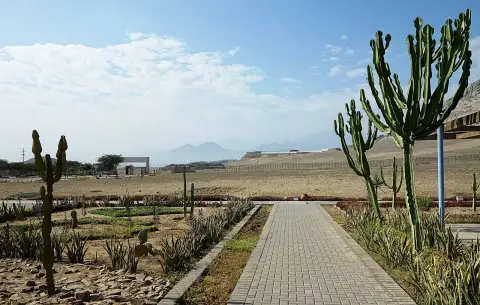
Trujillo is on the desert coast, at only about 77 m above sea level, so there is no altitude issue, and the site is flat. The main concerns are sun, dust and wind. The coast is dry and the cloud cover is often thin, even when the air feels cool. Wear a hat, sunscreen and closed shoes, and carry water, because shade is limited and the site has few facilities.
Mid-morning or late afternoon gives better light on the carved walls, with low sun showing the relief clearly. Midday is bright and flat, and photographs lose the shadows that make the friezes readable. Rain is rare, and the damage it can do to adobe, particularly during El Niño years, is one reason these sites are treated carefully.
The temple is easy for most people, including children, as the ground is level. The packing advice in the packing list is enough for a day on the north coast.
Combining it with other stops
The natural pairing is Chan Chan, which is close enough to reach in the same trip, and where a visit takes around two hours. Huaca Arco Iris works as a shorter and quieter counterpart: a single carved temple after a large city. Fit the two into a half day, and add the Huacas de Moche and the coastline at Huanchaco if you want a full day.
If you plan a longer northern route, the northern Peru itinerary places Trujillo alongside Chiclayo and the Sipán sites. Keep the order simple: monuments in the morning when it is cooler, lunch in Trujillo or Huanchaco, and a walk in the colonial centre in the evening.
Where to sleep
-
Find hotels
Trujillo centre
Colonial centre, base for Chan Chan and the Moche temples
-
Find hotels
Huanchaco
Surf village by the sea, a short ride from the city
Frequently asked questions
Is Huaca Arco Iris the same as Huaca del Dragón?
Yes. The two names refer to the same Chimú temple, called the Rainbow Huaca for its arched friezes and the Dragon Huaca for its dragon-like figures. Signs, taxi drivers and maps may use either one.
How long does a visit to Huaca Arco Iris take?
Around 30 to 45 minutes is usually enough, longer if you hire a guide. It is a compact site, so it fits easily with a morning at Chan Chan.
Is Huaca Arco Iris included in the Chan Chan ticket?
It has usually been sold on a combined ticket with the Chan Chan circuit, but the arrangement can change. Ask at the ticket office what your ticket covers and how many days it is valid.
How far is Huaca Arco Iris from Trujillo centre?
About five kilometres, a taxi ride of roughly 15 to 20 minutes depending on traffic. Local buses go towards La Esperanza, but taxis are easier for a first visit.
What do the rainbow carvings mean?
The usual interpretation links the arches to rain, water and agricultural fertility, which fits a desert coast that depends on irrigation. This is an archaeological reading, not a written record, so guides may offer other explanations.
Is the site worth visiting if I am short of time?
If you have time for only one site in Trujillo, Chan Chan is the larger and more complete choice. Add Huaca Arco Iris when you want to see the carved rainbow friezes up close and have an hour to spare.
Do I need a guide at Huaca Arco Iris?
It is not required, but the signs are limited and the meaning of the carvings is easier to follow with one. Guides are usually found at the entrance, so agree the price before the tour begins.