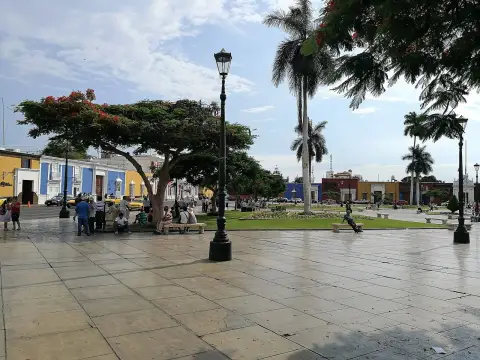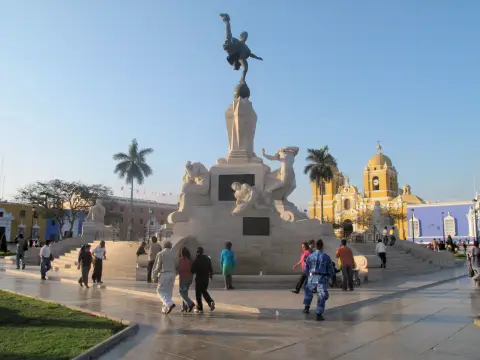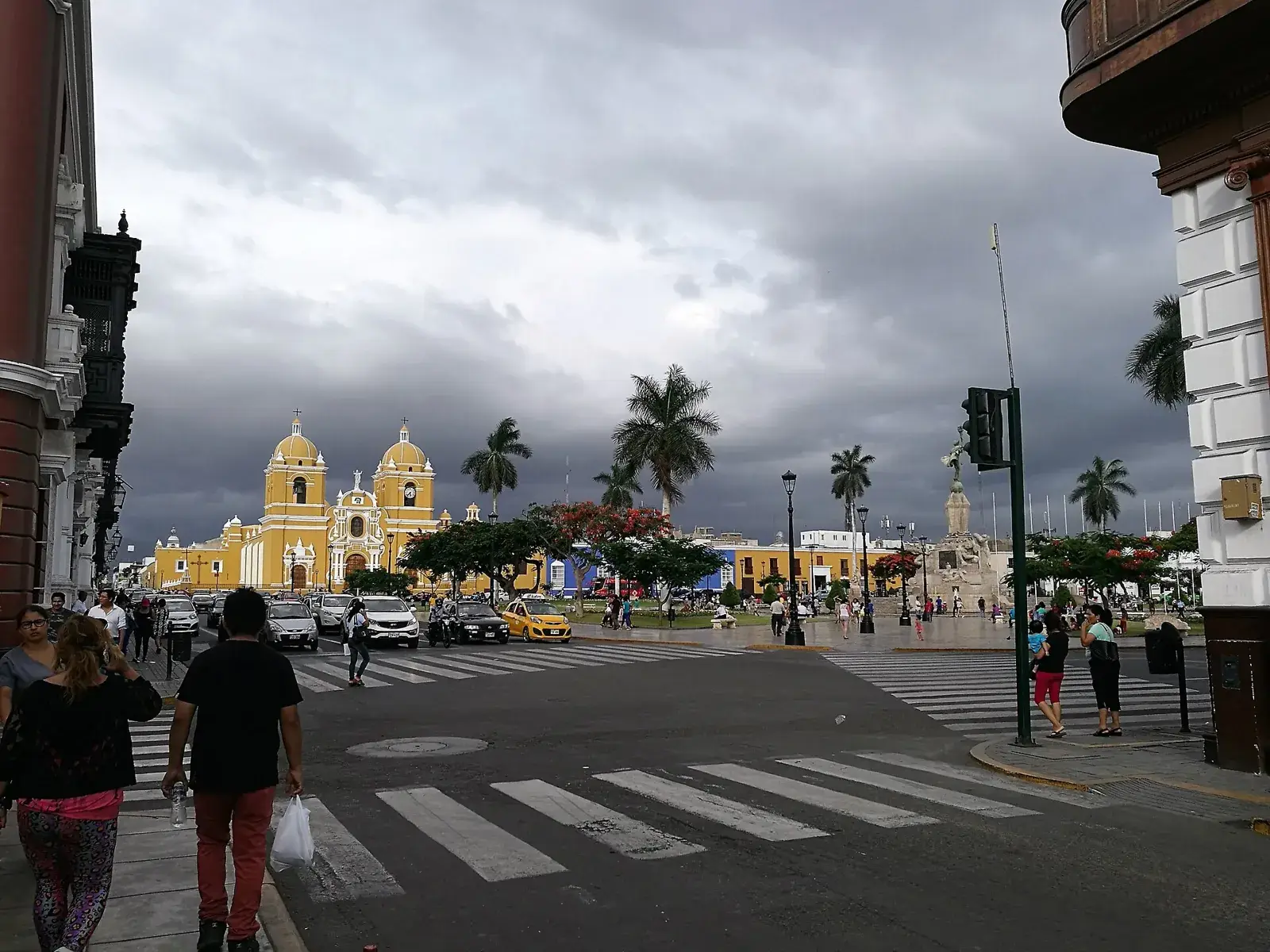
The Plaza de Armas is the colonial heart of Trujillo: a large, tidy square with the cathedral on one side, the Monument to Liberty in the middle and mansions with iron balconies and strong colours on the other sides. It is free to walk through at any hour. Give it one to two hours, ideally in the morning for the light or in the early evening when families gather, and use it as the starting point for the rest of the old centre.
Map
What the square is
The Plaza de Armas is the main square of Trujillo and the reason the old centre is easy to understand: the streets run in a regular grid around it, as in most Spanish colonial foundations, and the main civic and religious buildings were placed on its sides. Trujillo was founded by the Spanish in 1534, and the square has been the centre of public life ever since, for markets, processions, political meetings and the evening stroll.
Today it is a broad, open space with paved paths, gardens, benches and fountains, and it is one of the larger squares of the Peruvian coast. It is not an archaeological site and has no entrance gate, which makes it the easiest first stop in the city. Those who want the wider picture of the area, with the ruins and the beach village, can start from the things to do in Trujillo page and come back here for the colonial side.
A short history of the square
The city took its name from the home town in Spain of the conquistador Francisco Pizarro, and the grid around the square dates from the first years after the foundation. For centuries it was a coastal trading town of sugar estates and merchant families, and the mansions that surround the square were built by those families, often rebuilt after earthquakes, which on this coast are a recurring fact of life.
Trujillo is also remembered for its role in independence. In December 1820 the city proclaimed its independence from Spain, well before the final victories in the highlands, and the square was where the break was announced. That episode is the reason the central monument looks the way it does, and the local pride in it is still visible in the city's festivals and street names. A guide or a short reading beforehand makes the walk more rewarding, because the square is a place of layered meanings and not just a pretty space.
The cathedral
On one side stands the cathedral, the Basilica Menor of Trujillo, a church with a yellow facade and twin towers that is the most recognisable building on the square. It dates from the seventeenth century and has been repaired several times after earthquakes, so what you see is a mix of periods. The interior has a carved and gilded altarpiece, side chapels and religious paintings, and it still serves as the active church of the city, with Masses through the week.
A small museum linked to the cathedral has been reported, showing church art, but its opening arrangements are not something to count on, so ask at the entrance. Dress modestly, keep your voice low during services and avoid photographing worshippers. The cathedral is open at set times, usually with a break in the middle of the day, so check on arrival rather than assuming it will be open when you pass by.
The Monument to Liberty
In the middle of the square rises the Monument to Liberty, a tall sculptural group that commemorates the 1820 declaration of independence. It was made by a European sculptor in the early twentieth century and inaugurated in the late 1920s, and it is the focus of the square, with figures symbolising liberty, the arts, science and the like arranged around a central column.
It is worth walking around the monument slowly, since the figures are best seen from different sides and the light changes their character through the day. Its base is also where local people meet, so on weekends you may see school groups, wedding parties and photographers. The surrounding gardens are tended carefully, and the square is cleaned and swept early in the morning, which is also the best time to see it without crowds.
The mansions and the town hall
What gives the square its character are the colonial mansions on the sides and on the nearby streets, painted in blue, ochre, green and pink and fitted with wooden balconies, wrought-iron grilles and large doors that open onto courtyards. Some belonged to noble families and are known by the family names, such as the Casa de la Emancipación, linked to the independence story, and the Casa Urquiaga, which is often described as one of the finest in the city.
The town hall also faces the square, in a building that blends in with the colonial style. Several mansions now house banks, offices or cultural centres, and a few can be visited free or for a small fee, usually with limited hours that change. Walking into a courtyard where it is allowed is the best way to see the inner life of these houses. Respect any signs that mark private or working areas, and ask before photographing inside.
When to go and how long to stay
One to two hours is enough for the square, the cathedral and a look at the nearest mansions; add a further hour if you want to enter one or two buildings and walk the streets leading off the square. The morning is the best time for photographs, with softer light on the facades, and for entering buildings, since many close at midday or in the afternoon.
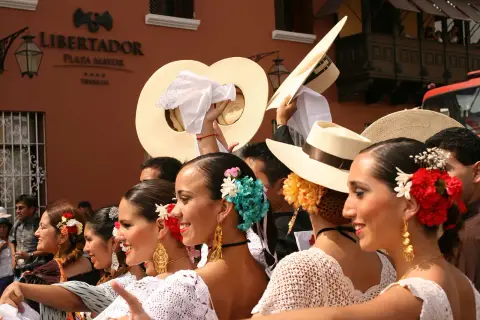
The early evening is the other good moment, when the lights come on, families and couples sit on the benches and street vendors appear. Trujillo is on the coast, close to sea level, so altitude is not an issue and the weather is generally dry. Cloud is common in the cooler months and the sun is strong in summer, so bring a hat. The city is known for its marinera dance festival, held in the summer months, and for a spring festival in autumn, when the square becomes a stage, though the dates change from year to year.
Getting there and moving around
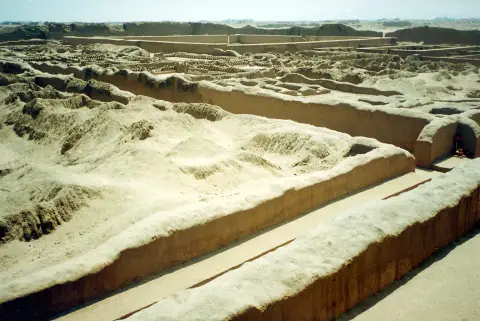
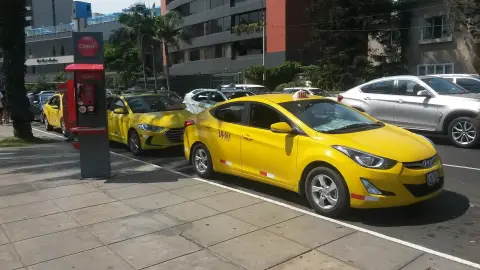
The square is the centre of the old city, and almost every hotel in the colonial centre is within a few minutes' walk. If you arrive from the coast route described on Lima to Trujillo, a taxi from the bus terminal or airport takes you to the square; the practical side of using cabs is covered in taxis and ride-hailing. The sights beyond the centre, such as Chan Chan and the Huacas de Moche, are reached by taxi, tour or local transport from here.
Inside the old centre everything is flat and walkable, which makes the area comfortable for older travellers and families. Sidewalks are narrow in places and traffic can be heavy on the streets around the square, so keep an eye on cars when you cross.
Food, safety and what to combine
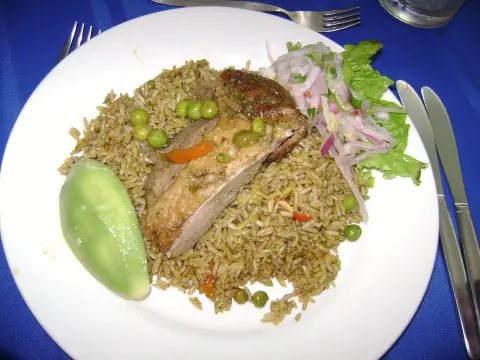
Cafés and restaurants line the streets around the square, and it is a convenient place for a seafood lunch or a coffee. The coast's ceviche is a lunchtime dish and many places close in the afternoon, so plan around that; what to eat in the north explains the local menu. Choose busy places and follow the advice on food and water for your stomach.
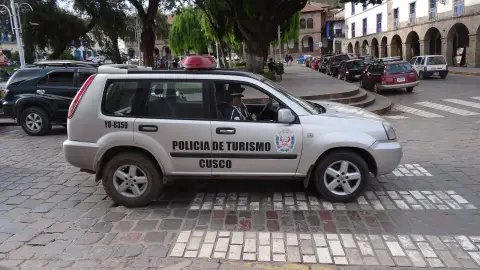
The square is generally calm by day. As in most Peruvian cities, keep your phone and bag close, avoid displaying valuables, and take a registered taxi at night rather than walking through quiet streets; the main points are in safety in Peru. Combine the square with the colonial streets nearby, a visit to Chan Chan in the morning and the beach village of Huanchaco at sunset, or place the stop in a longer route with the northern itinerary.
Where to sleep
-
Find hotels
Trujillo centre
Colonial centre, base for Chan Chan and the Moche temples
-
Find hotels
Huanchaco
Surf village by the sea, a short ride from the city
Frequently asked questions
Is the Trujillo Plaza de Armas worth visiting?
Yes, it is the best place to see the colonial side of the city, with the cathedral, the Monument to Liberty and the painted mansions in one place. It takes little time and costs nothing, so it fits easily around a day at Chan Chan.
How long do I need at the Plaza de Armas?
One to two hours covers the square, the cathedral and a walk past the nearest mansions. Add time if you want to enter a mansion or sit in a café.
Is there an entrance fee?
No, the square is a public space and is open at all hours. The cathedral is free to enter as a church at times, while any museum or mansion may charge a fee or have limited hours, so check on the spot.
What is the best time of day to visit?
Morning is best for light and for visiting buildings, and early evening is best for atmosphere, when local families come out. Avoid the middle of the day if the sun is strong, since there is little shade in the open parts.
Is the Plaza de Armas safe at night?
It is lively and generally comfortable in the early evening, but keep valuables out of sight and use a registered taxi to go back. For other tips see common scams.
Can I pay by card in the cafés and shops around the square?
Many restaurants and hotels in the centre accept cards, but small shops and market stalls often prefer cash in soles. Carry some small notes, and see money and ATMs for cash machines.
How do I get to the Plaza de Armas from the coast and from Lima?
From the bus terminal or airport a taxi reaches the centre in a short ride. Lima to Trujillo compares the long-distance options, and the old centre is compact enough to walk once you are there.