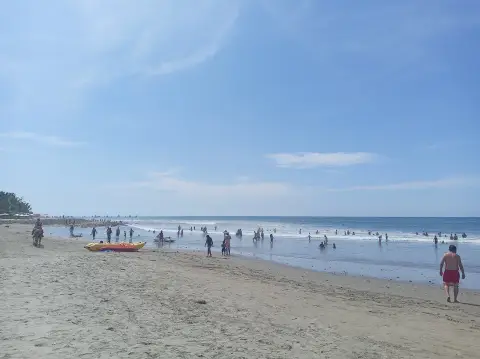
Huanchaco is a seaside town about 14 km north-west of central Trujillo, known for its caballitos de totora, the reed boats that local fishermen still use, and for easy surf. It works as a half-day beach stop after the ruins or as a quieter base for the north coast. Go in the morning to see boats come in, stay for a seafood lunch and the sunset, and expect a cool sea and a cloudy winter.
Map
What Huanchaco is
Huanchaco is a seaside town on the Pacific coast of La Libertad, about 14 km from the historic centre of Trujillo and effectively a suburb of it. The town has grown a great deal, with new building spreading up the slope behind the shore, but the seafront has kept its character: a long beach, a pier, fishermen's boats drawn up on the sand, and a strip of restaurants, surf schools and small guesthouses facing the water.
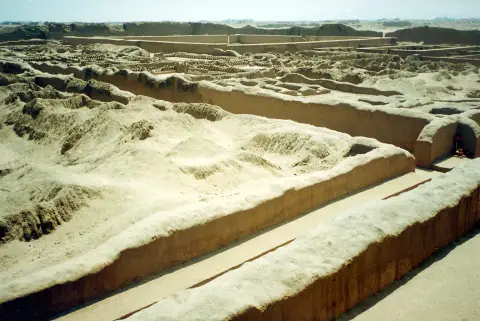
It is not a resort in the sense of big hotels and nightlife. Most visitors come for a few hours or an evening, and a smaller number stay for several nights because the pace is gentler and the air fresher than in the city. For a short trip it is the easy counterpart to the two great archaeological sites, and it sits comfortably between them: Chan Chan is only a few kilometres inland, and the Huacas de Moche are on the other side of the city.
A port older than the Spanish
People have fished here for a very long time. Huanchaco served as a port in the Moche period and later as the sea outlet of the Chimú capital of Chan Chan, which lies only a few kilometres away. The Inca chronicler Garcilaso de la Vega mentions the port, and the Spanish settled it in the sixteenth century, which is why the town has an old church on the rise above the beach, a landmark visible from the water.
The coast has also given archaeologists some of their hardest finds. At a site called Huanchaquito-Las Llamas, near the town, excavations uncovered a Chimú sacrifice of well over a hundred children and many llamas, reported as one of the largest known cases of its kind. It is a research site and not something to visit, but it is a reminder that the quiet beach sits on a deeply layered landscape. Much of that story is told better at the museums and ruins described under things to do in Trujillo.
The caballitos de totora
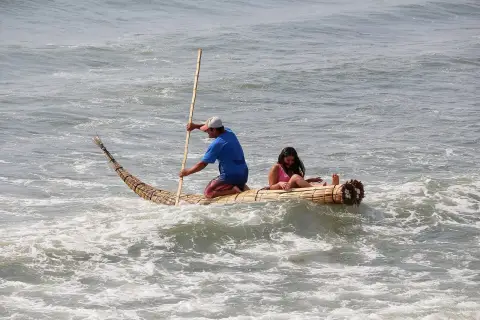
The reason Huanchaco is on the map is the caballito de totora, the "little horse of reeds". It is a narrow boat made from bundles of totora, a reed that grows in wetlands and shallow lakes, tied together into a tapered, upturned bow. The fisherman sits or kneels on it, as on a horse, and paddles with a split cane. Moche pottery shows boats of the same shape, so the design is understood to be centuries old, and local fishermen still use it for work, not only for show.
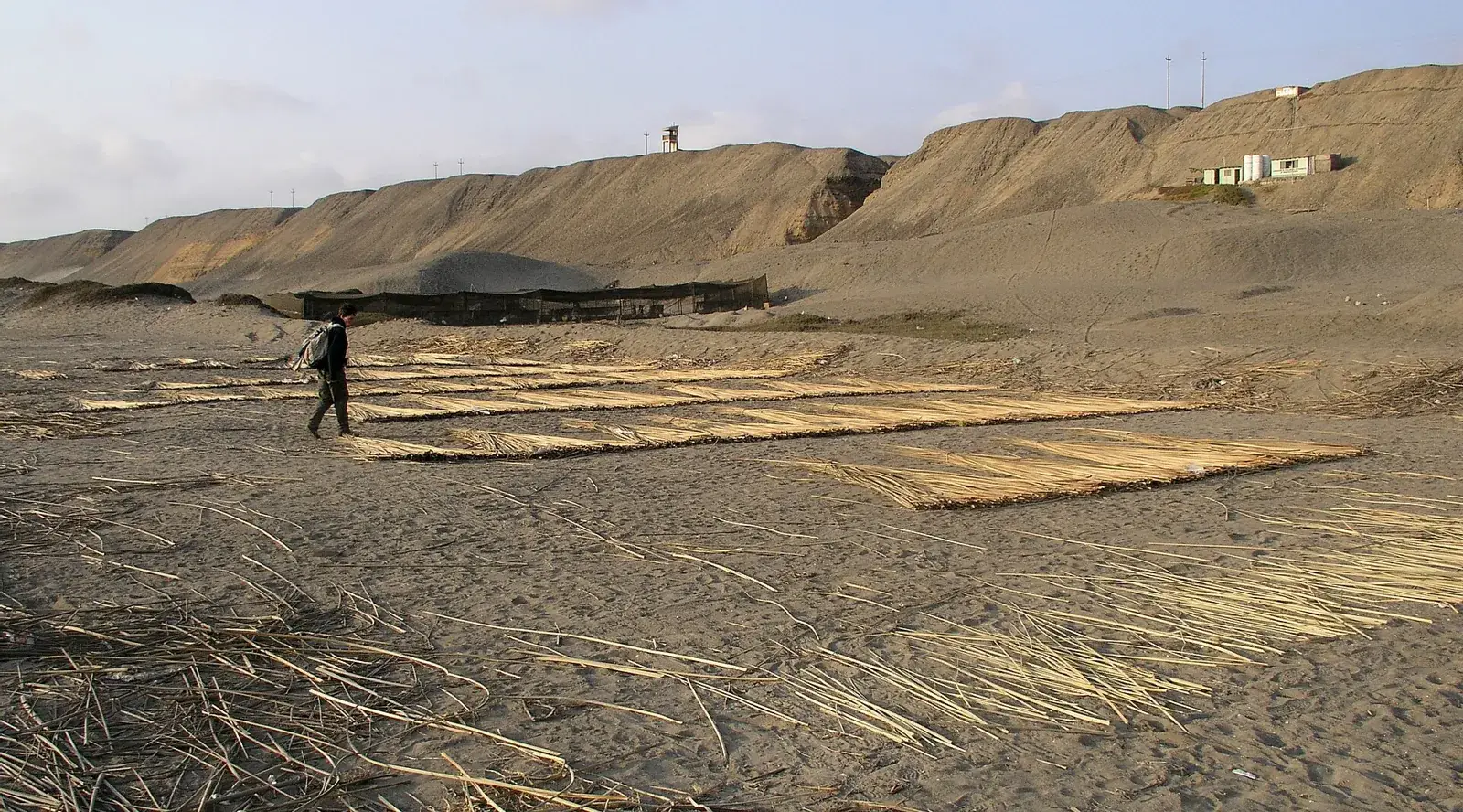
The reed lasts only a limited time in the water, so you will see the boats stood upright on the sand or on the pier to dry, with reed stacked beside them. This is also the clearest sign of a living craft, since each boat is rebuilt by hand. In the early morning the fishermen paddle out beyond the surf and return with the catch; the time varies with the sea and the season, so ask locally. Treat it as working life: watch from the shore, ask before photographing a person, and if a rider offers a short paddle for a fee, agree the price first. The wetlands where the reed grows are still managed near the town, and a few local operators run visits there.
Surfing and the water
Huanchaco is one of the best-known surf places in Peru. The waves come in along a long coast with sandy and rocky bottoms and are generally forgiving, which suits beginners and longboarders. Surf schools along the shore rent boards and wetsuits and give lessons, and the town has been named a World Surfing Reserve, the first in Latin America, according to the organisation that made the award. A longboard competition is held here each year.
The Pacific off northern Peru is cool because of the Humboldt Current, so a wetsuit is normal for most of the year even when the air is warm. Swimming is a different matter from surfing: currents, rocks and waves can be stronger than they look from the beach, there is not always a lifeguard, and many people simply paddle at the edge. Surf conditions change with the swell, so ask a school what the day will bring before you book, and read safety in Peru for the general precautions.
What to eat
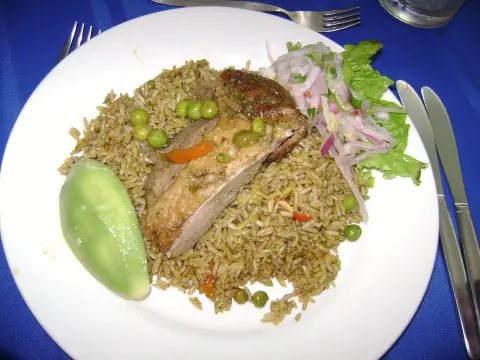
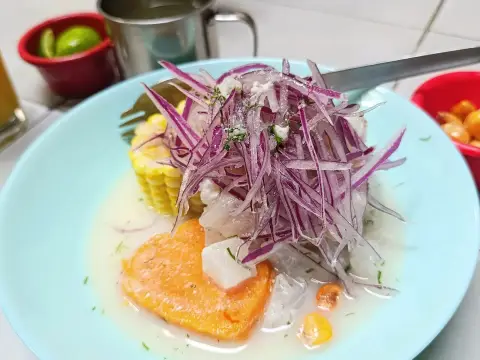
Seafood is the reason to have a meal here. The seafront restaurants serve ceviche of very fresh fish, usually at lunchtime, along with fried fish, rice with seafood and the stews of the north coast. Some local historians claim that Huanchaco is the birthplace of ceviche, but it is a claim and not a settled fact, and other coastal towns say the same. The dish is described in the guide to ceviche, and the wider coastal cooking in what to eat in northern Peru.
Ceviche is traditionally a lunch dish, and many restaurants prepare the best fish early in the day, so go between late morning and mid-afternoon rather than at night. Choose busy places where the fish is clearly turning over, and follow the advice on water and food safety if your stomach is sensitive. Menus near the pier are the most expensive and the view is part of the price.
Getting there from Trujillo
Huanchaco is close, so getting there is simple. Local buses and combis run between Trujillo and the town, taxis are plentiful, and the ride takes roughly half an hour depending on traffic. Taxi fares are best agreed before you get in; see taxis and ride-hailing for how that works, and carry small notes as described in money and ATMs.
Many travellers combine the town with the ruins in one day: Chan Chan in the morning, before the sun is high, then Huanchaco for lunch and the late afternoon. Others reverse the day and do the beach first. If you plan to stay, remember that the last public transport back to the city varies, so check the time locally and keep a taxi in reserve. To reach Trujillo itself from the capital, see Lima to Trujillo.
When to go
The climate is dry, with almost no rain, and the warmest, sunniest weather is in the southern summer, roughly December to April. From about May to November the coast is often under low cloud and a fine mist, and the air and water are cooler, although the town stays open and quieter. Surf is generally present all year, with larger swell at some times than others, so check with the schools.
The best time of day is late afternoon, when the light softens, the beach fills with families and the sun goes down over the sea. The town's patron saint, San Pedro, is celebrated in June with boats and processions, and the town also holds a carnival; dates change, so see festivals and holidays and confirm locally. Bring a light jacket for the evening, sunscreen for the day, and a hat.
Who it suits and what to combine it with
Huanchaco suits travellers who want a gentle day by the sea after the ruins, beginners who would like a first surf lesson, and anyone who prefers a small beach town to a city for sleeping. It is less suited to people who want a lively night out or a long swim in warm water. There is no altitude to worry about, since the town is at sea level.
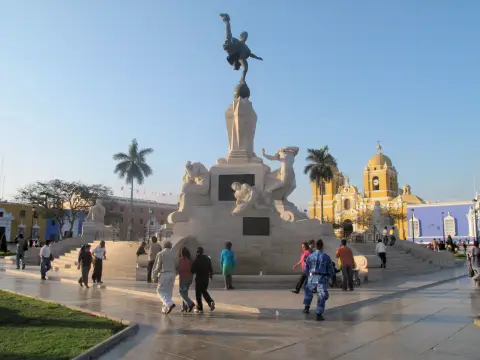
Within a Trujillo stay it fits easily alongside the colonial centre, Chan Chan and the Moche pyramids. On a longer northern loop it is the first stop before Chiclayo and the museums of Sipán, as laid out in the northern itinerary. If your main goal is warm-water surf and beach time, Máncora is much further north and has a very different, livelier character. Keep valuables out of sight on the beach, as anywhere busy.
Where to sleep
-
Find hotels
Trujillo centre
Colonial centre, base for Chan Chan and the Moche temples
-
Find hotels
Huanchaco
Surf village by the sea, a short ride from the city
Frequently asked questions
How far is Huanchaco from Trujillo?
About 14 km from the historic centre of Trujillo, roughly half an hour by taxi or local bus depending on traffic. It is easy to visit as a half-day trip.
What are caballitos de totora?
They are narrow reed boats made from bundles of totora, which fishermen still ride and paddle on the sea off Huanchaco. Moche pottery shows similar boats, so the design is very old.
Can beginners surf in Huanchaco?
Yes, the waves are generally gentle and surf schools on the shore rent boards and wetsuits and give lessons. The water is cool, so a wetsuit is usual, and conditions depend on the swell.
Is it better to stay in Huanchaco or in Trujillo?
Stay in Huanchaco if you want a calm seaside base and do not mind a short ride to the sites. Stay in the city if you want the colonial centre, more restaurants and easier night-time transport.
Can I swim at Huanchaco?
Many people paddle at the edge, but currents, rocks and waves can be stronger than they look and lifeguards are not always present. Ask locally before swimming, and see safety in Peru.
When is the best time to visit Huanchaco?
December to April is the warmest and sunniest period. From about May to November the coast is cloudier and cooler, but the town is quieter and still worth a visit.
Is Huanchaco worth a visit if I only have one day in Trujillo?
If you only have a day, put the ruins first, since Chan Chan is close to Huanchaco on the way. Then end the day by the sea for a late seafood lunch and the sunset.