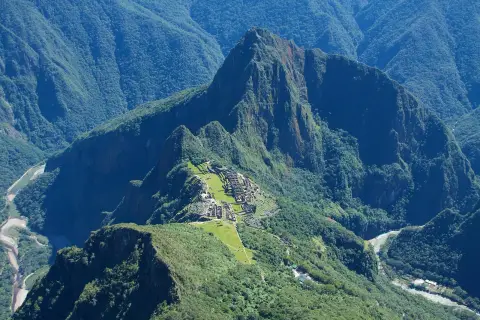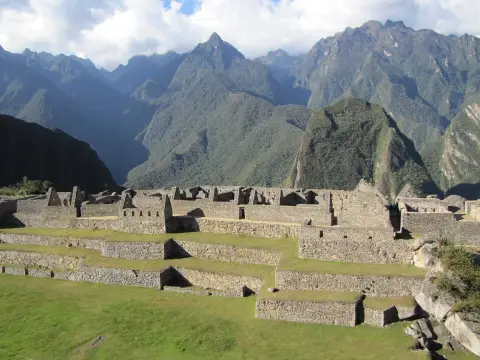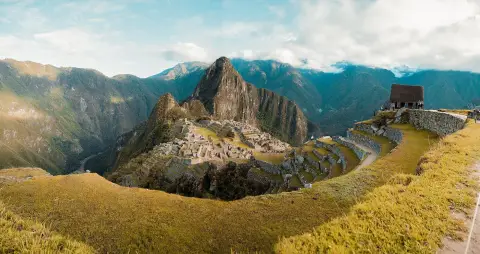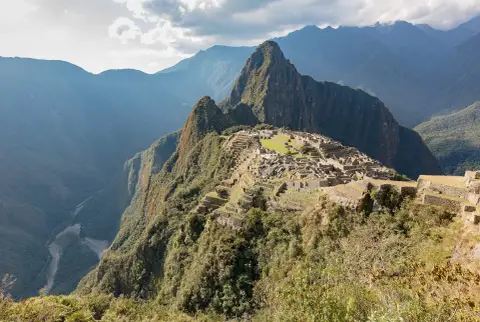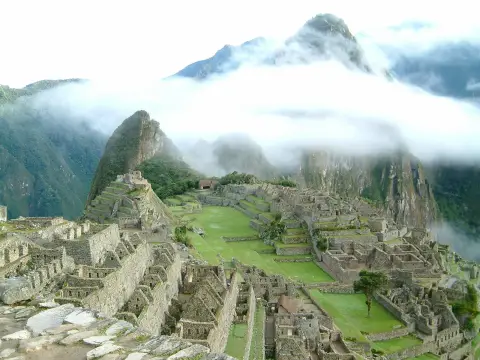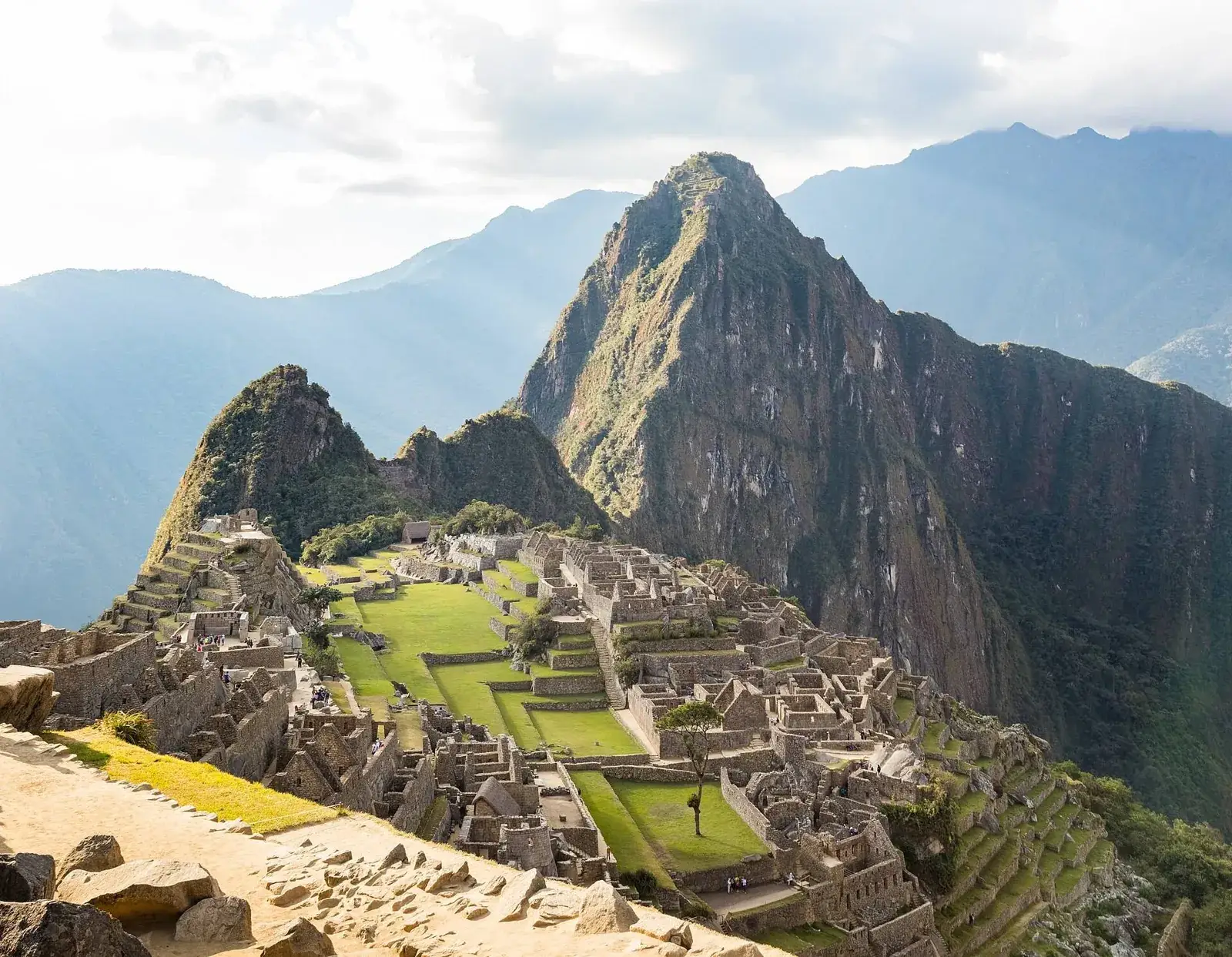
Huayna Picchu is the sharp peak that rises behind the citadel in the classic photograph, at about 2,720 m. Climbing it is an optional add-on with its own limited tickets and entry times, and it involves steep, exposed stone steps. It is a rewarding but demanding excursion that is not for everyone.
Ask a doctor if you have any doubts about your fitness.
What it is
The name means "young peak" in Quechua, in contrast to "old peak", Machu Picchu, the ridge on which the ruins stand. The mountain rises steeply on the northern side of the citadel, and its summit has terraces, small structures and ceremonial stonework that the Incas built. The path follows ancient stairways that climb through forest and along cliff edges with ropes and cables for support in places. At the top, you look back down on the whole site.
At about 2,720 m, the summit is only some 300 m above the ruins, which stand at about 2,430 m, so altitude is a smaller factor than the sheer steepness. The mountain is part of the protected area, and the stone structures near the top are original Inca work, which is one reason the number of climbers is limited. It appears in almost every photograph of the site, which is why many visitors want to stand on it. The wider site is described on the Machu Picchu.
The climb in general terms
The route is a narrow and sometimes steep path of uneven stone steps, with some sections that are exposed and others cut through tunnels of rock. You use your hands in places. It is slippery after rain. Most people take a few hours for the round trip, including time at the top, and the path is one-way for part of the route, so there is little room to turn back once you are committed.
People with a fear of heights, knee or balance problems, or poor fitness may find it very difficult. The altitude is moderate compared with Cusco, but the effort is intense. Trekking poles are often not allowed on the steep sections, and wearing shoes with good grip matters more than any other piece of kit. Pace yourself on the way up, since the descent is harder on the knees and the steps are steepest in the last part.
Tours and activities
Bookable online, chosen for their traveller reviews.
-
★ Top rated From €49 per person
Machu Picchu
Machu Picchu Entry Ticket for Circuit 1, 2 or 3
-
★ Top rated From €23 per person
-
From €178 per person
Machu Picchu
Private Machu Picchu Tour with Guide, Entry and Bus
-
★ Top rated From €22 per person
Permits and timing
Climbers need a ticket that includes Huayna Picchu, sold in limited numbers and for fixed entry times, in addition to the base entry. The quota is small, so it is among the first tickets to sell out. Entry is usually in early slots, and climbers are counted in and out, so you cannot go up at will. The rules, the number of groups and the schedule are adjusted from time to time.
Booking is made together with the main ticket, and the circuit that links to the climb is set by the system. For how the pieces fit together, see tickets, and for how the climb and the citadel route interact, see circuits. If you are using an agency, ask them to confirm the entry time of the climb in writing, and ask which circuit follows it.
Altitude, weather and conditions
Early starts are best, because the steps are cooler and the sky is often clearer, and because later groups meet more people on a path with few places to pass. Rain makes the stone slick, and a thunderstorm can lead to the route being closed. Mist can hide the summit view, so the weather plays a large part in whether the effort pays off.
If you have just arrived at altitude, read altitude at Machu Picchu before you book. The site is lower than Cusco, but a poor night and a hard climb can combine badly. Look at the weather for how conditions typically change through the day, and plan a spare day if you can, since a climb cancelled by weather is not always refundable.
What to carry and wear
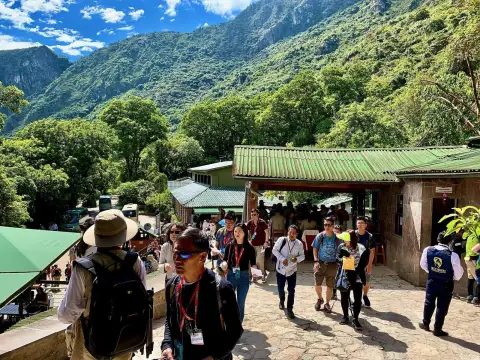
Take a small bag, a litre of water and a light layer, and leave anything that restricts movement at the hotel. Shoes with grip are more important than boots, and gloves are not necessary, although some people like thin ones for the cables. Carry the ticket and passport, because climbers are checked at the control post and signed in and out of the register, as the guards want to know everyone who is on the mountain.
Camera straps and loose items can catch on the narrow sections, so keep your phone secured in a pocket. The full kit is in what to bring, and the restrictions that apply to bags and sticks are in the rules. Avoid taking food or large bottles into the site, as they are generally restricted.
Is it worth it?
The view from the top is the main reward, along with the sense of having entered the landscape. But the citadel can also be admired from the main viewpoints, and the other climb, Machu Picchu Mountain, offers a different, broader perspective with a more gradual path. Choose Huayna Picchu if you are fit, comfortable on exposed paths, and keen on the iconic angle. Otherwise, the regular circuits and the lower viewpoints are more than enough.
Comparing Huayna Picchu and Machu Picchu Mountain sets the two climbs side by side. A good rule of thumb is to be honest about your balance and your fear of heights: if the cables and exposure worry you, the longer mountain is more comfortable, and the photograph from below is just as good.
Temple of the Moon and the way down
Beyond the summit, a side path on the far flank of the mountain leads to a cave and ceremonial stonework often called the Temple of the Moon. Whether this extension is open, and whether it is included in your climb, has varied, so ask at the control post or in advance. The detour adds time and more steep steps, so only take it if you have energy left and the weather is dry.
The way down uses the same steep stairs, and the descent is where most slips happen, when legs are tired and the steps are wet. Descend facing the stairs when the steps are very steep, use the cables where they exist, and give way to people coming up on the narrow sections. Allow time for a rest at the bottom, and drink before you start the main circuit. For what guards expect of climbers on the mountain, see rules.
Where to sleep
-
Find hotels
Aguas Calientes
Sleep at the foot of Machu Picchu for an early entry
-
Find hotels
Ollantaytambo
Early trains to Machu Picchu and a walkable old town
-
Find hotels
Plaza de Armas and historic centre
Everything on foot, at the price of noise and crowds
-
Find hotels
San Blas
Artisans' quarter with steep lanes and views, a short walk uphill
-
Find hotels
All of Cusco
Compare every area and price level in one search
Frequently asked questions
How high is Huayna Picchu?
About 2,720 m, around 300 m above the ruins, though the effort comes from the steepness rather than the altitude.
Is Huayna Picchu dangerous?
It has exposed sections and slippery steps, so it demands care. Follow the rules and do not go if you feel unwell.
Can I climb it without a separate ticket?
No. Entry to the climb requires a ticket that includes it, with limited availability.
How long does the climb take?
Most people allow a few hours for the round trip, including time at the top. The exact time depends on fitness, the weather and the queue on the narrow sections.
Is it suitable for children?
Generally not for small children, because of the steep steps and drops beside the path. Ask a doctor or an experienced guide before booking.
Can I do Huayna Picchu if I am afraid of heights?
It is not advisable. The path has exposed sections and cables, and turning back is hard in the one-way parts. The lower viewpoints give a good alternative.
Is the view better than from Machu Picchu Mountain?
It is closer and more dramatic, looking down on the citadel from a short distance. The other mountain gives a wider, higher panorama.