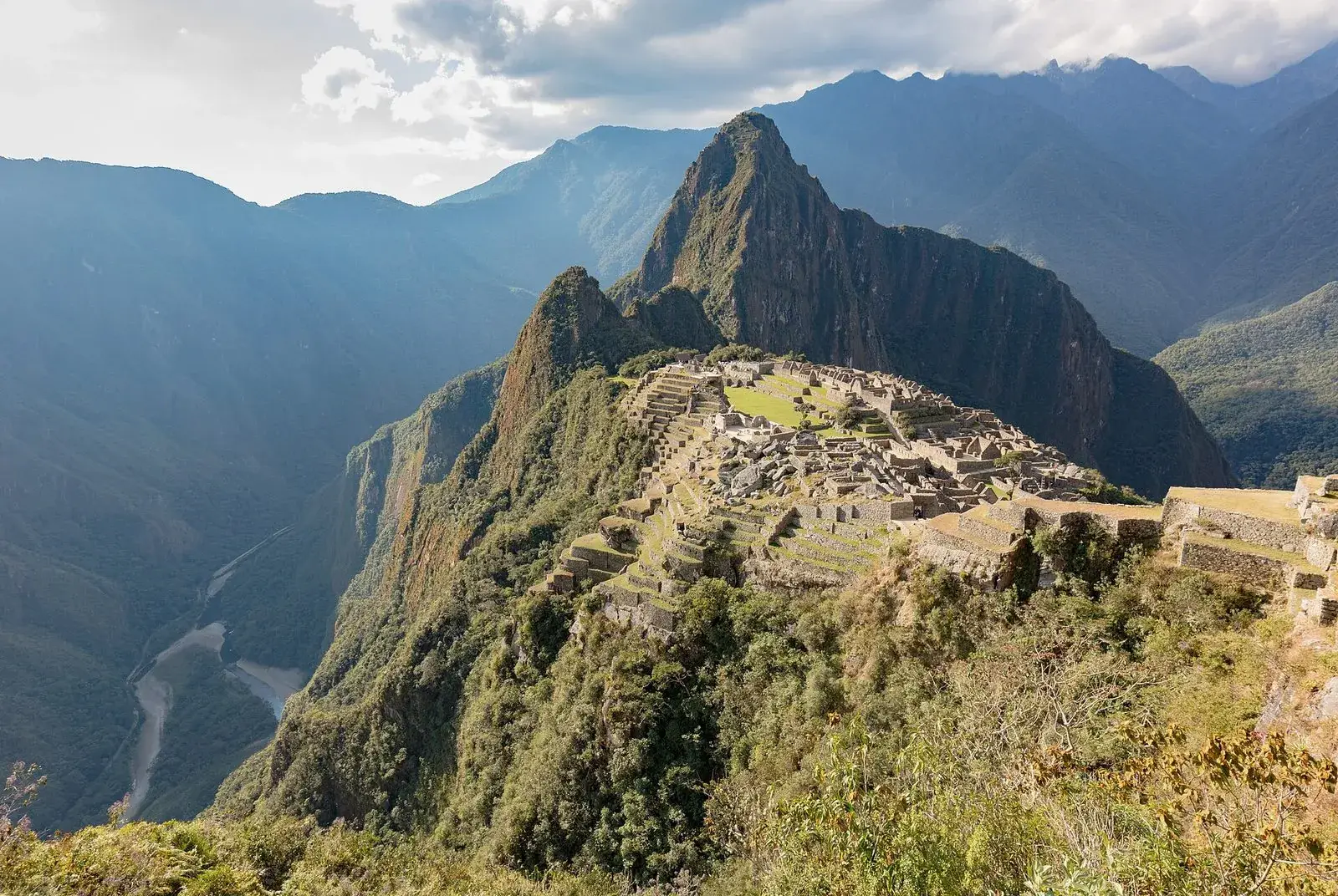
Choose Huayna Picchu if you are comfortable with steep, narrow stone steps and heights, and want the famous view straight down onto the site. Choose Machu Picchu Mountain if you prefer a longer but less exposed climb, a wider view and fewer people. Both require a separate ticket that must be booked ahead, so decide before you buy your entry.
The criteria
Time: both are add-ons to a visit to the ruins and need a few hours each. Huayna Picchu is the shorter climb; Machu Picchu Mountain takes longer overall because the path is longer and rises further.
Altitude: Huayna Picchu rises to roughly 2,700 m, while Machu Picchu Mountain reaches a little over 3,000 m. Both are below Cusco, though you gain a lot of height in a short time.
Effort: Huayna Picchu is short but very steep, with narrow stone steps, handrails in places and some exposed sections. Machu Picchu Mountain is a steadier but long climb of many steps, which tests stamina more than nerve.
Cost level: both need an additional ticket on top of the standard entry, and both are priced at a modest premium.
Crowds: Huayna Picchu is limited to a small number of climbers each day in timed entry slots, but the path can feel busy and narrow. Machu Picchu Mountain is also limited, and is generally calmer.
Season: both are best in the dry months. In rain, the steps can be slippery and views may disappear in cloud, which matters more on Huayna Picchu.
Risk: heights and slippery steps on Huayna Picchu; fatigue and heat on Machu Picchu Mountain. Neither is suitable for everyone.
What you see
From the top of Huayna Picchu you look down on Machu Picchu from above, the view seen in many postcards, with terraces and buildings laid out beneath you and the river curving below. The summit area is small, and in busy periods you may have to wait for a viewing spot. There is also a short section passing through a narrow tunnel-like opening in the rock, which some people find tight. For the route stage by stage, see Huayna Picchu.
Machu Picchu Mountain offers a more distant but wider view, taking in the site, the river valley and the surrounding peaks. Because the climb is long, it can feel more like a hike than a scramble, and you usually have more room at the top. See the Machu Picchu Mountain for details.
Booking and timing on the day
Both climbs are sold as an add-on to the main entry ticket, not as a separate visit, and each has its own time slots. That means the order of your day matters. The usual advice is to choose the climb slot first, then book the main entry and the circuit that fits around it, and finally the train and hotel. Check the tickets and the circuits to see how the route through the site interacts with your slot.
Slots in the dry season can sell out far ahead, and the earliest slots are the most popular for good reason: cooler temperatures, softer light and fewer people on the trail. If you are on a tight schedule, ask whether you can combine the climb with a morning entry rather than leaving it until after lunch, when the heat and cloud can both be at their worst.
For current restrictions on bags, poles and entry conditions, see Machu Picchu rules.
What the climbs are like
On Huayna Picchu the path rises quickly through forest and over stone steps cut into the mountainside. In places the steps are narrow and steep, and a handrail or cable is the only barrier on one side. Use both hands where needed, take your time, and let faster walkers pass. The descent can feel harder than the ascent for those unused to heights.
On Machu Picchu Mountain the path climbs steadily over many stone steps, with fewer exposed sections but a longer overall ascent. The sun is stronger on exposed stretches, and the effort builds gradually, so carry water and pace yourself. The reward is a calmer summit and a more panoramic view.
Both climbs are best with good footwear that grips wet stone, and a light rain jacket in case of showers. Trekking poles are often restricted at the site, so do not count on bringing them.
Weather, light and the best time
Clear skies make an enormous difference to both climbs. In the dry season the views are crisp, though mornings can still start in mist that burns off later. In the rainy season, cloud can cover the summit, leaving you with a wet climb and little to see, and the steps are slippery.
Early slots tend to give the best light on the ruins and the coolest conditions for the climb. Midday sun can be strong even when the air feels cool. For the seasonal pattern at the site, see best time to visit, and for when the site is quietest, see crowds.
Do not rely on a single day. If your trip allows a second entry, or a flexible day, you can adapt to a poor forecast rather than climb in thick cloud.
Verdict by traveller type
Confident climbers who enjoy exposure: Huayna Picchu.
Anyone nervous about heights, or hiking with older relatives: Machu Picchu Mountain, if their fitness allows it, or neither.
Photographers: Huayna Picchu for the iconic composition, Machu Picchu Mountain for a broad landscape view and more space.
Those with limited energy or time: skip both and spend your visit exploring the ruins themselves, which is a rewarding visit on its own.
The answer changes if the forecast is poor, since both are best in clear weather, if you have knee or balance issues, or if tickets for your date have sold out, in which case it is better to adapt than to force a climb.
Frequently asked questions
Can I climb both on the same day?
In practice this is demanding and rarely advisable. The ticket system is also built around one climb per entry.
Which is harder?
Huayna Picchu is steeper and more exposed; Machu Picchu Mountain is longer. Which one feels harder depends on whether you are more bothered by heights or by sustained effort.
How early should I book the climb tickets?
As early as your dates are fixed, particularly for the dry season. The daily number of climbers is limited, so plan the climb before the train and hotel.
Is Huayna Picchu dangerous?
It has steep, narrow steps and exposed sections, and people have been hurt there, so take care and stay on the path. It is not advised for anyone with a fear of heights or poor balance.
Can children do either climb?
Both are physically demanding and have minimum conditions that can change. Older children who are used to walking may manage Machu Picchu Mountain more easily.
Do I need a guide for the climbs?
Entry rules for the site have required a guide at various times. Ask your operator about the current requirement.
What should I carry on the climb?
Water, a light rain jacket, sun protection and your ticket and passport. Bags are limited at the site, so pack light.