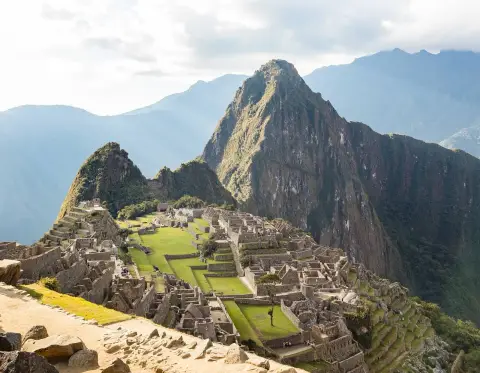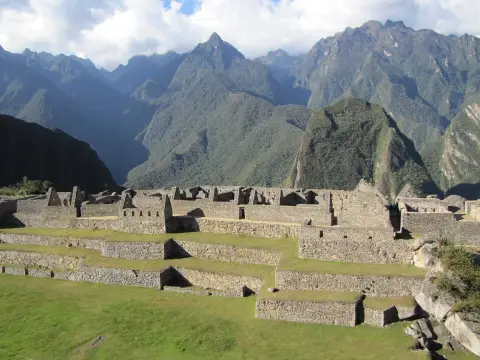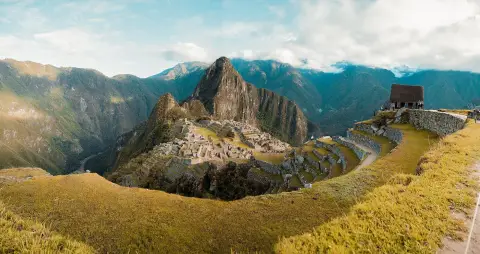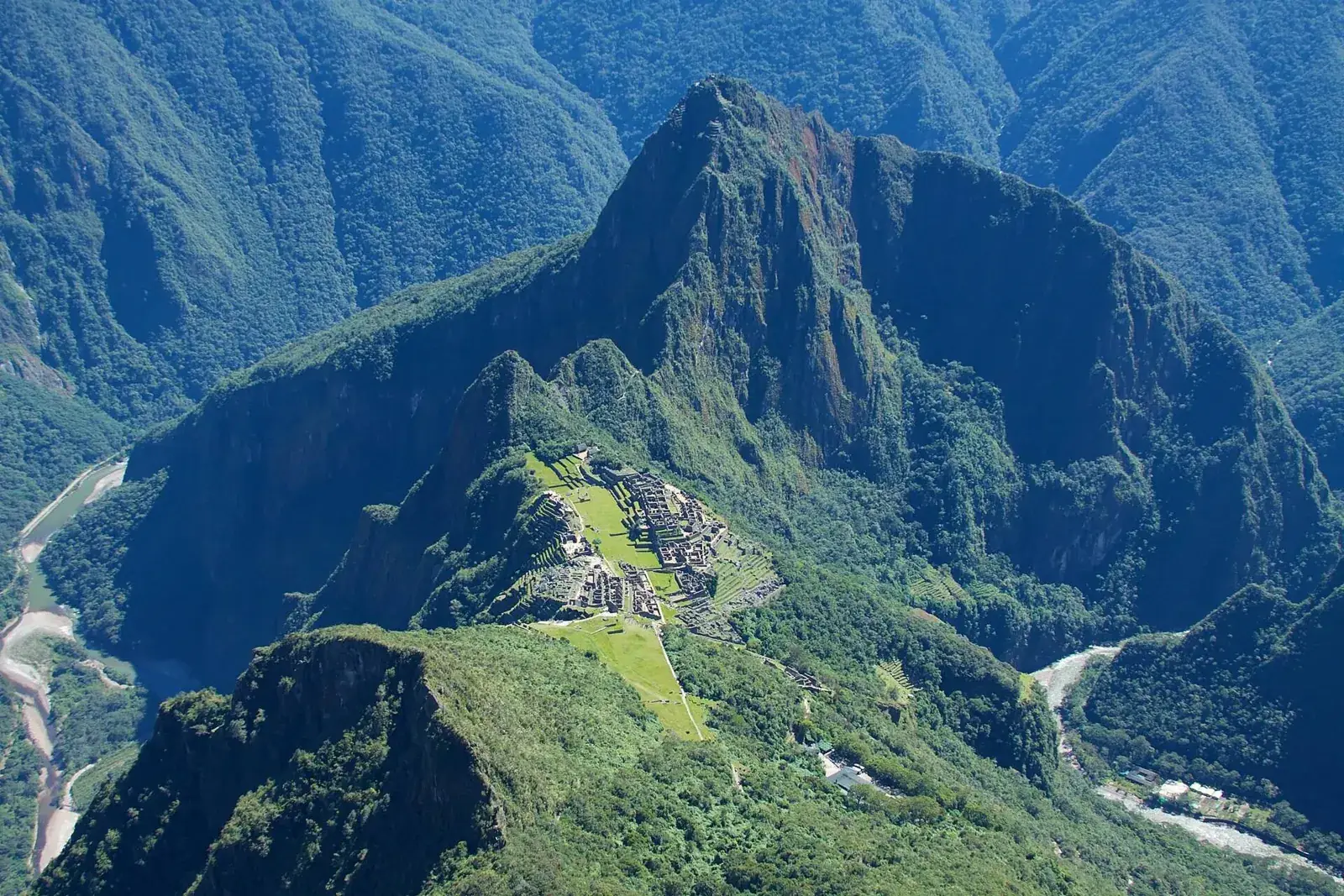
Machu Picchu Mountain, or Montaña Machu Picchu, is the peak on the opposite side of the ruins from Huayna Picchu, at about 3,082 m. The path is long and mostly steps, so it is more of an endurance effort than a scramble. The reward is a wide, high view over the site and the surrounding valleys.
It needs its own ticket, and anyone with health concerns should ask a doctor first.
Which mountain is which
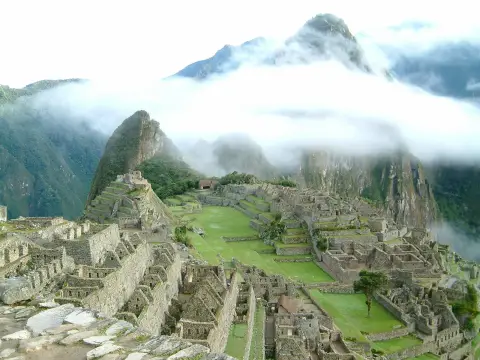
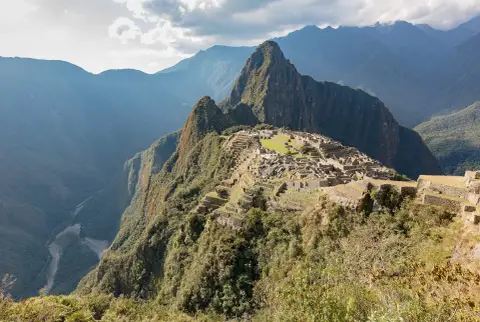
The names are easy to confuse. Huayna Picchu is the sharp peak seen behind the ruins in the famous photograph. Machu Picchu Mountain is the larger ridge that stands behind the visitor, as you look at the citadel from the usual viewpoint, and it is the one that gives the site its name. Seen from the summit, the citadel looks small, and the Urubamba river curls far below.
The two mountains frame the ruins, one on each side, and each has its own path, control post and quota. The second is part of the same protected area, but it is a separate product on the ticket platform. Huayna Picchu is the steeper alternative, and Huayna Picchu versus Machu Picchu Mountain sets them side by side.
What the climb is like
The path is a long stone staircase that climbs steadily, mostly in forest at first and then in more open ground. There are fewer exposed sections than on Huayna Picchu, but the length and the repetitive steps can be tiring, especially with the sun and humidity. It is a climb to take slowly, with rests, plenty of water and layers for the summit, where wind and cloud can arrive quickly.
Expect to spend a good part of the morning on the round trip, including time for views. The path is two-way, so you will meet people coming down. In places the steps are tall and uneven, and on the way down they are harder on the knees than the climb is on the lungs. A steady rhythm and short pauses work better than a fast start, and the viewpoints give a natural reason to stop. The stone is slippery after rain, so the same caution applies as elsewhere on the site.
Tours and activities
Bookable online, chosen for their traveller reviews.
-
★ Top rated From €49 per person
Machu Picchu
Machu Picchu Entry Ticket for Circuit 1, 2 or 3
-
★ Top rated From €23 per person
-
From €178 per person
Machu Picchu
Private Machu Picchu Tour with Guide, Entry and Bus
-
★ Top rated From €22 per person
Tickets and timing
Like Huayna Picchu, the climb needs a dedicated ticket sold in limited numbers and tied to entry times, and it is combined with a base entry to the ruins. The quota is generally larger than for Huayna Picchu, but it still sells out in busy periods. Early entry is best, both because of heat and because clouds often build later in the day. The rules, the counting of climbers and the time allowed are adjusted from time to time.
See how the climb links with the circuit you want to follow. For the overall system, see tickets, and for how the routes in the citadel fit around the climb, see circuits. If you are using an agency, ask them to confirm the entry time of the mountain and the circuit window in writing, and leave a gap between the two.
Height, cold and the summit
The summit is about 3,082 m, roughly 650 m above the ruins, so the air is cooler and the wind stronger than at the citadel. That difference is enough to make a sweaty walker cold in a few minutes of standing still, so a light layer and a hat belong in the bag. For comparison, the ruins are at about 2,430 m and Cusco at about 3,400 m, so the summit is a little lower than the city, but you arrive there after a steep effort rather than a flight.
People coming straight from the coast should allow time to acclimatise first, as explained in altitude. Cloud can shut the view in minutes, so be ready to wait for it to clear, and do not stay on the summit if thunder is heard. Weather describes what to expect through the day.
What to carry
Bring at least a litre of water, a small snack to eat before you enter, and a light waterproof, even if the sky is clear when you start. Sun protection is essential, since much of the path is open. Shoes with grip are more important than boots, and trekking poles are subject to the same restrictions as elsewhere on the site, so check the list on the what to bring.
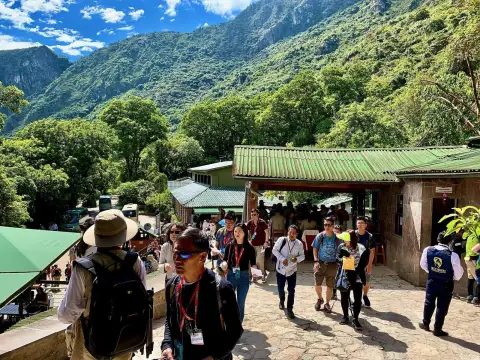
Carry your passport and ticket, since climbers are checked at the control post and signed into the register. Leave anything you do not need at the hotel, because the climb adds to the weight of every item. After the climb, plan a rest and a meal before the next part of your day, because the effort is larger than it looks on paper.
Choosing between the two
Choose Machu Picchu Mountain if you like long, steady walks and want a panoramic view with fewer scary sections. Choose Huayna Picchu if you prefer a shorter, steeper and more adventurous route. If you are not sure, the regular circuit is a satisfying visit in its own right, and you can always do a climb on a second visit.
Think about the photographs you want. From Machu Picchu Mountain you see the citadel small, in its setting of ridges, with Huayna Picchu rising beyond. From Huayna Picchu you look down on the buildings and terraces at close range. For the conduct expected on the mountain paths, see rules.
Preparing for the effort
Treat the climb as a long hike rather than a sightseeing detour. A few days of stair-climbing or hill walking before the trip makes the steps far easier, and a good night's sleep beforehand matters more than anything you carry. Eat a light breakfast, wear comfortable shoes that you have already walked in, and start at an easy pace so that you can keep going all the way to the top.
If you are arriving from a lower region, plan the climb for a later day, after you have spent time at the altitude of Cusco or the Sacred Valley. Acclimatising for treks explains the principle in general terms, and a doctor or travel clinic can give personal advice. Keep a note of your entry time, and tell your guide or your companion if you plan to turn back before the top.
Where to sleep
-
Find hotels
Aguas Calientes
Sleep at the foot of Machu Picchu for an early entry
-
Find hotels
Ollantaytambo
Early trains to Machu Picchu and a walkable old town
-
Find hotels
Plaza de Armas and historic centre
Everything on foot, at the price of noise and crowds
-
Find hotels
San Blas
Artisans' quarter with steep lanes and views, a short walk uphill
-
Find hotels
All of Cusco
Compare every area and price level in one search
Frequently asked questions
How high is Machu Picchu Mountain?
About 3,082 m, roughly 650 m above the ruins, so the summit is cooler and windier than the site.
Is it easier than Huayna Picchu?
It is less steep and less exposed, but longer. Many find it a steadier effort.
Can I do both climbs?
Not normally on the same day with one ticket.
How long does the climb take?
Allow a good part of the morning for the round trip, including time at the top. The pace depends on fitness, heat and crowds on the stairs.
Is it good for people who dislike heights?
Generally better than Huayna Picchu, since it has fewer exposed sections. The steps are still steep in places, so go at your own pace.
Is it worth the extra ticket?
If you like walking and want a wide view of the citadel in its setting, yes. If you want a quiet, short visit, the standard circuit is enough.
Are there toilets on the mountain?
Do not count on it. Use the facilities outside the gate before you enter, and carry what you need for the climb.