The savings that matter in Peru are structural: travelling outside the busiest dates, booking quota-limited items early, choosing buses over flights where the road is reasonable, eating the set lunch and staying slightly away from the tourist core. Haggling and chasing small discounts save little compared with these, and cheap trekking operators can cost more in the end.
Savings that move the total
Timing is the lever with the most effect. Dates around major holidays and in the peak dry-season months tend to be the most expensive for lodging and flights. Moving a trip by a few weeks, into the shoulder months, can lower the cost and the crowds at once, with a trade-off in weather that the seasons describe.
Booking early matters for the items that sell out, since prices on limited-quota products rarely fall as the date approaches. For flights, watch several airlines and consider the day of the week. For lodging, compare a partner platform with a direct booking, and ask about cash or longer-stay terms at smaller places.
Everyday savings
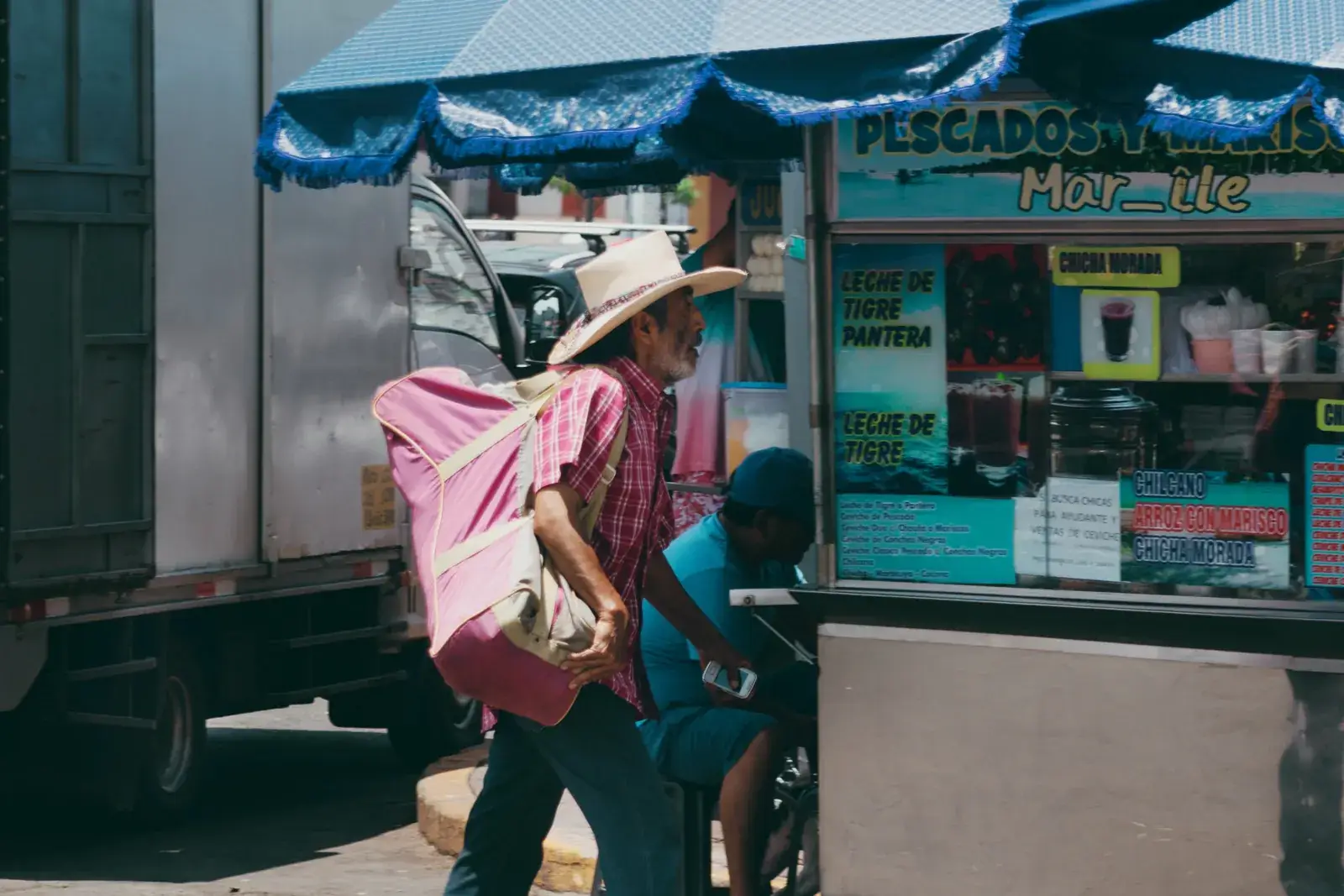
Eating the menu del dia, a fixed-price lunch, is the easiest daily saving and often the best meal of the day. Markets are cheap and safe if you choose busy stalls. Walking, shared taxis and local buses cut transport costs, though a licensed taxi booked through your lodging is the sensible choice at night.
Combining entry tickets, where an official combined ticket exists and covers what you actually plan to visit, can be cheaper than buying one by one. Check what it covers before buying so that you do not pay for sites you will skip.
Flights versus buses
The choice between flying and taking a bus is the biggest transport saving and also the most misunderstood. On a short or moderate leg with a good road, such as Lima to Paracas, a bus is cheap, comfortable and sensible. On a long leg across the Andes, the fare saved by a bus can be small next to the cost in time, and a night on a bus replaces a night of lodging at the price of rest.
The practical rule is to fly the long gaps and bus the short ones, and to compare the whole cost: fare, transfers to the terminal, the lodging saved and a day of your trip. For how classes differ, see bus, and for how to compare airlines and baggage rules, which can change the real fare of a cheap ticket, see flights.
Machu Picchu and treks: where savings are real and where they are not
For Machu Picchu, savings come from choices you make early: the ticket type, the train class, and whether you sleep in Aguas Calientes or elsewhere, all of which change the total. The Machu Picchu cost lays these out. Walking rather than taking the bus up to the site is a real saving of money but costs time and effort, so weigh it against the early start that sunrise needs.
For treks, the price differences between operators reflect what is provided: porters, food, tents, guides and park fees. A very low price usually means something has been left out or the staff are poorly paid. The questions to ask are listed in how to choose an agency, and the best trek tours show what a normal price covers.
Where to eat and sleep for less
Lodging in the historic core of Cusco and in the best-known districts of Lima costs the most. A short walk or taxi ride out of those areas usually brings the price down, though not at the cost of safety or of a steep climb at altitude. In smaller towns, guesthouses and family-run hostels offer clean, simple rooms for far less than a hotel on the main square.
For food, the pattern is the same: the further from the tourist plaza, the lower the price and the more local the menu. What to eat in Lima and the notes on specific dishes show what to look for. Be careful when saving on water and street food: choose busy stalls and bottled or purified water, and do not trade a few coins for a lost day of illness.
Small things that add up
Carry a refillable bottle and ask your lodging about safe water. Withdraw larger amounts less often if your bank charges per transaction. Pay in local currency whenever a card terminal offers a choice, because conversion at the terminal is usually worse. For these points, see money, and for the overcharging tricks to avoid, see scams. Finally, keep a small cash reserve in soles, since small shops, markets and local buses often cannot take cards, and being caught without cash usually means paying more for a worse option.
Agree the price of an unmetered taxi before you get in, and have small notes ready so that you are not left unable to pay the exact amount.
Savings that are not worth it
Some economies cost more than they save. Skipping travel insurance saves a small amount against a potentially large one if you are ill at altitude or a trip is disrupted. Buying the cheapest flight with several tight connections can cost more than a slightly dearer direct one when a delay occurs. Trying to see too much in a short time, then paying for extra internal flights to cover the gaps, defeats the purpose.
Time is also a cost. Spending a morning hunting for a minor discount on a ticket is rarely worthwhile, whereas picking a sensible number of bases and dates can save far more. For how experienced budget travellers set priorities rather than saving on everything, see budget travel.
Frequently asked questions
Should I haggle in Peru?
In markets and with unmetered taxis, agreeing a price first is normal. In shops with fixed prices and restaurants it is not expected.
Is a tour cheaper than going independently?
Sometimes, mostly when transport and entry are bundled for a remote site. Compare the total with the independent cost, including your time.
When is the cheapest time to visit Peru?
Usually outside the peak dry season and the main holidays, in the shoulder months. You trade some weather certainty for lower lodging costs and fewer crowds, so check each month before choosing.
Is it cheaper to book flights in Peru in advance?
Often yes, since the lowest fares tend to go first, but timing varies and cheap fares can come with restrictive baggage and change rules. Compare the full cost, not just the headline fare.
Are hostels worth it for saving money?
They are the cheapest bed in most cities and a good way to meet other travellers, though quality varies. Read recent reviews and check noise and security, and consider a private room in a hostel as a middle option.
What is the biggest single saving on a Peru trip?
Choosing fewer, better-chosen bases and dates. Cutting one city saves a flight or a long transfer plus the extra nights, which is worth more than most daily thrift.
Is street food a safe way to save money?
It can be, if you choose busy stalls with fresh food and a quick turnover. For how to judge a stall, see water and food safety.