Huchuy Qosqo, Quechua for "Little Cusco", is an Inca royal estate on a high ridge above the village of Lamay, at about 3,650 m. There is no road to the ruins: you walk in, either steeply up from Lamay in about three hours, or on a long day or two-day trek from Tambomachay or Tauca. It rewards the effort with a great hall, terraces, a water system and almost no crowds, but it is a real hike at altitude, not a stop on a bus tour.
Map
What Huchuy Qosqo is
Huchuy Qosqo is an archaeological site of stone and adobe buildings in the district of Lamay, in the province of Calca, north of Cusco. It sits about three kilometres west of Lamay and well above it, at roughly 3,650 m, on a spur that looks down on the Sacred Valley. The name means "Little Cusco", and the Inca name recorded for it is Kakya Qawani.
It is not a ceremonial city or a fortress in the manner of Ollantaytambo, but a royal estate: a country residence with storehouses, fields and workers that supported a ruler and his family. That makes it a good place to understand how the Inca economy worked, and the reason it feels so different from the better-known ruins on the valley floor.
Because it is reached only on foot, the site is quiet. Many days you may meet only the groundskeepers and a few hiking groups. Do not expect cafes, toilets in every corner or signage in several languages.
A short history
Chroniclers, notably Pedro de Cieza de León, attribute the estate to the eighth Inca ruler, Wiracocha (Viracocha), who reigned in the early fifteenth century, with construction usually placed around 1420. Archaeologists note that people lived on the ridge before the Inca, and radiocarbon dates suggest building continued until the arrival of the Spanish.
A well-known story says that when the Chanka threatened Cusco, Wiracocha withdrew to Huchuy Qosqo, and that his son Pachacuti defended the capital, took power and became the ruler who launched the Inca expansion. Treat the details as tradition recorded after the conquest rather than settled fact.
After the conquest the site was looted, and according to the sources used by Wikipedia, Gonzalo Pizarro burned Wiracocha's mummy here around 1534. Later the Spanish used the estate as farmland and altered some structures, including enlarging a reservoir. This layered past is part of what you see: Inca walls, later reuse and a landscape that is still farmed around the edges.
Tours and activities
Bookable online, chosen for their traveller reviews.
-
From €107 per person
Sacred Valley
Private Sacred Valley Day Trip with Local Guide
-
From €107 per person
Sacred Valley
Moray and Maras Day Tour from Ollantaytambo to Cusco
-
Day trip From €62 per person
Sacred Valley
Moray ATV Tour from Cusco with Salt Mines and Tasting
-
From €65 per person
Sacred Valley
Private Half-Day Maras and Moray Tour from Ollantaytambo
What you see on site
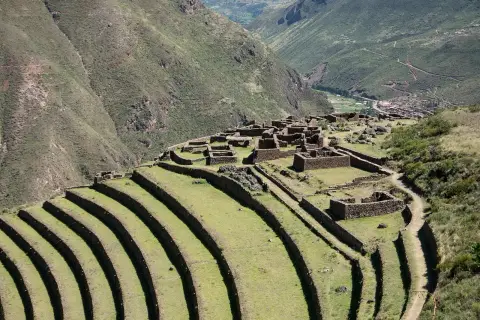
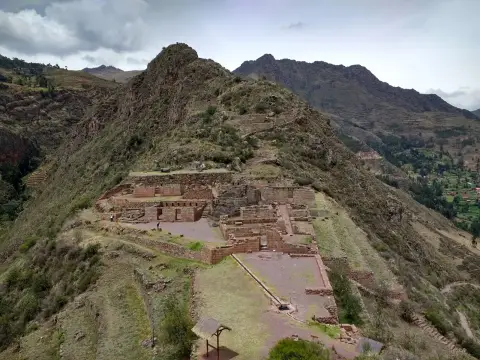
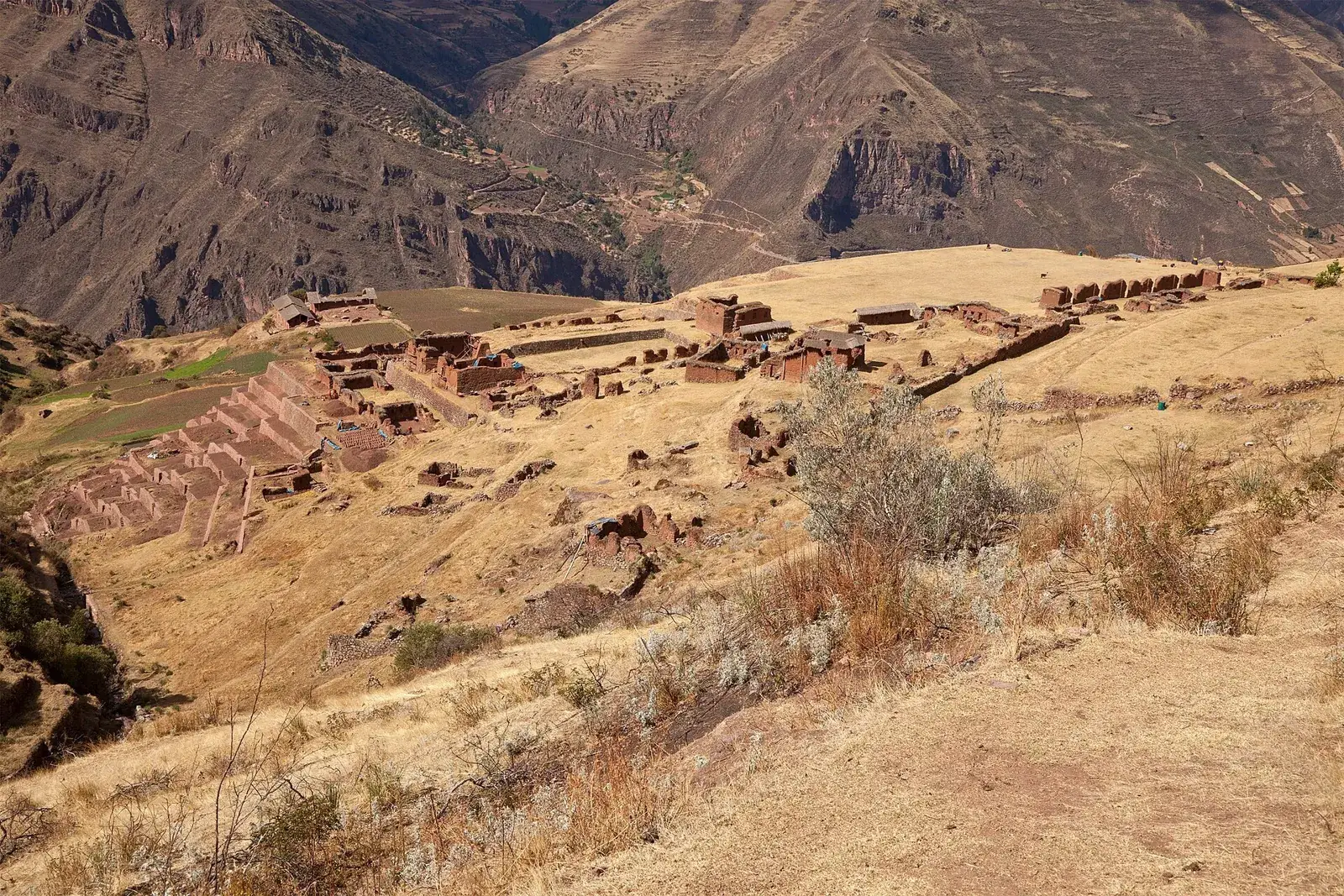
The core of the ruins is a group of rectangular buildings, many with the tall trapezoid doors and niches typical of Inca architecture, and in places two storeys. The largest is a kallanka, a great hall roughly 40 m long, which is the structure most people photograph. Next to it, an open esplanade gives the sense of a space designed for gatherings.
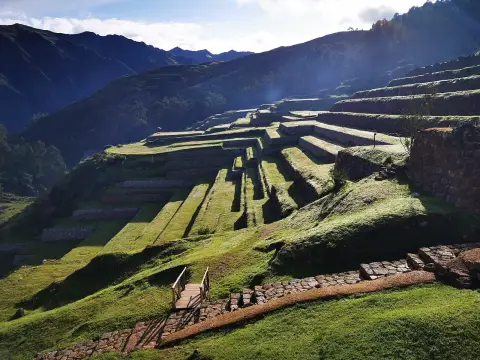
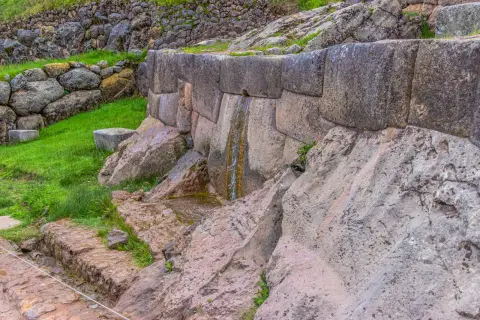
Below the main enclosure a flight of terraces drops towards the valley, and lower still are restored storehouses (qolqas) built with a ventilation system to keep stored food cool. Water mattered here: a stone-lined irrigation channel of several hundred metres brings it to the site, and there are fountains and a large reservoir. Look at the stonework itself, where fine fitted blocks sit beside humbler adobe walls.
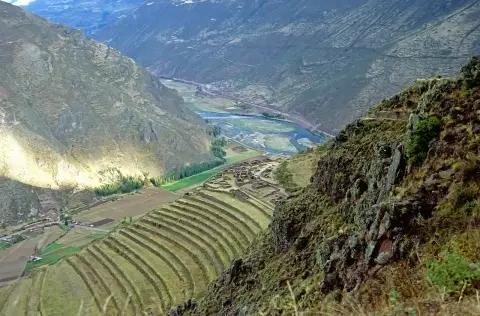
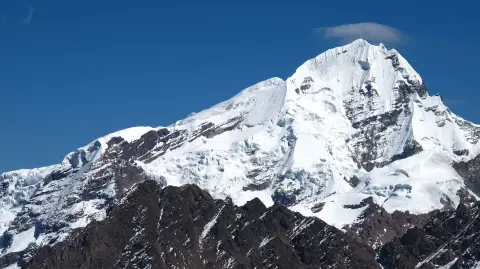
The best views are from the edge of the terraces, looking down to Lamay and across to the snow peaks that close the valley. Allow an hour or two on site, longer if you want to photograph or sit and take it in.
Route 1: up from Lamay
The shortest way in starts in Lamay, a small town on the valley floor between Pisac and Calca, at about 2,900 m. A dirt road leaves the town and climbs in switchbacks; the usual advice is to allow about three hours for the steep ascent, and a little under that on the way down. Near the top the road ends at a viewpoint, and a short walk past farmers' houses leads to the entrance.
This route is brief on paper but demanding in practice. You gain around 700 m over a few kilometres, in the sun, with little shade. It makes sense as a day trip from the valley or from Cusco if you are already acclimatised, and it is the way most people return after hiking in from the other side.
Plan the timing so that you are walking up in the morning, not at midday, and leave enough daylight to descend. Carry all the water you need, because you should not count on buying any on the trail. Transport back to Cusco from Lamay is by shared vans or buses that run on the main valley road, and you should confirm the current options in Lamay.
Route 2 and 3: the long approaches
The longer way starts near Tambomachay, on the edge of Cusco, one of the stops described on Inca sites near Cusco. Descriptions give about 17 to 19 km, with a pass at around 4,300 m and a final descent to the ruins. Done in a day it is long, often put at six to eight hours, so many hikers split it over two days and camp or arrange an overnight near the site. The trail crosses high puna, passes lakes and follows stretches of Inca paving, and some sections are hard to find, so a downloaded track or a guide is wise.
A third approach starts at Tauca, on the Chinchero side, near Lake Piuray. It is usually described as four to six hours with a high pass at roughly 4,400 m, and most of the second half is downhill. Because both starts are high, they suit people who have already spent a few days in Cusco.
On any of these, hikers normally finish by descending to Lamay on the last morning. If you do not want to organise it, look at the guided options on Sacred Valley tours, and read how to choose a trekking agency before booking.
Altitude, weather and safety
Huchuy Qosqo is higher than anywhere in the valley floor towns, and the approaches go higher still. Spend at least a few nights in Cusco or the valley before attempting it, and read the guidance on altitude sickness and acclimatisation for treks. Walking up from Lamay is short but steep, and people who feel fine in town can be breathless within an hour.
The dry season, roughly May to September, is the sensible time: clear skies, cold nights and the most dependable paths. In the rainy season, roughly November to March, tracks become muddy and slippery, clouds hide the views and the high passes can bring cold rain or hail. Afternoon weather turns quickly at any time of year.
Bring layers, a rain jacket, sun protection, a hat, enough water for the whole ascent and good footwear; see the trekking gear page for a fuller list. Do not walk the exposed sections at night, and tell someone at your hotel where you are going and when you expect to return.
Tickets, access and who it suits
Huchuy Qosqo has been described in guidebooks and online sources as having its own small entrance fee, collected by the groundskeepers who live near the gate, and not as part of the main Cusco tourist ticket. Reported amounts and rules differ between sources, so carry some cash in soles and do not assume a card machine. Check the current arrangement with your tour operator, your hotel or the local office before you set out.
The site suits walkers who enjoy a quiet, physically honest day and who are curious about Inca estates rather than only the famous monuments. It is a poor choice for anyone with limited mobility, knee problems on steep descents, or a tight schedule with no time to acclimatise. Families with older children who already hike can manage the Lamay route, if the pace is slow.
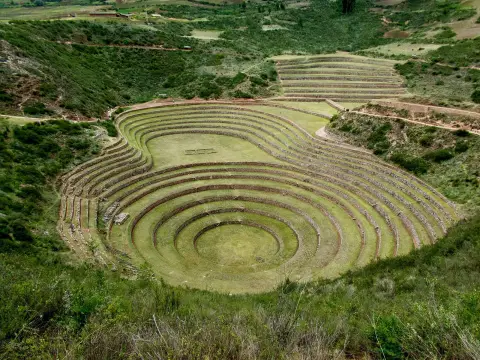
People who want the Inca atmosphere without the climb can instead visit Pisac ruins, which are reached by road, or the circular terraces of Moray.
Combining it with the rest of the valley
A hike to Huchuy Qosqo fills most of a day, so treat it as the main event and keep the rest of the schedule light. Lamay is a convenient base, and a night in the valley before the hike helps with altitude; see where to stay in the Sacred Valley for areas and options.
If you are coming from Cusco on the two-day route, it combines naturally with a visit to the sites around the city first, such as Sacsayhuamán, so that you see Inca work at several scales: a capital, a roadside shrine and a country estate. After the descent, the market and ruins at Pisac are only a short drive from Lamay, and the town of Calca is also nearby.
For the wider picture of the area, the Sacred Valley page links to the other main stops, and Chinchero lies on the plateau side, close to the Tauca start of the long route.
Where to sleep
-
Find hotels
Urubamba
Central, with the most choice and the easiest road links
-
Find hotels
Ollantaytambo
Inca town with the trains to Machu Picchu
-
Find hotels
Pisac
Market town with a citadel above it, closest to Cusco
-
Find hotels
Yucay
Quiet and green between Urubamba and Ollantaytambo
Frequently asked questions
How long does it take to hike to Huchuy Qosqo?
From Lamay the climb is commonly given as about three hours, and the descent a little less. From Tambomachay it is a long day or a two-day trek, and from Tauca roughly four to six hours. Fitness and acclimatisation make a big difference.
Can I reach Huchuy Qosqo by car or bus?
No. There is no public road to the ruins, and the final part is on foot. A dirt road leaves Lamay and climbs towards a viewpoint, but you should still plan on walking, and ask locally about the current state of the road.
Do I need a guide for Huchuy Qosqo?
Not necessarily for the Lamay route, which follows an obvious road and track. The long routes from Tambomachay and Tauca are harder to follow in places, so a guide or a reliable offline track is a good idea. Compare formats on Sacred Valley tours.
Is Huchuy Qosqo included in the Cusco tourist ticket?
Sources generally say it is not, and that a separate small fee is paid at the site, though amounts reported differ. Bring cash in soles and check locally.
Can I camp at Huchuy Qosqo?
Some guides describe a camping area at the site, and it is a common overnight stop on the two-day route. Rules can change, so ask your operator or the groundskeepers rather than assuming. Bring your own equipment and warm clothing, since nights are cold.
When is the best time to visit?
The dry season, roughly May to September, has the clearest weather and firmest paths. Start early in any season so that you are not walking the steep part in the midday sun and still have daylight to descend.