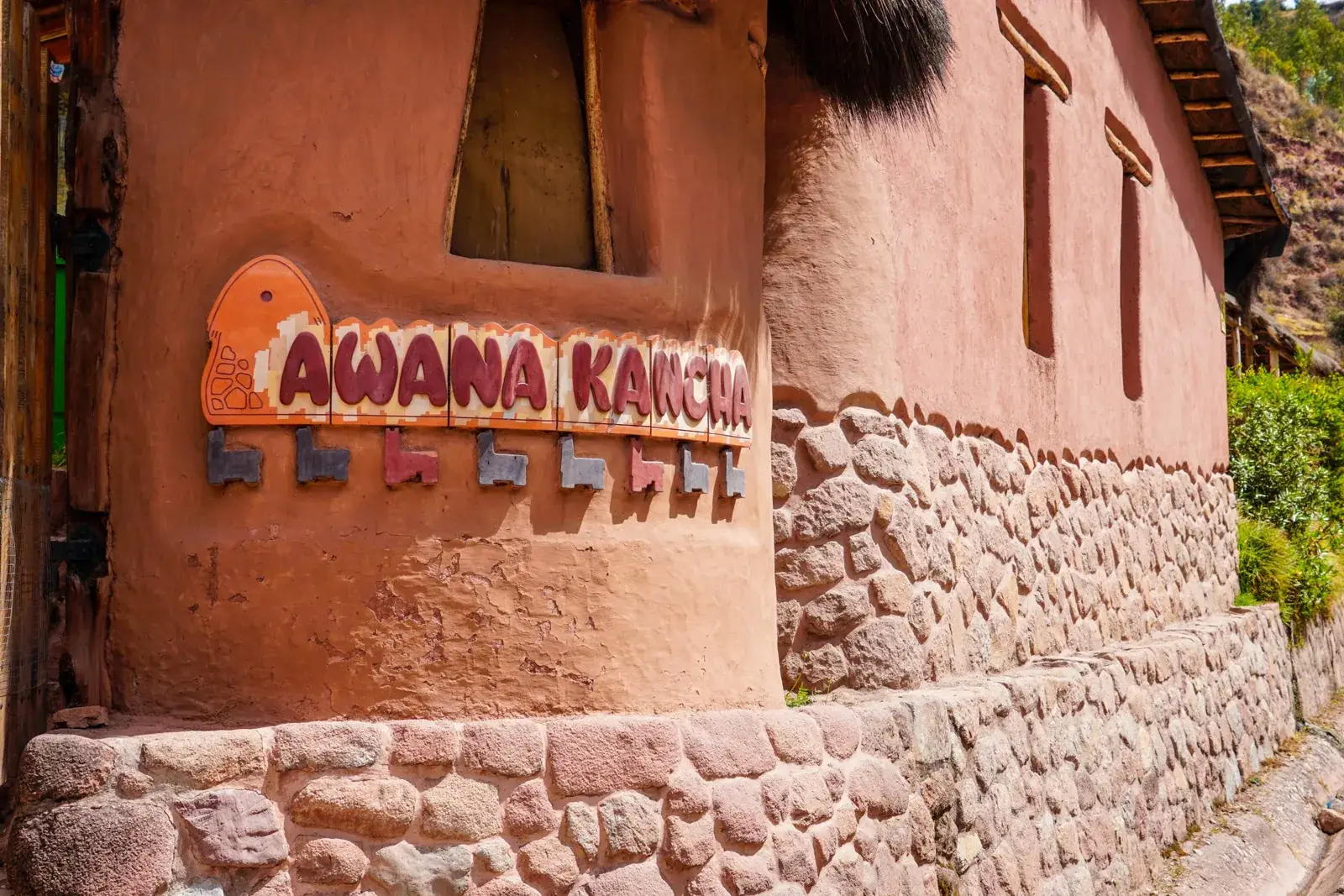
Awana Kancha is a privately run centre beside the Cusco to Pisac road, at about kilometre 23, where llamas, alpacas, vicuñas and guanacos are kept in pens and weavers show how wool is spun, dyed and woven. It is a practical stop of one to two hours on the way into the Sacred Valley, good for children and for understanding Andean textiles before you buy any. It is also a commercial place with a shop, so treat it as an introduction rather than a village visit.
Map
What Awana Kancha is
Awana Kancha is a weaving centre and camelid farm on the road that climbs out of Cusco and drops towards the Sacred Valley. The name is usually explained as Quechua for a weaving enclosure, which fits the layout: a walled compound with animal pens on one side, work areas in the middle and a shop at the end. The entrance is behind a long adobe wall and is easy to drive past if nobody tells the driver to stop.
It is not an archaeological site and not a working village. It is a visitor centre run as a business, and it is free to walk in, although the shop is the reason it exists. That makes it quite different from the cooperatives at Chinchero, where the weaving belongs to a community and the town itself is the destination. Knowing this in advance helps: go for the animals and the explanation, and decide separately whether you want to buy anything.
The four camelids
The main draw is the chance to see all four South American camelids in one place, which is hard to arrange in the wild. The two domestic species are the llama, a larger animal historically used to carry loads and for meat and coarse wool, and the alpaca, smaller, bred for fine fibre. The two wild species are the vicuña, a slender animal of high grassland whose very fine wool is among the most valued in the world, and the guanaco, the wild ancestor of the llama.
At Awana Kancha the animals are kept in separate pens, so the differences in size, neck, face and coat are easy to see side by side. Visitors can usually feed the llamas and alpacas, and staff are on hand. Keep your hands flat, do not pull at the wool, and stay away from the back legs. Camelids spit when they feel threatened, which is mostly aimed at each other, but it is wise not to crowd them.
Tours and activities
Bookable online, chosen for their traveller reviews.
-
From €107 per person
Sacred Valley
Private Sacred Valley Day Trip with Local Guide
-
From €107 per person
Sacred Valley
Moray and Maras Day Tour from Ollantaytambo to Cusco
-
Day trip From €62 per person
Sacred Valley
Moray ATV Tour from Cusco with Salt Mines and Tasting
-
From €65 per person
Sacred Valley
Private Half-Day Maras and Moray Tour from Ollantaytambo
From fibre to cloth
The educational part of the visit follows the wool through its stages. Staff show how the fleece is cleaned and spun, how yarn is coloured with natural dyes made from plants and other local materials, and how the dyed yarn becomes cloth. Weavers from highland communities work at looms and explain the patterns, many of which carry meaning for the community that uses them.
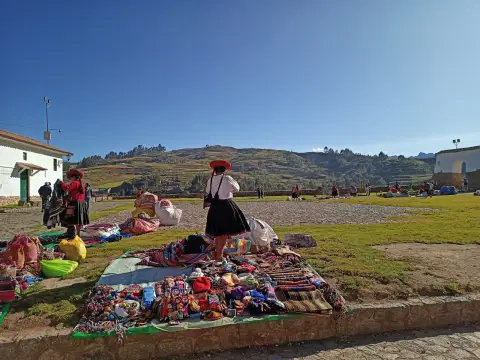
This is the most useful half hour of the visit if you plan to buy anything. Once you have seen how long a piece takes, why fine fibre costs more and why a hand-dyed yarn looks different from a synthetic one, the stalls at Pisac market and elsewhere read more clearly. It also helps with spotting machine-made goods sold as handwoven. For the broader buying advice, souvenirs in Peru covers what to look for and how fibres are labelled.
The shop and what to expect there
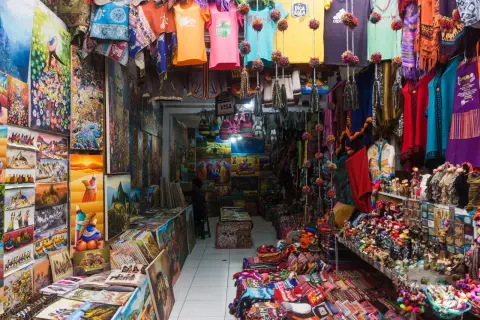
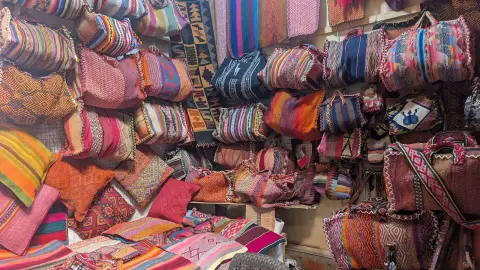
A large shop sells scarves, shawls, sweaters, gloves, caps, bags and rugs made from alpaca, llama and, at the top end, vicuña. Prices are marked and generally not negotiable, and they are higher than at street markets. The pieces are better made, the fibre is honestly described and the larger hand-woven textiles are real works of craft that take months to complete, so a high price on those is not surprising.
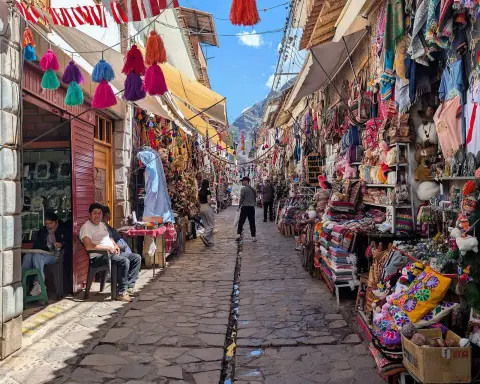
Whether it is good value depends on what you want. A fine alpaca scarf or sweater of reliable quality is easy to buy here without having to judge fibre yourself. If you want to bargain, buy small gifts or spread your money among several makers, the markets in the valley are the better place. Nobody is obliged to buy, and it is perfectly normal to visit the animals and the demonstrations and walk out empty-handed. Cards are commonly accepted in shops of this kind, but confirm before you rely on it.
Getting there from Cusco and the valley
The centre lies about 23 km from Cusco along the Pisac road, typically 30 to 50 minutes by car depending on traffic in the city. It is about 20 minutes before Pisac when you come from that side. A taxi or hired car is the simplest option, and shared minibuses and buses on the Cusco to Pisac route can drop you at the entrance if you ask the driver in advance. The routes are compared in Cusco to the Sacred Valley.
Most visitors arrive on a group or private tour, often as a short stop on the way to Pisac, where it fills a gap between leaving Cusco and the first major site. The Sacred Valley tours page explains the standard formats. If you travel independently, remember that the return flag-down from the road is less predictable than the outbound journey, so agree a taxi back or allow extra time.
Time, season and the best hours
Allow one to two hours. Less than an hour is enough to see the pens and the shop, and more is only useful if you want to watch the weavers for a long time or combine it with lunch nearby. The centre is reported to open daily during normal daytime hours, but these change around public holidays, so check before going on a feast day.
There is no bad season, as the farm and shop work all year. The wet months, roughly November to March, bring showers, and the pens can get muddy, so wear shoes with grip. Tour buses arrive in waves, mostly mid to late morning, so the first hour after opening and the late afternoon are quieter. The centre sits at roughly the altitude of the upper valley, lower than Cusco, so the stop is easy for people who have only just arrived; the general advice on altitude sickness still applies.
Who it suits and what to combine it with
Awana Kancha suits families, because the animals are close and the pace is relaxed, and anyone who wants to see a llama up close without a long walk. It also suits travellers with limited time who would like some context on textiles before reaching the valley markets. It is less rewarding for people who want an unscripted village experience or who dislike organised stops with a shop at the end.
A sensible plan is to start in Cusco, stop here for an hour, continue to the Pisac ruins and market, and finish the day at another valley site. Visitors who want to see weaving in a living community can then add Chinchero on another day. The valley as a whole is covered on the Sacred Valley page, and the choice of where to sleep is on where to stay in the Sacred Valley.
Responsible visiting
A few simple habits make the visit better for everyone. Ask before photographing weavers, and tip if you photograph them or pose with an animal. Do not feed the animals anything other than what the centre offers, and do not lift or chase them. Wild species such as vicuña should be watched from the fence.
If you buy, ask what fibre the item is made of and whether it was woven by hand or machine, and expect a straight answer. Sales of vicuña goods are legally controlled in Peru, so genuine pieces come with documentation. A price that is far below the shop norm for supposed vicuña is a warning sign. More on spending with care is in responsible travel.
Where to sleep
-
Find hotels
Urubamba
Central, with the most choice and the easiest road links
-
Find hotels
Ollantaytambo
Inca town with the trains to Machu Picchu
-
Find hotels
Pisac
Market town with a citadel above it, closest to Cusco
-
Find hotels
Yucay
Quiet and green between Urubamba and Ollantaytambo
Frequently asked questions
Is Awana Kancha free to enter?
Entry has been described as free, with a tip customary if you photograph or pose with the animals. Policies change, so check before you go, particularly if you are in a large group.
How long does a visit to Awana Kancha take?
One to two hours is typical. The pens and the weaving demonstration take about an hour, and more time only makes sense if you want to shop carefully or watch the weavers at work.
Where exactly is Awana Kancha?
It stands at about kilometre 23 of the Cusco to Pisac road, behind a long adobe wall. Cusco is roughly 30 to 50 minutes away by car, and Pisac about 20 minutes beyond.
Can I feed the llamas and alpacas?
Visitors are generally allowed to feed the domestic animals with what the centre provides. Keep hands flat, do not touch the back legs and give the animals space. Vicuñas and guanacos are for looking at.
Is Awana Kancha better than Chinchero for weaving?
They do different jobs. Awana Kancha is a quick, organised introduction with animals, while Chinchero is a real town where weaving cooperatives are part of community life. Many travellers do both.
Are the textiles at Awana Kancha good quality?
Quality is generally high and the fibre is described honestly, but prices are fixed and higher than at street markets. If you are comparing, see the advice on souvenirs before you buy.
Can I get to Awana Kancha without a tour?
Yes. Taxis and shared buses on the Pisac road pass the entrance, and you can ask to be dropped off. Plan your return in advance, since passing vehicles on the way back are less predictable. See Cusco to the Sacred Valley.