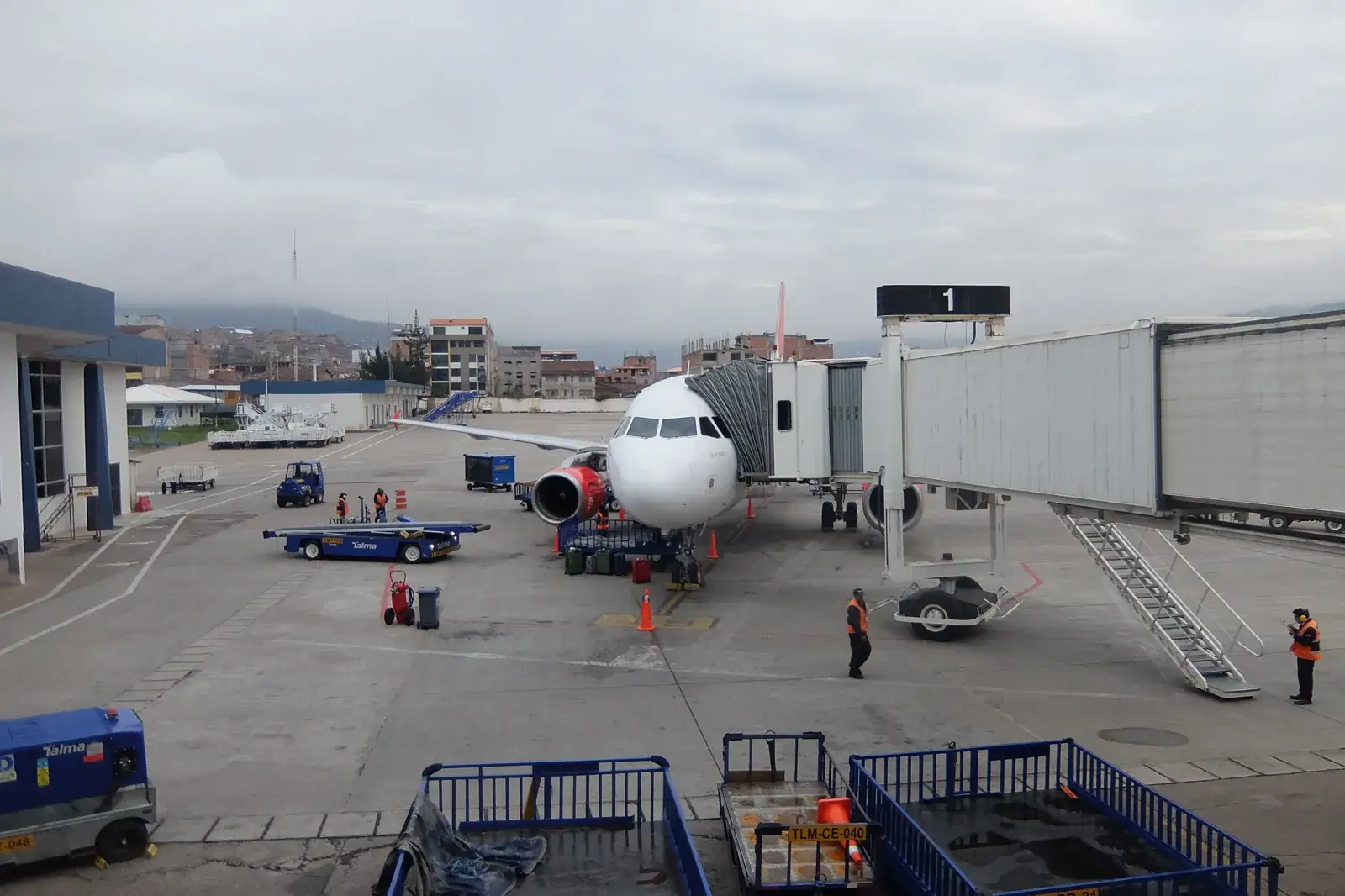
If you miss a domestic flight in Peru, go straight to the airline desk at the airport, not to a website, and ask what options exist for the next departure. What you get depends on the ticket type and on whether the airline or you caused the problem. Keep all documents and receipts for insurance.
The best protection is planning: morning flights, long connections and a spare day before the international departure.
First hour: stay calm and go to the desk
If you arrive at the airport after check-in has closed, do not assume the flight has gone without asking. Go directly to the airline's counter or service desk and explain the situation. Staff can tell you whether any seats remain on a later departure and what it costs. If the flight was delayed or cancelled by the airline, you have a stronger position than if you were late.
Have your passport, booking reference and any onward flight details ready. Be polite and specific: ask for the next available flight and for the written confirmation of any change. For how the main airlines operate, see flights in Peru, and for where the desks are, see airports.
Ticket type decides a lot
Many tickets on domestic routes are sold with different fare conditions, and cheaper fares often allow changes only with a fee or not at all. A missed flight because you were late is often treated as a no-show, which can cancel the rest of the booking, including the return segment. Ask at once whether the other flights on the same booking remain valid.
If the delay or cancellation was the airline's, it usually has to offer a rebooking or a refund according to its conditions and the local rules, which change. Read the conditions on your ticket and ask the desk to explain your options in writing. If you booked through an agency or a website, contact them as well, because some changes can be made only through the seller.
When it affects an international connection
The serious case is a missed domestic flight with an international departure the same day. If both flights were on one ticket, the airline is generally responsible for rebooking you on the next one. If they were separate tickets, it is generally your problem. This is the main reason to book them together, or to leave a long gap or a night between them.
Contact the international airline as soon as you know you will miss the flight, and ask if the booking can be moved. Do this before the flight leaves if possible. Lima to Cusco describes the main route, where many of these connections happen, and why a night in Lima before an early flight is often the safest choice.
The next few hours: practical steps
After the first conversation, set up the practical side. Tell your hotel, because a late arrival or a changed day can affect the room, and because staff often know which flights have spare seats. If you have a fixed booking such as a Machu Picchu train or a tour, contact the provider at once, since an early call gives the best chance of a change.
Keep a note of every conversation with names and times. Take photographs of any written notice. If the delay will cost a night, ask whether the airline provides a hotel or meals, and if not, keep receipts. If the airport is far from town and there is a long wait, consider asking whether bags can be stored. Travel insurance explains what to keep and what to claim.
Planning so it matters less
Choose morning flights, since weather delays in the mountains tend to build up later in the day. Leave a gap of many hours, ideally a night, between the last domestic and the international flight. Do not put a fixed-time activity such as a Machu Picchu entry on the day after a flight that could slip. When you have a choice, take a direct flight.
As an alternative to a missed flight, a bus can sometimes get you there, but long distances in the mountains take most of a day or more, so it is a fallback, not an equal option. Time lost in transit shows how much time a journey really takes, and first-timer mistakes explains why a spare day belongs in every plan.
When the airline is at fault
A cancellation or a long delay caused by the airline is a different case. You may be offered a seat on the next flight, a refund, or in some cases care such as meals or a hotel, depending on the fare and the local rules. Ask the airline for its written policy, take a photograph of the departure board and note the time of the announcement.
If the airline offers a refund, think before accepting it: a refund ends the contract and leaves you to buy a new ticket at the current price, which may be higher. A rebooking keeps your original price. Ask which is better in your case, and ask for the answer in writing. If you cannot get an answer at the airport, follow up by email with your booking reference, and keep the thread.
What not to do
Do not argue at length with staff at the counter; the person in front of you usually cannot change the rules, and a polite request gets further. Do not hand your passport to someone who is not wearing airline or airport identification. Do not buy a new ticket from a tout. Do not assume that a friendly stranger who offers a taxi is cheaper.
Do not leave the airport before you have the new flight in writing, and do not skip the check on the other bookings of the trip. A missed flight is a nuisance; a chain of cancelled hotel nights and tickets is a bigger cost, and it is avoided by a few calls made in the first hour.
Frequently asked questions
Will I get a refund if I miss my flight?
Usually not if you were late, depending on the fare. If the airline delayed or cancelled, you may be entitled to a rebooking or a refund according to its conditions.
Can I use the return half of a ticket after a no-show?
Often not, unless the airline agrees. Ask at the desk right away.
What if the flight is cancelled for weather?
The airline normally rebooks you on the next available flight. Seats can be scarce, so ask early and consider alternatives.
Should I accept a refund or a rebooking?
It depends on the price of a new ticket. A rebooking keeps your original fare, while a refund may leave you paying more, so ask which is better before deciding.
Does travel insurance cover a missed flight?
Some policies cover missed connections or delays, but conditions vary. Being late yourself is often excluded. Read the policy before you travel and keep all receipts.
Can I take a bus instead of waiting for the next flight?
Only for short distances. On mountain routes the bus can take most of a day or more, so it is usually a last resort.
How far ahead should the international flight be after the last domestic flight?
Ideally a night, and at the very least many hours. If both flights are on one ticket, the airline is more likely to help if the first one is delayed.