Chaparrí is a private conservation area of dry forest in the foothills east of Chiclayo, owned and run by the Muchik community of Santa Catalina de Chongoyape. It is best known for the spectacled bear, which lives wild on this part of the coast, and for birds such as the white-winged guan. Plan a long day trip or one night on site, arrange the visit and a guide in advance, and do not expect a guaranteed bear sighting.
Map
What Chaparrí is
The Chaparrí Ecological Reserve is a protected area of seasonally dry forest in the district of Chongoyape, in the Lambayeque region, a day trip from Chiclayo. Legally it is made up of two private conservation areas. The main one, ACP Chaparrí, covers roughly 34,000 hectares and belongs to the peasant community of Santa Catalina de Chongoyape, whose people identify as Muchik. A much smaller area, Huerta de Chaparrí, is held by a private family.
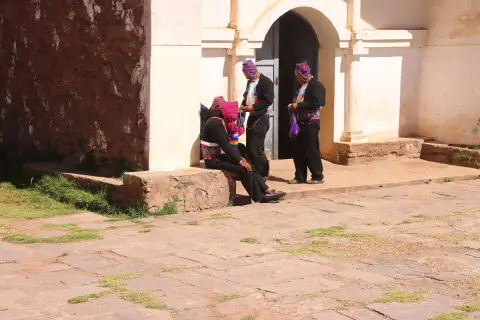
What sets it apart is who runs it. Instead of a state park with rangers sent from the capital, the community manages the land, trains its own guides and keeps the income from visitors. It is usually described as the first private conservation area created in Peru, in the early 2000s, with the wildlife photographer Heinz Plenge among its promoters. For a traveller it is a different kind of outing from the museums and pyramids that fill most days around Chiclayo, with hiking, birds and animals in place of tombs.
Why it matters: the dry forest
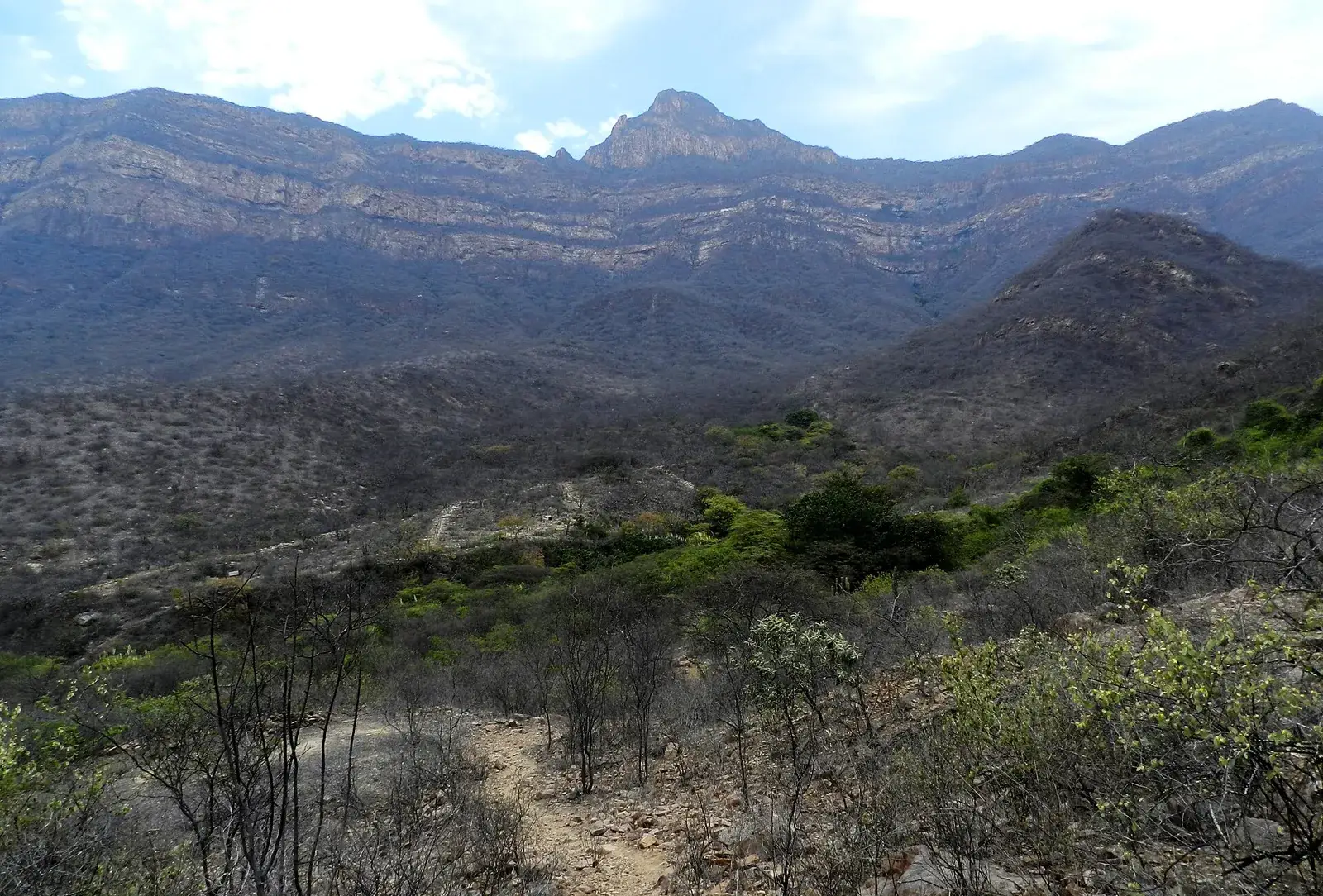
Most visitors to northern Peru see the coast as desert and the highlands as green. Chaparrí sits in between, in the equatorial dry forest of the western Andean foothills. For most of the year the hills look grey and bare, with leafless trees, cacti and rock walls. After the rains the same slopes turn green within weeks.
This habitat is among the most threatened in Peru, because it has been cut for firewood, grazed and cleared for farming. Chaparrí protects a large block of it, and reports give high species counts for such a dry place, including hundreds of birds, plus mammals, reptiles and plants. The area also sits in a part of the country where several bird species are found only in the northwest. The hills above the reserve rise well beyond the valley floor, so the views over folded ridges and cliffs are as good a reason to come as any animal you might see.
The spectacled bears
The headline animal is the spectacled bear, the only bear of South America, usually thought of as a cloud-forest animal of the high Andes. Chaparrí is unusual because bears live here wild at low elevation on the Pacific side. Press reports have counted dozens of individuals, and the reserve is often described as holding the only dense population on the Peruvian coast, although numbers differ by source and year.
The reserve also has a rescue and rehabilitation side. Bears taken from circuses or kept as pets were kept in a large enclosed area, and some visitors see them there. Wild bears are elusive, walk long distances and mostly avoid people, so a sighting in the open is a bonus and not something a guide can promise. Go in with the expectation of a good walk, tracks, scratch marks on trees and perhaps a distant animal, and treat any close view as luck. Never feed or approach a bear.
Birds and other wildlife
Birdwatchers are a core audience. The reserve is known for the white-winged guan, a large, endangered game bird that survives in only a few places, and the protected population here is considered one of the most important. Other northwestern specialities of dry forest and scrub can be found on the trails, and early morning is the best time to look for them.
Besides birds, the reserve holds foxes, collared peccaries, deer and smaller mammals, along with reptiles and a number of butterflies in the green season. A small reptile and wildlife display near the visitor facilities lets you see animals that are hard to find in the forest. Bring binoculars, because many species keep a distance, and carry a camera with a decent zoom. Ask your guide which species are active at the time of your visit, since the dry and wet seasons change what is easy to see.
How to get there from Chiclayo
The reserve lies roughly 60 to 80 km east of Chiclayo, depending on the source and the route counted. The road climbs from the coastal plain towards the town of Chongoyape, which is the last place with services. From the main road a rough track of about 15 to 20 km, partly unpaved, leads to the reserve entrance and community facilities. It is passable for a standard car in dry weather according to some operators and described as 4WD-only by others, so ask before you go.
Public buses and minibuses run from Chiclayo to Chongoyape, but they stop there, and the last stretch needs a private transfer arranged with the community or an operator. Most visitors choose a tour or a hired car from Chiclayo, which removes the navigation problem. The general options are laid out in buses in Peru. Allow around two hours each way door to door and confirm times locally.
Booking, guides and what to bring
Entry is arranged in advance, and visits are normally made with a community guide, so do not simply turn up at the gate. Contact the reserve through its official channels, or book through a Chiclayo operator, and confirm the fee, what it includes and whether meals or lodging are available. There are simple lodging options at the reserve for those who want a night, which gives the best chance of early-morning birds and animals.
Bring sun protection, a hat, long trousers for brush and thorns, sturdy shoes and more water than you think you need, because the area is hot and dry for much of the year. Insect repellent is useful in the green season. Phone signal is patchy. For a general kit list see the packing list, and for general precautions read safety in Peru.
When to go
The reserve can be visited most of the year, and the choice depends on what you want. In the dry season, roughly from May to December, tracks are easier, the days are clear and the bare forest makes wildlife somewhat easier to spot, although the landscape is brown and very hot at midday. In the rainy months, roughly January to April, the hills turn green and birds and butterflies are more active, but heavy rain can make the access track difficult or impassable.
Whatever the month, start early. Animals and birds are most active at dawn, and the heat builds quickly by late morning. A visit that leaves Chiclayo at first light gives you the best part of the day on the trails. Check recent weather and road conditions with the reserve before committing to a date, especially in the wetter months.
Who it suits and what to combine it with
Chaparrí suits travellers who enjoy walking, wildlife and community tourism, and who can accept uncertainty about what they will see. It is less suited to anyone with limited mobility, because trails are rough and shade is scarce, and to those who want a guaranteed animal encounter. Children can enjoy it if they are comfortable with a long day in the heat.
It pairs well with the archaeological sights of the area, as a contrast. The Lord of Sipán museum is the obvious companion, but on a separate day, since Chaparrí needs most of one. As part of a northern circuit, see the northern Peru itinerary, and for the next stops compare Trujillo, Cajamarca and Chachapoyas. Back in town, northern food is the reward after the dust.
Where to sleep
-
Find hotels
Chiclayo
Base for the Sipán tombs, pyramids and the north's food
Frequently asked questions
Will I see a spectacled bear at Chaparrí?
Not for certain. Wild bears are shy and cover large areas, so many visitors see tracks and signs rather than the animal. Bears kept in the rehabilitation area are easier to see, but ask the reserve what is open on the day.
Can I visit Chaparrí without a guide?
Visits are normally made with a community guide and arranged in advance, so turning up alone is not recommended. The guides know where the animals and birds are active, and their fees support the community.
How far is Chaparrí from Chiclayo?
Roughly 60 to 80 km, with sources differing, and about two hours each way including the final unpaved track. Buses reach only Chongoyape, so plan a private transfer or a tour for the last stretch. See Chiclayo for the base city.
Can I do Chaparrí as a day trip?
Yes, with an early start from Chiclayo, although the journey takes a large part of the day. Staying one night at the reserve gives more time at dawn, which is when animals and birds are most active.
What is the best time of year to go?
The dry season, roughly May to December, has easier access and clearer days. The rainy months, roughly January to April, are greener and good for birds, but the track can become difficult.
Is Chaparrí a national park?
No. It is a private conservation area, owned and managed by the Muchik community of Santa Catalina de Chongoyape. That is why rules, fees and opening arrangements are set by the community and may differ from state-run parks.
What should I wear and carry?
Light long trousers, a hat, sturdy shoes, sunscreen, binoculars and a lot of water. The packing list covers general kit, and the area has little shade and patchy phone signal.