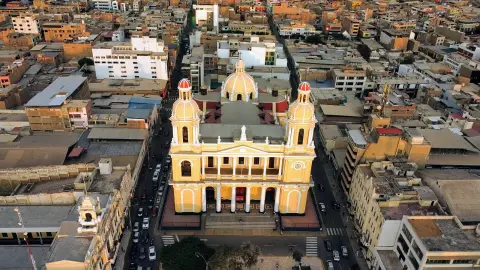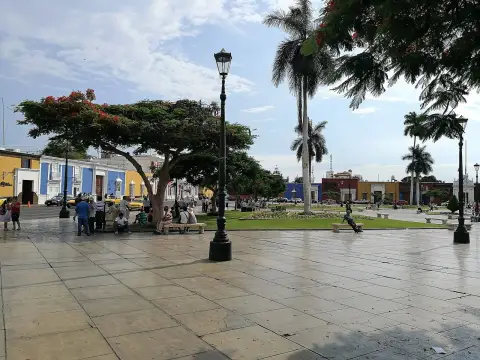
Pimentel is the seaside town of Chiclayo, a short drive west of the city on the Pacific coast. It offers a sandy beach, a long wooden pier, the reed craft called caballitos de totora and plenty of seafood restaurants. Give it half a day, ideally from late morning to sunset, and go at the weekend if you want the town at its liveliest. It is a place for a relaxed lunch and a walk, not for a beach holiday on the scale of Máncora.
Map
What Pimentel is
Pimentel is a small town on the Pacific coast of the Lambayeque region, and it is the seaside of the people of Chiclayo. The city itself is a hot inland hub, so on a weekend families and groups of friends take a short ride to the shore for the sea air, a plate of fish and a stroll on the sand. Pimentel is its own district within the province of Chiclayo, and you reach it by a road of roughly 12 to 14 km from the centre of the city.
For a visitor it fills a useful gap in a northern archaeology route. After a morning among the tombs and museums described on the Chiclayo guide, it offers an afternoon with no ticket queue, no guide and no schedule. It does not have the surf or the nightlife of Máncora, and the town keeps the unhurried feel of a place that is still mostly about fishing.
A short history of the port
Pimentel was a landing place before it was a resort. In the early decades of the Republic, goods from Chiclayo were carried out to ships anchored offshore, and the beach served as the city's nearest anchorage. A private railway linking Pimentel to Chiclayo was opened in the 1870s, and a later company built a railway and a pier in the early twentieth century, with the line reported to have started running in 1914. The trade moved to other ports over time and Pimentel settled back into a fishing village.
You can still sense that past in the layout. The pier sticks out from the end of the main street like a gangway, and a few older wooden houses near the seafront recall the period when merchants and families built holiday homes here. Treat the exact dates as a guide and check them locally, because accounts of the port's early history differ in detail.
The pier
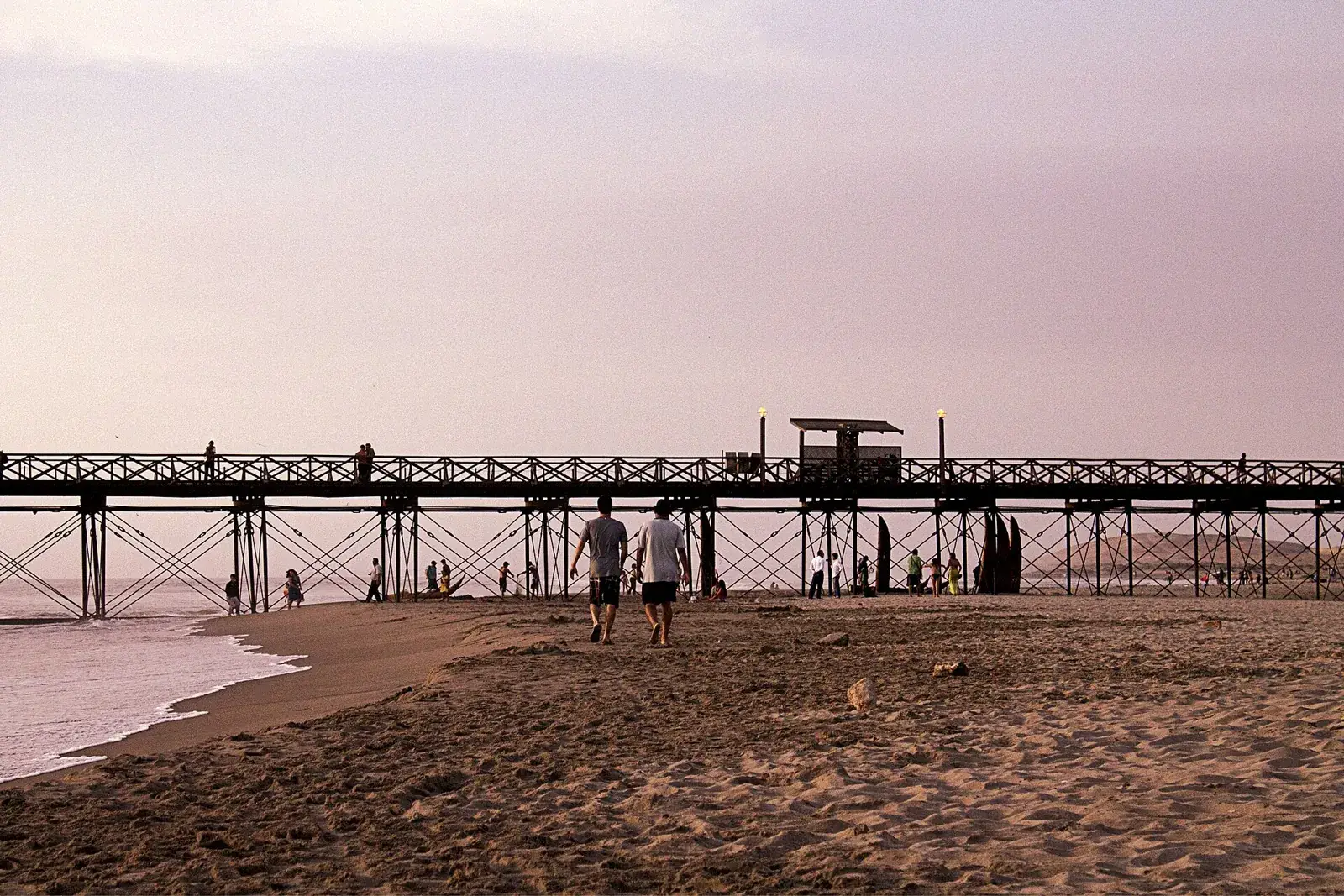
The pier is the best-known landmark of Pimentel and the first thing most visitors walk to. It is a long wooden structure on piles that extends well out over the surf, and it is reported to be several hundred metres long. At the far end you look back at the town, the beach and the line of waves, and in the evening the light on the water is the reason many people go.
Walk it slowly. Fishermen use the planks, small boats work around the piles, and pelicans and other seabirds perch along the rails. The boards are weathered, so watch your step, keep children close and do not lean over the sides. The condition of the pier and any restrictions on walking it can change after storms or repairs, so ask in the town whether it is open before you plan a sunset around it.
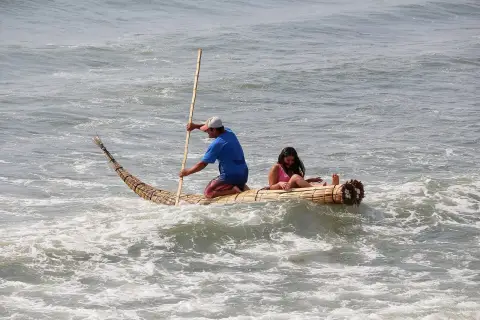
Caballitos de totora
The most distinctive sight on this stretch of coast is the caballito de totora, a narrow craft made of bundled totora reeds that a fisherman rides astride and paddles through the surf. Similar craft have been used on the north coast of Peru for a very long time, and they appear in the art of the ancient cultures of the region. At Pimentel you can see them pulled up on the sand to dry, standing on end, with the fishermen working nearby.
Seeing them in use is a matter of timing, since the fishermen go out at their own hours and the sea decides the rest. Ask permission before photographing people at work, and expect that a short demonstration or ride may be offered for a fee that you should agree beforehand. The craft is also associated with the neighbouring beaches and with Huanchaco, further south near Trujillo, so this is a good place to compare the two.
Eating by the sea
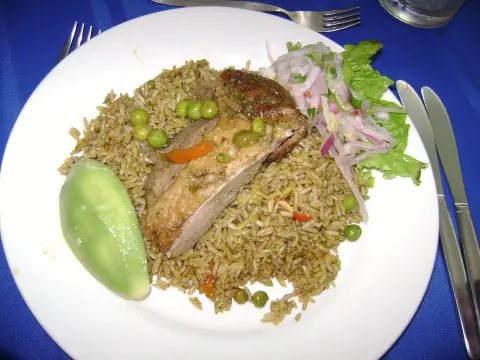
Lunch is the real purpose of many trips. The restaurants along the seafront and the streets behind it serve ceviche, fried fish, rice with seafood and the shellfish that come in from the nearby coast, and the dishes are typical of the northern kitchen. The dish is described in the ceviche guide, and the wider regional cooking is covered in food in the north.
Go for lunch rather than dinner if you want the freshest fish, since ceviche is traditionally a daytime meal and some places stop serving it in the afternoon. Choose a busy place with a turnover of customers, look at how the fish is handled, and ask what has come in that day. Prices are shown on menus and are not worth bargaining over. Read water and food safety if you are new to eating raw fish in Peru.
The beach and the sea
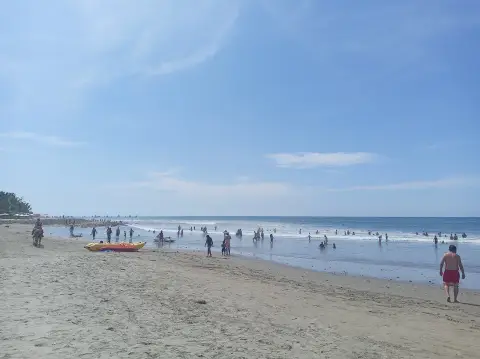
The beach is a broad strip of sand, popular for walking, sitting and watching the sunset more than for serious swimming. The Pacific here is cool and the surf can be strong, and the sea on this coast has currents that can catch swimmers off guard. Swim only where other people are in the water, stay close to the shore and watch children at all times, because the beach is not guaranteed to have lifeguards.
The sun is strong even when the sky is hazy, so bring a hat and sunscreen. In winter the coast is often covered by a grey cloud layer, and the water is cold, so the beach works better as a place to walk than to bathe. Keep your valuables out of sight and your bag close, as on any popular beach, and see staying safe for general advice.
Getting there from Chiclayo
Pimentel is close enough to reach in about 20 to 30 minutes by road from Chiclayo, depending on traffic. Local minibuses and shared taxis serve the route from the city, and a taxi is the simplest choice if you want to go directly and come back at a time that suits you. Agree the fare before you set off, and carry small notes, as explained in money in Peru.
If you are travelling in a group, a taxi that waits for you is usually a sensible choice at the end of the day, when the minibuses are full and the light is fading. The beach is also an easy addition to a day built around the Lord of Sipán: the museums in the morning, the sea in the afternoon. Check current transport options locally, because routes and fares change.
When to go and what to combine
The coast is warm and dry for most of the year, and the summer months from December to April are the hottest and the most crowded, especially at weekends and during school holidays. Weekdays are quiet and many places run a reduced service. Late afternoon is the best time of day, when the heat eases and the light on the water softens, a good moment to be on the sand.
Combine Pimentel with the city rather than treating it as a stop on its own. A day might include a museum visit in the morning, a late lunch by the sea and a return to Chiclayo for dinner. If you are building a longer trip, the town sits comfortably on the northern itinerary, between Trujillo and the highlands, and it is one of the few places in the area where you can finish a day with your feet in the sand.
Where to sleep
-
Find hotels
Chiclayo
Base for the Sipán tombs, pyramids and the north's food
Frequently asked questions
How far is Pimentel from Chiclayo?
It is about 12 to 14 km west of the centre, roughly 20 to 30 minutes by road. The trip is easy by taxi or minibus, and it fits comfortably into a half day from the Chiclayo guide.
Is Pimentel worth visiting?
Yes, if you want a seafood lunch, a sunset walk and a look at the traditional reed craft after the museums of the area. If you want surf, nightlife or a long beach stay, go to Máncora instead.
Can I swim at Pimentel beach?
Some people do, but the water is cool and the surf and currents can be strong. Swim only where others are in the water, stay near the shore, and do not count on lifeguards being present.
What are caballitos de totora?
They are narrow fishing craft made from bundled totora reeds, ridden astride and paddled through the surf. Fishermen have used them on the north coast for a very long time, and you can see them drying on the sand at Pimentel.
Can I walk on the pier?
Usually yes, and it is the most popular thing to do in town, especially around sunset. Its condition can change after storms or repairs, so ask locally whether it is open, and watch your step on the wooden boards.
What should I eat in Pimentel?
Ceviche and other fresh fish dishes are the reason many people come. Eat at lunchtime at a busy restaurant, and see food in the north for other regional dishes to look for in Chiclayo.
How long do I need at Pimentel?
Half a day is enough for the pier, the beach and a long lunch. Add the Lord of Sipán museum in the morning for a full day out from Chiclayo.