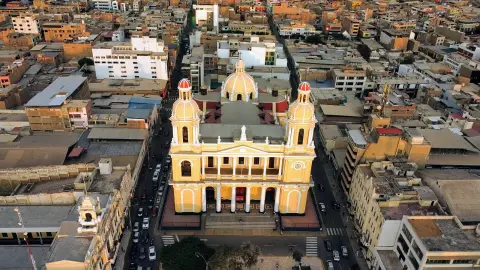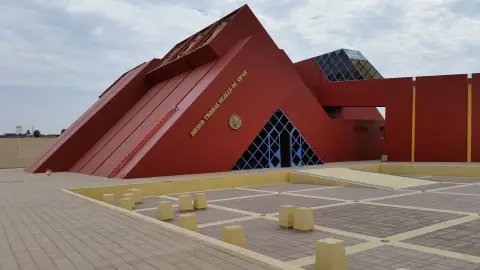
The Brüning National Archaeological Museum is in the town of Lambayeque, a short ride north of Chiclayo, on Avenida Huamachuco. It is the older and quieter of the town's two big museums, with ceramics, textiles and a Gold Room that shows how the Lambayeque (Sicán) culture worked precious metal. Give it about two hours, go with a guide or read up first because labels are sparse, and combine it with the Royal Tombs of Sipán museum nearby.
Map
What the museum is
The Brüning National Archaeological Museum (Museo Arqueológico Nacional Brüning) is a state museum in Lambayeque, the old town about 10 km north of Chiclayo. It describes itself as the first regional museum in Peru, and it covers the cultures of the northern coast in one building, from the first farming and pottery societies through Cupisnique, Moche and Lambayeque to the Chimú and the Inca.
It is easy to confuse with its neighbour. The Royal Tombs of Sipán museum is a newer building devoted to one discovery, the Moche ruler found at Huaca Rajada. The Brüning is broader and older in spirit: it is a general archaeological museum, where one tomb is only a part of the story. The two are in the same town and are normally visited together, but they ask different questions, and the Brüning is the better place to see how the region's cultures follow one another.
The German who started it
The museum takes its name from Hans Heinrich Brüning, a German engineer and ethnographer, known in Peru as Enrique Brüning. He arrived in Peru in the 1870s, worked at a sugar estate near Chiclayo, and over decades collected pottery, metalwork and textiles from the north coast while photographing and drawing the sites. He also learned the Muchik language of the coast and published a dictionary of it.
Part of his collection was sold to the Peruvian state, and the museum was established in his house in Chiclayo in the early 1920s, with Brüning as its first director. It moved to its present purpose-built building in Lambayeque in 1966. The collection has grown since then through confiscations, donations and new excavations, so the museum now mixes a collector's century-old selection with finds from recent digs. Brüning's photographs and drawings have a room of their own, a useful record of sites as they looked before modern damage.
The building and its garden
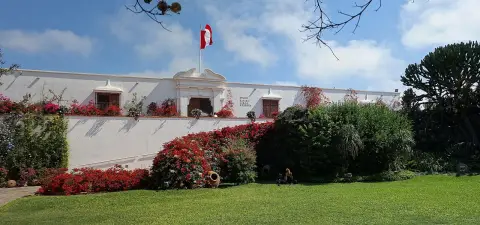
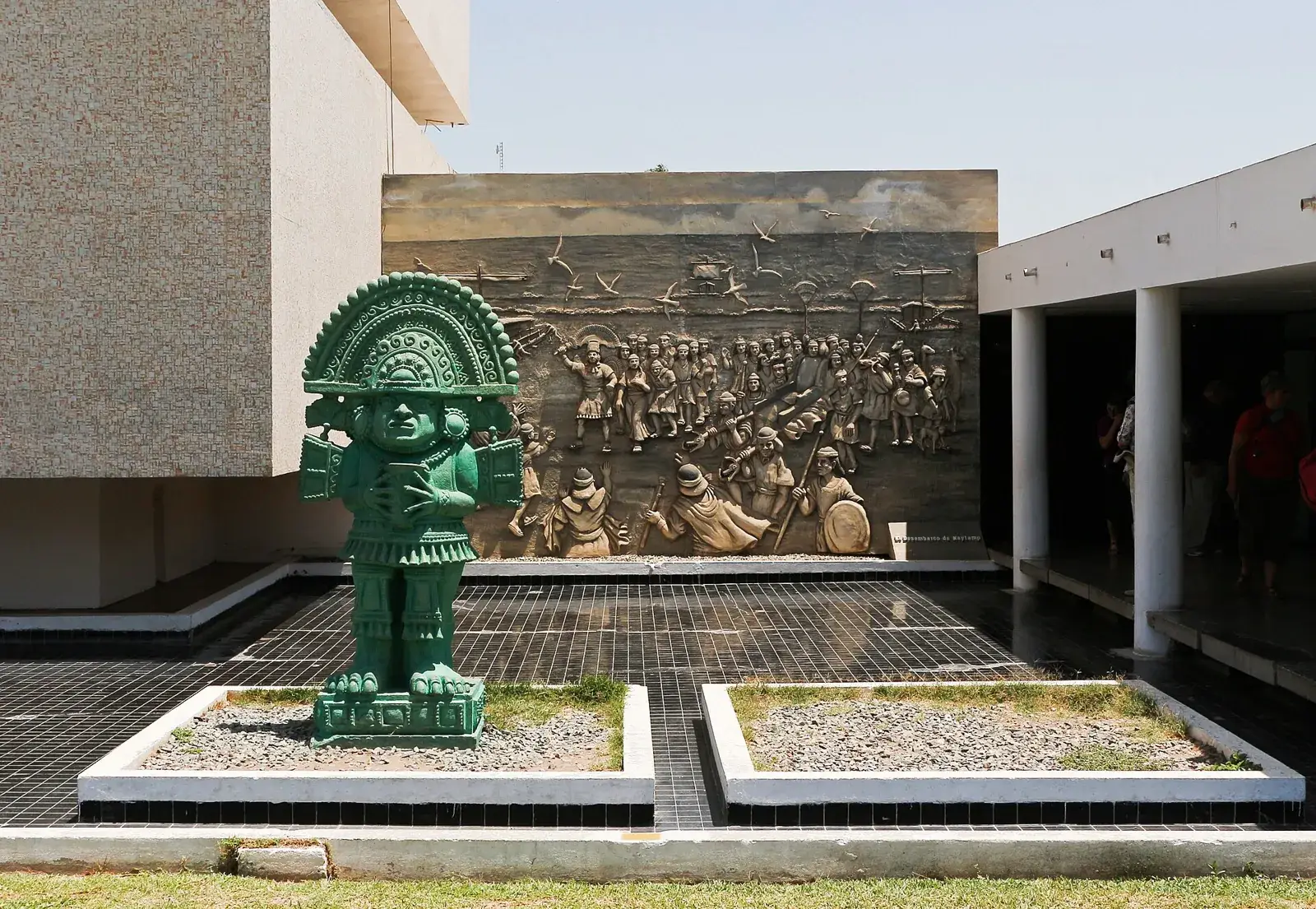
The building is a modern four-storey block of the 1960s, plain and functional, with a mural on the front and a garden around it. The garden holds a statue of Naylamp, the legendary founder of the Lambayeque dynasty, who in the local tradition arrived by sea with his court and settled the valleys. Inside the entrance court, a large relief of that landing and a big green figure of a crowned deity are good places to start, because they introduce the myth that later rooms refer to.
The ground floor has the introduction and the Brüning room, and the displays then run upwards through the periods, with the later levels following the region's culture from the distant past into the present, including music, belief and healing practice. The layout is easy to follow even without a guide, and the stairs make a clear loop. A cloakroom and shop are listed among the services, which helps if you arrive with a bag.
The Gold Room
The Gold Room is the reason many travellers come. It holds roughly 500 objects of gold, silver and precious stones according to the museum's own presentation, among them pectorals, necklaces, ceremonial masks and headdresses, with pieces from the Moche and Lambayeque periods and some objects linked to the tomb of the Lord of Sipán.
What stands out is the skill rather than the weight of the metal. Hammered sheet, casting, soldering and inlay of shell and stone were all part of the northern goldsmith's repertoire, and the ornaments are rarely plain: they carry the faces, birds and fanged figures of the northern coast's religion. The Lambayeque (Sicán) culture, which flourished roughly between the 8th and 14th centuries, is the best known goldworking tradition of this coast, and its characteristic mask with almond-shaped eyes is the image most people associate with Peruvian gold.
The priestess of Chornancap
A highlight of recent years is the tomb of the Priestess of Chornancap, a high-ranking woman of the Lambayeque elite from about the 12th to 13th centuries AD, found at the end of 2011 at the Chotuna-Chornancap temple complex near the coast. Her burial, with its offerings of metal and textile, is presented in the museum as a reconstruction and as objects, and the discovery drew national attention because it showed that a woman could hold the highest religious and political rank.
Interpretation of a find so recent is still moving, and the museum's labels and the researchers' publications are the authorities to follow. As a visitor, treat the priestess as a counterpart to the Sipán lord, who was Moche and about a thousand years earlier. Seen together on the same afternoon, the two burials show how the coast's rulers changed in dress, metal and symbol, while keeping the idea that power ended in a richly furnished grave.
Ceramics, textiles and daily life
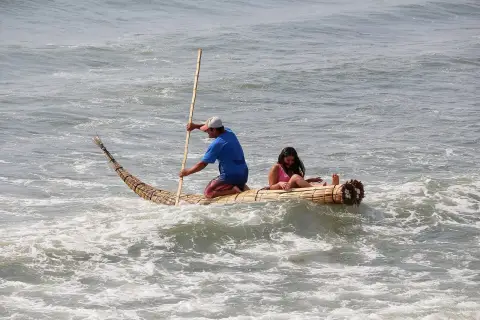
Do not rush past the lower floors to the gold. The ceramics include the stirrup-spout bottles, portrait vessels and modelled animals of the Moche, as well as the dark, polished blackware of later periods, and the textile cases show what survives in the dry coastal desert, where cloth can last for centuries. Many pieces show ordinary life, such as fishing and ritual scenes, and the small reed boats called caballitos de totora, still used on this coast, link the display to the present day.
If you want to compare the same world from another angle, the Larco Museum in Lima has the larger Moche pottery collection, while the sites that these objects came from, such as Huacas de Moche and Chan Chan near Trujillo, are described on their own pages. The Brüning is the one that puts them in sequence.
Getting there from Chiclayo
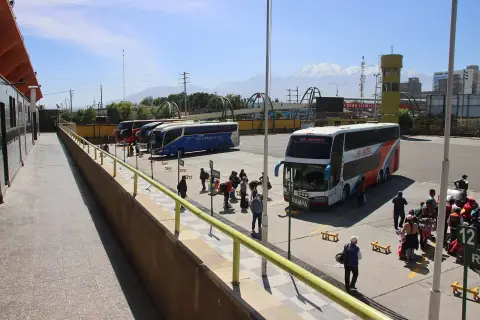
Lambayeque is a short drive from Chiclayo, about 20 minutes by regular local transport, and a taxi is the simplest way to be dropped at the door. Buses and shared minibuses run between the two towns throughout the day, and most stop within a block or two of the museum, so tell the driver you want the museum. The museum stands on Avenida Huamachuco, and the Royal Tombs museum is a few blocks away, so you can walk between them. Check the bus options if you are arriving in the north from Lima or Trujillo.
Lambayeque itself is a small town and worth a short wander, so a stroll between the two museums is not wasted. The heat is real, especially at midday, so carry water and a hat.
Planning the visit
Allow about two hours at the Brüning, more if you want to read everything and look closely at the textiles. The two museums together make a full day, and many visitors do the Sipán museum first because it is the more spectacular, with the Brüning as the calmer second stop. Morning is the better time, before the heat and before tour groups from the coast arrive.
Opening days and hours, the ticket price, the free-entry days and the closing days around national holidays are set by the Ministry of Culture and have changed, so check them on the day before you travel. Entry has been modest, and photography has been allowed inside the Brüning but not at the Sipán museum, though rules can change. Labels are brief, so a local guide or a read of the Sipán museum page and the northern itinerary beforehand pays off. Carry small notes, as explained in money in Peru.
What to combine it with
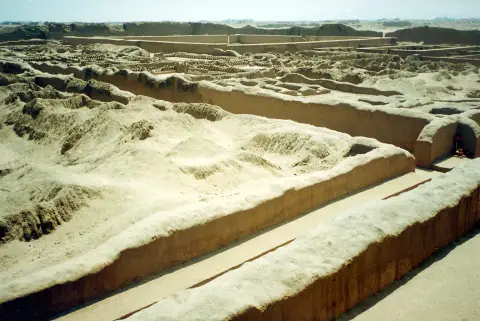
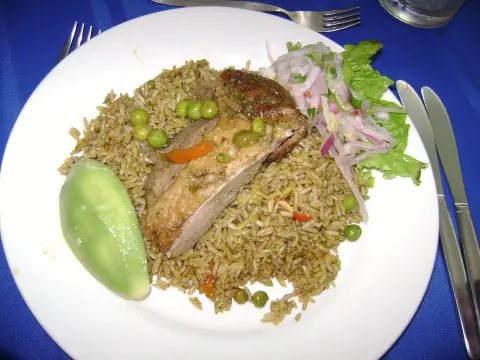
For a day built around Lambayeque, the usual order is one museum in the morning, a long lunch of northern cooking, and the second museum in the afternoon, as set out in food in the north. The excursions from Chiclayo to the adobe pyramids and the dry forest fit a second day.
Further inland, Leymebamba has a museum of mummies and textiles from a different, highland culture, and Cajamarca offers a colonial town with its own archaeology. Together with Trujillo the Brüning completes a north-coast museum route that begins with the Moche and ends with the Lambayeque and Chimú.
Where to sleep
-
Find hotels
Chiclayo
Base for the Sipán tombs, pyramids and the north's food
Frequently asked questions
Is the Brüning Museum worth visiting if I see the Sipán museum?
Yes, if you have the time. The Sipán museum shows one royal burial in depth, while the Brüning covers the whole sequence of northern cultures and has the Gold Room and the Chornancap priestess. If you only have time for one, many visitors choose the Sipán museum.
How long does the Brüning Museum take?
About two hours is typical, and a little more if you read the labels and spend time on the textiles. Visiting both Lambayeque museums on the same day is possible and makes a full outing from Chiclayo.
How do I get from Chiclayo to the museum?
Take a local bus or minibus to Lambayeque, around 20 minutes, or a taxi. The museum is on Avenida Huamachuco, and the other big museum is a few blocks away.
Can I take photographs in the Brüning Museum?
Reports say photography has been allowed inside, unlike at the Royal Tombs of Sipán museum. Rules, and any fee for cameras or flash, can change, so ask at the entrance and never use flash on textiles.
Does the museum have English information?
Information is limited, and labels are brief, so a local guide adds a lot. Reading the Sipán and Chiclayo pages first, and having some Spanish, helps.
Who was Brüning?
Hans Heinrich Brüning was a German engineer who settled in northern Peru, collected antiquities and photographed sites for decades, and learned the Muchik language. Part of his collection became the basis of this museum.
Is the Brüning Museum open every day?
Not necessarily. Sources have given different opening days and hours, and the museum has closed on certain dates, so check the Ministry of Culture listing or ask locally before you go, especially on Mondays and around national holidays.