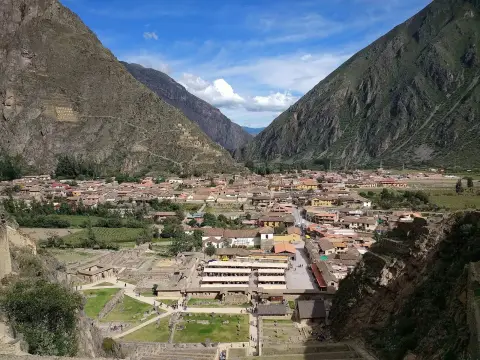
The Lares trek is a three- or four-day walk through highland villages north of Cusco, crossing a pass of about 4,400 m before heading to Ollantaytambo and Machu Picchu by train. It is generally easier than Salkantay or the Inca Trail, with less steep climbing and more contact with local communities. It does not use the limited Inca Trail permit, so dates are more flexible; see the Salkantay for the other main alternative.
What makes Lares different
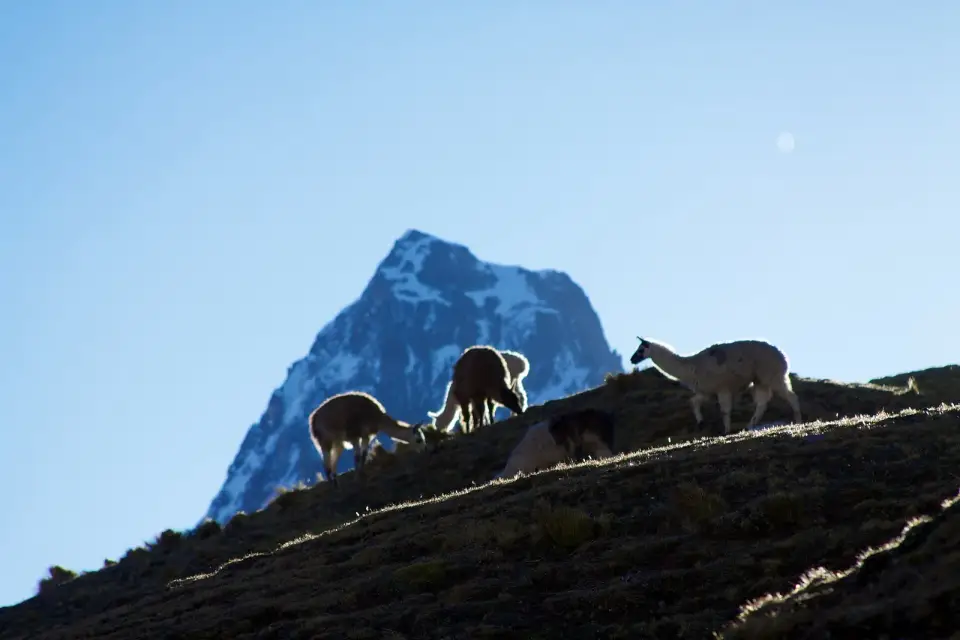
Lares is walked as much for the people as for the scenery. The route passes through communities of Quechua farmers and herders, where weaving is still a daily craft and llamas and alpacas graze on the high pastures. Many itineraries include a stop at a weaving cooperative or a visit to a school or home, which gives some insight into life in the highlands.
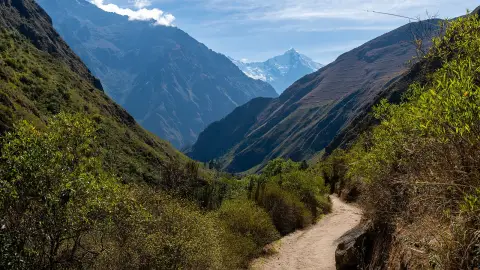
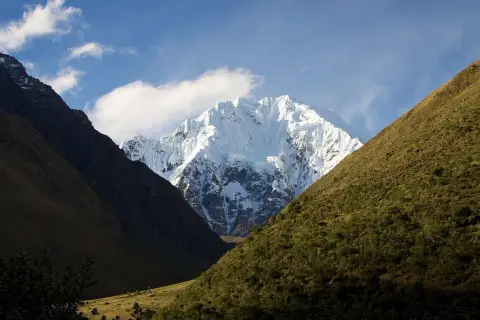
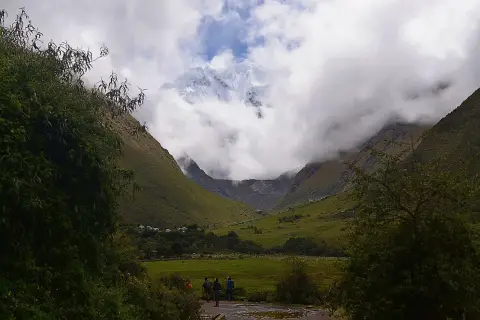
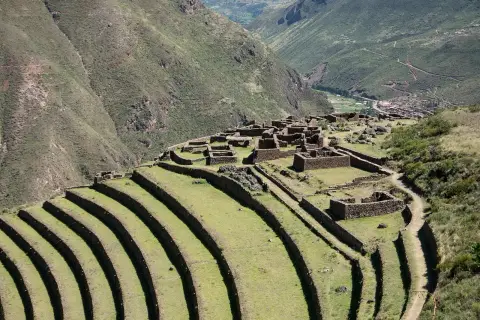
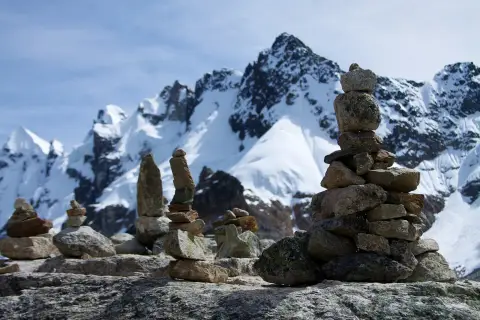
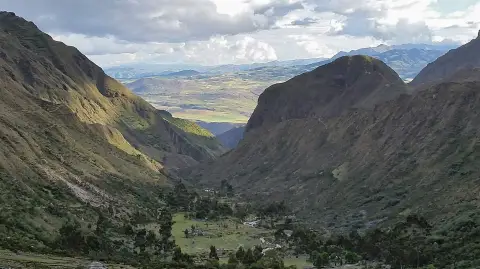
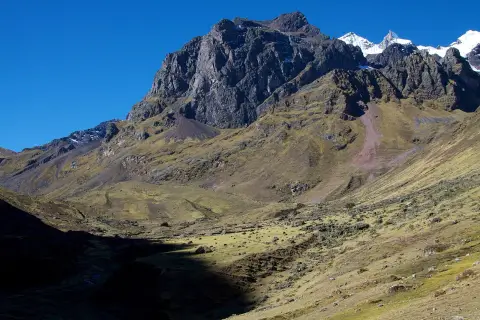
The landscape is varied, with lakes, high grasslands, quiet valleys and, on clear days, views of snow peaks. It lacks the glacial drama of Salkantay and the stonework of the Inca Trail, but it is quieter and less rushed. If you want to see how people live and work at altitude, it is arguably the most rewarding of the Cusco treks. The Sacred Valley is the natural base for it.
The stages
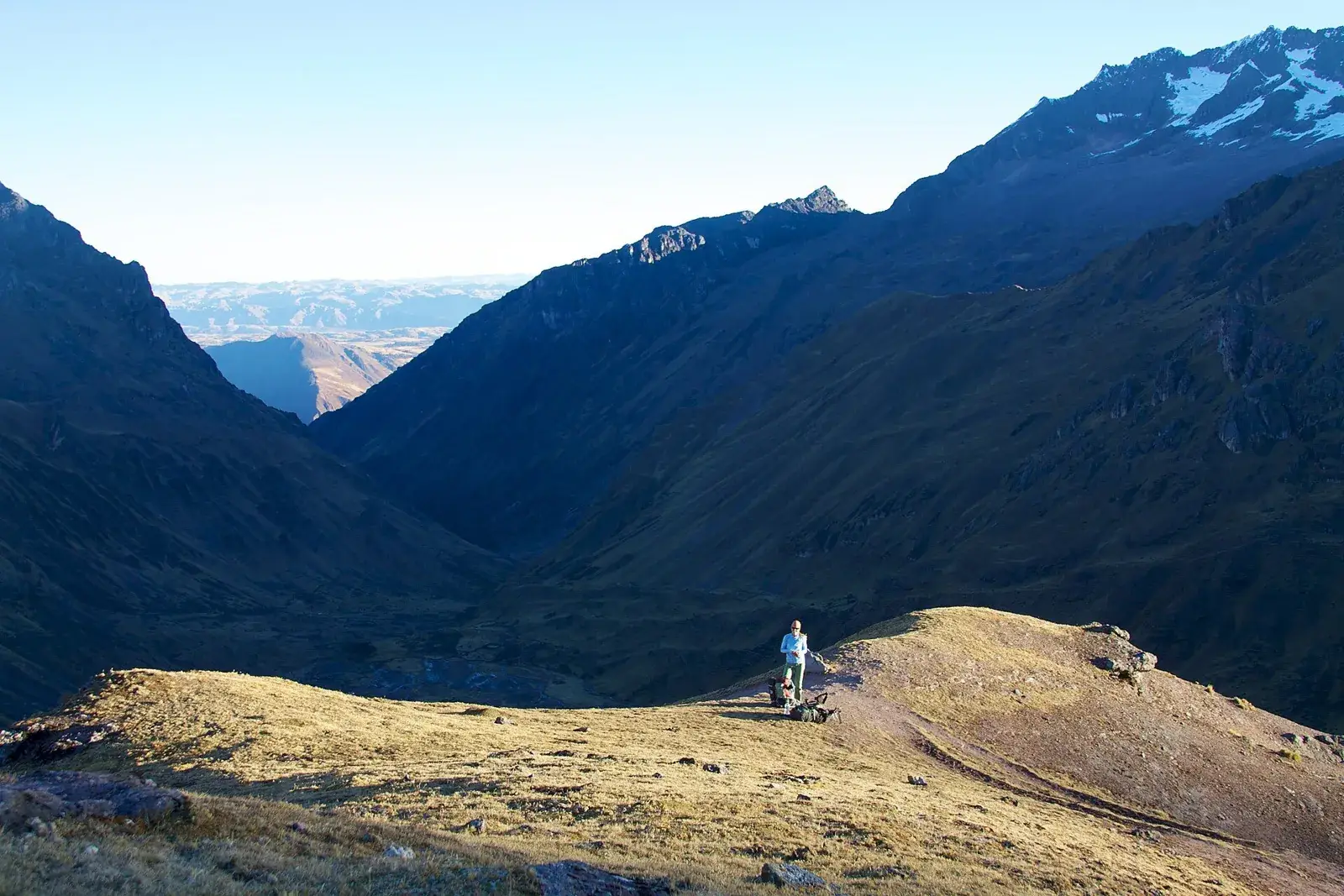
Routes vary, but the pattern is similar. Day one starts with a drive from Cusco or the Sacred Valley to the trailhead, sometimes passing the hot springs at Lares itself, then a gentle walk of about 10 km along a river, climbing to a camp at roughly 3,800 to 3,900 m. Day two is the main climb, up to a pass of about 4,400 m, with views over lakes and peaks, and a long descent to a camp or a village home-stay.
Day three is usually easier, a descent through farmland to the village where transport takes you to Ollantaytambo, from where a train goes to Aguas Calientes. Machu Picchu follows the next morning. A shorter variation finishes in Ollantaytambo without continuing, and a longer one adds a rest day or an extra pass.
Tours and activities
Bookable online, chosen for their traveller reviews.
-
★ Top rated From €23 per person
-
★ Top rated From €22 per person
-
★ Top rated From €23 per person
-
★ Top rated From €17 per person
Who it suits and when to go
Lares suits people who want a first multi-day trek without the toughest days, families with older children who walk well, and anyone whose Inca Trail permit is unavailable. It also appeals to people who value cultural contact over big-peak scenery. It is less suited to travellers who want dramatic glaciers or a heavily archaeological route.
The dry season, roughly May to September, is the best time, with clear days and cold nights. The wet months, roughly November to March, bring rain, mud and cloud, and some departures are cancelled. In the high season the route is much quieter than the Inca Trail or Salkantay, though it does see more visitors than a few years ago.
Booking and what to ask
Lares is not controlled by a daily permit like the Inca Trail, so many operators offer it and quality differs. Ask how the community visits are arranged and whether the villages receive a fair share, how many people are in the group, how porters and muleteers are treated, and what is included in the price: train tickets, Machu Picchu entrance, meals, camping or home-stay accommodation. Confirm who buys the Machu Picchu ticket and for which date, since tickets have limits and can sell out in high season.
The hot springs and the Lares valley
Many itineraries stop at the thermal baths in the town of Lares, either at the start or at the end of day one. The pools are a welcome break for tired legs, and the setting in a green valley is a contrast with the bare pass above. Facilities vary and entrance is normally paid separately, so check whether it is included and carry a towel and swimwear if the stop is planned.
The valley itself is a working landscape of potato and quinoa fields, terraces and small farmhouses. In the dry season, you may see harvest work, and in the evening the villages are lit by woodsmoke from the kitchens. Some itineraries use a community camp with a shared dining hall, others use a home-stay with basic beds, so ask which you will have. Whichever option is used, your guide should be able to explain what the community receives from your visit.
Lares compared with the other Cusco treks
For the most archaeology and the most regulation, see Inca Trail; Salkantay gives glaciers, a higher pass and a steeper second day; Lares offers contact with highland life and the easiest walking. For how the first two differ, see Inca Trail versus Salkantay; Lares sits clearly at the gentler end.
If you worry about the cold, Lares has lower camps and a lower pass, though nights are still near or below freezing in the dry season. If you want to finish with a flourish, remember that you arrive at Machu Picchu by train rather than on foot, so the sense of a walking arrival is missing. For some travellers that is a fair trade for a calmer, more human trek.
Where to sleep
-
Find hotels
Plaza de Armas and historic centre
Everything on foot, at the price of noise and crowds
-
Find hotels
San Blas
Artisans' quarter with steep lanes and views, a short walk uphill
-
Find hotels
All of Cusco
Compare every area and price level in one search
Frequently asked questions
Is the Lares trek easier than Salkantay?
Generally yes. The pass is lower and the days are less steep, though the altitude still demands acclimatisation.
How many days does it take?
Most itineraries are three days of walking, with an extra day for Machu Picchu. Variations of two to four days exist.
Does Lares end at Machu Picchu?
It usually ends near Ollantaytambo, from where a train takes you to Aguas Calientes for Machu Picchu the next day.
Do I need a permit?
There is no limited daily permit like the Inca Trail, but there can be fees and you need a Machu Picchu ticket. Check with your operator.
Is the Lares trek good for families?
It can be, with children who already walk several hours a day and can handle the altitude. The community contact is a strong draw, but check the minimum age your operator sets and ask about horses.
What is the best time for the Lares trek?
The dry season, roughly May to September, gives the clearest weather. April and October can be good too, with fewer people but more rain risk.
Can I combine Lares with the Inca Trail?
Not in a single permit. You can do both on one trip, but the Lares trek needs a separate booking and a few days between, because both involve high passes and tiring days.