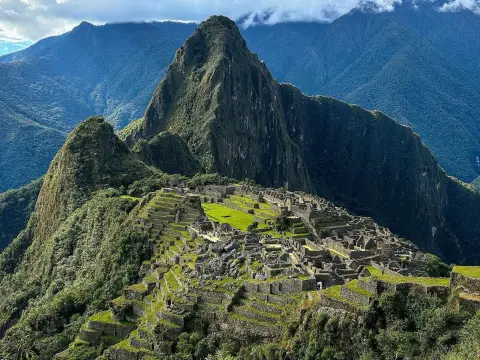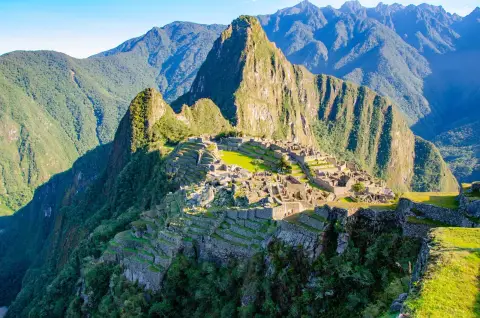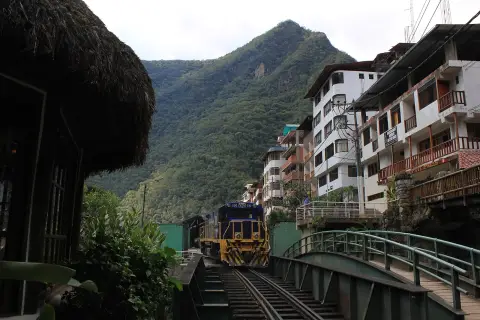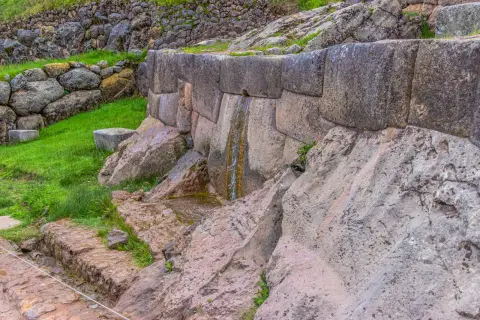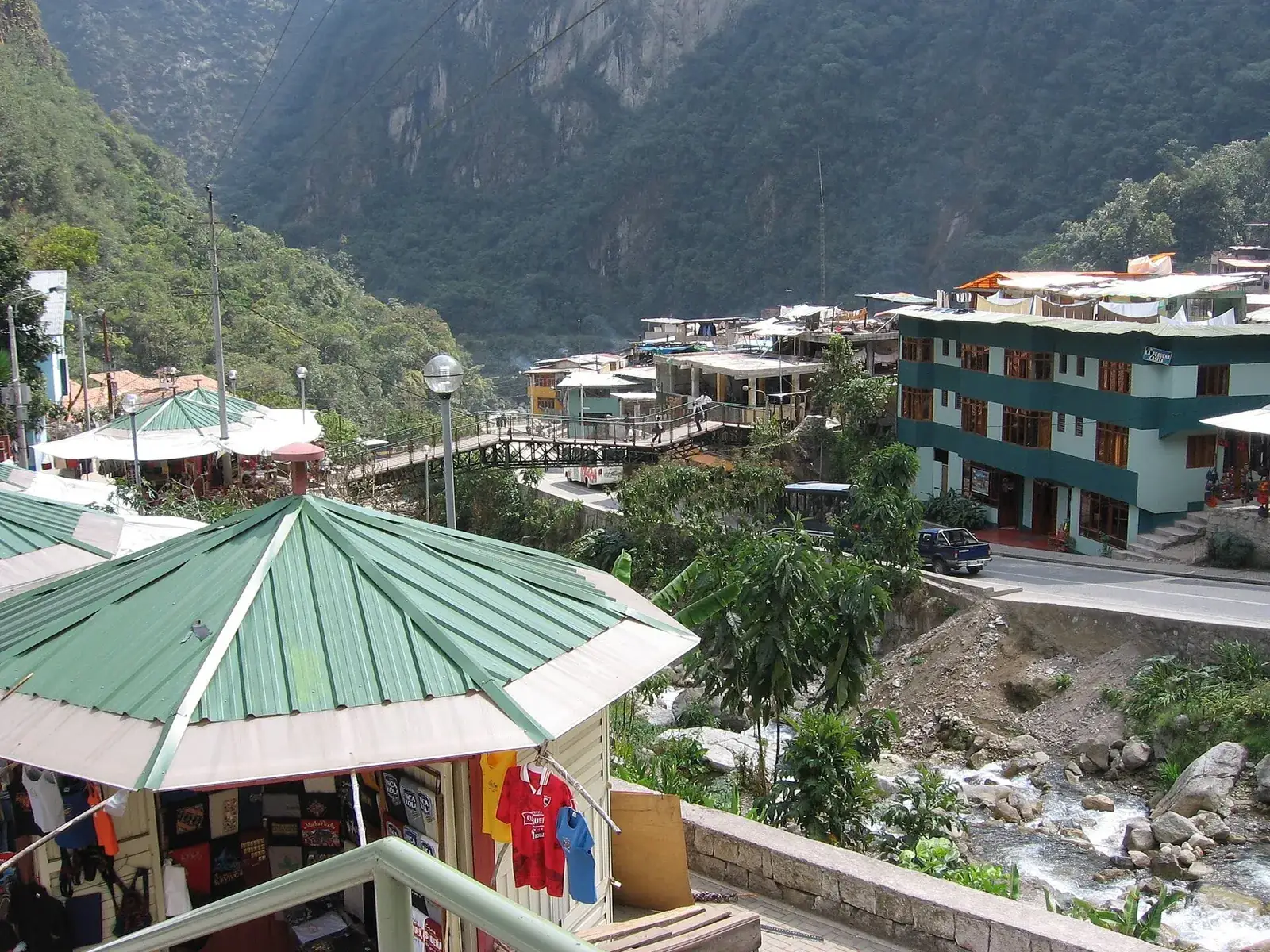
The Manuel Chávez Ballón Site Museum is the official museum of Machu Picchu, run by the Ministry of Culture at the old Puente Ruinas, at the bottom of the bus road and a short walk down the river from Aguas Calientes. It has five permanent rooms and a garden, and most visitors need one to two hours. It is worth doing if you want the history, building techniques and ecology that the citadel itself barely explains, but it is not essential. Opening hours and the ticket rule linked to the Machu Picchu entry change, so confirm both locally.
Map
What the museum is
The Manuel Chávez Ballón Site Museum (Museo de Sitio Manuel Chávez Ballón) is the Ministry of Culture's museum for the whole Machu Picchu archaeological park, not only the ruins on the ridge. It stands at the former Puente Ruinas, the point where the road from the citadel meets the Urubamba river and the railway, around kilometre 112 of the line from Cusco. That position matters: it is outside the ticket gate of the ruins, so you can visit it without using a Machu Picchu entry slot.
The museum is named after the Cusco-born archaeologist who worked at the site in the twentieth century and challenged some of the early readings of it. The building was remodelled several times, and the Ministry says it reopened with a new exhibition design in July 2005. The idea is simple and useful: to put in one place the maps, objects and explanations that are missing from the ruins, where there are almost no signs. Anyone who has stood in the citadel and wondered what they were looking at will find part of the answer here.
Why it matters
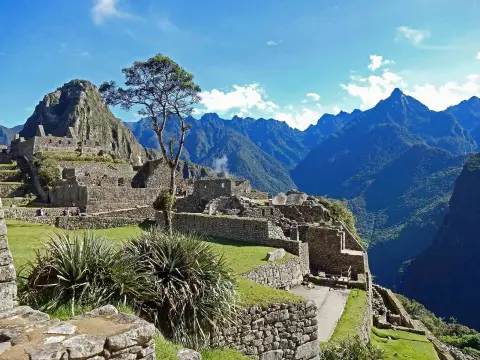
Machu Picchu is easy to photograph and hard to understand. The stone is there, but the people are not, and a first visit can leave you with a vague sense of "Inca city in the clouds". The museum fills the gap with context. It sets out the Inca state, its builders and its labour system, and explains why a royal estate was placed on this ridge, between the Andes and the cloud forest, at a modest altitude of about 2,430 m.
It also places the site in its landscape. The surrounding Historic Sanctuary is a protected area of steep forest with its own plants, animals and ruined paths, and the museum treats it as one story rather than a backdrop. For readers planning a short stay, this is the strongest reason to go: it adds a layer that a guided circuit of the ruins often rushes. If you are still deciding how much time to give the area, how many days at Machu Picchu covers the trade-offs.
Tours and activities
Bookable online, chosen for their traveller reviews.
-
★ Top rated From €49 per person
Aguas Calientes
Machu Picchu Entry Ticket for Circuit 1, 2 or 3
-
From €179 per person
Aguas Calientes
Private Machu Picchu Tour with Guide, Entry and Bus
-
From €139 per person
Aguas Calientes
Machu Picchu Guided Tour from Aguas Calientes with Bus
-
From €126 per person
Aguas Calientes
Machu Picchu Small-Group Tour with Entry Ticket
The five rooms
According to the Ministry of Culture, the museum has five permanent rooms that present eight thematic sequences, using panels, maps, infographics, videos and objects from the excavations. The rooms move from the setting to the people. One introduces the Historic Sanctuary and its ecosystems, another the Inca world and the techniques used to build in such terrain, and others show how the citadel was used.
The objects are the plain, working things of daily and ritual life: ceramics, stone tools, metal pieces and bone or textile fragments, mostly from excavations at Machu Picchu. Do not expect gold or spectacular finds. Their value is in showing how ordinary people lived and worked at a royal estate, which is quite different from the monumental image of the stonework.
There is also material on how the site came to international attention in 1911 and on later Peruvian research, including the work of the museum's namesake. The exact order and content of the rooms can change when displays are renewed, so treat this description as a guide rather than a fixed route.
The orchid garden and the setting
Next to the museum is a small botanical garden with labelled native plants, with orchids as its main attraction. The Machu Picchu sanctuary is known for its orchid diversity, and the garden lets you see a selection at close range without climbing into the forest. Orchids bloom at different times, so what you find in flower depends on the month, and some visitors come away with only a few blooms to look at.
The garden is flat and short, a walk of perhaps a quarter of an hour at a gentle pace. Hummingbirds and other small birds are often seen on the paths, and the garden is a pleasant place to pause after the museum rooms, with the noise of the Urubamba close by. Its position beside the river also gives you an idea of how narrow and steep the gorge is, something that is easy to miss from the bus.
Do not confuse it with the trails around Aguas Calientes itself. The garden is part of the museum site and follows the museum's rules and hours.
Getting there from Aguas Calientes
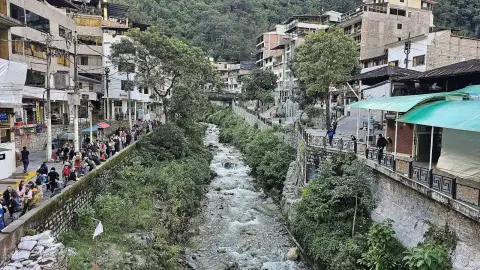
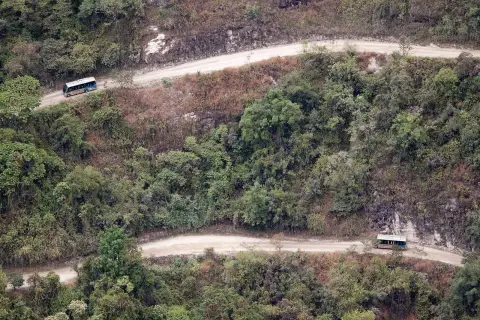
The museum is roughly 1.5 km downstream from Aguas Calientes, on the way to the bridge at the foot of the Machu Picchu road. The walk follows the river and is flat, taking about 20 minutes at an easy pace. There is no regular public transport to the door. The shuttle buses to the ruins cross the river near this point, so it is on the line of the road, but the buses do not make a stop here for general visitors.
A good way to use it is on the day you arrive or the afternoon after you come down from the ruins, when you have time and tired legs but no pressure. In the evening it is closed, so do not leave it until after dinner. Details of the bus system, which starts from the town, are in Machu Picchu buses, and the wider logistics of reaching Aguas Calientes are in how to get to Machu Picchu.
Wear shoes that cope with wet ground, as the path can be muddy after rain, and carry water.
Tickets, opening hours and the Machu Picchu link
The Ministry of Culture lists the museum as open daily, with hours of about 9:00 to 16:00, although some visitor sources give a closing time of 16:30. Check on arrival, and expect changes on public holidays. The Ministry's page lists an adult price of S/22 and a lower price for higher-education students, with free entry for children and students aged 3 to 17, older adults, people with disabilities, and Peruvian citizens and resident foreigners under a 2025 resolution.
Visitors often ask whether a Machu Picchu ticket gives free entry. Several guides say that showing a same-day Machu Picchu ticket gives free entry to the museum and garden, but they disagree on whether this applies all day or only after midday. Do not rely on it: ask at the ticket desk, and carry your passport and your citadel ticket in any case. The rules for the main site are explained in Machu Picchu tickets and Machu Picchu opening hours.
Large backpacks are not accepted in many Peruvian museums, and there may be free storage at the entrance. Confirm this when you arrive.
How long it takes and who it suits
Plan on about one to two hours for the five rooms and the garden, longer if you read every panel or stop for the birds. Some online guides suggest up to three hours; that is generous unless you are especially interested. The museum is compact, and a fast visit of the rooms alone can take under an hour.
It suits travellers who want to understand Machu Picchu rather than only photograph it: history-minded visitors, families with children old enough to read a map, and anyone with a spare half-day who is not ready for another trek. It is also a good wet-weather option. If rain closes in over the gorge, a few hours indoors with the garden under a light shower is a sensible alternative to waiting for the clouds to lift; see Machu Picchu weather for the seasons.
It is less suited to anyone chasing a single big sight. If you have only one night and a morning ticket for the citadel, a hurried museum visit will not improve the day, and is Machu Picchu worth it may help you set priorities.
Combining it with the rest of your stay
The easiest pairing is the afternoon after the ruins. By then you know the layout, and the objects and maps make more sense. If you arrive the evening before, a first visit helps in another way: it gives you a mental picture of the terraces, the agricultural sector and the water channels before you meet them. Either way, keep it separate from your timed entry to the citadel so that you do not rush either.
Around it, Aguas Calientes offers the town's market, the riverside paths and the thermal baths, all described in the Aguas Calientes guide. Visitors who like the museum angle can continue to other Inca sites near Cusco with a more archaeological approach, listed in Inca sites near Cusco.
One reality check: the museum does not hold the famous collection of objects taken to the United States by the early expedition and later returned. Those pieces are kept in Cusco, so check what is on show before you go if they are your main interest. The collection and its location are best confirmed with the Ministry or the university that holds them.
Where to sleep
-
Find hotels
Aguas Calientes
Sleep at the foot of Machu Picchu for an early entry
Frequently asked questions
Is the Machu Picchu site museum worth visiting?
Yes, if you want context that the ruins themselves do not give. It is a small, well-organised museum, and the orchid garden adds variety. If you have only a few hours in Aguas Calientes, the citadel, rest and the river walk may be better uses of time.
Where is the Machu Picchu site museum?
At the former Puente Ruinas, at the foot of the road to the citadel, around kilometre 112 of the railway. It is outside the ruins' gate, about 1.5 km downriver from Aguas Calientes.
How do I walk from Aguas Calientes to the museum?
Follow the river downstream along the flat path and road; it takes roughly 20 minutes. Ask in town for the current route, as paths and works along the railway can change. Take water and wear shoes that cope with mud.
Do I need a Machu Picchu ticket to enter the museum?
No. The museum has its own entrance and price. Some sources say a same-day citadel ticket gives free entry, but they disagree on the details, so ask at the desk. See Machu Picchu tickets for the main entry.
How much does the museum cost?
The Ministry of Culture lists an adult price of S/22, a lower price for higher-education students and free entry for several groups, including children from 3 to 17 and older adults. Prices and categories are revised, so treat this as a guide.
Can I see the objects Hiram Bingham took from Machu Picchu?
The museum tells that part of the story, but the large collection returned from Yale University is held in Cusco, not here. Check which pieces are on show before you go, and see Cusco if the returned pieces are your interest.
Is the museum open in the evening?
No. It closes in the late afternoon, around 16:00 or 16:30 according to the source, and entry stops before closing time. Go in the morning or early afternoon.