The Manu Cultural Zone is the part of Manu National Park set aside for human settlement and nature tourism, so it is the section you can reach without the permits needed for the reserved zone. It covers the road and valleys that fall from the Andes near Cusco into the cloud forest and the first lowland forest, with villages, lodges and bird-watching. Allow at least three to four days from Cusco, expect long, winding roads and plan around the dry season.
Map
What the cultural zone is
Manu National Park is divided into four zones with different rules, and the Cultural Zone is the one meant for human settlement and most activities, including nature tourism. It is the outer, most accessible part of the park, as opposed to the stricter core and the reserved zone deeper in the lowlands. The fuller picture of the whole park, its permits and its other zones is on the Manu National Park page; this page goes deeper on the part most travellers actually see.
The name is slightly misleading. "Cultural" does not mean ruins or museums. It means that people live here: farming and river communities, small towns along the road and lodges whose owners and staff come from the area. Indigenous peoples named in the park, including the Matsigenka, Harakmbut and Yine, are part of that cultural landscape, and some groups in the wider park live in voluntary isolation and must never be sought out. The zone is also a working landscape, so you will see fields, trucks and small settlements alongside intact forest.
Why it matters
The importance of the zone is its altitude gradient. Within one journey you travel from high Andean terrain, where the park reaches close to 4,000 m, down through cloud forest to warm lowland rainforest. Each band has its own plants and birds, which is a large part of why Manu is counted among the most biodiverse protected areas on earth. The park was created in 1973, recognised by UNESCO as a Biosphere Reserve in 1977 and inscribed as a World Heritage site in 1987.
For a visitor this means the cultural zone is not a lesser version of the reserved zone, just a different one. The lowland river wildlife of the interior, such as large macaw clay licks and giant otters, is concentrated further in, while the cultural zone is strongest for cloud-forest birds, orchids, butterflies, frogs and the sheer change of scenery. Many people find the descent itself the most memorable part of the trip.
The road in
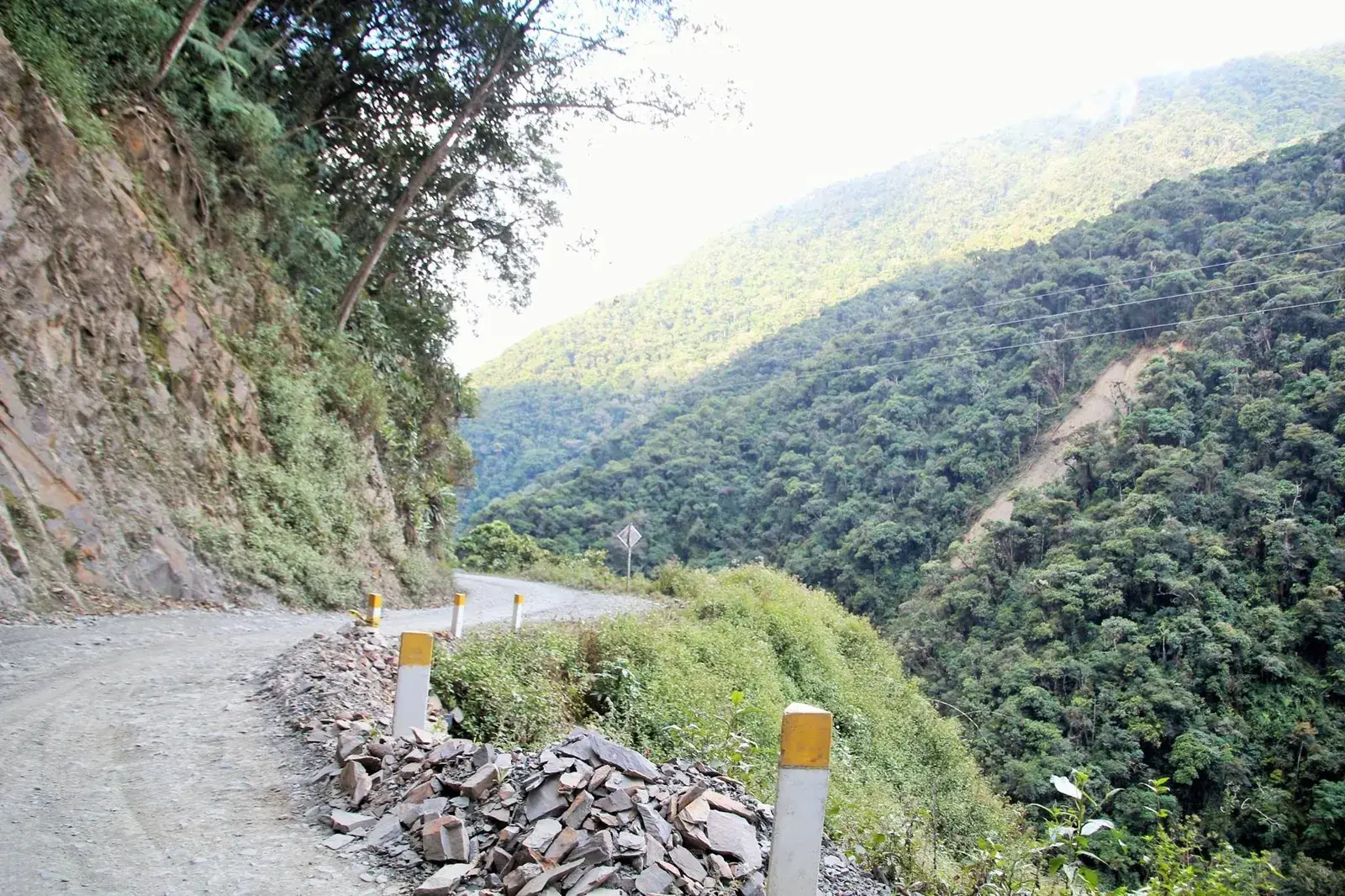
Almost everything revolves around the Manu road, a long, mostly unpaved route that is the only link between the park's highlands and its lowlands, roughly 190 km. It leaves the Cusco region through the colonial town of Paucartambo, climbs over a high Andean pass, then drops through cloud forest to the foothill settlements of Pilcopata and Atalaya, where many lodges sit. Cusco to Pilcopata is often quoted as around 220 km and ten hours or more by road, because the surface is narrow, steep and affected by weather.
The scenery changes in stages: bare grassland and rock, then trees draped in moss, then dense, humid forest with the first palms. Driving it in daylight matters, since fog and landslides are real hazards. The practical side of the journey, including the vehicles, timing and what can delay it, is covered in Cusco to Manu.
What you see and do
The headline sight is the Andean cock-of-the-rock, Peru's national bird, whose males gather at traditional display sites in the cloud forest at dawn. Several lodges in the Kosñipata valley are known for it. A viewing is never guaranteed, and the display season and light conditions matter, so ask the lodge or operator what they can realistically promise.
Beyond that, days are made of guided walks on forest trails, early-morning bird-watching along the road, visits to waterfalls and rivers, night walks for frogs and insects, and in the lower sections short boat or river excursions. Hummingbirds, tanagers, trogons and many other species are commonly seen from the road itself. Photographers and birders tend to spend the most time here, while those after big wildlife such as tapirs and caimans usually aim for the lowland sections or the reserved zone. Food in the Amazon is worth a look if meals at lodges are part of your plan.
Getting there and how long to allow
Most visitors go from Cusco, either on a package with transport, guide and lodge included or with their own arrangements to a lodge in the Pilcopata area. Short programmes of three to four days are common, with a day at each end spent mainly on the road. Five or six days gives time to stay at more than one altitude and to see the birds without rushing.
Public transport towards Pilcopata exists, and independent travellers can in principle reach the cultural zone on their own, but services are infrequent and conditions change with weather. If you go by yourself, book lodges ahead and leave slack in the schedule. For guided options, compare operators using tours from Cusco as a starting point and ask who actually drives and guides on the day.
Cultural zone or reserved zone
The main alternative is the reserved zone, deeper in the lowlands, which requires an authorised operator and limited permits and takes more days and money. The cultural zone is shorter, cheaper and easier to organise, but it offers less of the remote-river and big-mammal experience. If your priority is birds, cloud forest and a taste of Manu on a limited schedule, the cultural zone is a good fit. If you want the interior wilderness and have a week or more, look at the reserved zone on the Manu page.
If you mostly want the lowland rainforest and are short of time, Tambopata, reached from Puerto Maldonado, is the more convenient comparison. Where to go in the Amazon sets the options side by side, and is the Amazon worth it helps decide whether to go at all.
When to go and what to prepare
The dry season, roughly May to October, is the usual choice, with fewer landslides and better road conditions. The wetter months, roughly November to April, bring heavy rain, muddy sections and possible delays or closures, so confirm road status before you set out. Even in the dry season the cloud forest is damp and the nights at height are cold.
Pack light waterproofs, quick-dry layers, sturdy walking shoes, insect repellent, a head torch and binoculars. Mosquito-borne diseases are a consideration at lower elevations, so talk to a doctor or travel clinic well before you go and read the health and vaccines page. Mobile coverage is patchy, so tell someone your plan. Stay on paths, never approach or photograph people living in voluntary isolation, and follow the advice in responsible travel.
Frequently asked questions
Do I need a permit or a tour for the Manu Cultural Zone?
The reserved zone needs a licensed operator and permits, but the cultural zone is open to settlement and nature tourism, and independent travellers can in principle reach it. Services are limited, so many people still book a lodge or a guided package. Check current rules with the park authority or an operator.
How many days do I need?
Three to four days is the common minimum from Cusco, but a lot of that is spent in a vehicle. Five or six days gives more time at the lodges and a better chance of good bird sightings.
Can I see the Andean cock-of-the-rock?
It is one of the zone's best-known sights, with males displaying at dawn at traditional sites in the cloud forest. Sightings are likely at the right lodge and season but never guaranteed, so avoid anyone who promises them.
Is the road from Cusco dangerous?
It is long, narrow, mostly unpaved and exposed to fog, rain and landslides, so drive in daylight with an experienced driver. Delays are common in the wet season, and a spare day in the plan is sensible.
Will I see jaguars, tapirs or giant otters here?
Unlikely. The cultural zone is mainly about birds, plants, insects and cloud-forest scenery. Larger mammals and river wildlife are better sought in the lowland sections or the reserved zone.
When is the best time to visit?
The dry months, roughly May to October, give the most reliable road conditions. The wet season is greener but muddier and more likely to disrupt travel. See Cusco to Manu for road details.
Do I need travel insurance and vaccines?
Yes, plan for both. Remote areas mean long journeys to medical care, so check that your travel insurance covers them, and speak to a doctor or travel clinic about vaccines and malaria advice well before departure.