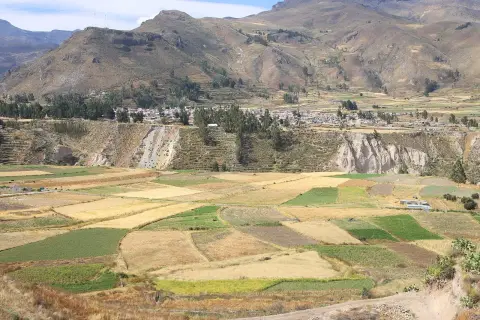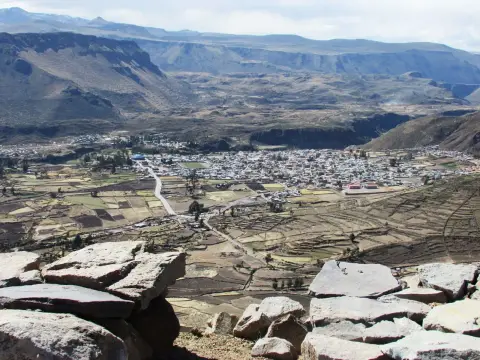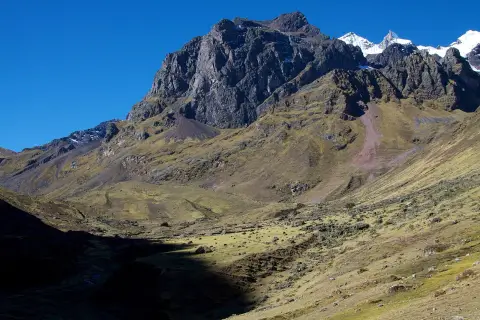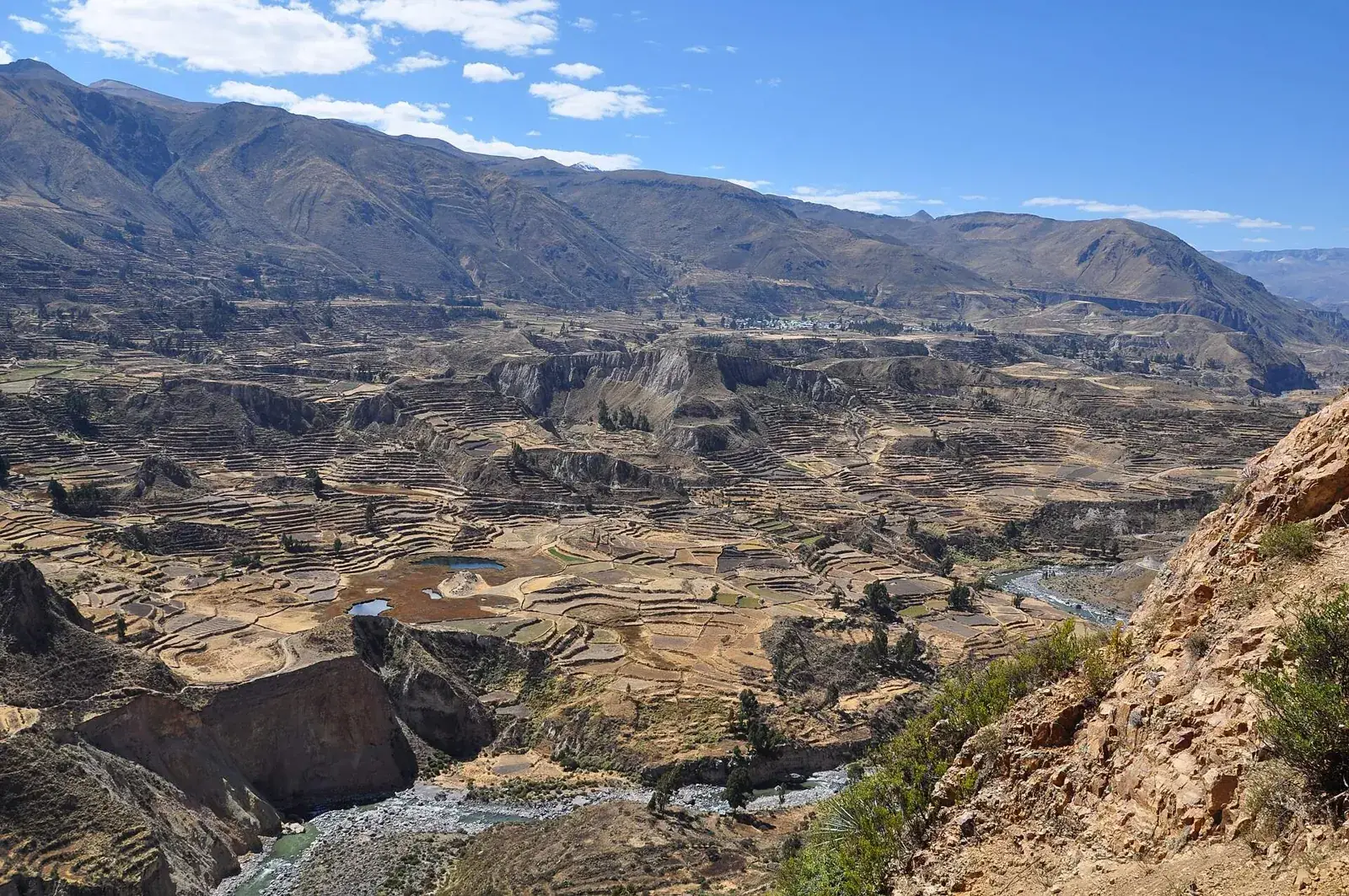
The classic Colca Canyon trek starts at Cabanaconde, at about 3,300 m, and drops around 1,000 m to the river and the oasis of Sangalle, where you can swim and sleep, before climbing back out. It is usually done as a two- or three-day trip from Arequipa. The descent is steep and the climb out is hard in the heat, but altitudes are lower than the Cusco treks, so it suits people who want a challenge without extreme height.
Route map
What the trek is like
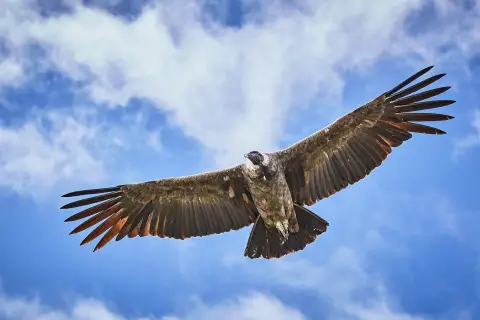
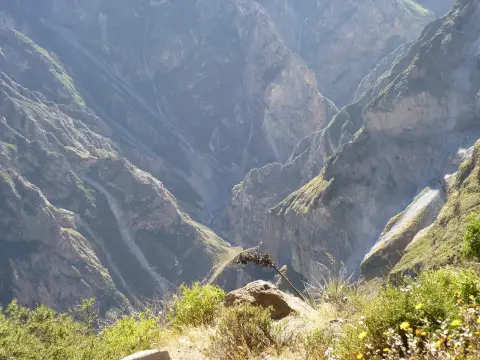
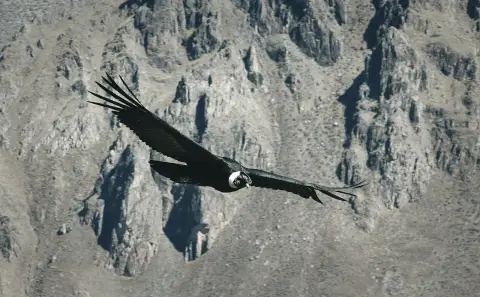
Colca Canyon is one of the deepest canyons in the world, and the trek takes you into the lower part of it. From Cabanaconde, the path zigzags down the dry, dusty slope, with views across the canyon and, on clear mornings, a chance of seeing condors. At the bottom, you cross a river and reach a cluster of villages and simple lodges. The oasis of Sangalle has palm trees, natural pools and rudimentary accommodation, a surprising contrast to the arid slopes above.
Unlike the Cusco treks, there is no ancient trail to follow and no glaciers. The reward is the scale of the canyon, the contrasts of landscape and the chance to walk through villages that are reached only on foot or by mule.
Routes and timings
Tours from Arequipa leave very early, with a drive of roughly six hours to the Cruz del Cóndor viewpoint and Cabanaconde, including stops. The common two-day option starts with the descent of about three hours to the river and a night at the oasis, then the climb out the next morning, which takes about three hours or more depending on fitness. A three-day version adds an extra night and a walk through villages on the canyon floor, giving more time and less rush.
A one-day trek is also sold, but it means a very long day with a lot of driving. A more gentle option is to visit the viewpoint and the thermal baths near Chivay without going into the canyon. Choose the length on the basis of your fitness and how much time you have.
Tours and activities
Bookable online, chosen for their traveller reviews.
-
Day trip From €38 per person
-
Day trip From €16 per person
-
Day trip From €58 per person
-
From €9 per person
Season and practicalities
The dry season, roughly May to September, is the best time, with clear days and cold nights at the top, while the canyon floor stays warm. In the wet season, roughly December to March, rain makes the paths slippery and can cause landslides. Mornings are usually clearer than afternoons in any season.
Accommodation at the bottom is simple, with basic rooms or bungalows, shared bathrooms and limited electricity. Bring cash, a headtorch and swimwear for the pools. Check which meals are included. Some visitors go independently by public bus from Arequipa to Cabanaconde (see Arequipa to Colca), which is possible but takes planning, while a guided tour handles transport and logistics.
Choosing between tour and independent
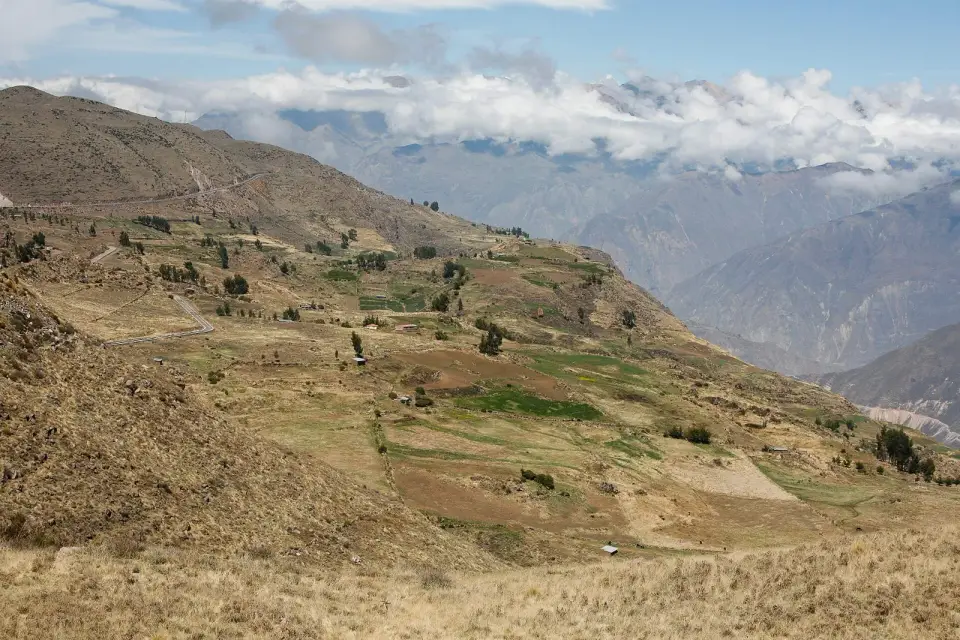
A guided tour makes sense if you have limited time or are unsure about the path, but group sizes can be large and the schedule is fixed. Going independently gives flexibility and costs less, but you must organise buses, accommodation and the climb out, and you should be confident with navigation and heat. For this in more detail, see tour or independent travel. In either case, ask about the number of days, the departure time, meals, entrance fees and what happens if someone cannot make the climb.
Sangalle and the canyon floor
The oasis sits on the canyon floor beside the Colca river, where small lodges stand among palms, with several natural-looking pools filled with water from the stream. After a hot descent, a swim is the high point of the day. The pools are simple and shared, and the water is cool rather than warm.
The villages around the canyon floor are small and have a few basic shops, which keeps prices up and options limited. Meals at the lodges are usually simple and are often included in the tour price. Evenings are quiet and the canyon walls make the night sky feel narrow and deep. Take insect repellent, and be ready for early starts because the climb out begins before first light for most groups.
Combining the trek with the wider Colca area
Most visits combine the walk with the viewpoint, the town of Chivay, the hot springs and the villages along the canyon's rim. The Colca Canyon and Colca Canyon tours cover these, and the viewpoint is described separately. A three-day trip with a night in Chivay before the trek helps with acclimatisation, since Chivay is higher than Cabanaconde.
If the trek does not appeal, many travellers skip the canyon floor and use the rim for walks that are much shorter. The scenery is still exceptional, the condors are still there and the hiking is easier on knees and lungs. Whichever option you choose, allow a day for the journey back to Arequipa, since the road is long and winding.
Training and kit for a steep descent
The challenge is the gradient rather than the distance, so training should include long downhill and uphill sessions, preferably with a pack. Strengthening the thighs and calves helps with the descent, which punishes unprepared knees. Trekking poles are very useful, especially on the loose slope near the top.
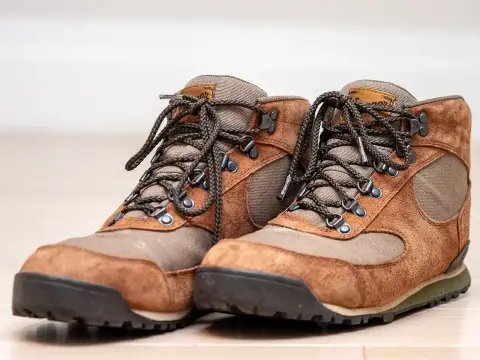
Wear boots or trail shoes with grip, a hat and light long sleeves for the sun, and bring swimwear, a towel and a headtorch. A small first-aid kit with blister care is worthwhile. For a general checklist, see gear, and for how to approach the altitude if you arrive from the coast, see acclimatisation.
Where to sleep
-
Find hotels
Chivay
Main town of the Colca Valley, hot springs nearby
-
Find hotels
Cabanaconde
Village at the canyon rim, near the trails down
-
Find hotels
Plaza de Armas and historic centre
Colonial core within walking distance of the main sights
-
Find hotels
San Lázaro
Old narrow lanes close to the main square, with character and lower prices
-
Find hotels
Yanahuara
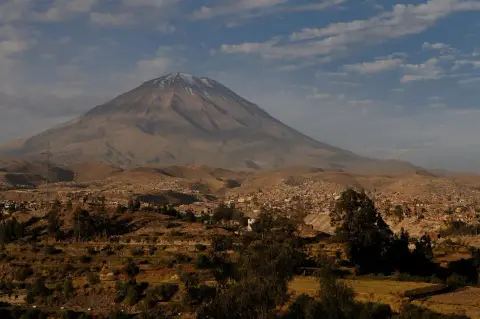
Residential quarter with views of the volcano and good restaurants
-
Find hotels
All of Arequipa
Compare every area and price level in one search
Frequently asked questions
How hard is the Colca Canyon trek?
The descent and especially the climb out are demanding, but the distances are short. The heat and steepness are the main challenges.
How many days should I plan?
Two days is the common choice, and three days gives a more relaxed trip with extra time in the canyon.
Can I see condors on the trek?
Condors are seen most often from the Cruz del Cóndor viewpoint in the early morning, though sightings are never guaranteed.
Is there a mule to carry me out?
Mules are generally available at the bottom to carry bags or tired walkers. Arrange this with your guide in advance.
Can I do the Colca Canyon trek in one day?
Yes, a one-day version exists, but it means a very long day with the drive from Arequipa, a hard climb and a late return. Two days is much more comfortable and usually better value.
Do I need to book the Colca Canyon trek in advance?
Usually not in the low season. In July and August, book a few days ahead if you want specific dates, and confirm what the price includes.
What should I wear for the Colca Canyon trek?
Wear light layers for the hot descent, a hat, sunscreen and sturdy shoes. Carry a warm layer for the cold mornings at the rim and the early climb out.