Choose a two-day tour if you can. The one-day version covers the Cruz del Condor viewpoint but spends most of the day on the road and starts in the middle of the night. A two-day tour overnights in a canyon village, gives more time at the viewpoint and may include hot springs. Trekking to the canyon floor adds a physical challenge and needs a guide.
All options leave from Arequipa, and the road crosses a high pass of around 4,900 m.
The one-day tour
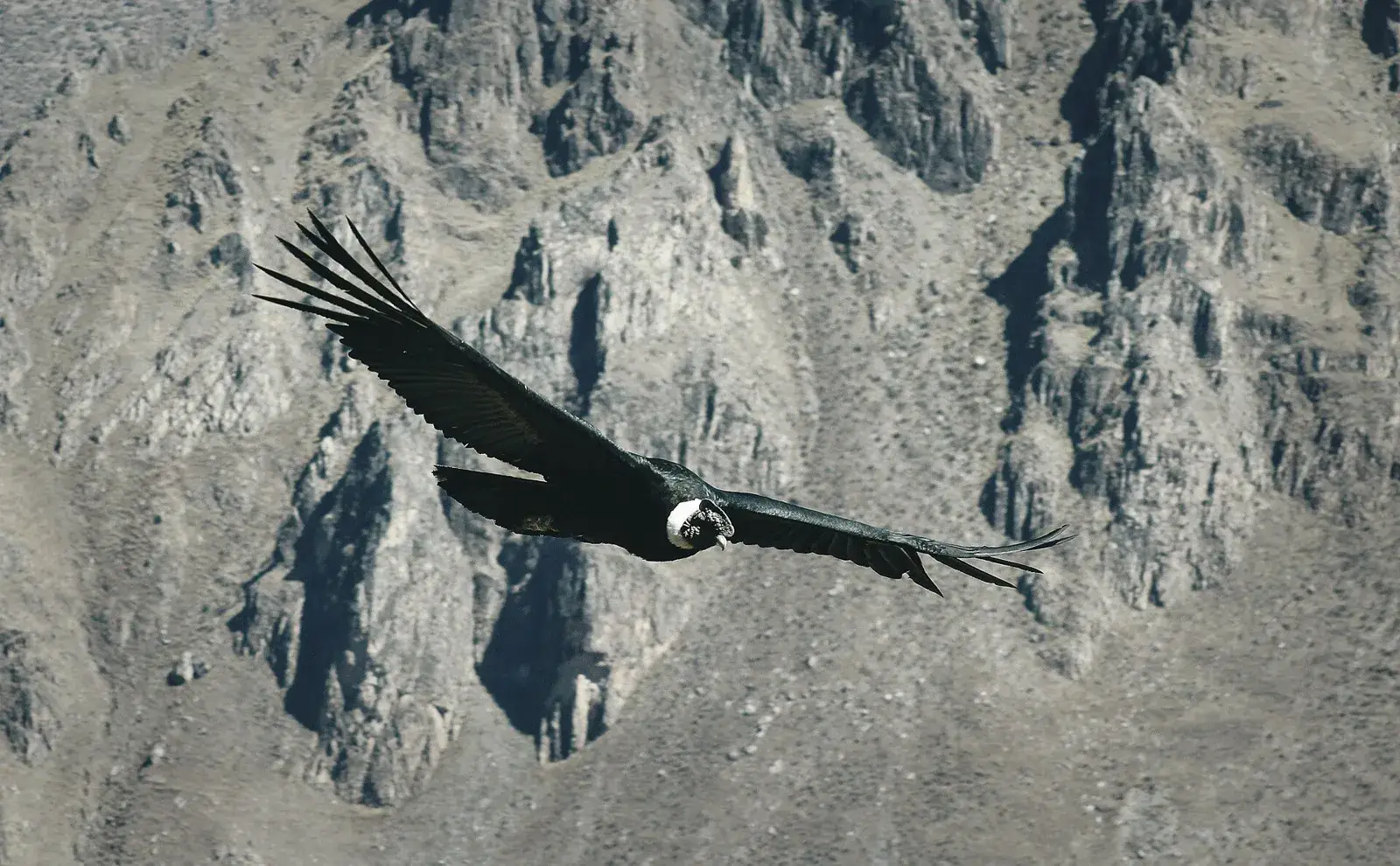
One-day tours leave Arequipa in the small hours and drive for around six hours to reach the Cruz del Condor viewpoint, where condors can be seen riding the morning thermals. Afterwards there is a stop in a village, a buffet lunch and sometimes the hot springs at Chivay, before the long return drive after dark. The day is long, and a lot of time passes in the vehicle.
It can suit travellers with only a day to spare, but you may arrive at the viewpoint tired and rushed, and the condors do not always appear.
Because the schedule is tight, you cannot adjust to delays, and a late start or a roadworks stop eats into the one thing you came for. If you are unsure whether you can manage the early start and the long drive, the comparison of a tour or going independent lays out the alternatives.
The two-day tour
The two-day version leaves at a slightly more civilised hour, stops at Patapampa pass and the viewpoints, and overnights in Chivay or a canyon village such as Yanque or Cabanaconde. This allows a visit to the Cruz del Condor early the next morning, when conditions are best, and then a return drive with stops.
The extra night means time to soak in the thermal baths, see terraced fields and a village market and sleep before returning. Many travellers say this is the version worth paying for.
Ask where you will sleep, as standards differ widely between simple guesthouses and larger hotels. Some tours also continue to Puno instead of returning to Arequipa, which saves a day if you are heading to Lake Titicaca. See Arequipa to Colca for the road and the public alternatives.
Trekking into the canyon
Three-day treks go from Cabanaconde down into the canyon, to the green oasis of Sangalle, and back up. Descent is steep and the climb out is hard in the heat and altitude, so this is for fit travellers who have acclimatised. A guide is advisable, and muleteers can carry luggage or even you on the ascent for a fee.
The full route description, the stages and the best season are covered in the Colca Canyon trek. Take the same care you would on any high-altitude hike: carry water and sun protection, start early and turn back if you feel unwell. Acclimatisation is worth reading about before you commit.
What to check before booking
Ask when the tour leaves and returns, how long you spend at the Cruz del Condor, and whether you stay overnight inside the canyon area. Check what is included in the price: entry to the Colca Valley, meals, hot springs and the guide. Compare vehicle size and ask about group numbers, as large coaches limit stops.
Be aware that a separate tourist ticket is usually required for the valley and is often not included in the tour price. Arrange it clearly in writing. See tours from Arequipa to compare other trips from the city so you can see how Colca fits into your plan.
Seasons and weather
The dry months, roughly from May to September, bring clear skies and the best light at the viewpoints, but nights can be very cold at the canyon. The wetter months bring afternoon storms, and road works or landslides can occasionally affect the route. Condors tend to be seen most reliably in the morning, but wind and cloud affect their flight.
Take layers whatever the season: a warm jacket for the early morning at the viewpoint, a sun hat for midday and a rain layer in the wet months. Sunglasses and sun protection matter at altitude.
Combining Colca with Arequipa and Puno
Colca fits naturally between Arequipa and Lake Titicaca. After two days in the city, take a two-day tour and then either return to Arequipa or continue by bus to Puno. For how to spend the days before, see Arequipa, and for the villages, terraces and thermal baths in more detail, the main Colca Canyon entry.
If you carry on to Puno, check the bus times and book tickets in advance. The days around the pass are demanding at altitude, so plan a restful evening rather than a late arrival.
Frequently asked questions
Is the one-day Colca tour worth it?
It is possible but tiring, with long drives and little time. A two-day tour is more relaxed.
When do condors fly?
Mostly in the morning, when warm air starts rising, so early arrival matters. Sightings are not guaranteed.
Can I go to Colca without a tour?
Yes, by public bus from Arequipa to Chivay and onward, but it takes more time and planning.
Do I need to acclimatise before a Colca tour?
Arequipa is lower than Cusco, but the pass is very high. A day or two in Arequipa before the tour helps, and the altitude guide has more detail.
Are the hot springs at Chivay worth a stop?
Many travellers enjoy a soak after a long day, but the pools can be crowded. Go late or early if you want a quieter visit, and avoid long hot soaks if you feel dizzy at altitude.
What should I wear at the Cruz del Condor?
Warm layers, a hat and sun protection, since mornings are cold and the sun is strong. Bring binoculars if you have them.
Can children join a Colca tour?
Yes, though the long drives and the high pass are tiring. Ask a doctor about altitude for young children, and consider the two-day option for a gentler pace.