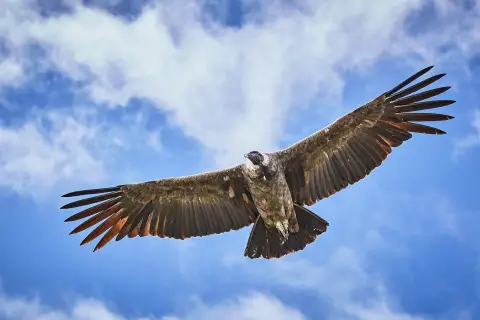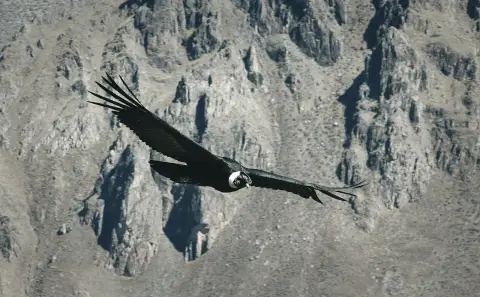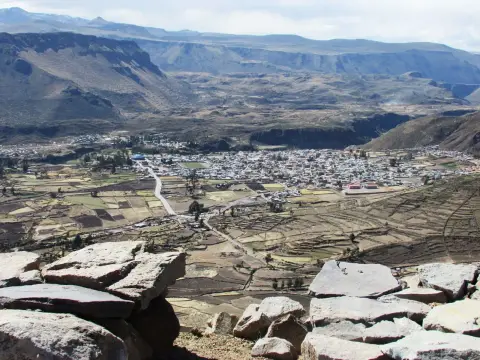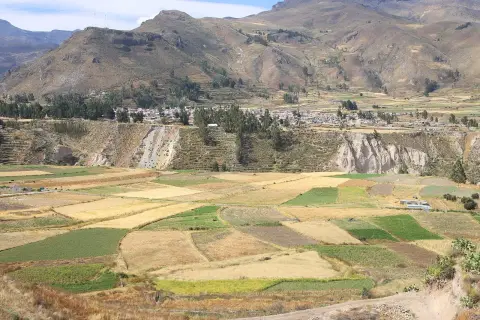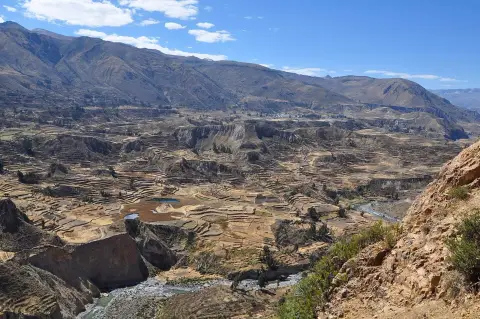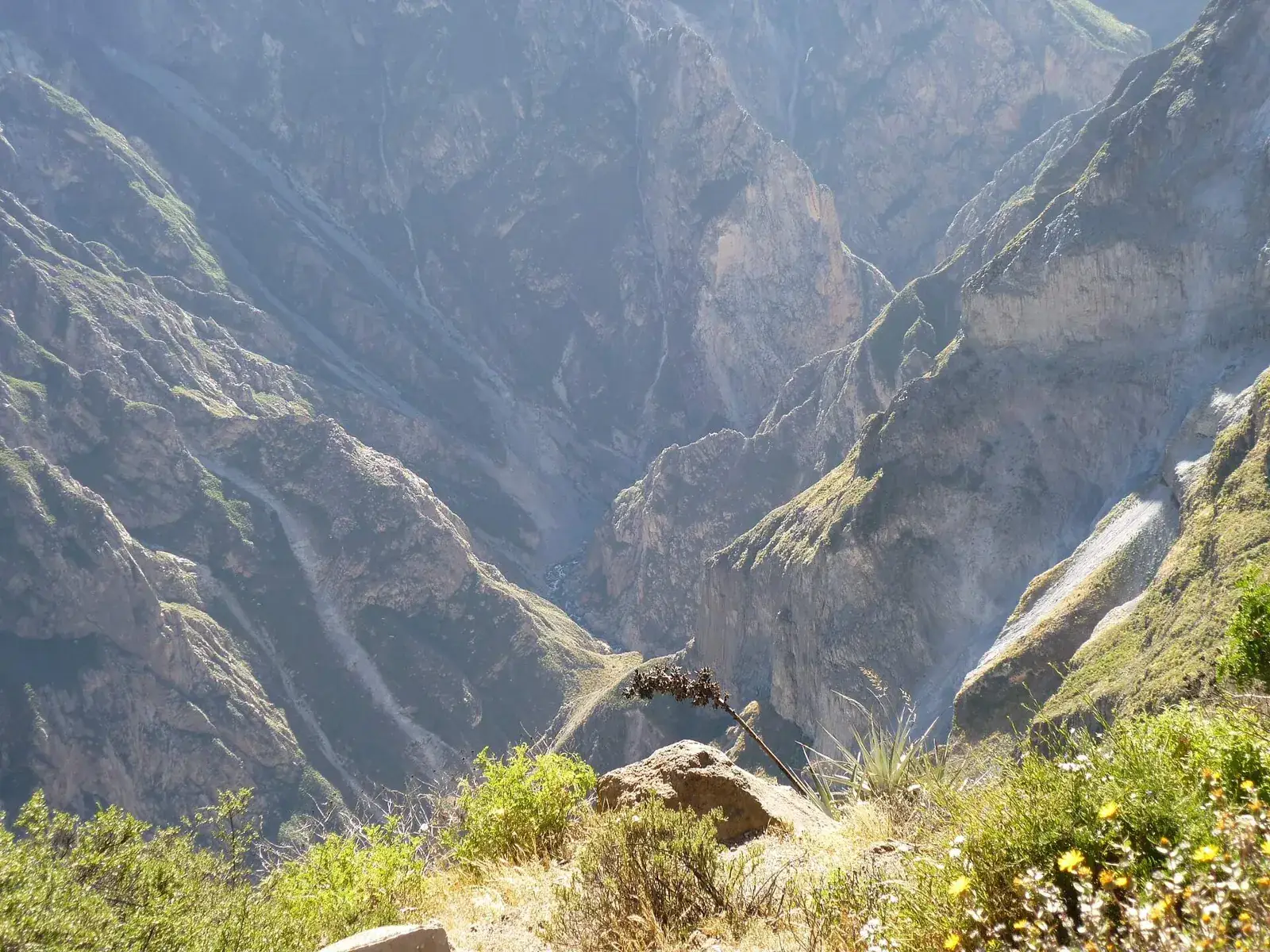
The Cruz del Cóndor is a viewpoint on the rim of Colca Canyon where Andean condors are often seen riding the air currents. Go early, since the best sightings are usually in the morning once the air begins to warm. Sightings are never guaranteed, so treat the birds as a bonus. Dress warmly, because it is cold and high, and stay on the paths.
Map
Why condors appear here
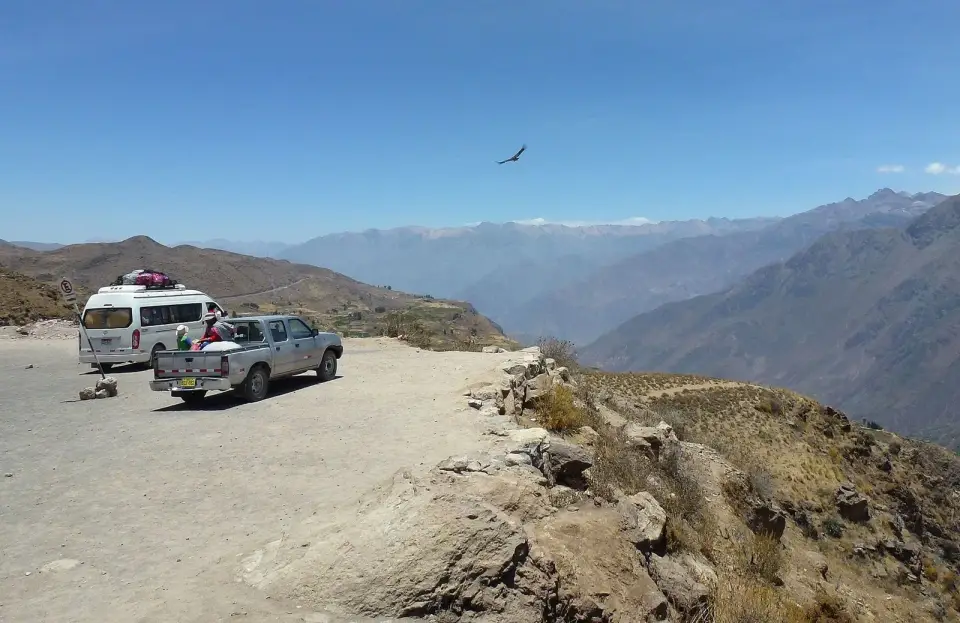
The Andean condor is one of the largest flying birds in the world, with a very large wingspan, and it relies on rising warm air to stay aloft with little effort. At Cruz del Cóndor, the canyon walls and the way the morning sun heats the slopes create thermals that lift the birds. They often glide close to the viewpoint at eye level, which is why the spot became so well known.
It helps to understand this when planning. Condors tend to be most active once the air has warmed enough to produce thermals, which is typically in the morning rather than at dawn. Later in the day the birds may be higher or away from the viewpoint.
Making a visit work
Most visitors arrive on a tour from Chivay or Arequipa that is scheduled around the typical morning window. Arriving early is wise, because crowds build, and the best places along the rim fill with people and cameras. If you are staying in a village in the canyon, you can also reach the viewpoint with a short transfer.
Be realistic. Condors are wild animals, and some days there are many, and some days only a few or none. Weather, wind and season all influence what you see. Some tour guides mention certain months as better for sightings, but that is a general pattern and not a guarantee, so keep expectations flexible.
Bring binoculars if you have them and a camera with a zoom. The condors can pass close, but you also see them at a distance. Be patient and quiet, because the birds can be disturbed by noise and people moving into restricted areas.
Tour or independent visit
The viewpoint is usually included in a one- or two-day tour of the canyon from Arequipa. The tours are simple to book and handle the long road, which crosses high ground before dropping into the Colca valley. The downside is that tour timetables sometimes put you at the viewpoint at the busiest time, and the stop can be short.
Travellers who prefer to go independently can take public transport to the canyon and then reach the viewpoint from a village. This gives more control over when you arrive but needs more planning, and our comparison of a Colca tour versus independent travel lays out the trade-offs. The route from the city is described in Arequipa to Colca.
Whichever route you choose, check whether the entrance to the canyon area requires a ticket and whether it is included in your tour price. These arrangements change, and guides can usually tell you what applies on the day.
Respect the birds and the place
Stay behind the barriers and on the marked paths. The edge is steep, and the drop is considerable. Do not throw food or objects, and keep children close. Local people sell crafts and snacks near the viewpoint, and buying a small item is an easy way to support them.
If your tour includes the viewpoint as one stop in a wider route through Colca villages and hot springs, ask the operator how much time you will have at Cruz del Cóndor, since some itineraries allow only a short stop.
Watching well: light, wind and patience
Good condor watching is mostly about patience. Find a spot early, settle in and watch the sky above the canyon rather than only the rim in front of you. Condors often appear first as small dark shapes against the far wall, then swing closer. The wind is a clue: when it is steady and the sun is on the slopes, birds are likelier to be airborne.
Photographers should bring a zoom lens and a spare battery, since cold drains batteries quickly. Keep your camera strap secure at the edge, and avoid leaning over barriers for a shot. A fast shutter speed matters more than a heavy lens, because the birds move quickly against a bright sky.
Everyone benefits from dressing in layers. The morning at the viewpoint is cold, then the sun warms the rim quickly, so a removable layer is more useful than one heavy coat. Keep a hat and sunscreen handy, because the high sun is strong even when the air is cool.
Combining it with the rest of the canyon
Cruz del Cóndor is one stop among many. The canyon has villages with terraced fields, small churches and hot springs, and the wider area is described under Colca Canyon. See Colca tours to understand how the standard one-day and two-day formats differ.
If you want to see the canyon on foot, the Colca trek goes down into it and gives a very different perspective from the rim. Walkers should remember that every descent has to be climbed back, and that altitude and heat make the climb harder than it looks.
For those arriving from Cusco or Lima, altitude sickness is worth reading about before you commit to an early start on a high road.
Where to sleep
-
Find hotels
Chivay
Main town of the Colca Valley, hot springs nearby
-
Find hotels
Cabanaconde
Village at the canyon rim, near the trails down
Frequently asked questions
What is the best time of day to see condors?
Mornings are generally best, once the air warms and thermals form. Arrive early to secure a good spot.
Will I definitely see condors?
No. They are wild birds, and sightings vary by day, weather and season. Most visitors see at least some, but it is not guaranteed.
How high is the Cruz del Cóndor?
The viewpoint is at roughly 3,700 m above sea level, so dress warmly and take the altitude seriously.
How long should I stay at the viewpoint?
Allow at least an hour if your schedule permits, since sightings come in waves and the first ten minutes can be quiet. Some tours give a shorter stop, so ask the operator before booking.
Can I visit Cruz del Cóndor on a day trip from Arequipa?
It is possible but long, with a lot of time on the road for a short stay at the viewpoint. Many people choose a two-day tour, which allows the early morning visit. See Colca tours for the usual formats.
Is there a fee to enter the Colca area?
A ticket for the canyon area has been collected in the past, and tours often include or arrange it. The rules change, so ask your operator.
What should I bring?
Warm layers, a hat, gloves, sunscreen, water and binoculars. A camera with a zoom helps. Wear shoes with grip for the dusty paths.
Is it suitable for children and older travellers?
The viewpoint is easy to reach, with short paths, but the altitude and cold can be tiring. Go slowly and keep warm. If anyone has a health condition, ask a doctor before travelling to high ground.