The Museum of Pre-Columbian Art, known as MAP, is a museum of ancient Andean ceramics, metalwork and stone, set in a restored colonial mansion on a small square beside the San Blas district of Cusco. Its pieces come from the Larco Museum in Lima and run from the Formative period to the Inca. Allow about one to two hours, go in the afternoon when the sites outside are crowded, and check the current hours and ticket price locally before you go.
Map
What the museum is
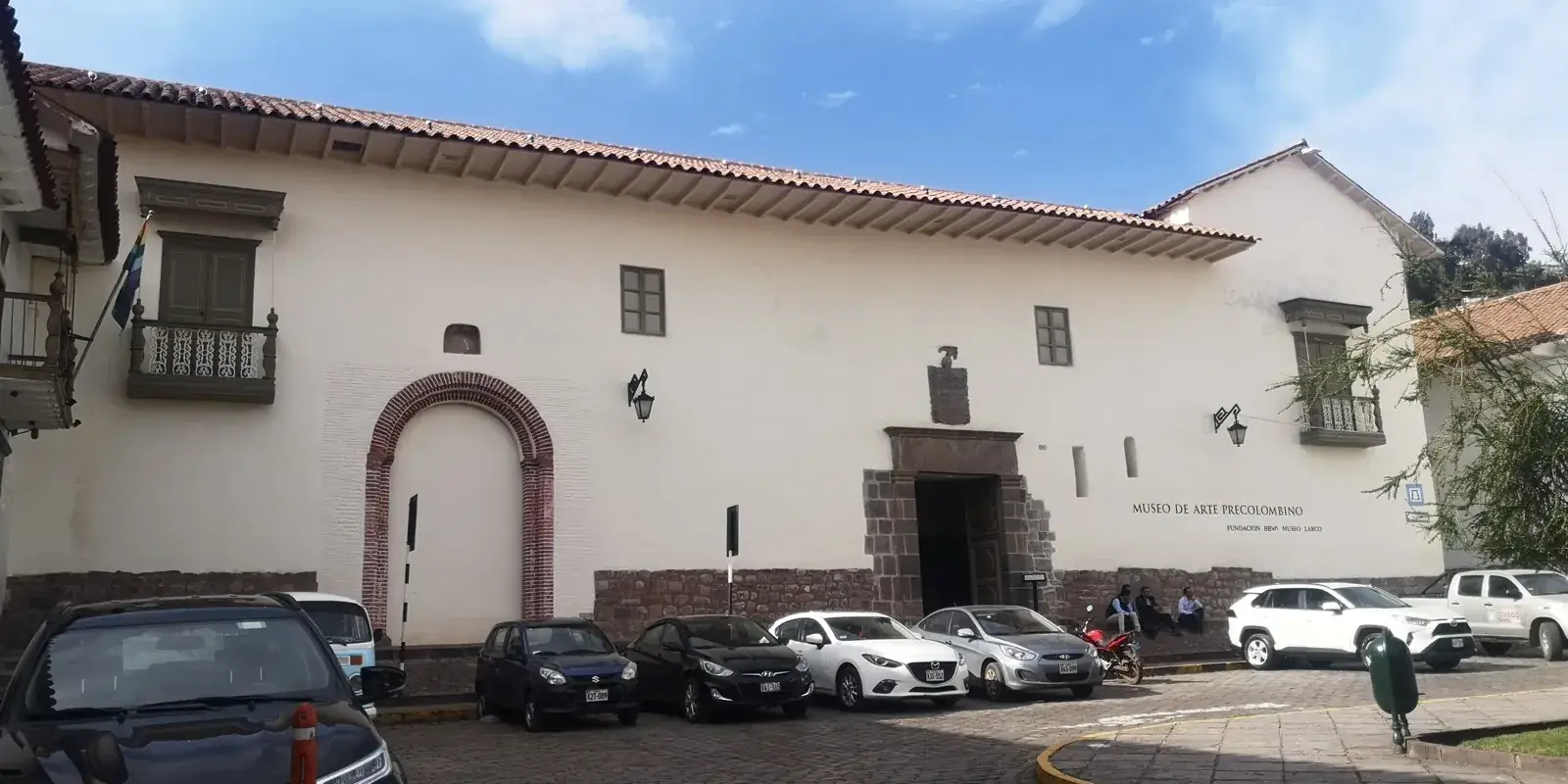
The Museo de Arte Precolombino, usually shortened to MAP, is a compact museum of ancient Andean objects in the historic centre of Cusco. It stands on the Plazoleta de las Nazarenas, a quiet small square a short walk from the main square and at the edge of the San Blas district. The museum belongs to the Larco Museum of Lima and was opened in June 2003, with the restoration of the building supported by a Peruvian bank foundation.
The idea is simple. The Larco family collection in Lima is enormous, and only a small part can be shown there. MAP gives Cusco a selected sample of it, chosen for visual quality rather than for completeness. Sources describe the display as a few hundred pieces, with figures between roughly 400 and 450 quoted, drawn from a much larger store in Lima. The aim is to show these objects as art, with pieces lit one by one against dark walls, rather than as archaeological finds in crowded cases.
It is not a site museum for the Inca, and it does not replace the ruins. It is a place to see what the people before and alongside the Inca made, and that context improves your visits to the stone sites around the city.
The building and its layers
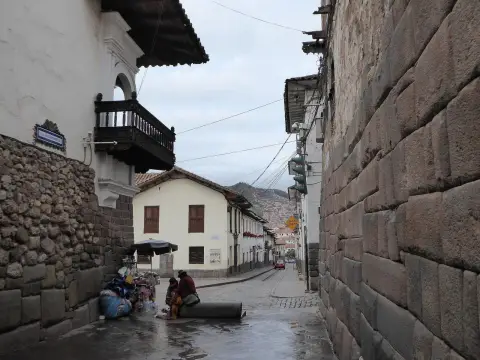
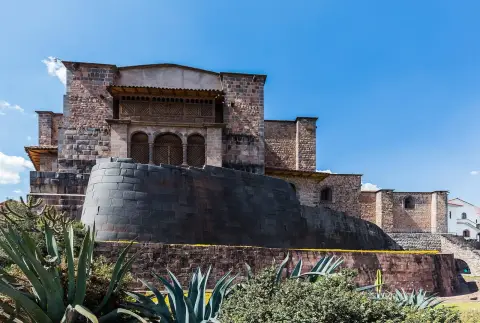
The house itself is part of the visit. The site began as an Inca building, described in sources as a ceremonial courtyard or courthouse, and the base of the street front is still made of fitted Inca stone. After the Spanish conquest it passed to the conquistador Alonso Díaz, who built a colonial house on top of the Inca walls around 1580, a pattern repeated all over Cusco, which you can also see at Qorikancha. The mansion is known as Casa Cabrera, after a later owner of the Cabrera family.
Over the centuries the house changed hands several times, was put to different uses and fell into poor condition before the restoration. The museum now uses its rooms around a courtyard, over two floors, with a modern interior fitted behind the old walls. Look at the entrance and the stone at the base of the façade before you go in, and notice how the thick walls and small windows keep the interior cool and quiet.
Tours and activities
Bookable online, chosen for their traveller reviews.
-
★ Top rated From €23 per person
-
★ Top rated From €22 per person
-
★ Top rated From €23 per person
-
★ Top rated From €17 per person
What you see inside
The display runs roughly in time order, from about 1250 BC to the Spanish arrival in AD 1532, with the rooms arranged by culture or by material. The first room covers the Formative period, with pieces from cultures of the north and south coast such as Cupisnique, Salinar, Vicus, Virú and Paracas, including finely incised and negative-painted pottery. Later rooms are given to the Nasca and Mochica (Moche) peoples, to the Huari, to the Chancay and Chimú of the coast, and to the Inca.
Other rooms are organised by material instead: wood, jewellery and stone, silver, and gold and other metals. Moche portrait vessels, Nasca polychrome jars, small carved figures and fine metal ornaments are the kind of objects to expect. Inca rooms include the tall, long-necked jars known as aríbalos, one of them unusually large. Labels are in Spanish and English, and sources say French too. The exact room count is quoted as ten or eleven depending on the source, so do not rely on a figure.
Why it is worth a visit
Cusco is rich in Inca stonework and colonial churches, but ordinary objects of the pre-Inca world are less visible in the city. MAP fills that gap in a small space. Seeing a Moche vessel, a Nasca jar and an Inca aríbalo in consecutive rooms makes clear that the Inca were the last of many Andean states, not the first, a point developed in pre-Inca cultures and in the Inca empire overview.
The museum also suits people who do not enjoy long days of ruins. It is a seated, sheltered and well-lit visit, and the objects can be understood without a guide. If you already plan to see the Larco Museum in Lima, described on the Larco Museum page, MAP shows a smaller selection of the same collection, so you will see some overlap of types, though not the full range. For textiles in more depth, see Andean textiles.
How long to allow
Plan on one to two hours. A fast walk through all the rooms is possible in about an hour, but the display rewards slow looking, and an extra half hour is easy to spend on the pieces you like. The museum is small enough that it does not exhaust you, which matters at Cusco's altitude of about 3,400 m, where long days on foot tire people who have just arrived. If you are new to the height, altitude sickness explains what is normal.
There is a café in the museum's premises, with a courtyard setting, which makes it a convenient place for a coffee break between visits. It is also a good rest stop after the climb along the San Blas streets. Opening hours have been reported differently by different sources, so treat any time you read online as provisional until you confirm it locally or on the official museum site.
Getting there and fitting it into a day
The museum is a walk of about ten minutes from the Plaza de Armas, uphill along the streets that lead towards San Blas. The slope is gentle compared with the steps further up the hill, but at this altitude it is still slow going. A taxi from anywhere in the centre is short and inexpensive, though walking lets you see the street and the Inca walls on the way.
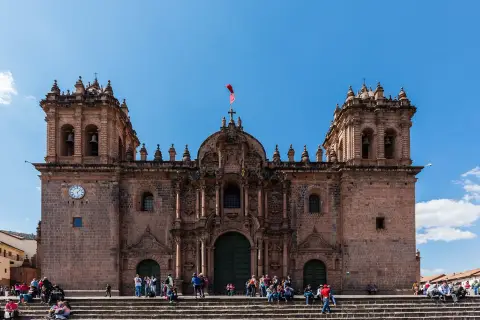
It fits well into a day that mixes sites and museums. A reasonable plan is the cathedral and Qorikancha in the morning, lunch, then MAP in the afternoon and an evening stroll through San Blas, whose craft workshops and viewpoints are close by. Because it is indoors, it works on rainy afternoons in the wet season, a point made on the things to do in Cusco page. For a larger outdoor day, pair it instead with Sacsayhuamán on another day.
Tickets, rules and practicalities
Admission is charged, with a lower price for students and free entry reported for residents of Cusco, but fees and hours change, so confirm them at the door or on the museum's official website. Sources do not agree on whether the museum closes on one day a week, so check before you plan a day around it. MAP is a separate museum and, according to sources, is not part of the Cusco tourist ticket that covers many other sites, so budget for it separately.
Bring your passport or a copy if you want a student rate, and pay with soles in cash or by card if the ticket office accepts it, as discussed in money in Peru. Photography rules in museums change, so ask at the entrance before you take out a camera, and never use a flash near objects. Bags may have to be left at a cloakroom. If you like what you see, the shop sells replicas and books, and souvenirs in Peru explains how to judge them.
What to combine it with
MAP pairs naturally with other museum and church visits in the centre, where the colonial side of Cusco is best seen. The painting tradition of the city is introduced in the Cusco School of painting, and the wider picture of the country's collections is in museums in Peru. For a day built round the centre, start from the Cusco overview, and for a place to sleep within walking distance of the museum, where to stay in Cusco compares the neighbourhoods.
If you want the Inca in stone rather than in clay, spend a separate half day at the outdoor sites and consider a guided tour for the context. For many visitors the sequence of museum first, ruins second works best, because you arrive at the sites knowing what the objects looked like.
Where to sleep
-
Find hotels
Plaza de Armas and historic centre
Everything on foot, at the price of noise and crowds
-
Find hotels
San Blas
Artisans' quarter with steep lanes and views, a short walk uphill
-
Find hotels
All of Cusco
Compare every area and price level in one search
Frequently asked questions
What does MAP stand for in Cusco?
MAP is the short name of the Museo de Arte Precolombino, the Museum of Pre-Columbian Art. It is run in association with the Larco Museum of Lima, from whose collection its objects come.
Is the Pre-Columbian Art Museum worth visiting?
Yes, if you want to see the work of the cultures that came before and alongside the Inca, in a small, calm museum. It is less useful if you are looking for Inca stonework, which is better seen at Qorikancha and the ruins.
How much time do I need at MAP?
One to two hours is a comfortable visit. The rooms are small, so it does not tire you, but the objects reward slower looking than a quick pass allows.
Where is the museum?
It is on the Plazoleta de las Nazarenas, a small square near the Plaza de Armas and the San Blas district. It is a short uphill walk from the centre, or a brief taxi ride.
Is MAP included in the Cusco tourist ticket?
According to sources it is not, so it has its own entrance fee. Confirm the current price and any student or resident rates locally, as these change.
Is it a good rainy-day plan?
Yes, it is indoors and easy to combine with a café stop. In the wet season, see things to do in Cusco for other options when showers set in.
Is MAP the same as the Larco Museum in Lima?
No. It is a separate, smaller museum in Cusco, but it belongs to the Larco Museum and shows a selection of its pieces. The full collection and gardens are in Lima, described on the Larco Museum page.